Aircraft
L-5 Sentinel
Stinson Aircraft CompanyUnited States
- Role:
- Liaison and observation aircraft
- First flight:
- 1941
91kt
Cruise speed
326nm
Range
General
- Role:
- Liaison and observation aircraft
- Status:
- Retired
Programme
- First flight:
- June 23, 1941
- Introduction:
- 1942
- Produced:
- 1942 to 1945
- Number built:
- 3,590
Crew & capacity
- Crew:
- 2
Dimensions
- Length:
- 24 ft
- Height:
- 8 ft
- Wingspan:
- 34 ft
- Wing area:
- 155 ft²
Weights
- Empty weight:
- 1,550 lb
- Maximum takeoff weight:
- 2,251 lb
Powerplant
- Engine:
- 1 × Lycoming O-435-1 (185 hp)
- Power:
- 185 hp (138 kW)
Performance
- Maximum speed:
- 113 kt
- Stall speed:
- 37 kt
- Rate of climb:
- 906 ft/min
- Ceiling:
- 15,801 ft
Price
- Used market:
- $101,000 – $120,000
As of 2025-04. See references.
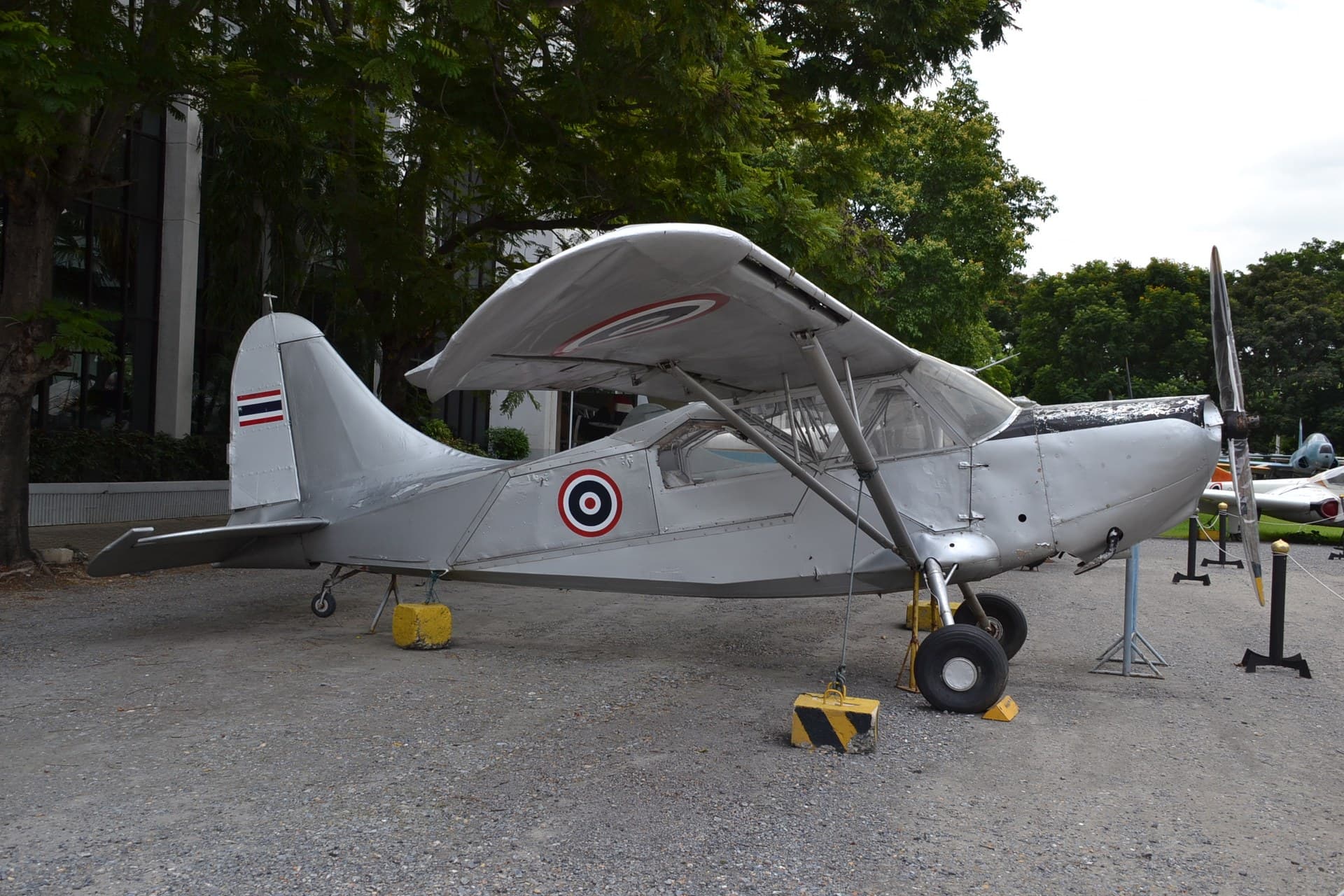
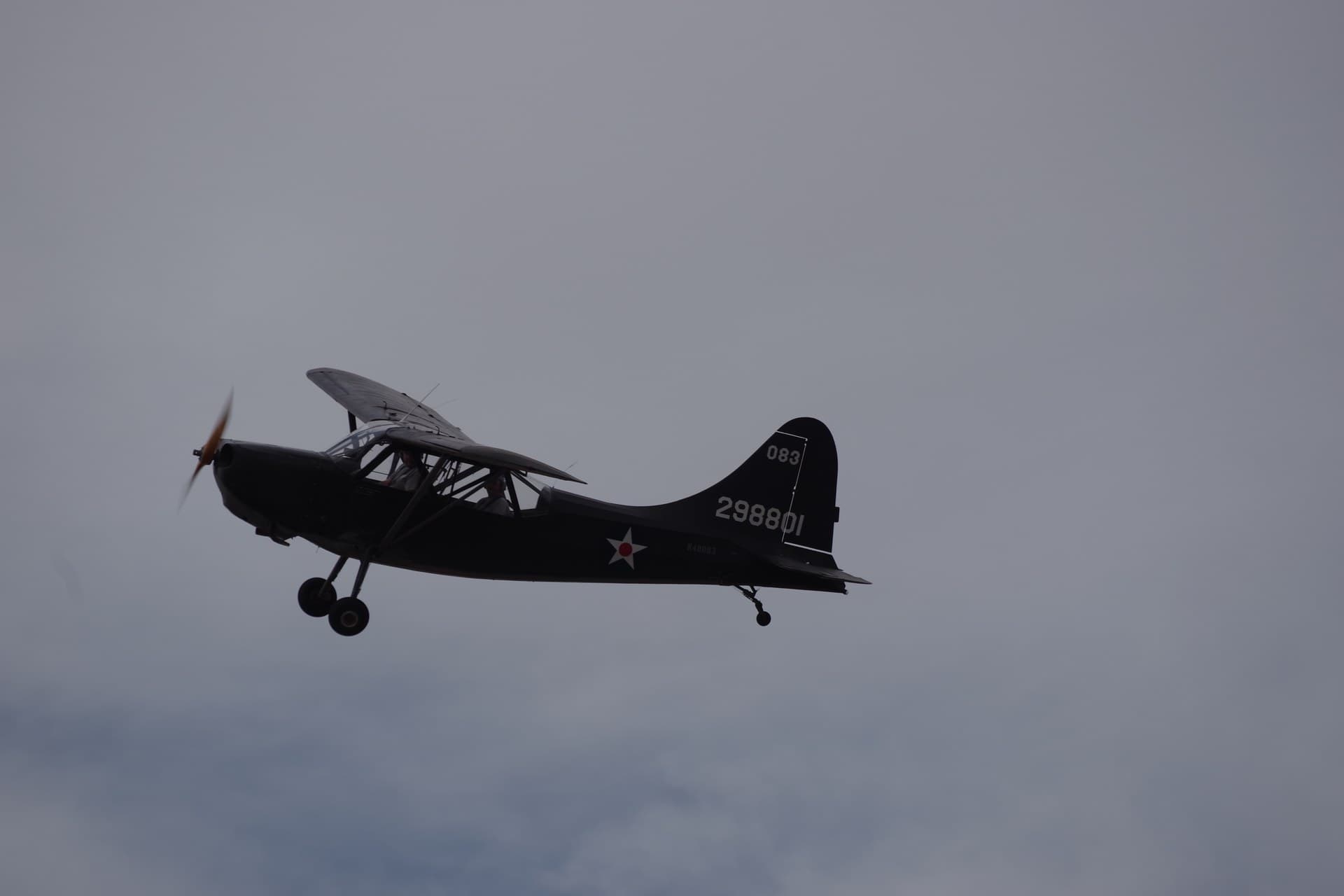
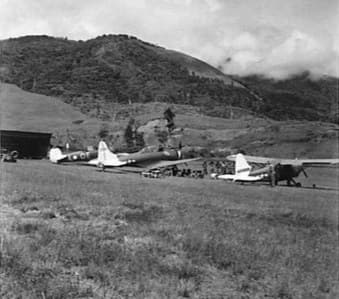
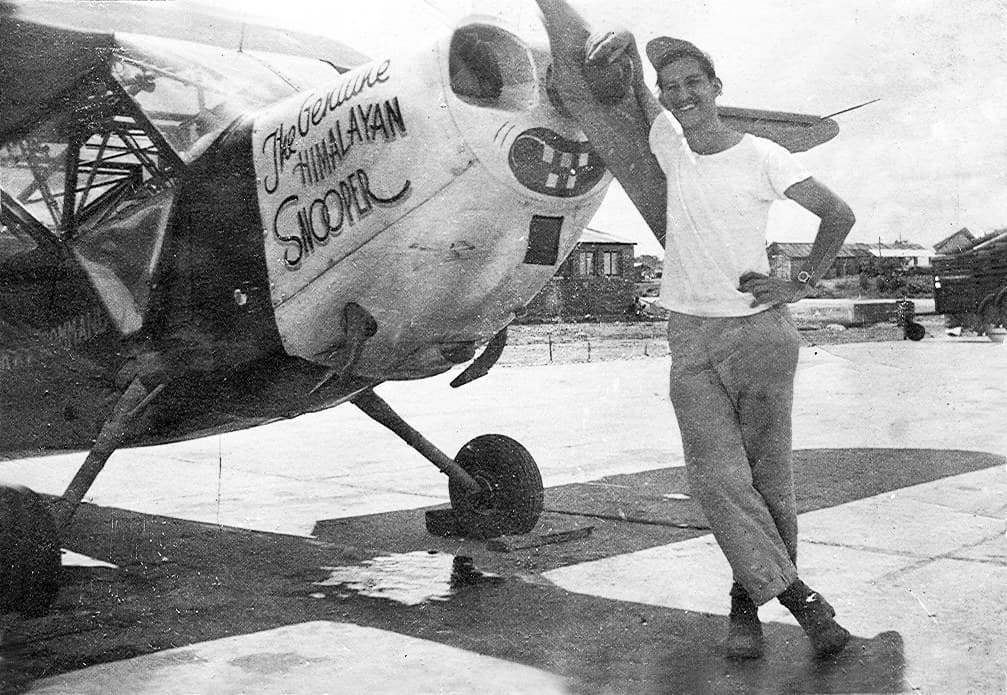
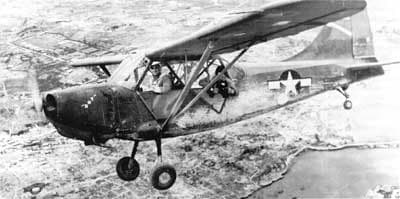
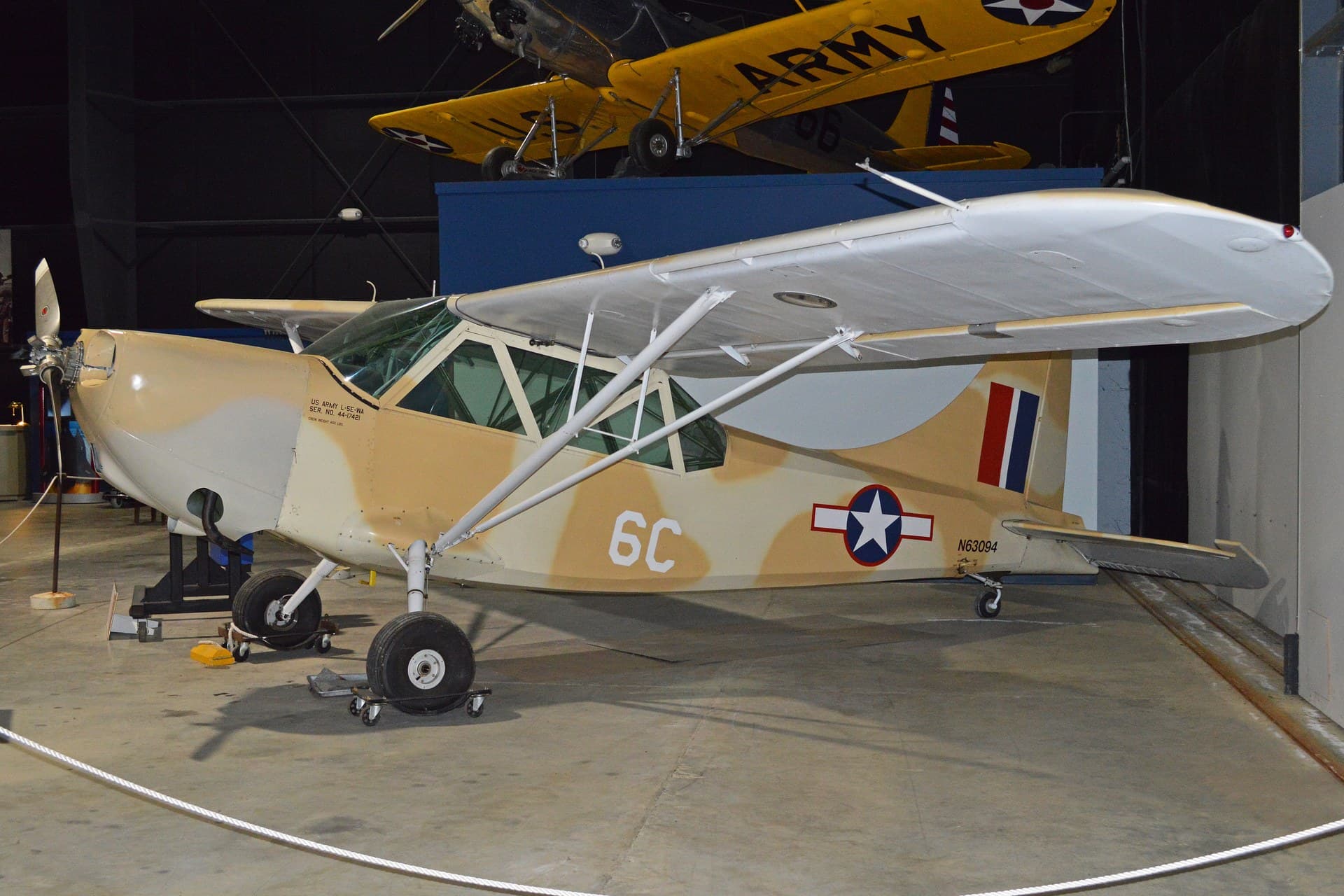
The Stinson L-5 Sentinel is a two-seat, high-wing liaison aircraft built for the U.S. Army during the Second World War, and the aircraft that shows most clearly what "military" meant when it was applied honestly rather than as a paint job. Where Piper's L-4 Grasshopper was a civilian trainer drafted into uniform, the L-5 was designed from the outset for the work: a 185-horsepower Lycoming against the L-4's 65-horsepower Continental, a heavier and stronger airframe, and a cabin built to take more than a pilot and an observer.
That extra power and structure bought capability the L-4 simply did not have. An L-5 could climb out of a strip half the length a heavier liaison type needed, carry real cargo, and, in its L-5B version, take a stretcher casualty through an enlarged rear hatch straight from the front line to a field hospital. It flew artillery spotting and courier work like the L-4, but it also flew missions the smaller aircraft could not: casualty evacuation under fire, aerial photography, wire-laying, and forward air control of fighter-bombers, across every theatre the U.S. Army fought in.
It was, correspondingly, the more expensive and less common aircraft: roughly 3,590 built against the L-4's 5,600, and a design purpose-built enough for a specific war that it never found the peacetime civilian market its cheaper cousin did. Where the Cub and the L-4 became flying-club fixtures, the L-5 became a battlefield workhorse remembered chiefly by the people it evacuated and the gunners it guided, a narrower legacy, but by most accounts of the men on the ground, a more consequential one.
History
The L-5 began life as a civilian aeroplane. Stinson's Model 105 Voyager, first flown in 1939 and shown at the New York World's Fair, evolved through the 80-horsepower Model 10 into the 90-horsepower Model 10A, a conventional, high-wing, side-by-side-seat light tourer with no military ambitions at all. Stinson itself had already changed hands: in August 1940 it became a division of Vultee Aircraft Corporation, and from mid-1943 of the merged Consolidated Vultee.
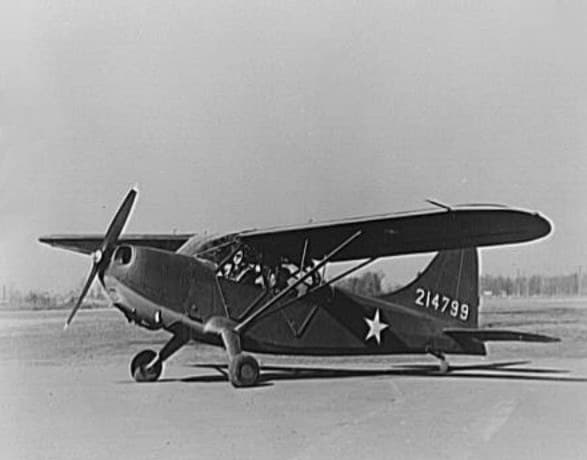
The transformation into a military aircraft came from an experimental tandem-seat derivative, the Model 75B, redesigned under Vultee as the Model 76, nicknamed "the Flying Jeep" by the factory workers who built it. It first flew at the Stinson factory airport in Wayne, Michigan, on 23 June 1941. The Army ordered it as the O-62 observation aircraft that December; in April 1942, seven months before deliveries began, the type was redesignated L-5 under the Army's new liaison category, and named Sentinel. Six early Voyager airframes acquired for evaluation had already been tested separately as the YO-54.
Production ran from November 1942 to September 1945 at the Wayne, Michigan plant, reaching 3,590 aircraft across the L-5 family: a run substantially smaller than the L-4's, reflecting both the L-5's higher unit cost and the Army's more limited need for a heavier liaison type. By the end of 1943 some 900 were already in service, spread from North Africa to the Southwest Pacific.
When the war ended, most of the fleet had no obvious civilian role to move into: an unarmed 185-horsepower liaison aircraft with a stretcher hatch and no side-by-side seating had been designed too specifically for one job to compete as a private tourer. Many surplus L-5s went instead to the Civil Air Patrol, to state forestry and fish-and-wildlife services, and to foreign air arms rebuilding after the war: a second career the Cub never needed, because the Cub had never stopped being what peacetime buyers wanted.
Design
Structurally the L-5 follows the same recipe as most light aircraft of its generation, a welded steel-tube fuselage and wooden wing structure under doped fabric, but scaled up and reinforced for a load the Voyager it descended from was never asked to carry. Where the Piper L-4 kept its civilian Cub's airframe essentially unchanged, the L-5 was redesigned around its role: strengthened landing gear for rough-field operation, flaps for a genuinely short landing roll, and a fuselage stressed for the weight of cargo, a stretcher, or a second passenger rather than just an observer.
The 185-horsepower Lycoming O-435 gave it a rate of climb and a useful load well beyond the L-4's reach, enough to get a loaded aircraft out of a strip cut into a jungle clearing or a beachhead, which was frequently the only kind of airstrip available. Empty weight ran to around 1,500 lb, more than double the Cub's, and gross weight to just over a tonne; the aircraft could still be flown from unimproved ground because the extra power scaled with the extra weight, not merely alongside it.
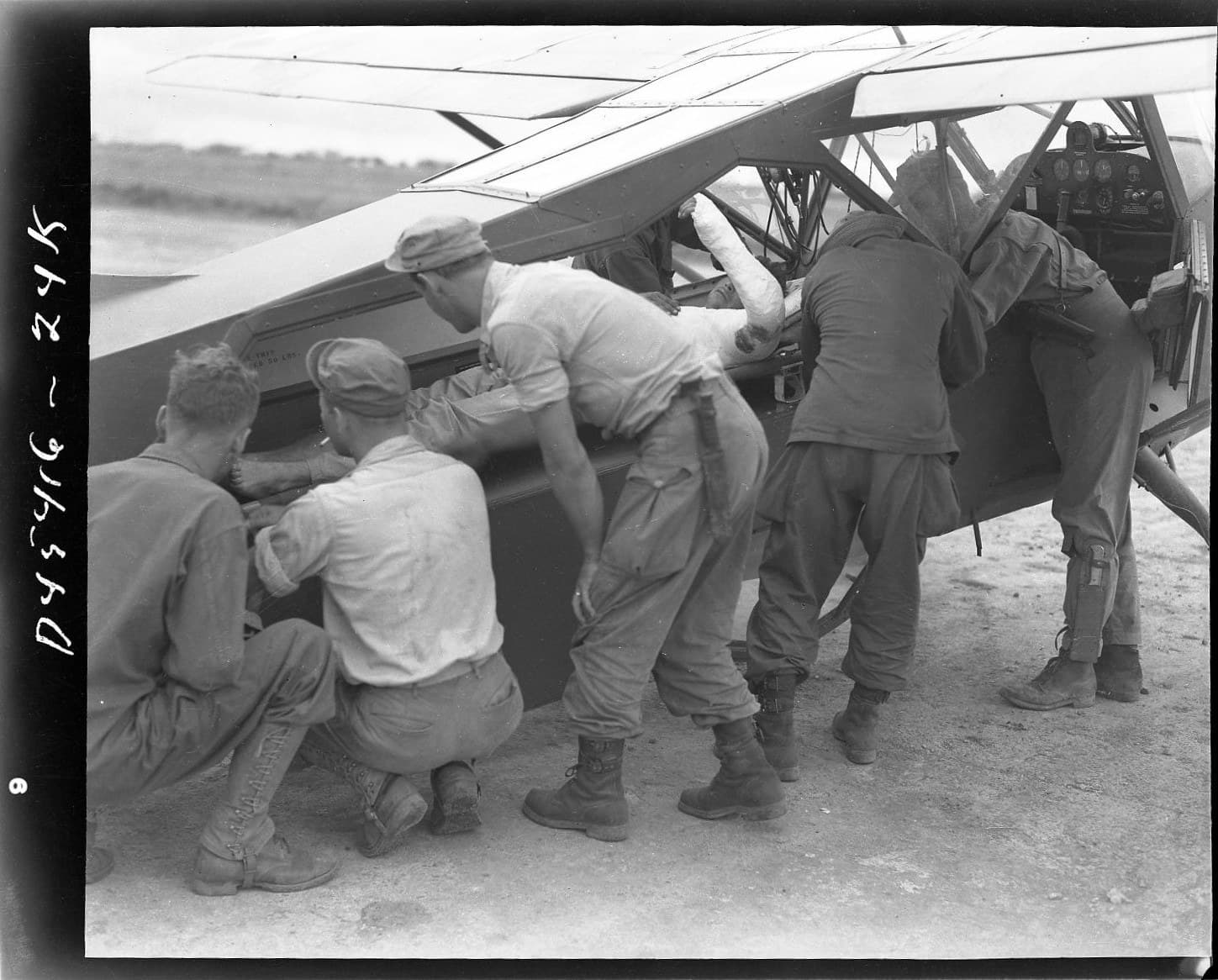 Stinson L-5B Sentinel
The tandem cockpit, glazed generously to the sides and rear, gave the observer the field of view an artillery spotter needed, while the L-5B's rear fuselage was cut down and reglazed further still to open a hatch wide enough to load a litter patient, a modification the Cub-derived L-4 could not accommodate at any point in its production life without a redesign the Army never funded.
Military service
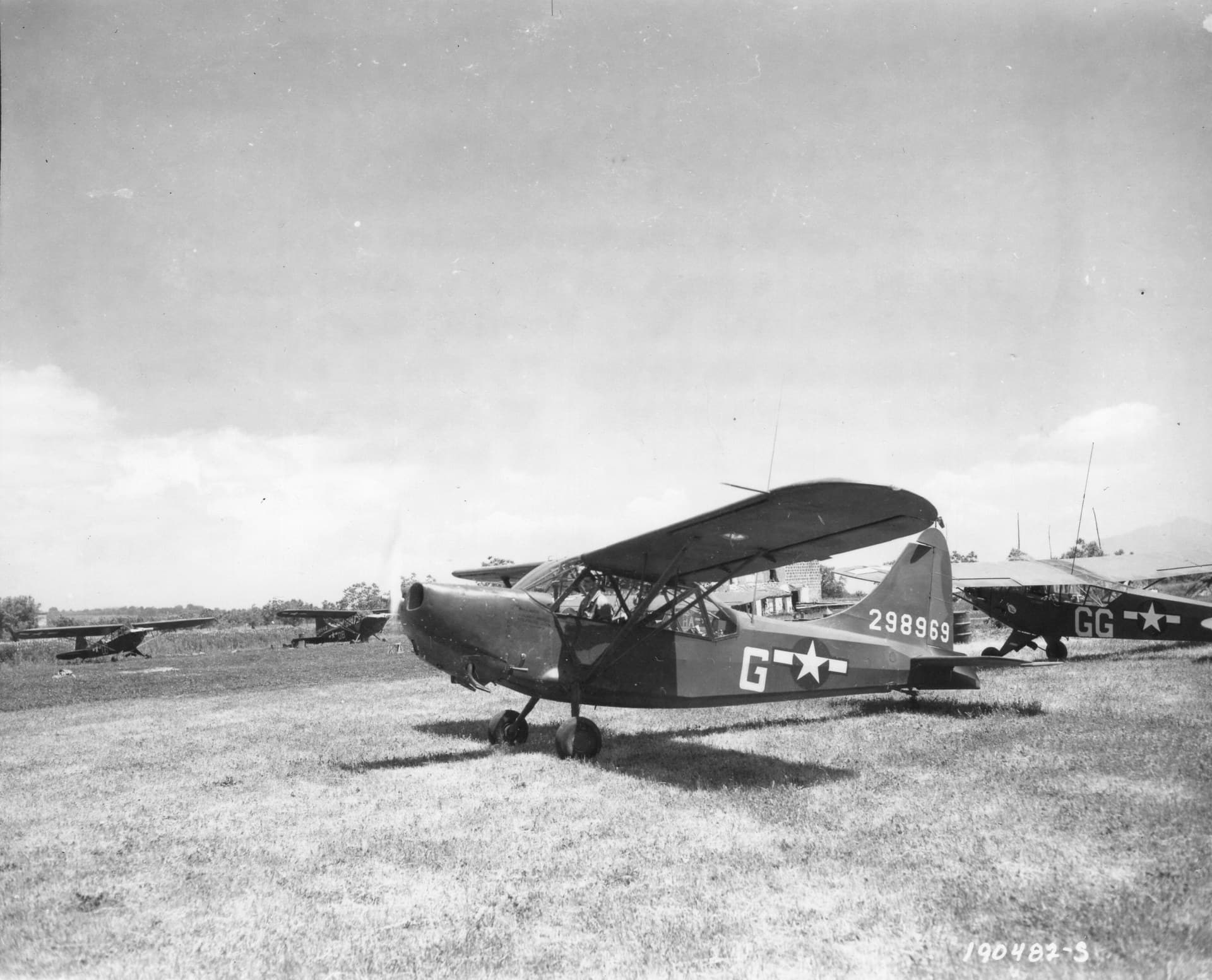
The L-5 served in every theatre the U.S. Army fought in, and its missions ran well beyond the artillery spotting and courier work it shared with the Cub-derived L-4. Crews flew route reconnaissance, aerial photography, forward air control for fighter-bombers, wire-laying for field telephone lines, leaflet dropping, loudspeaker broadcasts to enemy positions, and (in a handful of improvised, unauthorised instances) grenade drops and wing-mounted bazooka attacks on ground targets, the same kind of freelancing that made the L-4 famous in the hands of Major Charles Carpenter.
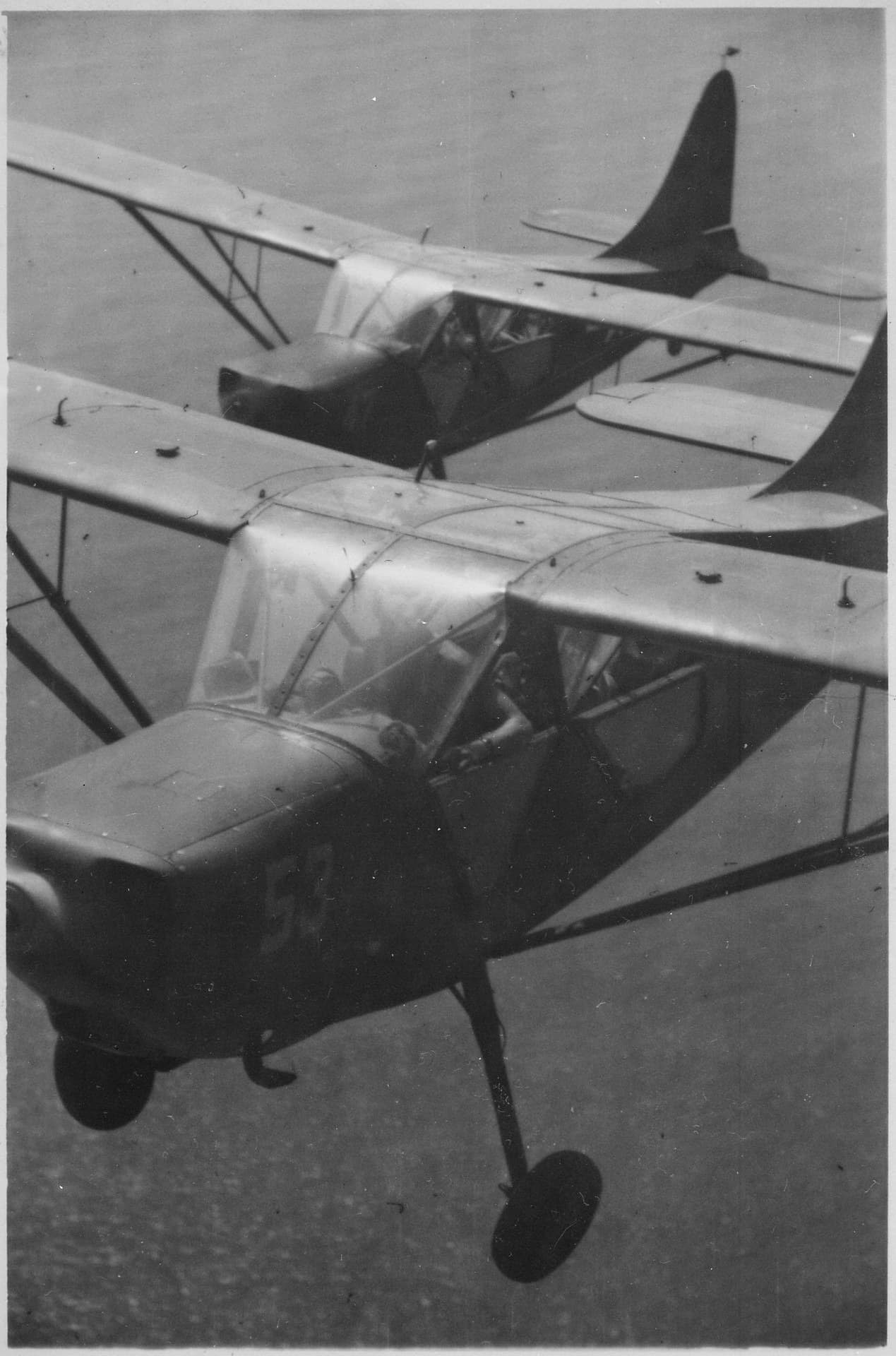
Casualty evacuation was the mission that most set it apart. The L-5B, its rear fuselage cut down and reglazed from June 1944, could lift a single litter patient or 250 lb of cargo out of a forward strip in minutes rather than the hours a road ambulance needed over shelled or mined terrain: a capability the smaller L-4 never had. In the China-Burma-India theatre, where roads barely existed and the terrain punished everything that used them, that made the L-5 one of the most valuable aircraft in the theatre relative to its size, ferrying casualties and single passengers over the Burmese jungle from strips like Akyab to Kyaukpyu.
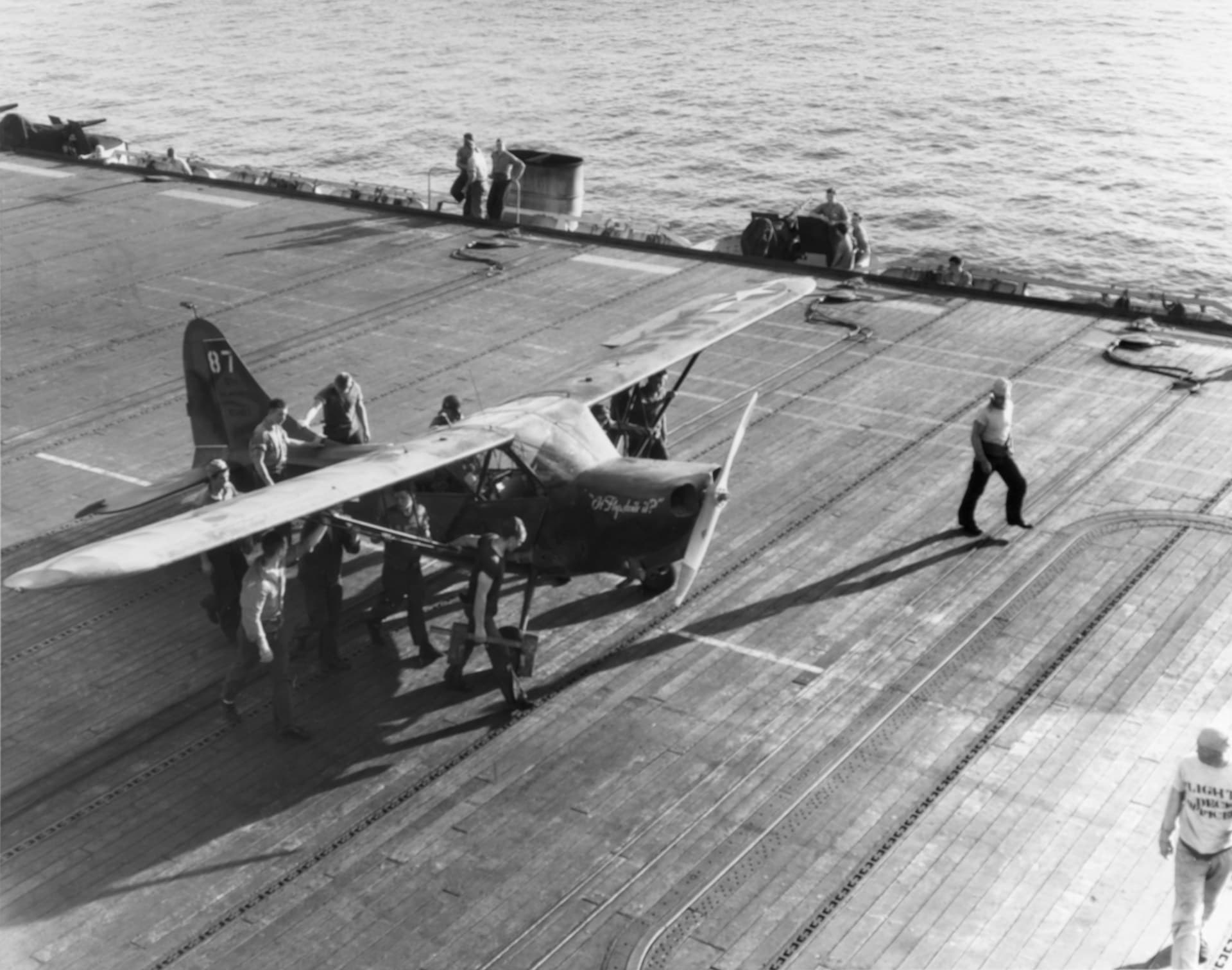 Stinson OY-1 Sentinel
The Pacific war produced the type's strangest footnote: the Brodie landing system, a cable-and-hook apparatus that let a Sentinel take off and land without a runway at all, snagging an overhead wire strung from a ship or a truck-mounted rig. Tested successfully aboard a Liberty ship and later fitted to at least one LST, it let Marine OY-1s, the Navy and Marine Corps designation for the same airframe, operate from vessels too small for a flight deck; one such detachment off Okinawa spotted a flotilla of Japanese suicide boats before they could be launched. Marine and Navy OY-1s and OY-2s also flew from escort carriers throughout the island-hopping campaign, launched by catapult when deck space allowed.
Operators
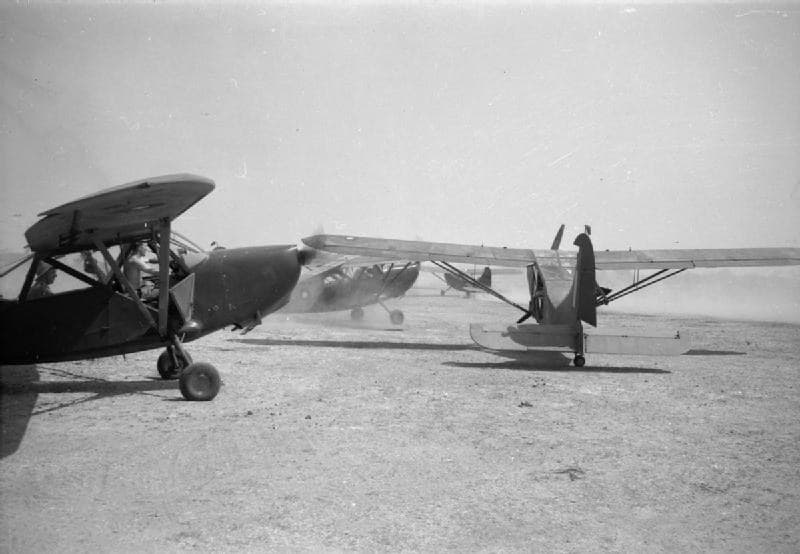 Sentinel Mk II (RAF)
Postwar, the L-5 found a narrower afterlife than the Cub and its L-4. Within the United States, surplus Sentinels went to the Civil Air Patrol for search-and-rescue work in the continental states, Hawaii and Alaska, and to state forestry and fish-and-wildlife agencies for patrol duty: steady, unglamorous work suited to an aircraft built to operate from rough strips rather than paved runways.
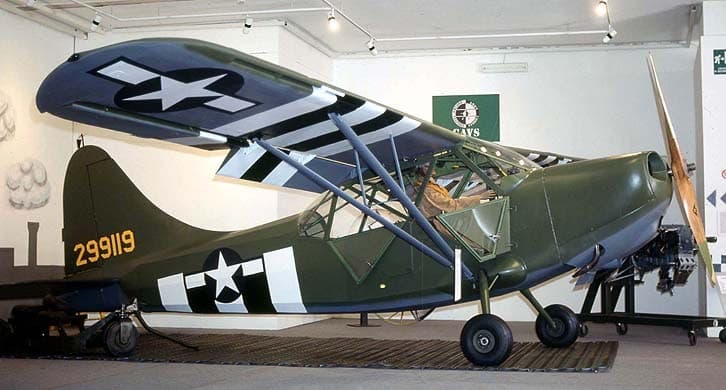 Stinson L-5 Sentinel (Italian Air Force)
Abroad, the L-5 armed a string of postwar and Cold War air forces rebuilding from wartime stock. Italy operated the largest foreign fleet, some 119 Sentinels from 1946 to 1961; the Philippines and India took substantial numbers, and Pakistan received aircraft after the 1948 partition. Thailand, Japan, South Korea, Nationalist China, Mexico, Venezuela and Brazil all flew L-5s in liaison or observation roles, and Greece used them in United Nations liaison service during the Greek Civil War. The RAF had received 100 Sentinels under Lend-Lease during the war itself, 40 basic L-5s as the Sentinel Mk I and 60 L-5Bs as the Mk II.
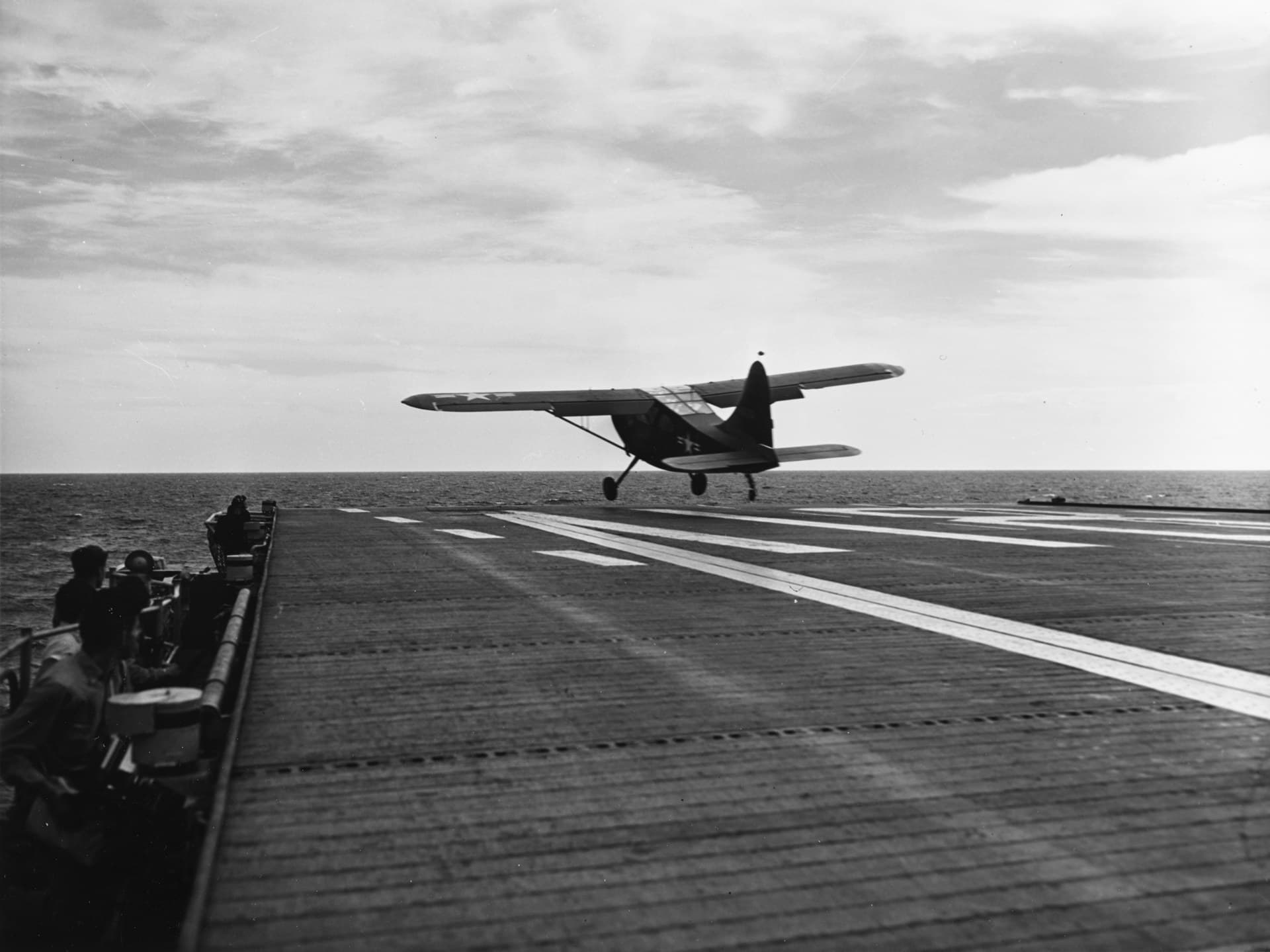 Stinson OY-2 Sentinel
The type's last operational relevance came in Korea, where the late-war L-5G and its Navy/Marine equivalent, the OY-2, saw the combat service their 1945 introduction had denied them in the Second World War. The U.S. Air Force kept a handful of L-5s flying into the 1960s, redesignated U-19 in 1962; one served as a glider tug at the Air Force Academy years after most of its wartime contemporaries had been retired.
Legacy
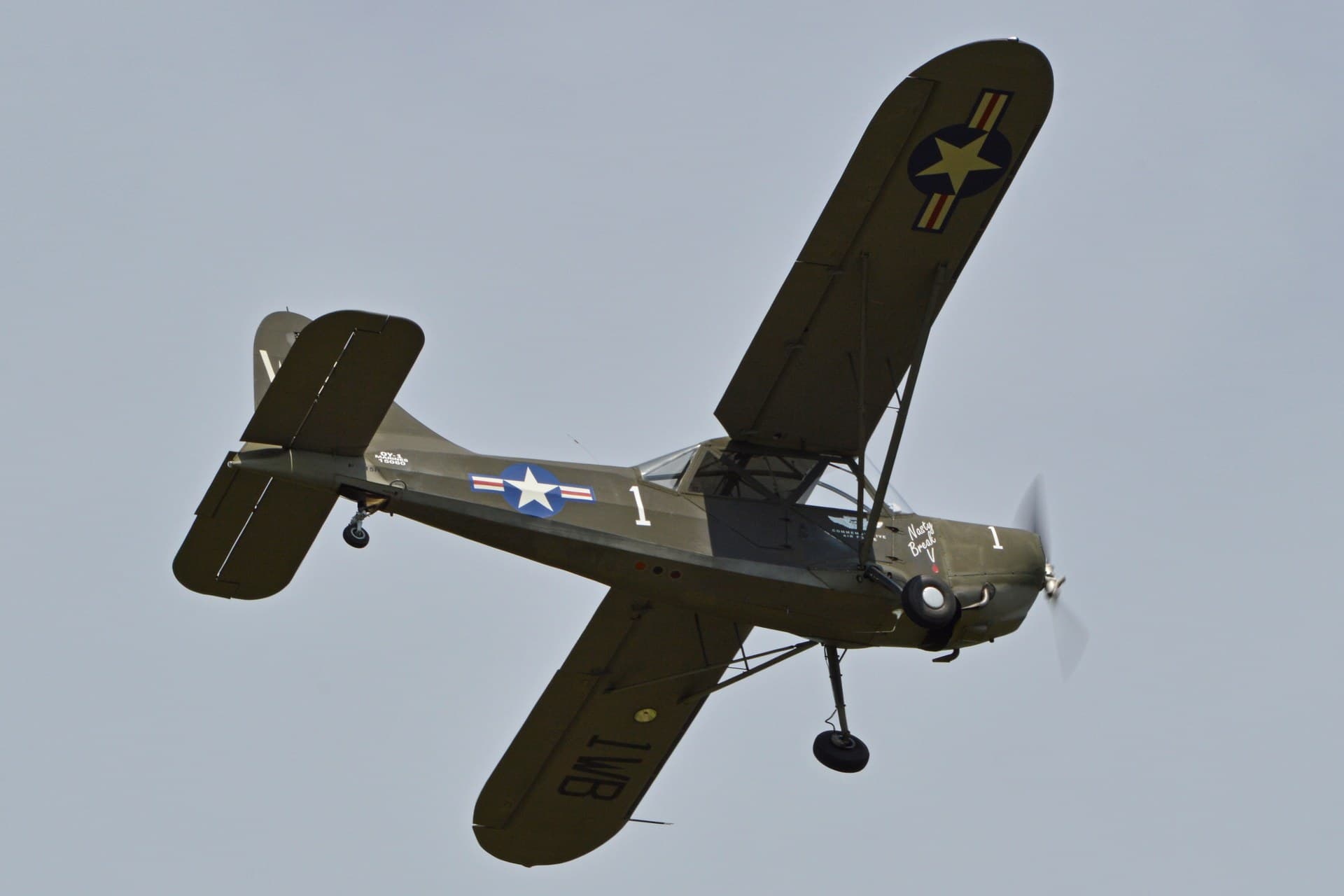
Roughly 300 Sentinels are known to survive worldwide, fewer than half of them airworthy, a far smaller surviving population, proportionally, than the Cub's, and one concentrated in museums and warbird collections rather than working aircraft. The Smithsonian's National Air and Space Museum holds the first production L-5 built; the National Museum of the United States Air Force, the EAA AirVenture Museum and a scatter of warbird museums across the United States each keep at least one, and flying examples appear regularly at air shows in the hands of owners drawn to a genuinely rare, genuinely warbird-grade liaison type.
That rarity shows in the market. A restored, airworthy L-5G, the most capable and most sought-after production variant, has recently changed hands for between roughly $101,000 and $120,000, prices that put it comfortably above a well-restored Cub despite the L-5 never having been the collectible icon the Cub became. It is bought less often as an entry point into vintage flying than as a first warbird: an aircraft simple enough to operate like a Cub, but with genuine wartime service and a two-seat cabin built for real work rather than trained restraint.
Model evolution
Stinson YO-54
1941Six civilian Model 10A Voyager airframes, fitted with military radios and instruments, acquired by the Army Air Corps in 1941 purely for evaluation, ahead of any commitment to production or to a redesigned military airframe.
No structural change from the civilian Model 10A Voyager beyond military instrumentation; this was a trials batch, not a combat type. The Army needed to test whether a light civilian liaison type could realistically do the observation and courier work it wanted before committing money to a purpose-built military redesign of the airframe.
Stinson O-62
1941The initial Army designation for the redesigned tandem-seat Model 76, nicknamed the 'Flying Jeep' on the factory floor, ordered in December 1941 as an observation aircraft.
Tandem seating, a strengthened airframe and a 185-horsepower Lycoming replaced the Voyager's side-by-side cabin and touring-class power: the redesign that made the type a genuine military aircraft. Observation and liaison duty demanded more power, a stronger structure and a seating layout that gave the observer a clear view, none of which the touring Voyager was built to provide.
Stinson L-5 Sentinel
1942The initial production standard, redesignated from O-62 in April 1942 under the Army's new liaison category and formally named Sentinel; 1,538 were delivered, the largest single block of the family.
Essentially the production O-62 airframe carried over unchanged; the new designation reflected a reclassification of mission, not a redesign of the aircraft. The Army's liaison category, created in 1942, better described how the aircraft was actually being used than the older observation designation had.
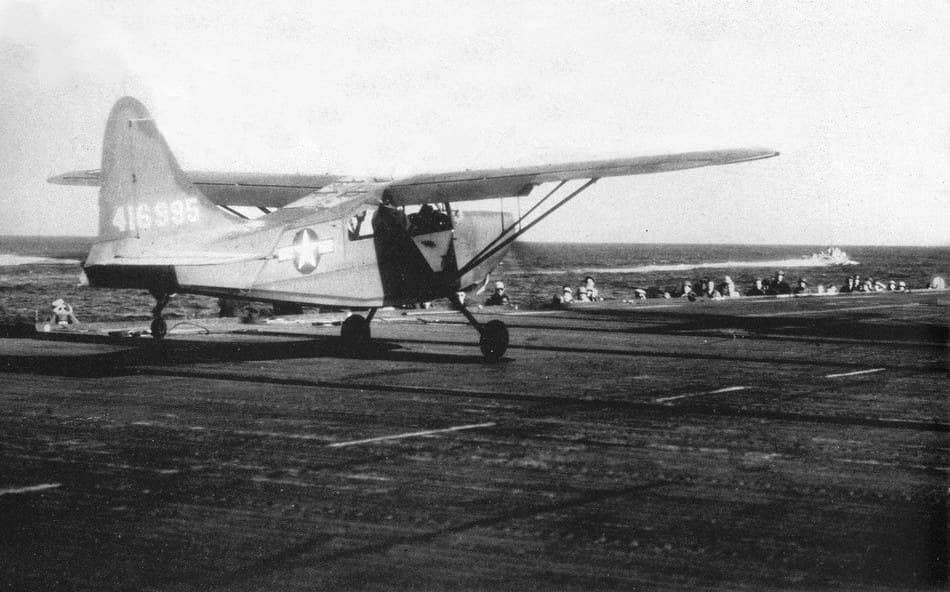
Stinson L-5B Sentinel
1944The casualty-evacuation and cargo version, with the rear fuselage cut down and reglazed from June 1944 and fitted with a large hatch; 729 were delivered, the second-largest block after the base L-5.
A redesigned rear decking and a hatch large enough for a stretcher, replacing the solid civilian-style turtledeck and rear seat trim. Frontline casualty evacuation needed a way to load a litter patient quickly; nothing about the base L-5's fuselage made that possible without this specific modification.
Stinson L-5C Sentinel
1943A photo-reconnaissance version fitted with a K-20 aerial camera mounted to shoot vertically through the cabin floor; 200 were delivered.
A camera mount and floor aperture for the K-20, in place of some of the rear cabin space used for cargo or a passenger on the base model. Battlefield reconnaissance needed a systematic photographic record, not just an observer's eyes and a notebook, and the L-5's low, slow flight profile suited close vertical photography.
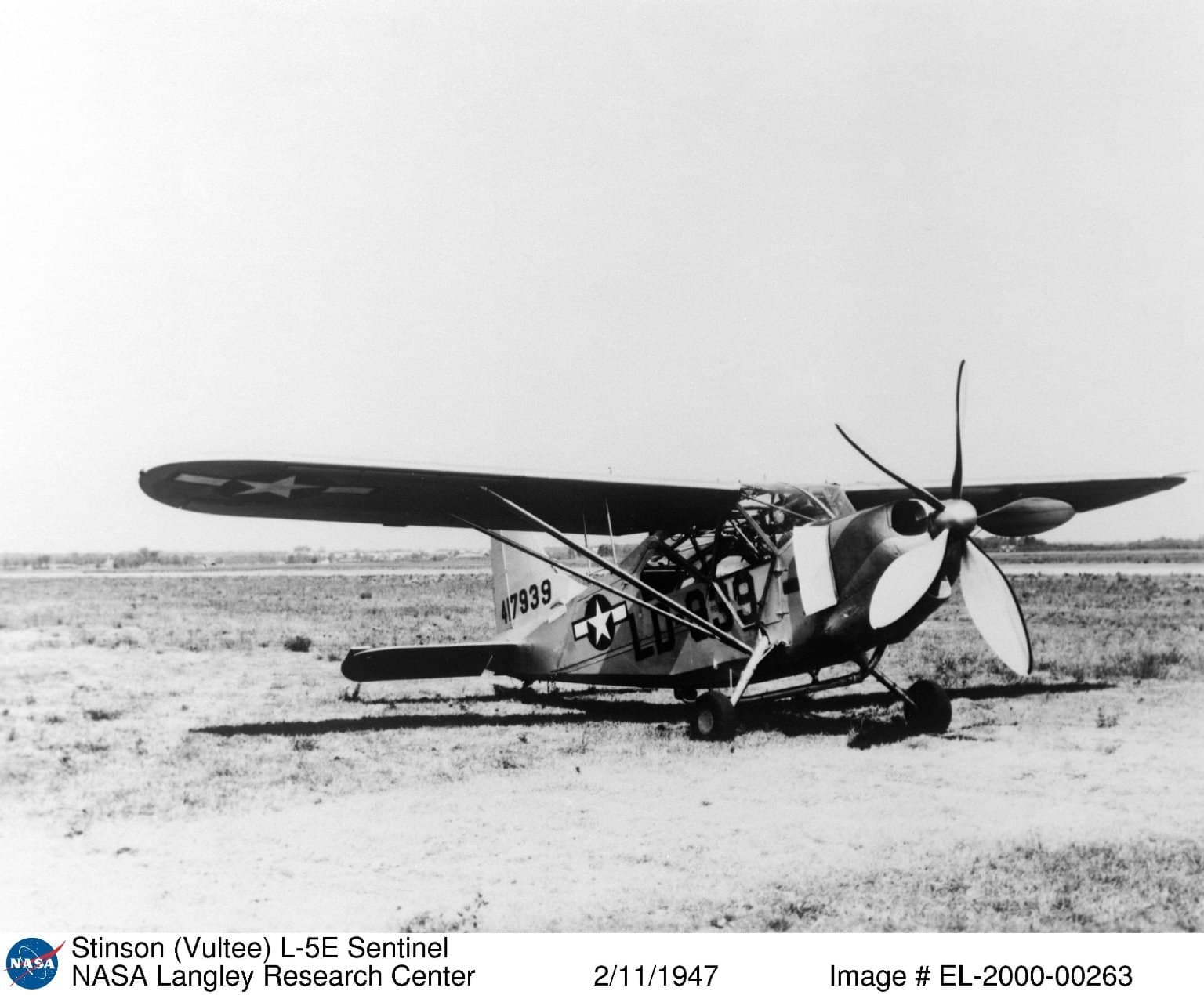
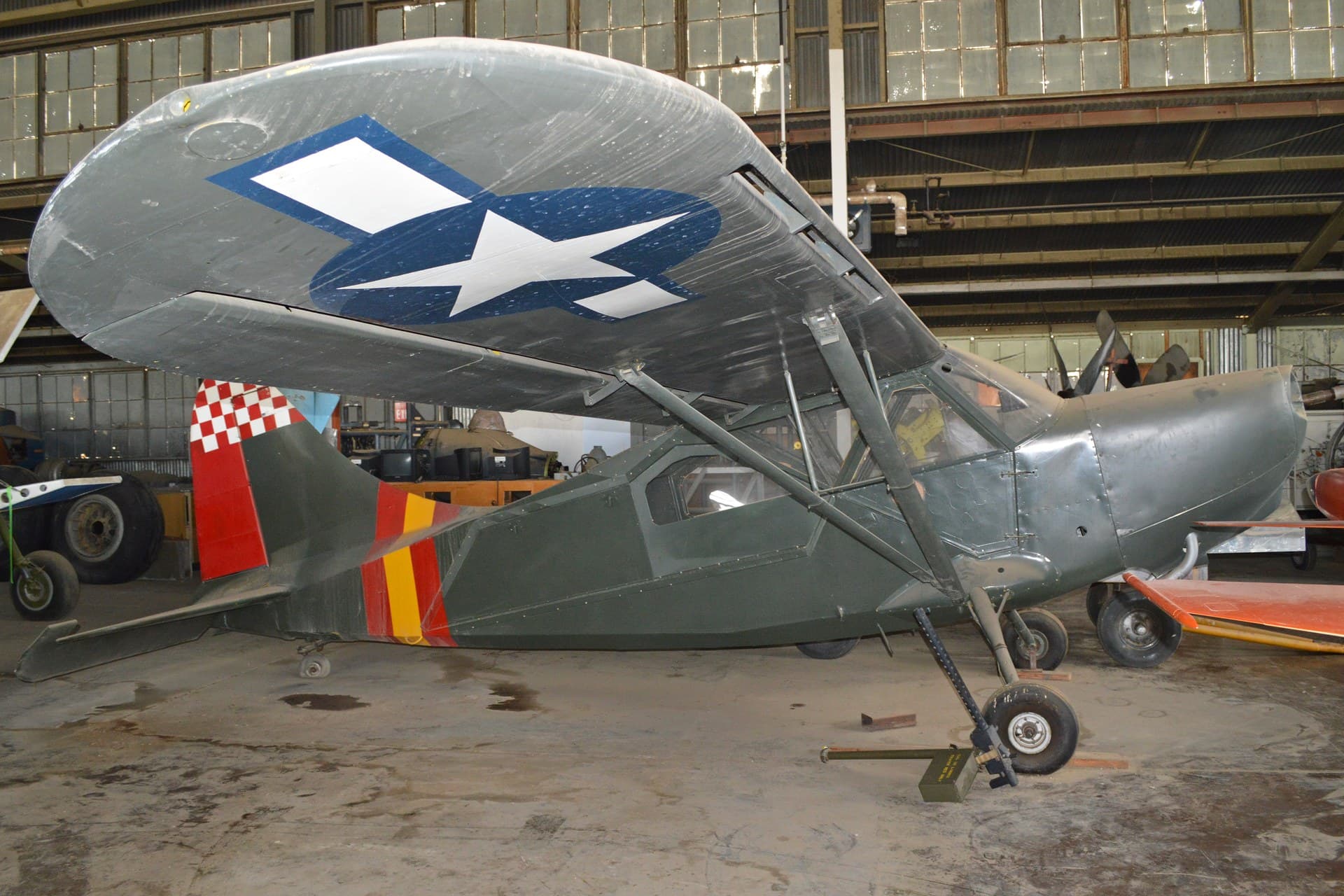
Stinson L-5E Sentinel
1944A short-field-optimised version with manually drooping ailerons that acted as auxiliary flaps at low speed; 500 were delivered, plus a further 250 as the heavier-braked L-5E-1.
Ailerons that droop down together with the flaps at low speed, plus, on the E-1, larger wheels, tyres and heavy-duty brakes for rougher unimproved strips. Front-line strips kept getting shorter and rougher as the aircraft moved closer to the fighting; the drooping ailerons and stronger undercarriage were a direct response to that operating environment.
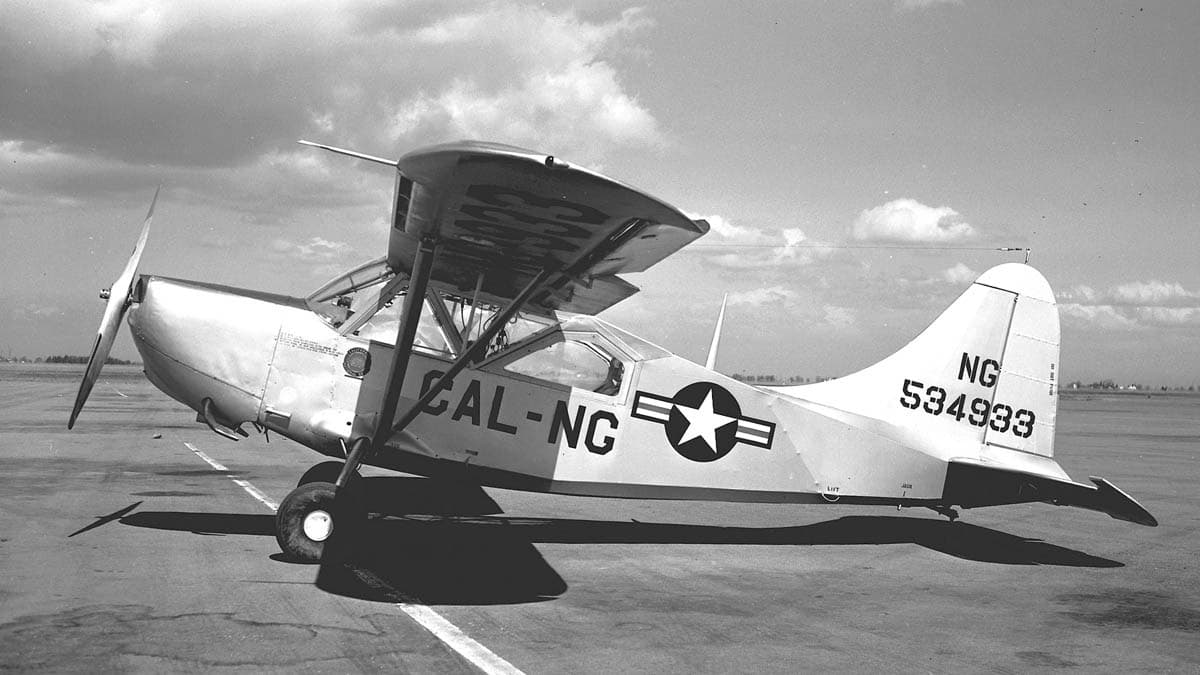
Stinson L-5G Sentinel
1945The final and most powerful production variant, with a 190-horsepower Lycoming, a 24-volt electrical system and an SCR-622 radio; only 115 were built before the war ended.
A slightly more powerful engine and a modernised electrical and radio fit, developed from the cancelled 24-volt L-5A and tested on the one-off XL-5F. Later-war liaison work increasingly needed reliable radio communication, which the L-5's original 12-volt system could not support well; the G model modernised the electrics to fix that.
Foreign and naval service marks
1943The same airframe under other flags and services: the U.S. Navy and Marine Corps flew it as the OY-1 and OY-2, the RAF received 100 under Lend-Lease as the Sentinel Mk I and Mk II, and postwar operators from Italy to Thailand flew L-5s and L-5Bs under their own local designations.
A change of operator and designation rather than of airframe: naval marks added arrester-adapted equipment for carrier and Brodie-system operation, while foreign air arms generally flew the aircraft as delivered. Wartime Lend-Lease and postwar surplus transfers put the same reliable, inexpensive liaison type into the hands of allies and later Cold War air forces that had no aircraft of their own to fill the role.
Blueprints
- Stinson L-5 Sentinel, National Museum of the United States Air Force
- Stinson L-5 Sentinel, Smithsonian National Air and Space Museum
- Stinson L-5 Sentinel, National Museum of World War II Aviation
- About the L-5, Stinson L-5 Sentinel Club (Sentinel Owners and Pilots Association)
- This 1945 Stinson L-5G Sentinel Is a Veteran 'AircraftForSale' Top Pick, FLYING Magazine
- Stinson L-5 Sentinel, Wikipedia
Checked September 2, 2026