Engine
Pratt & Whitney JT9D
Pratt & WhitneyUnited States
- Type
- Two-spool high-bypass turbofan
- Introduced
- 1970
4.8:1
Bypass ratio
249.1kN
Peak thrust
Figures for the JT9D-7R4 series, the final production standard
General
- Type
- Two-spool high-bypass turbofan
- Status
- In service
Programme
- Introduced
- 1970
- Built
- 3,200 (as of September 2026)
Architecture
- Configuration
- Two-spool high-bypass turbofan: single-stage fan, 3-stage low-pressure compressor, 11-stage high-pressure compressor, annular combustor, 2-stage high-pressure turbine, 4-stage low-pressure turbine
Weight and size
- Fan diameter
- 93.39 in
- Dry weight
- 8,609 lb
- Length
- 132.72 in
Performance
- Thrust
- 249.1 kN
- Bypass ratio
- 4.8:1
- Overall pressure ratio
- 26.7:1
The Pratt & Whitney JT9D was the first high-bypass-ratio turbofan to power a wide-body airliner, and the engine that made the Boeing 747 possible. It was Pratt & Whitney's first high-bypass engine, it carried the first "jumbo jet" into airline service in January 1970, and over the next two decades it spread from the 747 to the McDonnell Douglas DC-10-40, the Airbus A300 and A310, and the Boeing 767.
The idea behind it was simple to state and hard to build. Instead of forcing all of its air through a hot core, as the turbojets and low-bypass turbofans of the 707 generation largely did, the JT9D drove a very large single-stage fan that pushed most of its air around the core. Moving a great mass of air slowly is more efficient than moving a small mass quickly, and it is also quieter. The penalty is size: the fan is enormous, the casings that hold it must stay round under loads nobody had designed for before, and every component has to be scaled up at once.
That is exactly where the JT9D's story turned. The engine was developed almost in parallel with the aircraft it was meant for, on a schedule set by Pan Am's demand for the 747 by the end of 1969. The result was a turbofan that worked in principle and struggled in practice: during the 747 flight-test programme its casings bent out of round under take-off loads, turbine blades rubbed, engines were changed by the dozen, and finished aircraft stood outside the Everett factory waiting for engines they could use.
The problems were solved, and the engine that emerged became the workhorse of the first wide-body era. Pratt & Whitney grew it from about 43,500 lbf on the first certified JT9D-3A to 56,000 lbf on the final -7R4H1, added a sixteenth compression stage, and in 1985 won approval for 180-minute extended-range operations on twin-engined aircraft. More than 3,200 were delivered before production ended in 1990, and the company's successor, the PW4000, was designed as its replacement.
Aircraft fitted with this engine
Year each aircraft entered service with this engine.
- 1970JT9D-3A, -7 series, -70A, -7Q, -7R4G2
Boeing 747-100, -100B, -100SR, -200, -300 and 747SP
The aircraft the engine was created for, and its launch application in January 1970.
- 1973JT9D-20, -59A
McDonnell Douglas DC-10-40
- 1974F105 (JT9D military designation)
Boeing E-4
- 1982JT9D-7R4D, -7R4E
Boeing 767-200
The JT9D's first twin-engined airliner, and the installation behind its 180-minute ETOPS approval.
- 1983JT9D-7R4D1, -7R4E1
Airbus A310
- JT9D-59A; -7R4H1 on the A300-600
Airbus A300
6 aircraft
Development
The JT9D's roots lie in a competition Pratt & Whitney lost. In the mid-1960s the United States Air Force's CX-HLS heavy-logistics requirement, which became the Lockheed C-5 Galaxy, called for engines far larger and more economical than anything then in service. General Electric pioneered the high-bypass concept for it and won the production contract with the TF39. Pratt & Whitney had been working on the same principle with its STF200 and JTF14 demonstrator engines, and the JTF14 had been its proposal for the C-5. Losing that contract left the company with a demonstrated technology and no aircraft to put it on.
The civil market supplied one. Pan Am's Juan Trippe wanted an airliner two and a half times the size of the 707, with a seat cost 30 per cent lower, and Boeing's answer was the 747. General Electric was committed to the C-5 engine and did not enter the commercial market until later, so the new aircraft's engine fell to Pratt & Whitney. The JT9D programme was launched in September 1965; Pan Am ordered 25 747-100s in April 1966, and by late 1966 Boeing, Pan Am and Pratt & Whitney had agreed to develop the engine for it.

The schedule was brutal for both partners. Boeing had promised Pan Am its first 747 by the end of 1969, leaving about 28 months to design the aircraft, two-thirds of the normal time. The first JT9D was tested in December 1966 on a rig at East Hartford, Connecticut. In June 1968 the engine flew for the first time, mounted on a Boeing B-52E used as a flying testbed. In 1968 a single engine cost about $800,000.
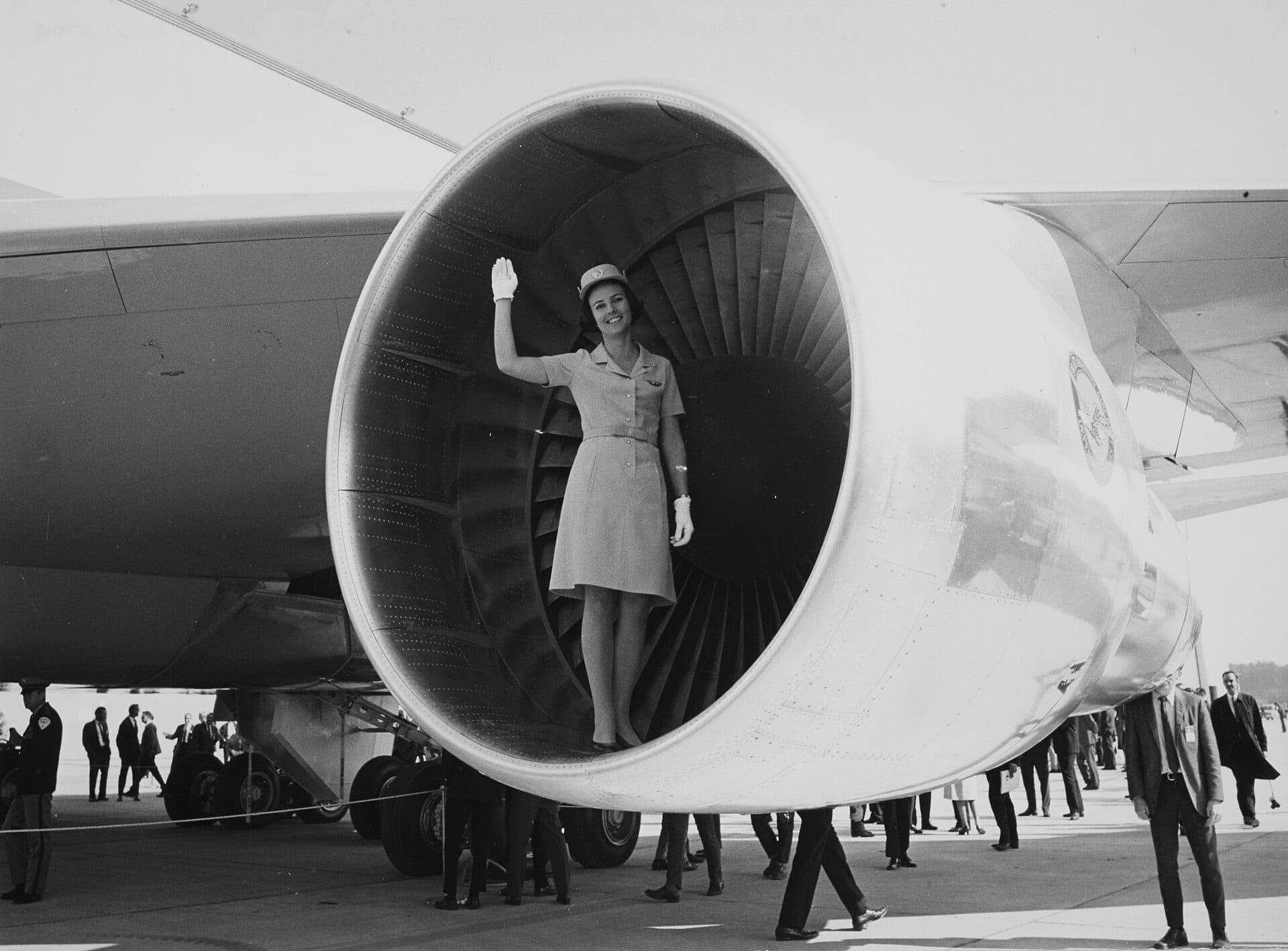
On 30 September 1968 the first 747 was rolled out at Everett in front of the press and representatives of the 26 airlines that had ordered it, and the size of its engines was part of the show: an SAS hostess was photographed standing inside a nacelle to give the fan a scale. The aircraft first flew on 9 February 1969, on four JT9Ds of about 39,000 lbf each. The engine received its FAA certification in May 1969, but certification was not the end of its development. It was the beginning of the hardest part.
Design
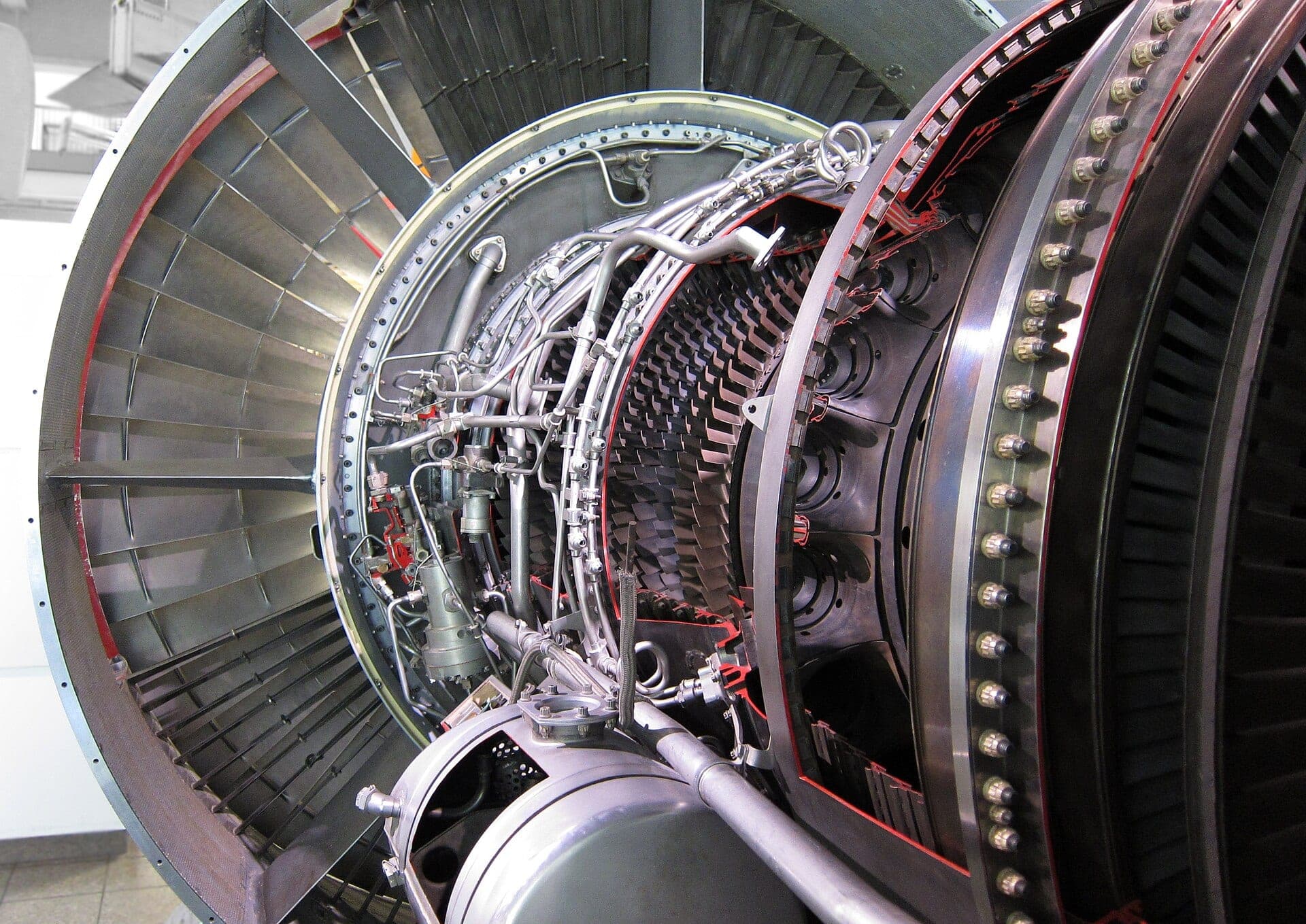 JT9D-7
The JT9D is a two-spool turbofan. On the low-pressure spool, a single-stage fan at the front of the engine is joined to a three-stage low-pressure compressor and driven by a four-stage low-pressure turbine at the back. The high-pressure spool, running inside it, carries an eleven-stage high-pressure compressor driven by a two-stage high-pressure turbine. Between them sits an annular combustion chamber, in which discrete fuel injectors maintain flame zones inside one common ring-shaped casing.
Most of the air never goes near the flame. On the JT9D-7R4 the bypass ratio is 4.8 to 1: for every kilogram of air that passes through the core, nearly five are pushed around it by the fan, which on its own raises the pressure of the air by a factor of about 1.67. That cold bypass stream produces most of the take-off thrust. The core's job is less to push the aircraft than to turn the turbines that drive the fan.
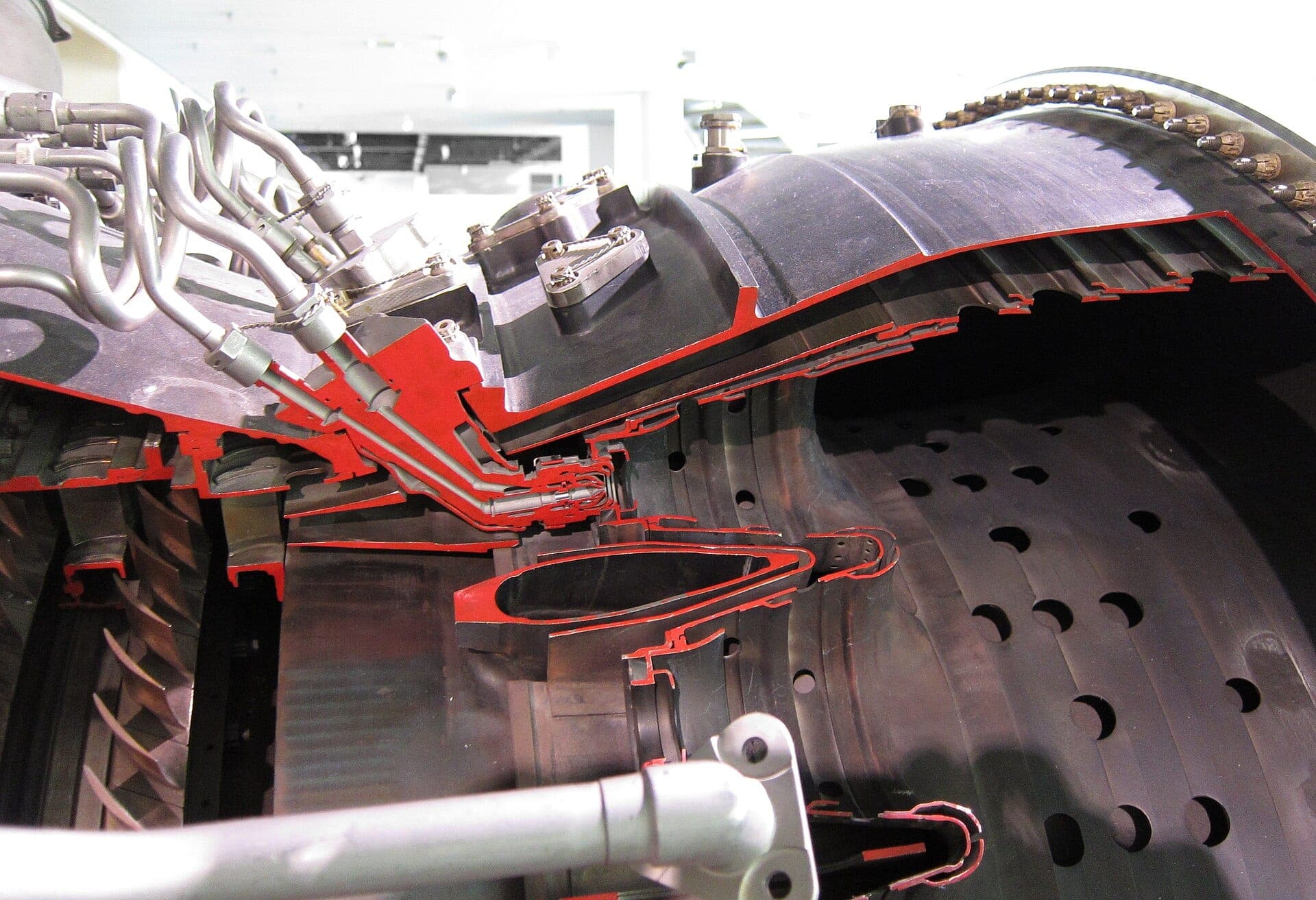 JT9D-7
The efficiency of the core depends on how hard it squeezes the air before burning fuel in it, and here the JT9D was a large step from the JT3D, the turbofan Pratt & Whitney had derived from the 707's turbojet. The final -7R4 series reaches an overall pressure ratio of 26.7. Reaching such figures, and holding the higher temperatures that go with them, meant new structures, new aerodynamics and new materials, including titanium alloys and nickel alloys, chosen to improve fuel efficiency and reliability over its predecessor.
The numbers that defined the engine were its size. The -7R4 is about 11.1 ft long from flange to flange, its fan tip diameter is about 7.78 ft, and it weighs around 8,600 lb. The first certified engine, the JT9D-3, weighed 8,470 lb in its basic form and produced 43,500 lbf. That is a thrust-to-weight ratio of about five, a figure that made four-engined flight at 1970s 747 weights practical.
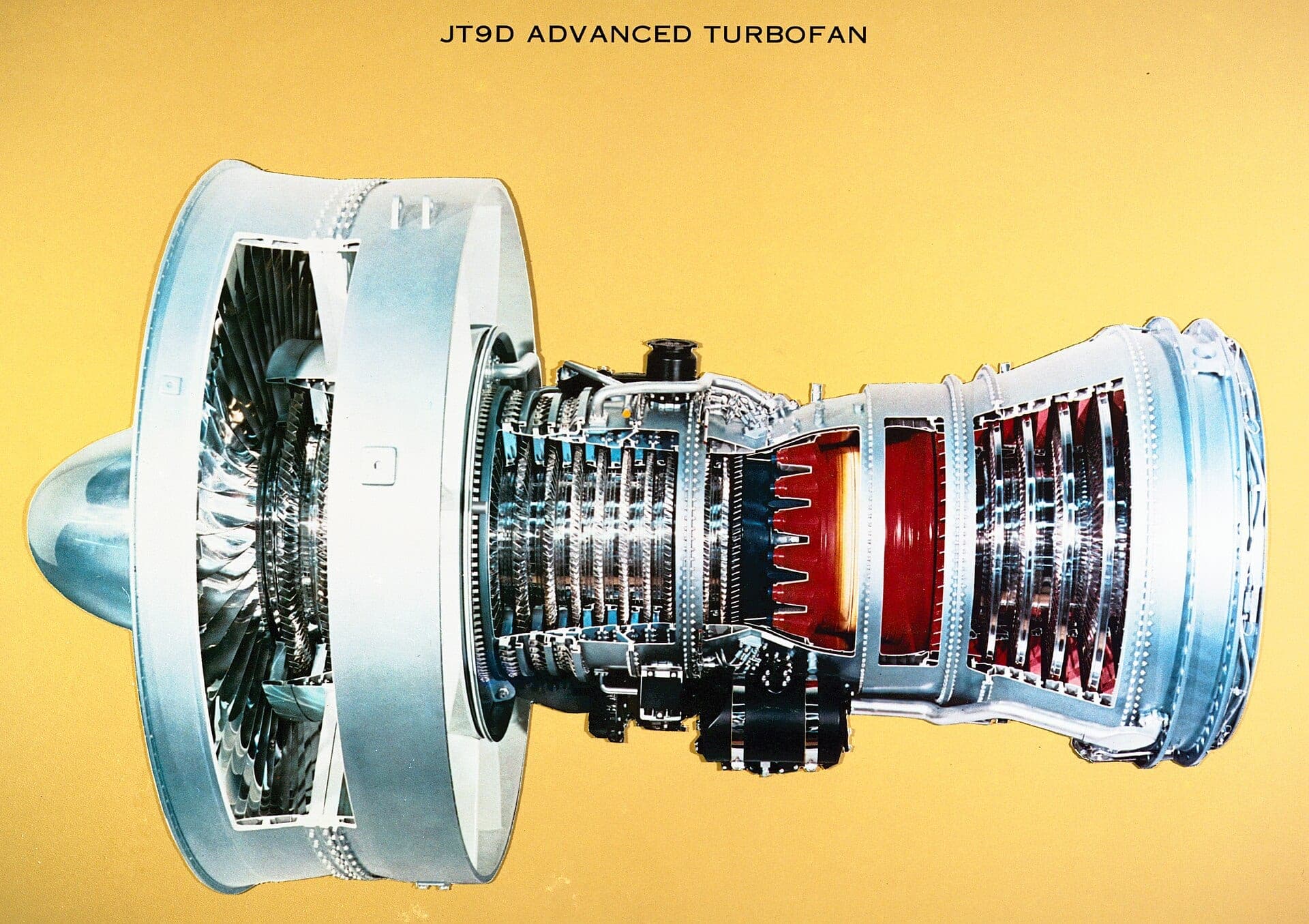
The basic architecture never changed. Every version kept the single-stage fan, the two-stage high-pressure turbine and the four-stage low-pressure turbine. What Pratt & Whitney did change, from the mid-1970s, was the compressor: the -59A, -70A, -7Q and -7R4 families added a stage, giving 16 compression stages in total against the 15 of the -3, -7 and -20. Across the family, take-off thrust grew by nearly 30 per cent while the engine's length stayed essentially the same.
Production
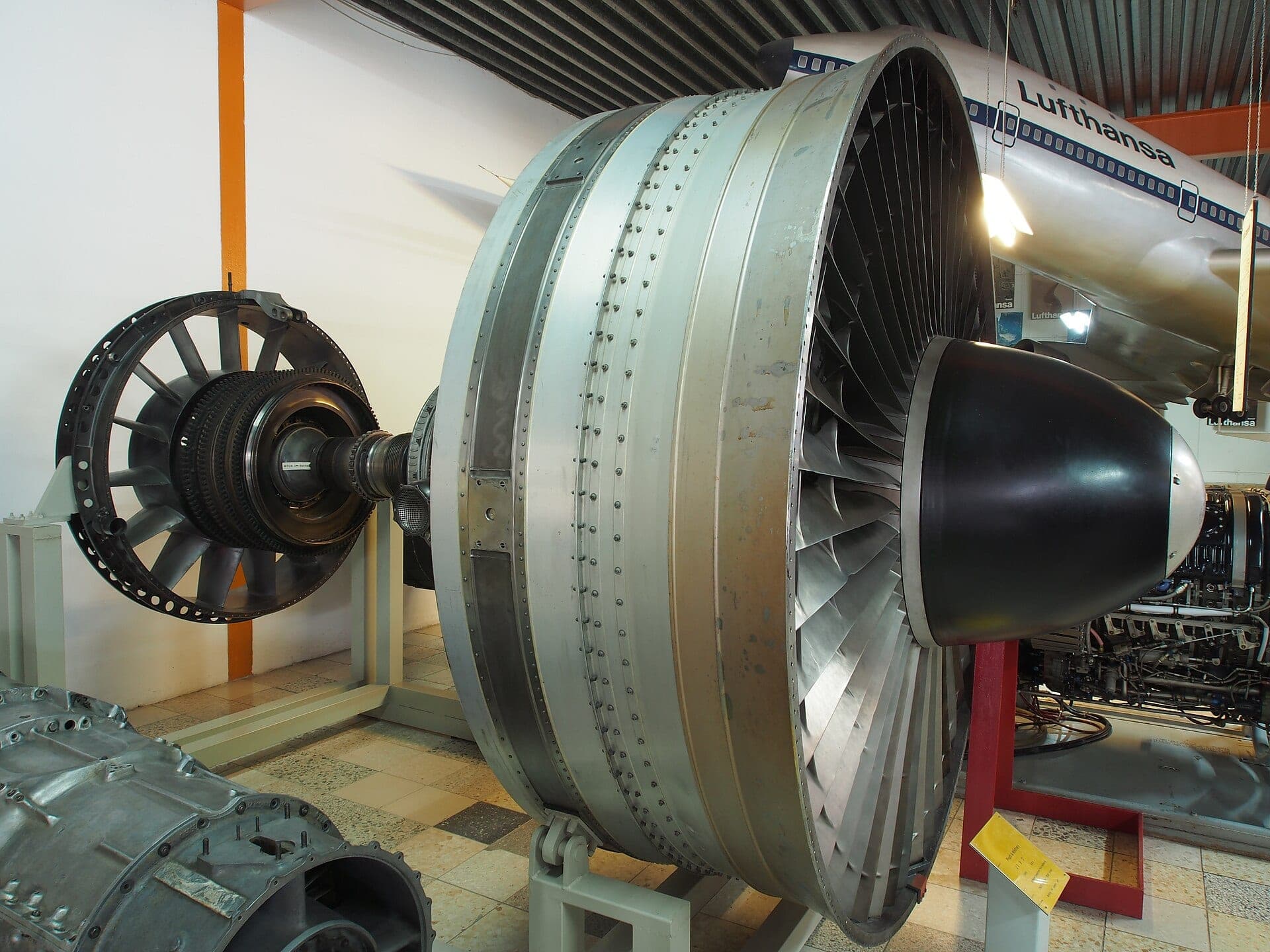
Pratt & Whitney puts the total at more than 3,200 JT9D engines delivered, a figure published on its product page and retrieved in September 2026. Production ceased in 1990, so the total no longer changes; the company quotes it as a lower bound rather than an exact count, and it is given here in the same form.
The number has to be read against the aircraft it served: large, long-range widebodies, each 747 carrying four engines. Over its career the JT9D was the workhorse for the early 747, 767, A300, A310 and DC-10 models.
The engines have also accumulated an enormous service record. By 2020 the JT9D fleet had flown more than 169 million hours. In 1968, at the start of that record, one engine cost about $800,000.
In service
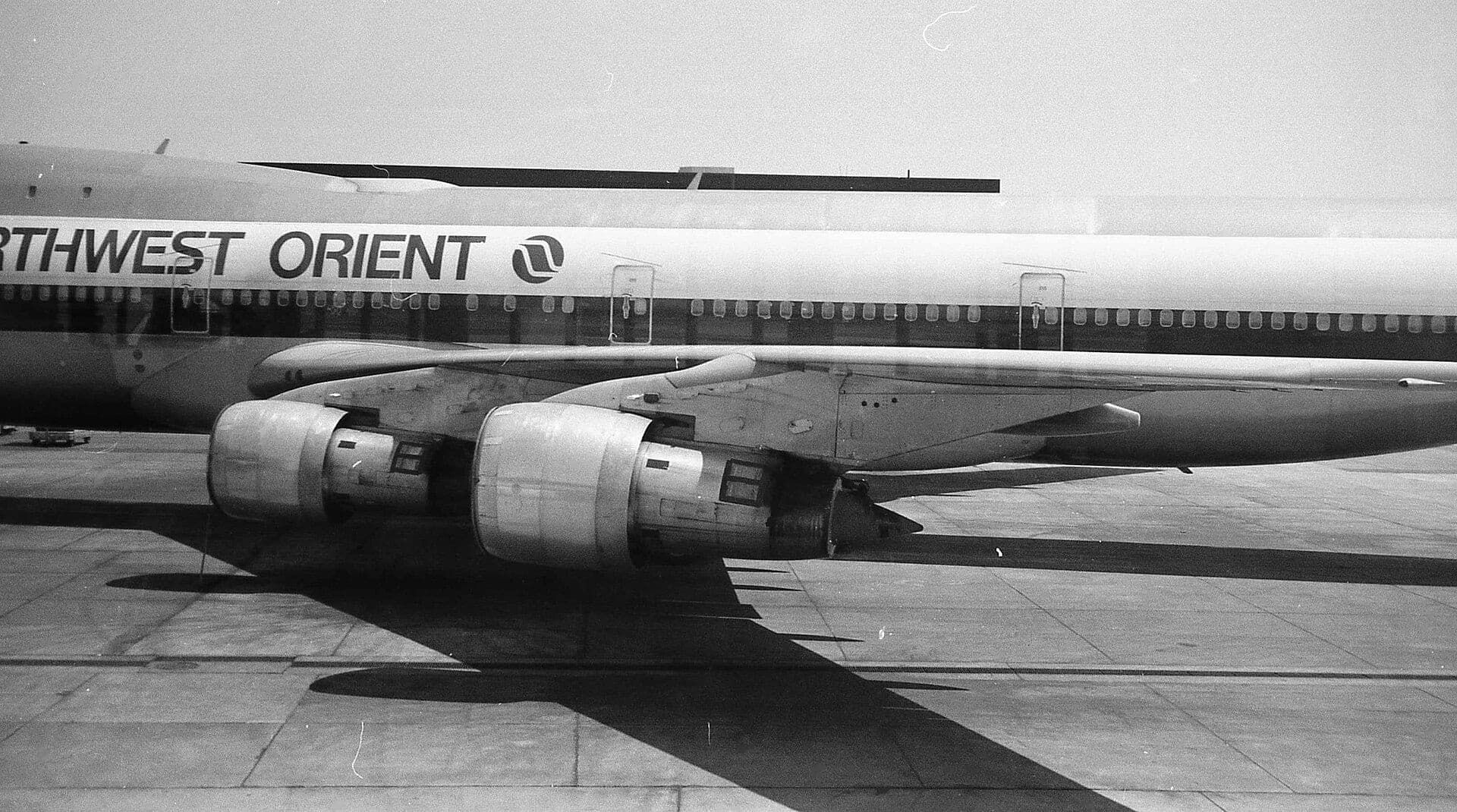
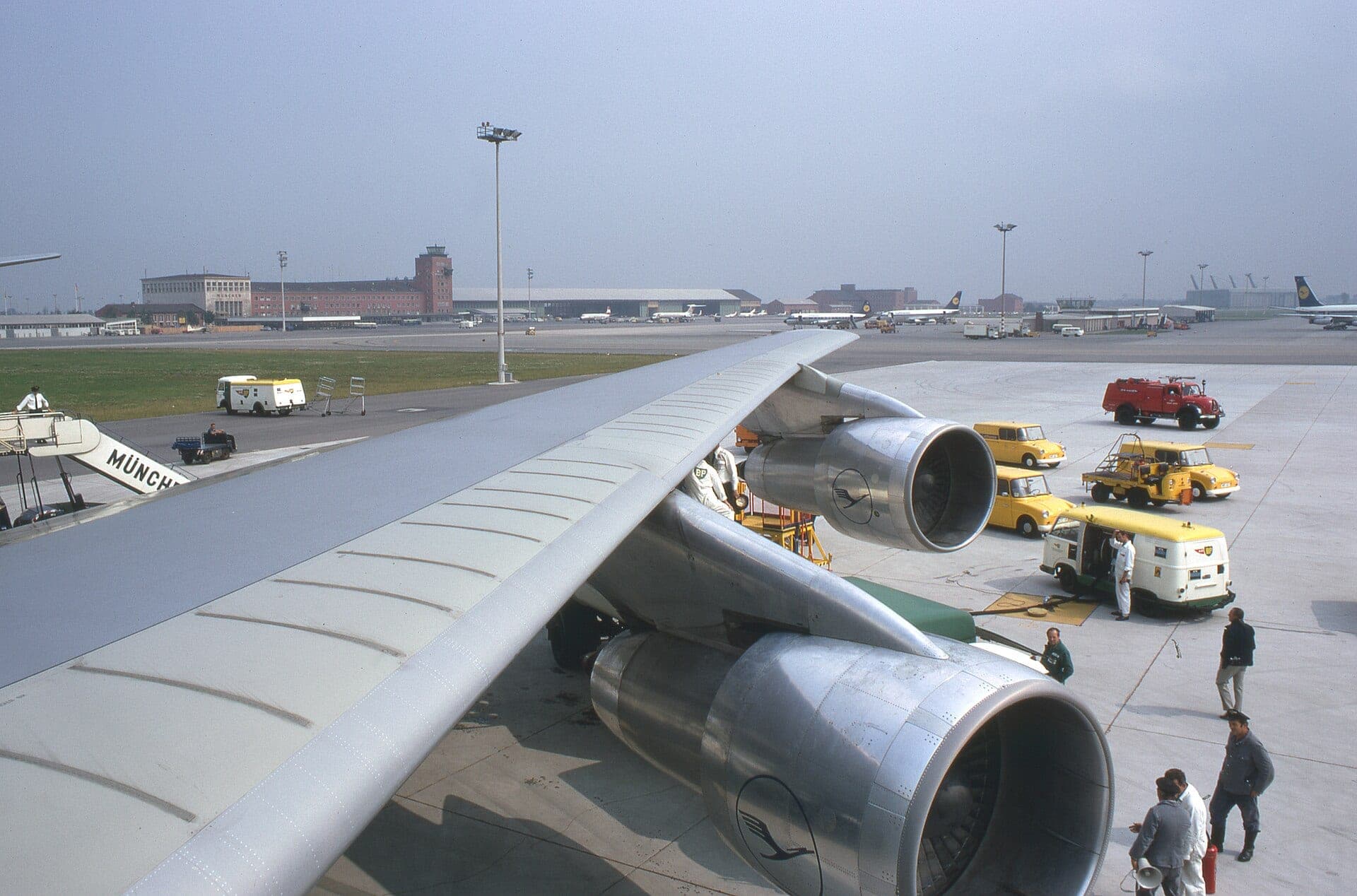
The JT9D entered airline service on 22 January 1970, on Pan Am's New York to London route, a week after First Lady Pat Nixon had christened the airline's first 747 at Dulles. Within months Pan Am faced JT9D-powered 747 competition on its international routes from other American carriers such as Trans World Airlines and Northwest, and from foreign airlines including Air France, Lufthansa and Japan Airlines.
For the first years of the programme there was no alternative. The 747 was initially powered only by the JT9D; General Electric's CF6 and Rolls-Royce's RB211 were offered on the original variants later, and the first RB211-powered 747 did not appear until November 1976. Every 747-100 of the launch years, and the 747SP that followed, flew on Pratt & Whitney engines, and the JT9D's early reputation, good and bad, was inseparable from the aircraft's.
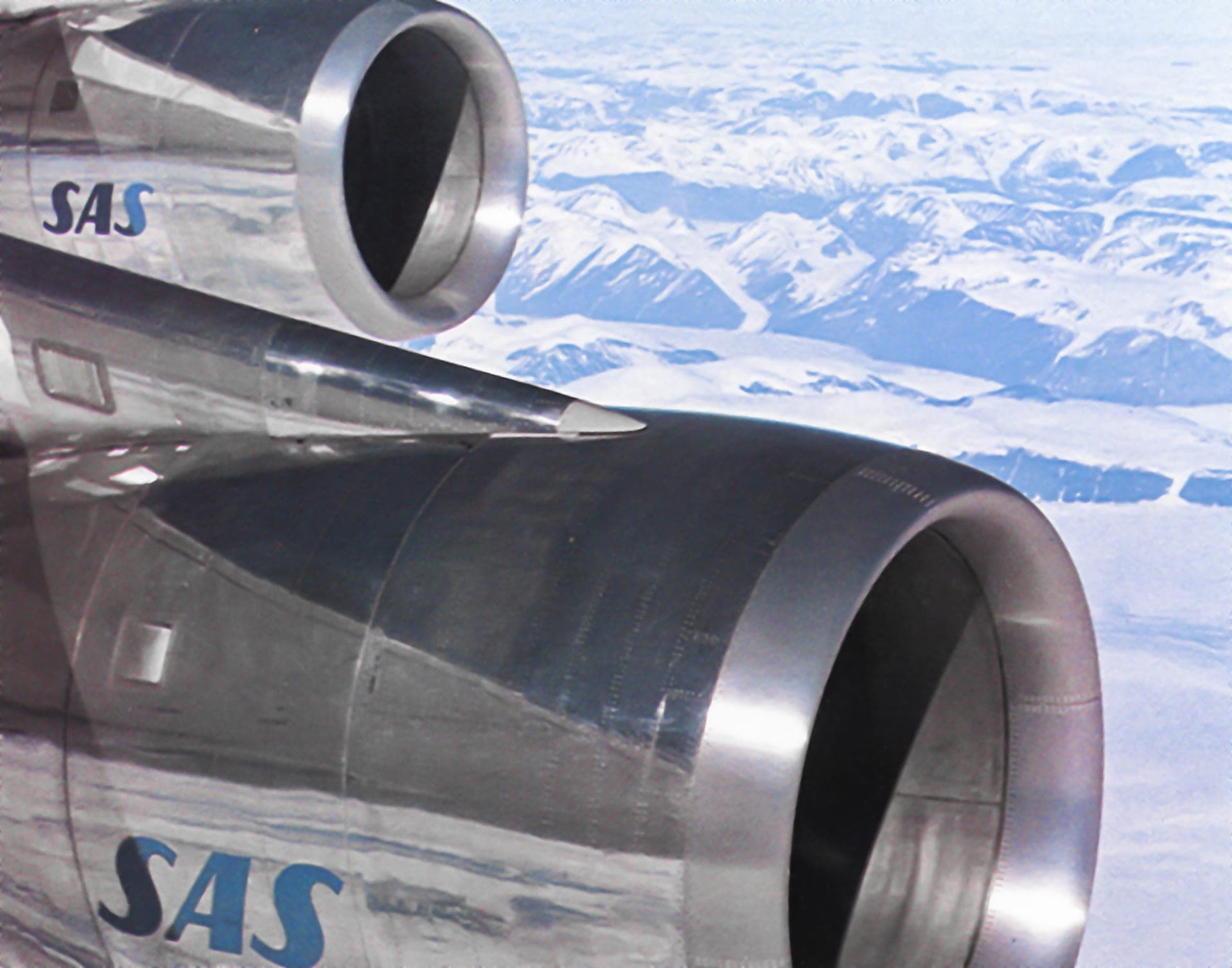
The engine grew with the aircraft. Boeing introduced the 747-200 in 1971 with uprated engines for a heavier maximum take-off weight, and the JT9D-7 series, certified from June 1971, supplied them. The -7A, -7F and -7J pushed the rating higher through the 1970s, and the -7J of 1976 reached 48,650 lbf. The shortened, longer-range 747SP, which appeared in 1976, used the same engine family.
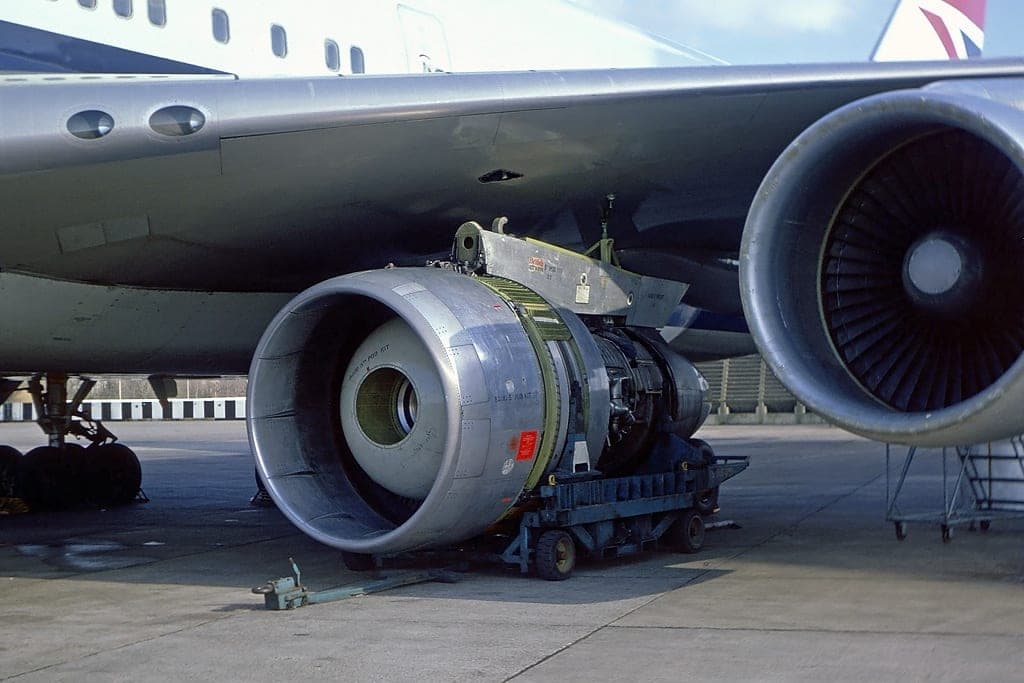
Operating an engine this large changed airline logistics. To transport spare engines, the 747 can carry a non-working engine as a fifth pod under its left wing, between the inner engine and the fuselage. The extra drag on one side had to be trimmed out by the crew, but it let airlines move spare engines around their networks on scheduled flights.
The JT9D also saw military service. The US Air Force's E-4 airborne command posts, derived from the 747, used the engine under the military designation F105. At the other end of its career, a JT9D-powered 747SP carried NASA and the German Aerospace Center's SOFIA airborne observatory, which made its first transatlantic flight in 2011, four decades after the engine's service debut.
Reliability and maintenance
Developed virtually in parallel with the 747, the JT9D inevitably suffered reliability problems before and after it entered service. Part of the trouble was the aircraft's growth. As the 747's weight rose, the engine was pushed from an initial 41,000 lbf rating to 43,500 lbf and then 45,000 lbf, and each step brought turbine temperature problems with it. Rapid throttle movements could make the engine stall.
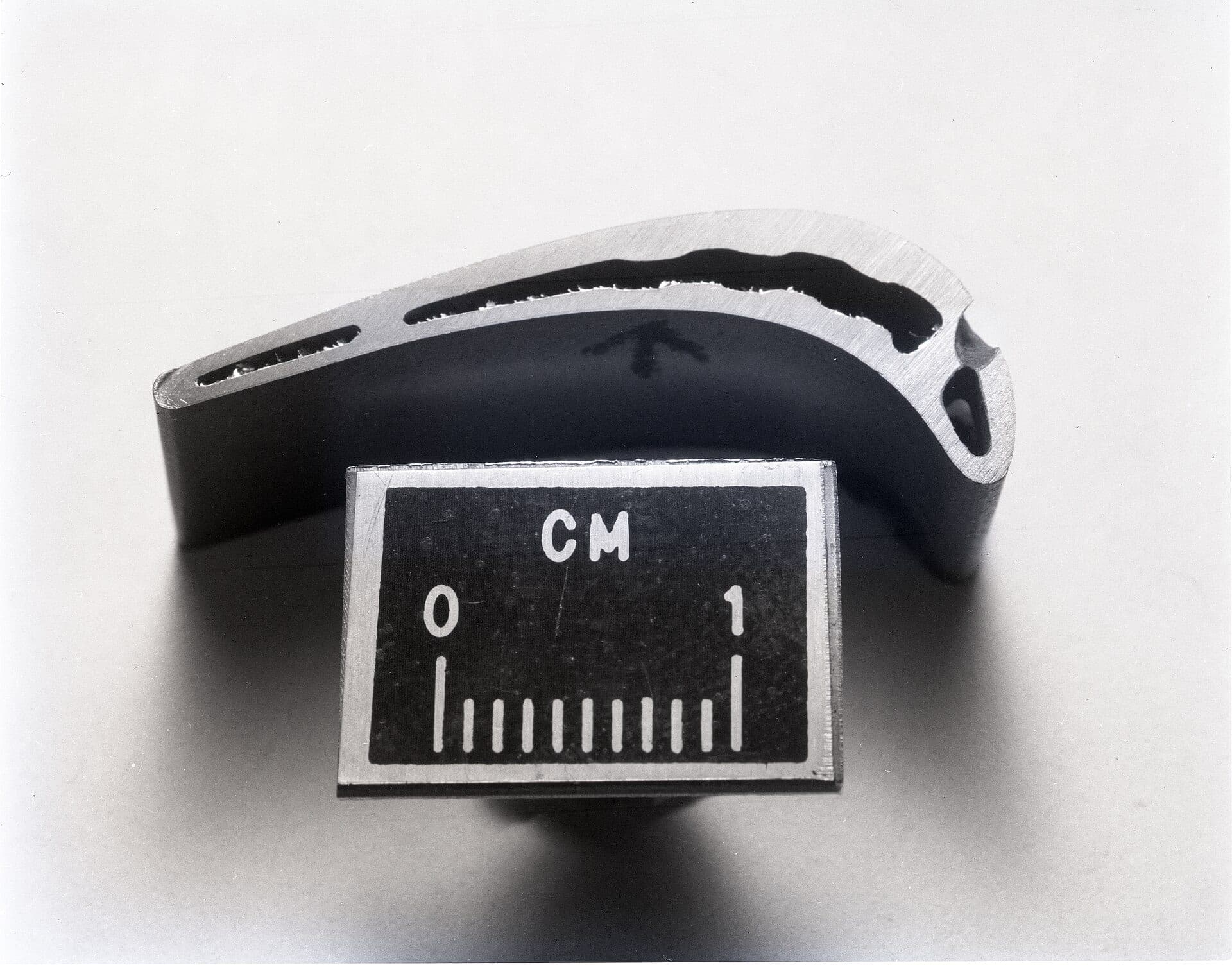
The most serious fault was ovalisation. Under the loads of take-off, the engine casing bent out of its circular shape, bowing into an oval. In a turbine whose blades run with very small clearances inside their casing, a casing that is no longer round means blade tips rubbing against it, and the high-pressure turbine blades wore away in short order. Turbine casings distorted after only a short period of service, and the damage showed up in performance and in engine removals.
The scale of the problem is clearest in the flight-test numbers. During the 747 test programme some 55 engines were changed; the JT8D-powered 737 programme had needed a single change. On the production line the effect was worse. Aircraft were coming out of Everett faster than usable engines could be supplied, and finished 747s stood outside the factory with concrete blocks hanging from their pylons to stand in for the engines' weight. Accounts differ on how many: the 747's history puts the stranded aircraft at up to 20, the engine's at about 30. Either way, 747 deliveries slipped by several months.
The fix was structural. Boeing and Pratt & Whitney worked on it together through 1969. Pratt & Whitney stiffened the attachments that held the engine to the strut, strengthened the casing and added yoke-shaped thrust links, inverted-Y fittings that kept the thrust load from pulling the casing out of round.
The troubles followed the aircraft into service. Pan Am's inaugural 747 flight from New York to London, planned for the evening of 21 January 1970, was delayed by engine overheating on the original aircraft, Clipper Young America; finding a substitute, Clipper Victor, pushed the departure back by more than six hours into the following day. The JT9D that emerged from those years was a reliable engine; the one that entered service had not yet become it.
Upgrades
The JT9D's development never really stopped after certification; its thrust climbed in steps for twenty years. The early 747 engine had been rated at around 39,000 lbf on the prototype's first flight and 43,500 lbf on the certified -3A. The -7 series added a few thousand pounds at a time through the 1970s, and the -7FW, certified in August 1982, reached 50,000 lbf with the original 15-stage compression system.
The larger step was the 16-stage family of the mid-1970s, which pushed the engine past 51,000 lbf, and above all the JT9D-7R4. The first -7R4 model was certified in November 1980, and the enhanced engine was introduced in September 1982. Its ratings run from 48,000 to 56,000 lbf according to the aircraft it was built for, and they are flat-rated to 30 °C: the engine holds its certified take-off thrust as the air warms up to that temperature, and only above it does thrust begin to fall away. For an airline flying from hot airports, that temperature matters as much as the headline number.
The -7R4 also brought the change that mattered most for the engine's later career. In June 1985 it was approved for 180-minute ETOPS, extended-range twin-engine operations, allowing twin-engined aircraft to fly routes up to three hours from the nearest suitable diversion airport. An engine designed for a four-engined aircraft thus became one of the engines that made long-range twinjet flying possible on the 767 and the A310.
Support has outlived production. Pratt & Whitney has continued to invest in and support the JT9D, offering Reduced Cost of Ownership kits intended to improve durability, increase thrust and reduce noise on engines already in service.
Applications
 JT9D-59A
The 747 made the JT9D, but the engine did not stay a one-aircraft design. Its first application beyond Boeing was the McDonnell Douglas DC-10. The 15-stage JT9D-20, certified in October 1972 at 44,500 lbf, powered the DC-10-40, and the 16-stage JT9D-59A of December 1974, at 51,720 lbf, followed on the same aircraft. Japan Airlines and Northwest were among the airlines that flew the Pratt & Whitney-powered DC-10.
The -59A also took the engine to Europe. The same model was certified for the Airbus A300, and its 747 counterpart, the -70A, was certified alongside it at 51,140 lbf. The next 747 engine, the JT9D-7Q, followed in October 1978 at 51,900 lbf, and the -7Q3 a year later; Pratt & Whitney quotes the -7Q series at 53,000 lbf.
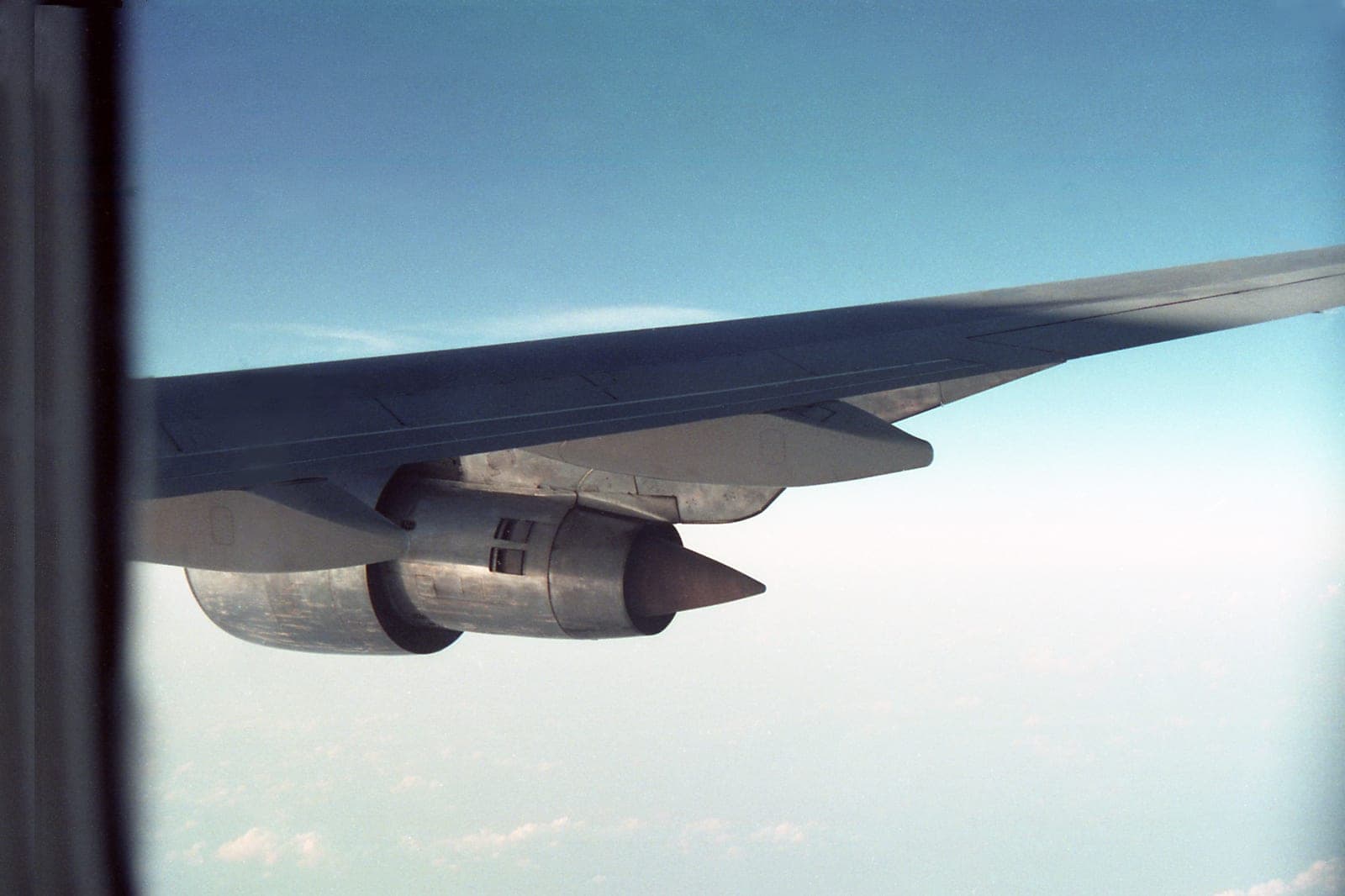
The widest spread came with the -7R4. In its various sub-models it powered the Boeing 767 (-7R4D, -7R4E and -7R4E4), the Airbus A310 (-7R4D1 and -7R4E1), the Airbus A300-600 (-7R4H1, the most powerful JT9D at 56,000 lbf) and the 747 (-7R4G2, 54,750 lbf). A JT9D-7R4E4 for the 767 was certified as late as March 1985.
The engine even left aviation. In 1973 the US Navy's Naval Sea Systems Command selected the JT9D-70 as the basis of a high-efficiency marine gas turbine in the 30,000 to 50,000 hp class, installing its compressor in the existing FT4 marine turbine to create the FT9. It was recommended for provisional acceptance in June 1980 and selected for a 3,000-ton surface-effect ship.
Preservation
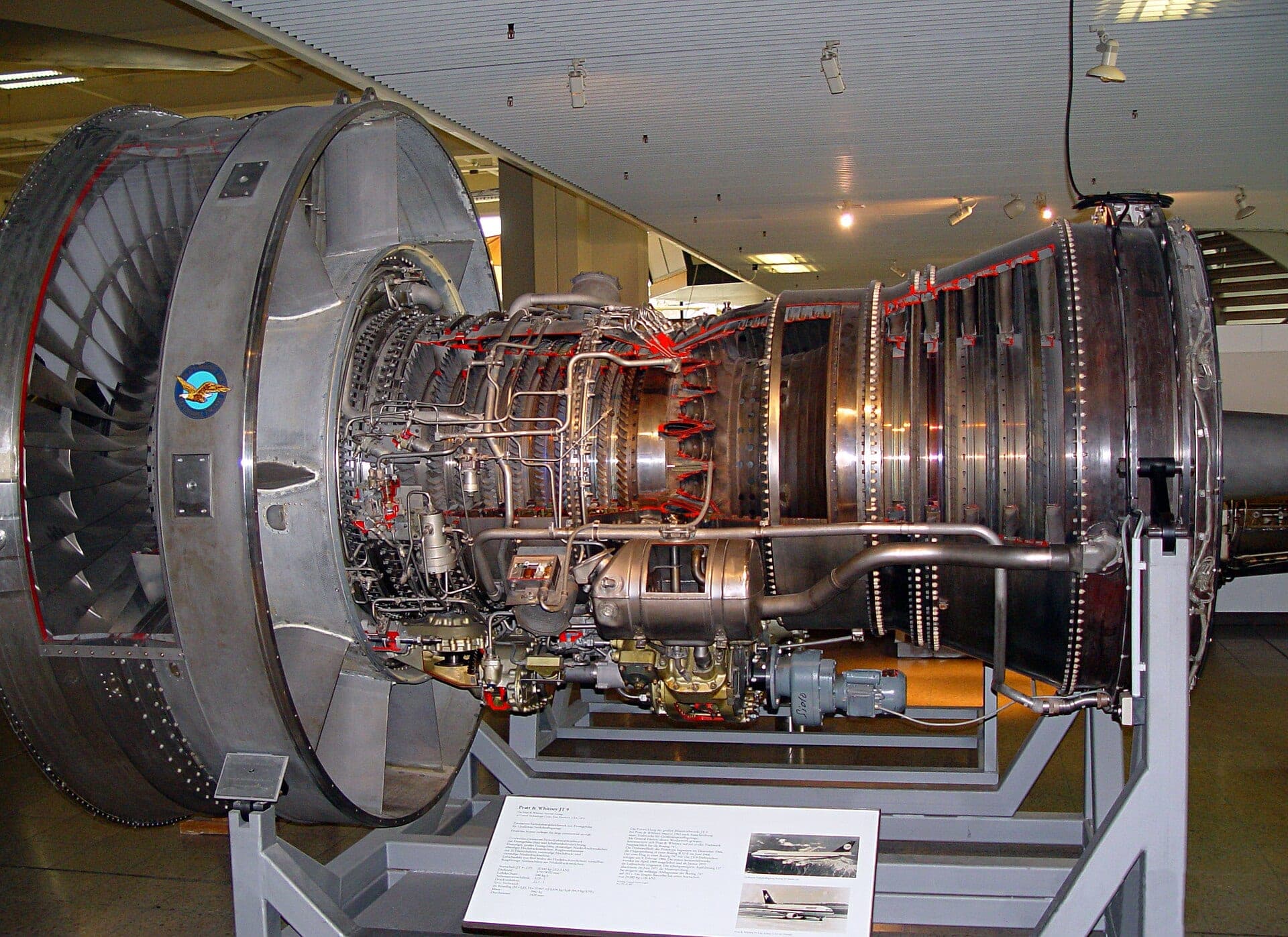
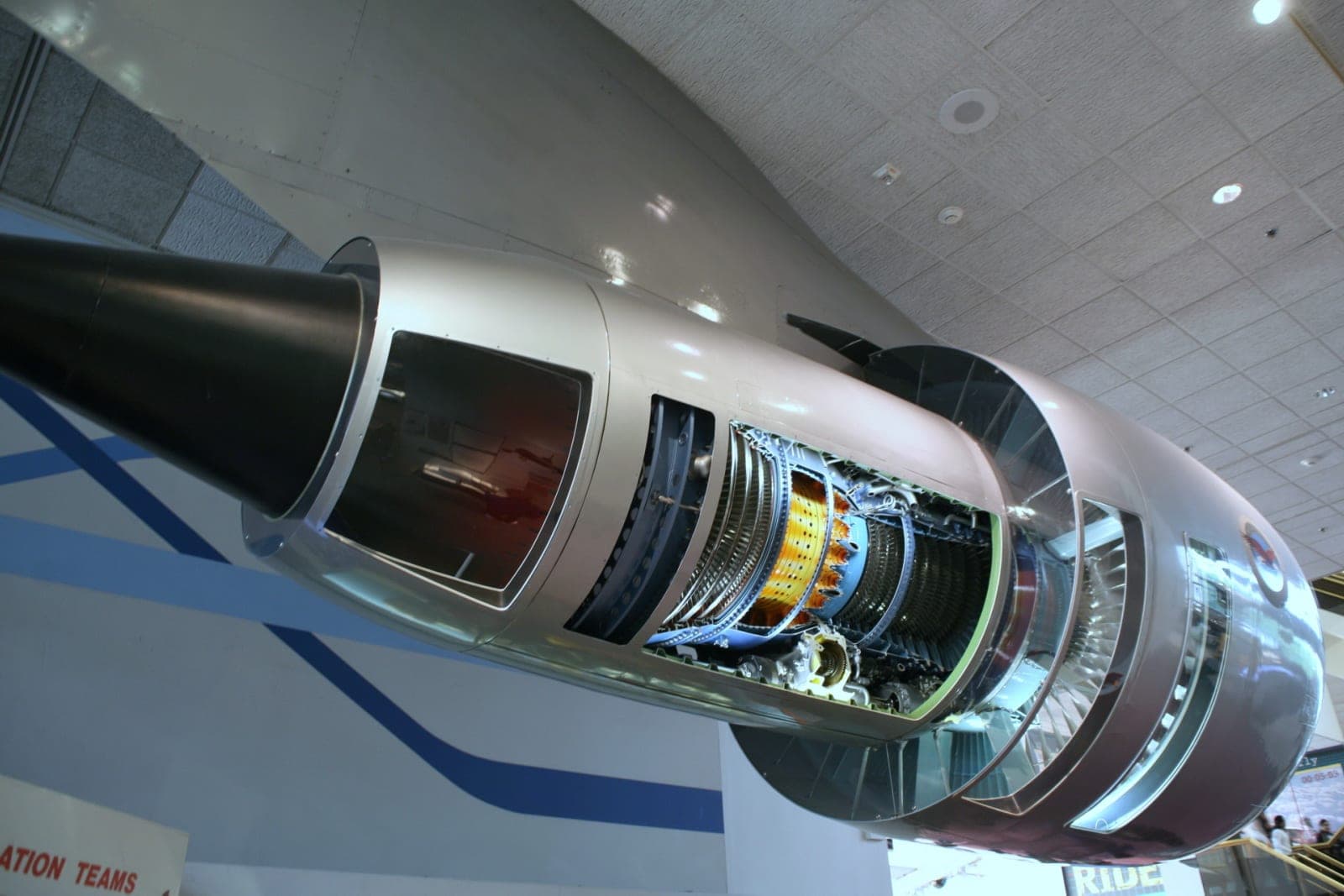
Because it powered the first 747s, the JT9D is well represented in museums, and several examples show the engine in ways no airline ever did. The Deutsches Museum in Munich displays a sectioned JT9D-7 that was previously installed on a Lufthansa Boeing 747-200. Its cutaway exposes the fan, the compressors, the annular combustion chamber and the turbines, and it can be walked around and seen from the rear as well as the side.
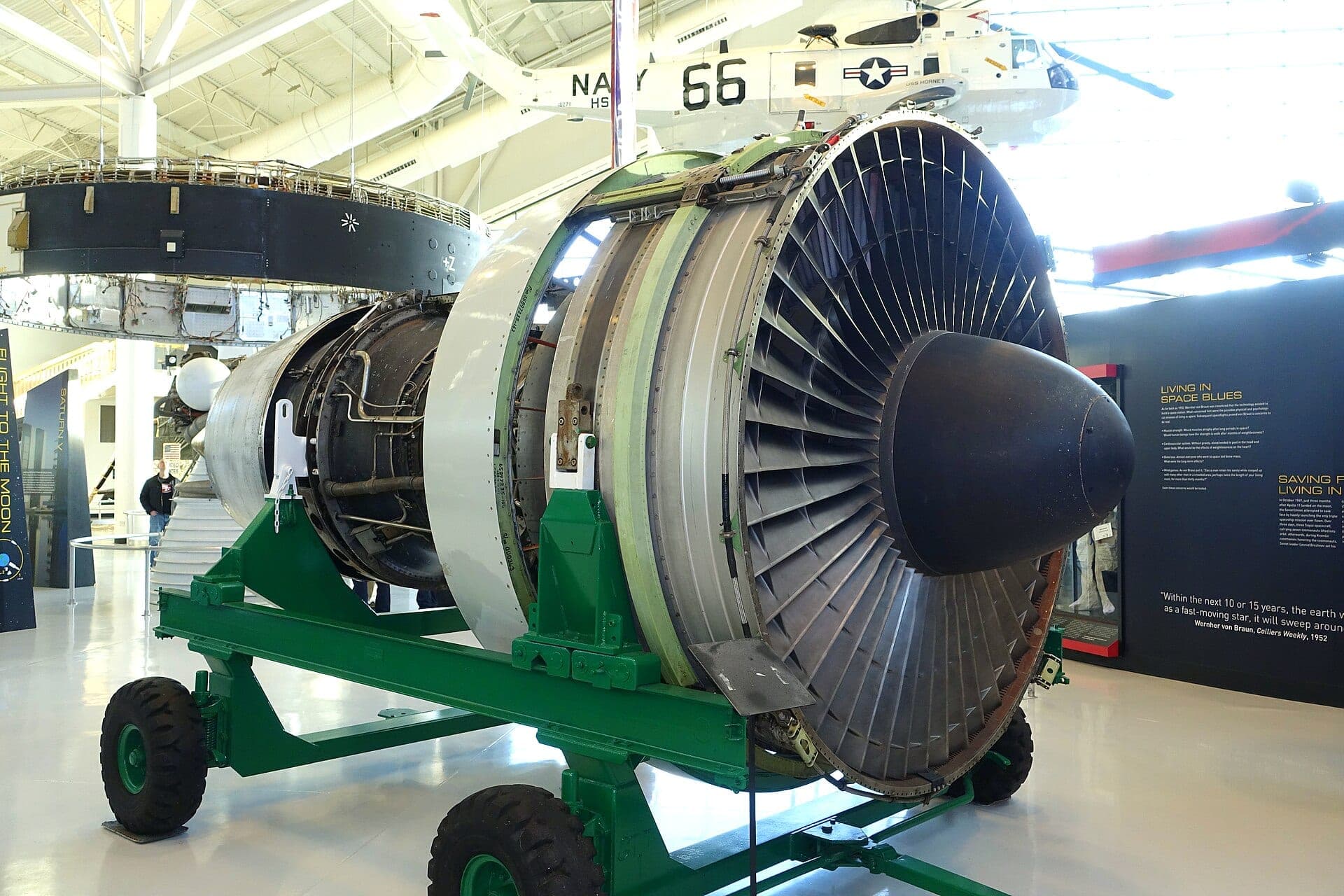
In the United States, the Smithsonian's National Air and Space Museum holds a sectioned JT9D in its nacelle. It is a pre-production engine built for ground testing rather than flight, though outwardly identical to production examples. The Evergreen Aviation & Space Museum in McMinnville, Oregon, shows a complete JT9D on a transport stand.
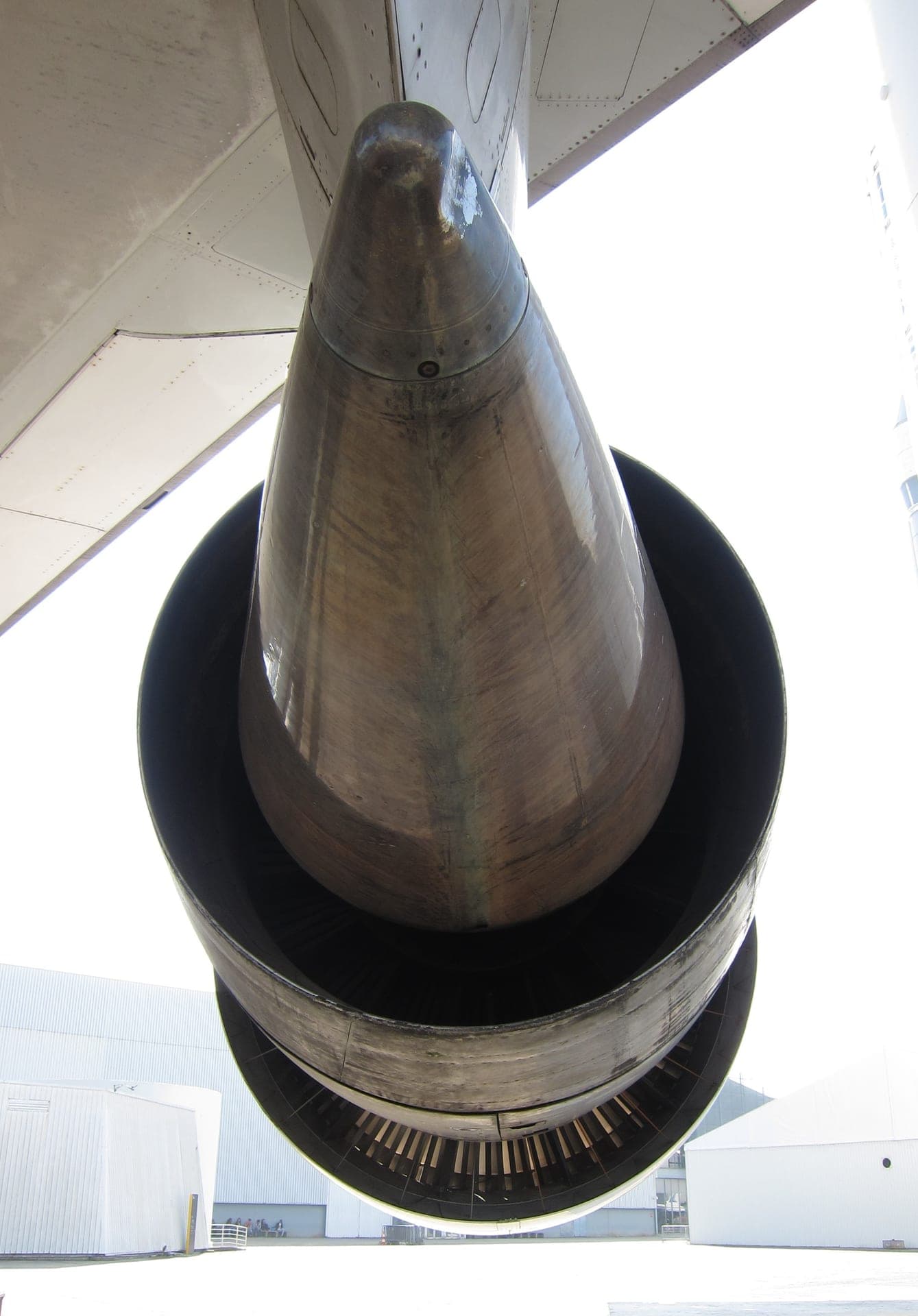
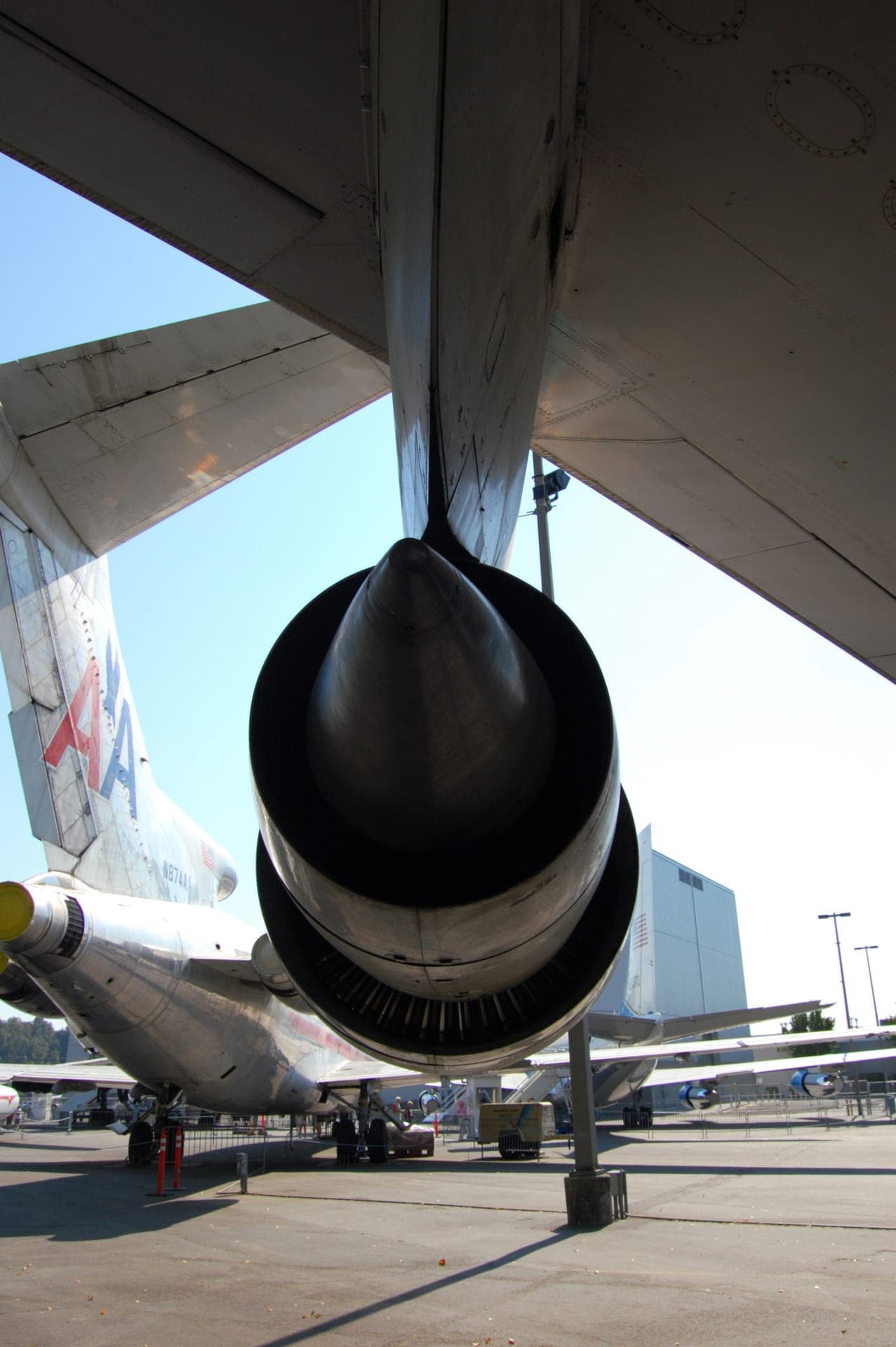
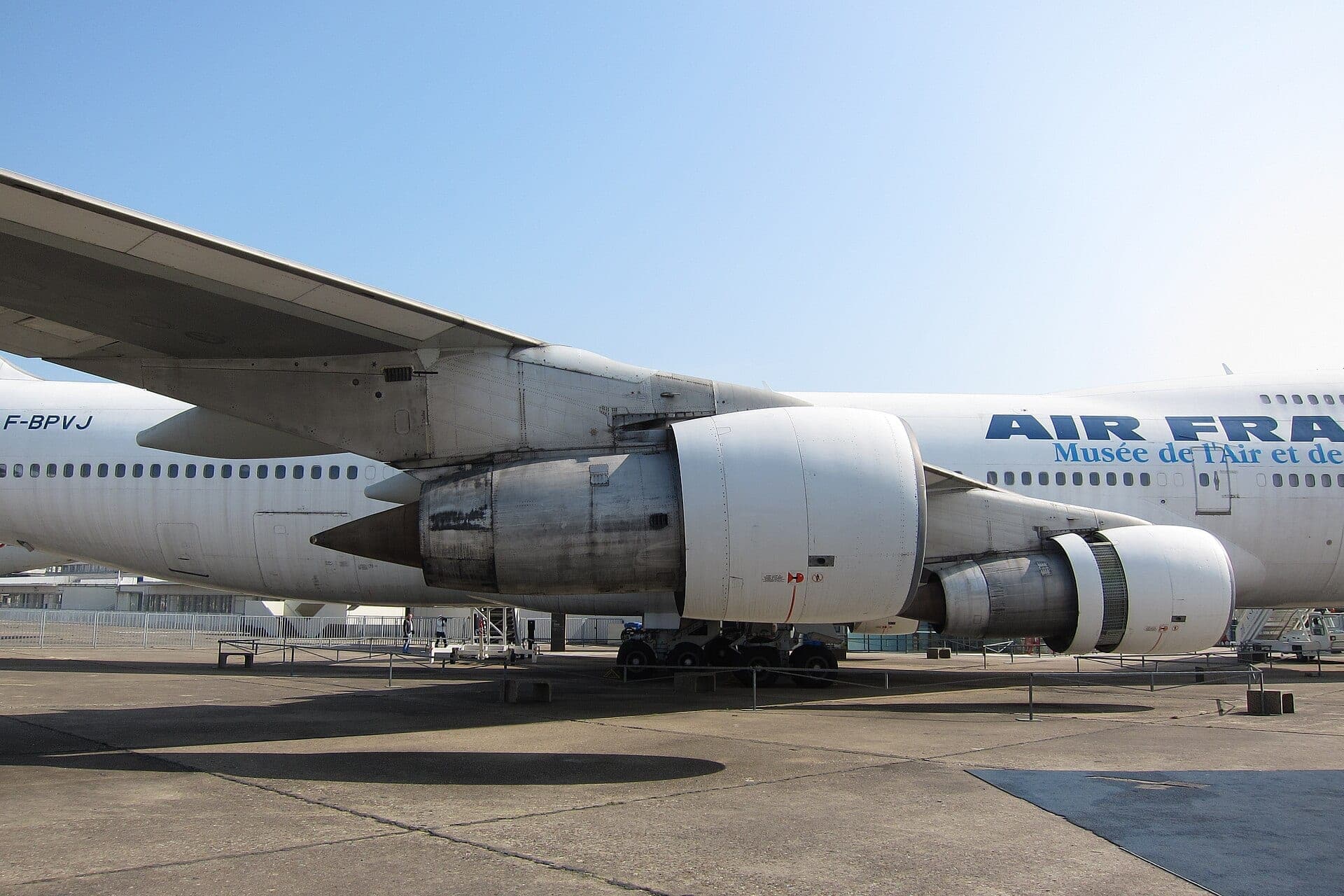
Some engines remain on the aircraft they first flew with. The first 747, N7470 City of Everett, is preserved at the Museum of Flight in Seattle with its JT9Ds in place, one of them stripped of its cowlings to show the engine's core. At Le Bourget, the Musée de l'Air et de l'Espace keeps an Air France Boeing 747-100 with its four JT9Ds, one with its thrust reversers deployed. In Germany, the Hermeskeil aircraft collection shows a bare JT9D from a 747, and in Spain the MUNCYT science museum in A Coruña displays a JT9D from the Boeing 747 Lope de Vega.
Legacy
The JT9D's successor was the PW4000, which Pratt & Whitney produced as the next generation of its widebody engine. The first version, with a 94-inch fan and 52,000 to 62,000 lbf of thrust, made its first run in April 1984, was certified by the FAA in July 1986 and entered service in June 1987. It went onto the same aircraft the JT9D had served, the Airbus A300-600 and A310-300 and the Boeing 767, as well as the new 747-400, whose engine options were the improved RB211 and CF6 or the PW4000.
The PW4000 then grew far beyond its predecessor, into a 100-inch-fan version for the Airbus A330 and a 112-inch-fan version for the Boeing 777. Its thrust range eventually spans 50,000 to more than 99,000 lbf, and it is the ancestor of the Engine Alliance GP7000 of the Airbus A380. The PW2000 of the Boeing 757 is also part of the same line.
The JT9D's deeper legacy is the idea it proved in airline service. The first wide-body airliner flew on high-bypass turbofans, and every wide-body since has done the same. Its troubles were the price of going first: an engine and an aircraft of unprecedented size developed side by side, on a schedule that left no room for either to mature before the other needed it.
Output by altitude
A piston engine has no single power figure. Each rating below is what the sources publish for one mark under one set of conditions, at the altitude it was measured at.
| Mark and conditions | Altitude | Output |
|---|---|---|
| JT9D-3ATake-off, sea-level static | Sea level | 193.5kN |
| JT9D-20Take-off, sea-level static | Sea level | 197.9kN |
| JT9D-7Take-off, sea-level static | Sea level | 202.4kN |
| JT9D-7ATake-off, sea-level static | Sea level | 205.3kN |
| JT9D-7FTake-off, sea-level static | Sea level | 208kN |
| JT9D-7JTake-off, sea-level static | Sea level | 216.4kN |
| JT9D-7FWTake-off, sea-level static | Sea level | 222.4kN |
| JT9D-70ATake-off, sea-level static | Sea level | 227.5kN |
| JT9D-59ATake-off, sea-level static | Sea level | 230.1kN |
| JT9D-7QTake-off, sea-level static | Sea level | 230.9kN |
| JT9D-7R4DTake-off, sea-level static · flat-rated to 30 °C | Sea level | 213.5kN |
| JT9D-7R4ETake-off, sea-level static · flat-rated to 30 °C | Sea level | 222.4kN |
| JT9D-7R4G2Take-off, sea-level static · flat-rated to 30 °C | Sea level | 243.5kN |
| JT9D-7R4H1Take-off, sea-level static · flat-rated to 30 °C | Sea level | 249.1kN |
Mark evolution
At the 747 rollout on 30 September 1968, SAS chief hostess Wiveca Ankarcrona stands inside a JT9D nacelle to show the size of the fan JT9D-3A
1970193.5 kNThe first certified production standard, which carried the Boeing 747-100 into service with Pan Am in January 1970.
A 15-stage compression system (fan, three-stage low-pressure and eleven-stage high-pressure compressors); 43,500 lbf.
Its first years were marked by casing ovalisation, turbine-blade rub and engine changes on a scale Boeing had never seen.
The JT9Ds of Northwest Orient Boeing 747-151 N603US at Seattle to Tacoma in August 1972 JT9D-7
1971202.4 kNThe uprated series that followed from 1971 for the heavier 747-200 and its derivatives, with the -7A, -7F and -7J progressively adding thrust.
Same stage count as the -3; 45,500 lbf on the -7, rising through 46,150 (-7A), 46,750 (-7F) and 48,650 lbf (-7J) to 50,000 lbf on the -7FW.
JT9D-20
1972197.9 kNA 15-stage version certified in October 1972 for the McDonnell Douglas DC-10.
44,500 lbf; later the -20J at 48,050 lbf, certified in 1986.
- JT9D-59A
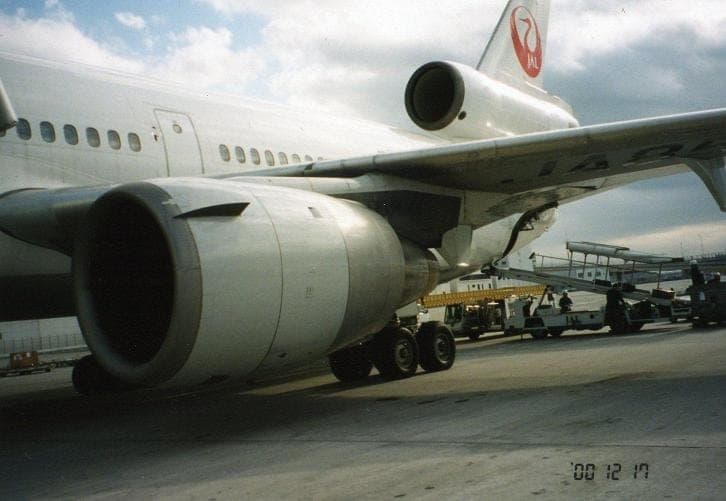
JT9D-59A engines on a Japan Airlines McDonnell Douglas DC-10-40 at Narita in 2000 JT9D-59A / -70A
1974230.1 kNThe 16-stage family certified in December 1974: the -59A for the DC-10-40 and Airbus A300, the -70A for the 747.
An added compressor stage, for 16 stages in all; 51,720 lbf (-59A) and 51,140 lbf (-70A).
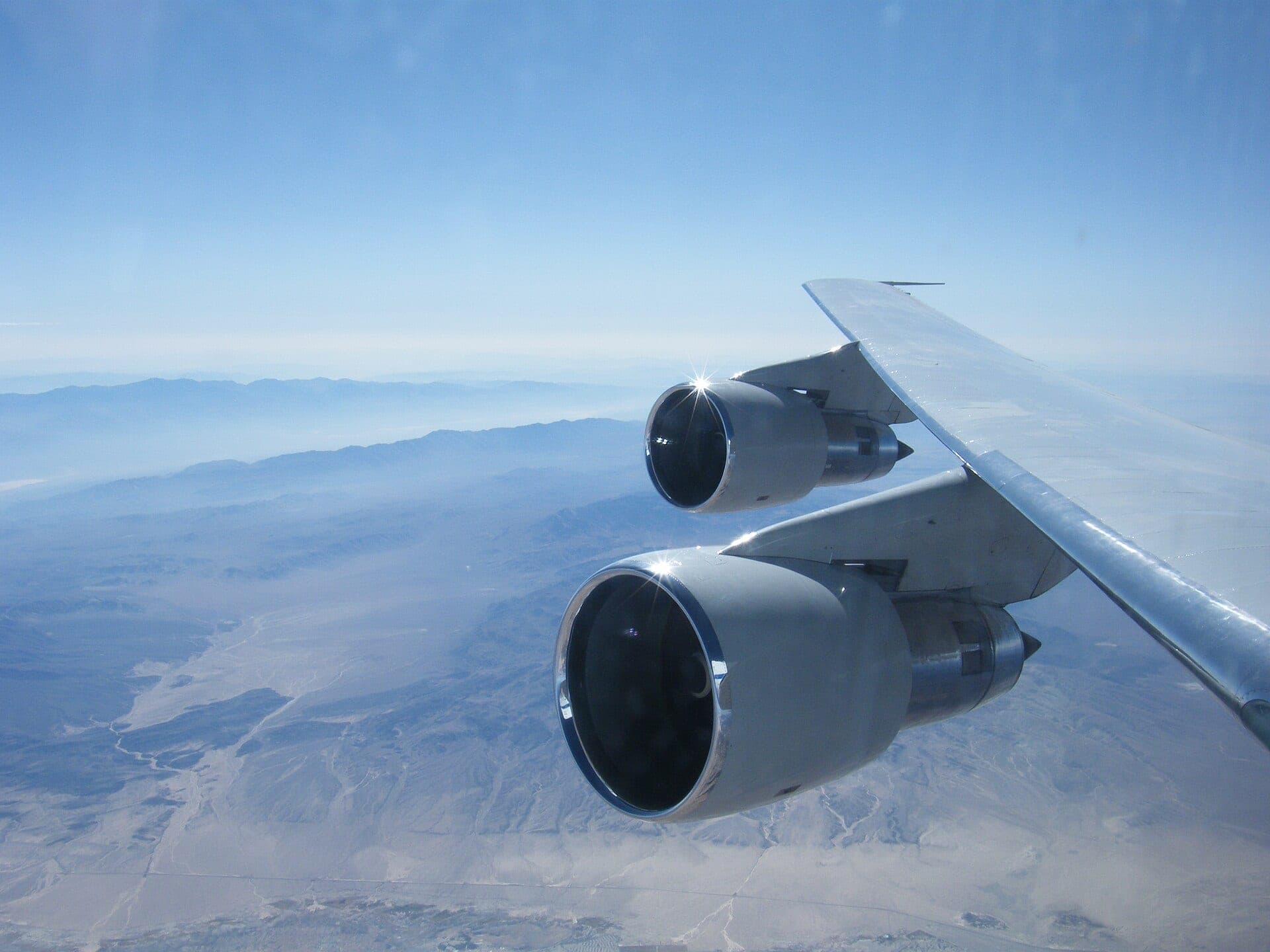
The wing and engine of a Singapore Airlines Boeing 747-212B seen from a cabin window in 1989 JT9D-7Q
1978230.9 kNThe 16-stage 747 engine certified in October 1978, followed by the -7Q3 a year later.
51,900 lbf; Pratt & Whitney quotes the -7Q series at 53,000 lbf.
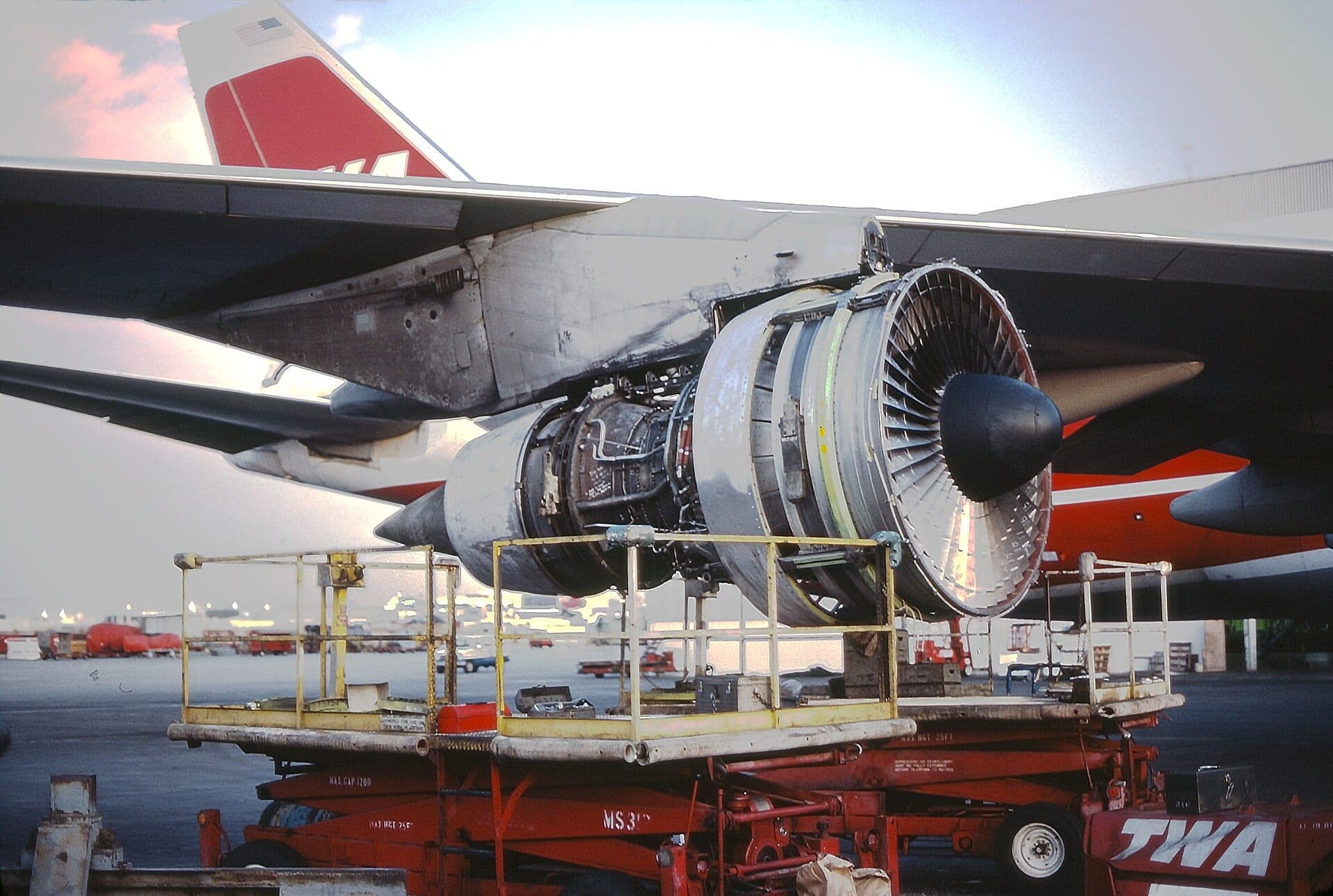
A TWA Boeing 747-131 at Los Angeles in August 1982 with its number 4 JT9D uncowled for maintenance JT9D-7R4
1980249.1 kNThe final series, certified from November 1980 and introduced in September 1982, which took the JT9D onto the twin-engined Boeing 767, Airbus A310 and A300-600 as well as later 747s.
48,000 to 56,000 lbf across the -7R4D, -7R4E, -7R4G2 and -7R4H1, flat-rated to 30 °C; approved for 180-minute ETOPS in June 1985.
- JT9D Engine, Pratt & Whitney
- From the Archives: A Timeline of the 747, Aviation Week
- Pratt & Whitney JT9D, Wikipedia
- Boeing 747, Wikipedia
- Pratt & Whitney PW4000, Wikipedia
Checked September 12, 2026