History
Alcock and Brown's Transatlantic Flight
June 14, 1919 – June 15, 1919
Lester's Field, St John'sNewfoundland (British dominion; now Canada)
Derrygimlagh bog, near Clifden, County GalwayIreland (then part of the United Kingdom)
16hours
In the air
1,640nm
Coast to coast
2
Crew
The flight
- Dates
- 14 to 15 June 1919
- Take-off
- 16:13 GMT
- Landing
- 08:40 GMT
- Time in the air
- 15 h 57 min
- Distance
- ≈ 1,640 nm
- Crew
- Alcock (pilot), Brown (navigator)
The machine
- Type
- Vickers Vimy
- Engines
- 2 × Rolls-Royce Eagle VIII, 360 hp
- Modifications
- Extra fuel tanks
- Navigation
- Sextant, dead reckoning
- Where it is now
- Science Museum, London
The prize
- Offered by
- Daily Mail, 1913
- Amount
- £10,000
- Condition
- Under 72 hours
- Presented
- 20 June 1919, by Churchill
- Honours
- Both knighted
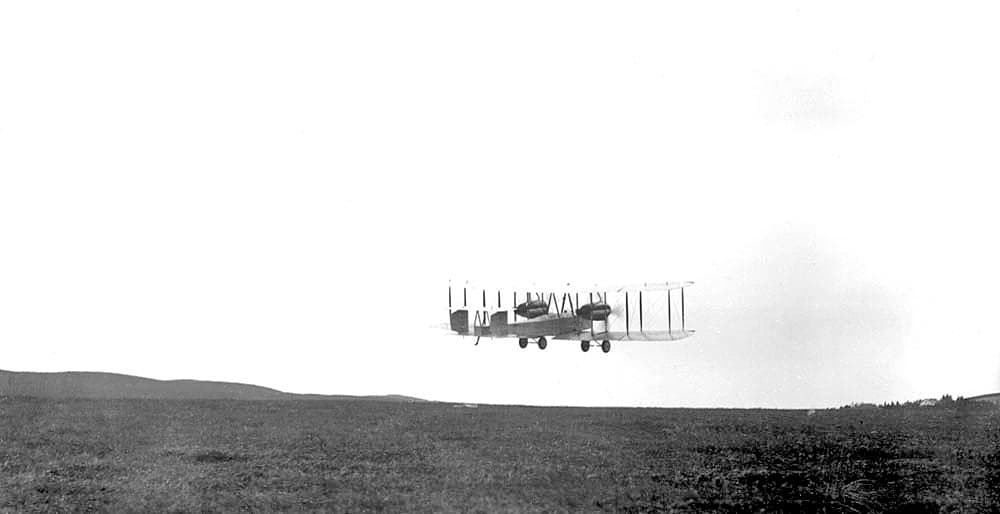
John Alcock and Arthur Whitten Brown flew a modified Vickers Vimy bomber without a stop from St John's, Newfoundland, to a bog outside Clifden in the west of Ireland in about sixteen hours, making the first nonstop aeroplane crossing of the Atlantic and winning the Daily Mail's £10,000 prize. Both men were knighted; Alcock was killed in a crash six months later.
On the afternoon of 14 June 1919 a converted Vickers Vimy bomber lurched up a sloping meadow on the edge of St John's, Newfoundland, cleared the trees at the end of it by very little, and turned east over the sea. In the open cockpit sat two former prisoners of war: John Alcock, a twenty-six-year-old pilot from Manchester, and Arthur Whitten Brown, a thirty-two-year-old engineer turned navigator. The next morning, a little before nine o'clock by Greenwich time, the same aircraft came down in what looked from the air like a green field beside the Marconi wireless station near Clifden, in Connemara, and tipped onto its nose in the soft peat of Derrygimlagh bog. Neither man was hurt. They had crossed the Atlantic without stopping.
The flight lasted about sixteen hours, most of it out of sight of the sea and the sky. The little wind-driven generator that powered the wireless broke away early in the evening, an exhaust pipe split and roared beside the pilot for the rest of the night, and fog, cloud, rain, hail and snow took turns to deny Brown the sun and stars he needed to navigate. In a cloud before dawn the Vimy stalled and spun, and Alcock recovered it only when it fell out of the bottom of the cloud a few dozen feet above the waves, heading back towards America.
The crossing won the London Daily Mail's £10,000 prize, first offered in 1913 for a flight between North America and the British Isles in under seventy-two hours, and brought both men knighthoods within a fortnight. It was not the first aerial crossing of the Atlantic: three weeks earlier the United States Navy flying boat NC-4 had reached Lisbon from Newfoundland in stages, by way of the Azores. Nor was it the last word that summer: in July the British airship R34 crossed from Scotland to New York and back. What Alcock and Brown did first was to fly the ocean in one leap, in an aeroplane, from one side to the other.
It was a short-lived triumph for one of them. Alcock was killed in December 1919 flying a new Vickers amphibian to the Paris aero show. The Vimy itself was rebuilt by Vickers and presented to the nation, and it still hangs in the Science Museum in London, the aircraft that proved an ocean could be crossed nonstop eight years before Charles Lindbergh flew from New York to Paris.
Background
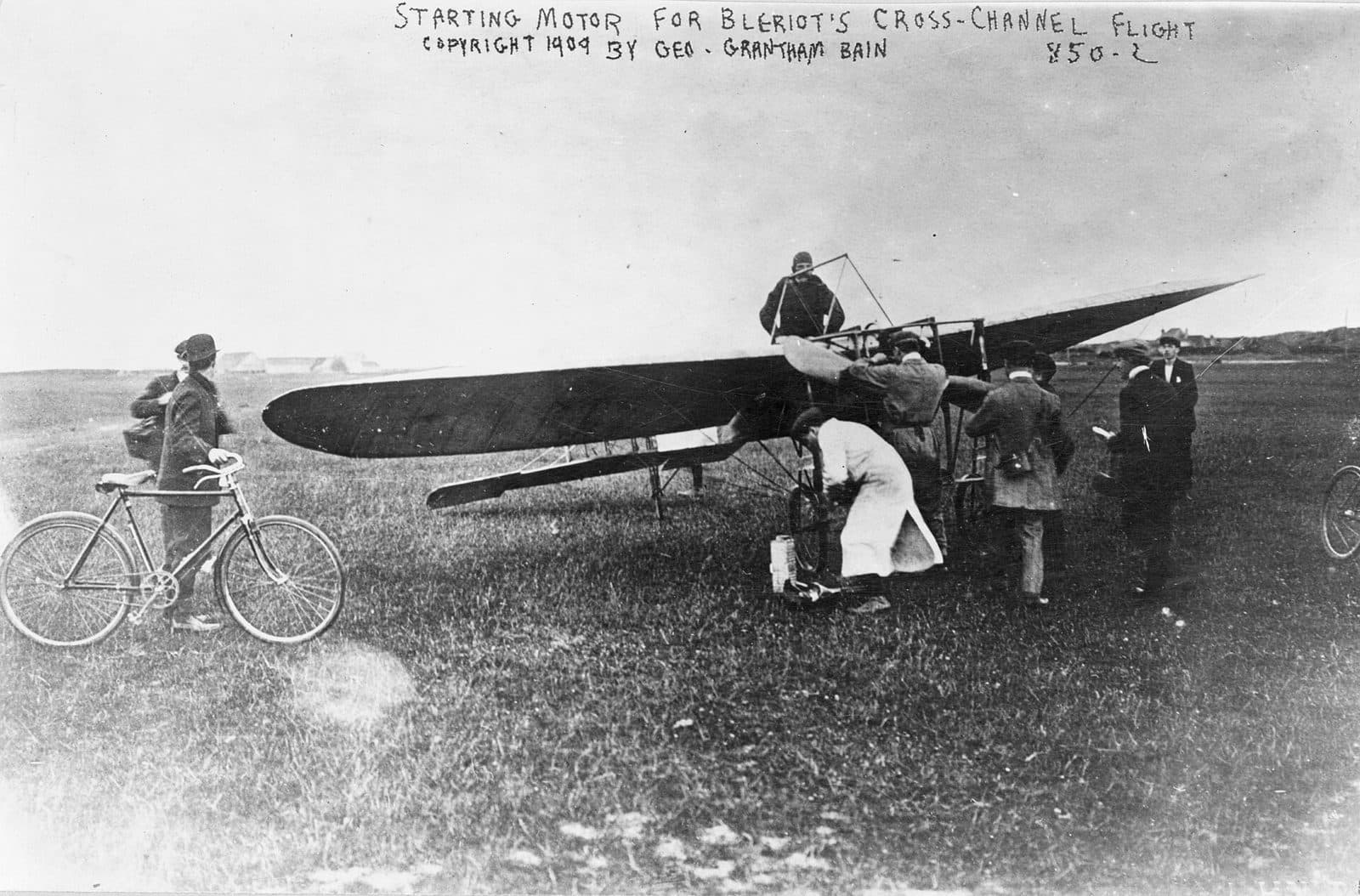
In April 1913 the Daily Mail, whose owner Lord Northcliffe had already paid for Louis Blériot's crossing of the Channel in 1909, offered £10,000 to the aviator who should first cross the Atlantic in an aeroplane, in flight from any point in the United States, Canada or Newfoundland to any point in Great Britain or Ireland, within seventy-two continuous hours. It was an enormous sum and, at the time, an absurd challenge. No aeroplane in 1913 could carry enough fuel to cover the roughly 1,700 nm between Newfoundland and Ireland, and no engine could be trusted to run for a whole day.
The prize nonetheless drew one serious pre-war project. The American department-store heir Rodman Wanamaker ordered Curtiss flying boats, to be flown by the British naval officer John Cyril Porte, but war broke out in Europe in August 1914 before the aircraft called America could make an attempt. The competition was suspended. Four years of war then did for the aeroplane what peace had not: it produced large, reliable multi-engined bombers, engines such as the Rolls-Royce Eagle that could run for many hours, and a generation of airmen practised in flying by night and navigating over sea.
After the Armistice of November 1918 the Daily Mail reopened the competition. The rules were plain. The crossing could be made in either direction, and stops were not forbidden, but it had to be completed within seventy-two consecutive hours and only one aircraft could be used for each attempt, which ruled out changing to a fresh machine in the Azores or Iceland. In practice the geography decided the route. Newfoundland was the nearest point of North America to Ireland, and the prevailing westerly winds favoured a flight from west to east.
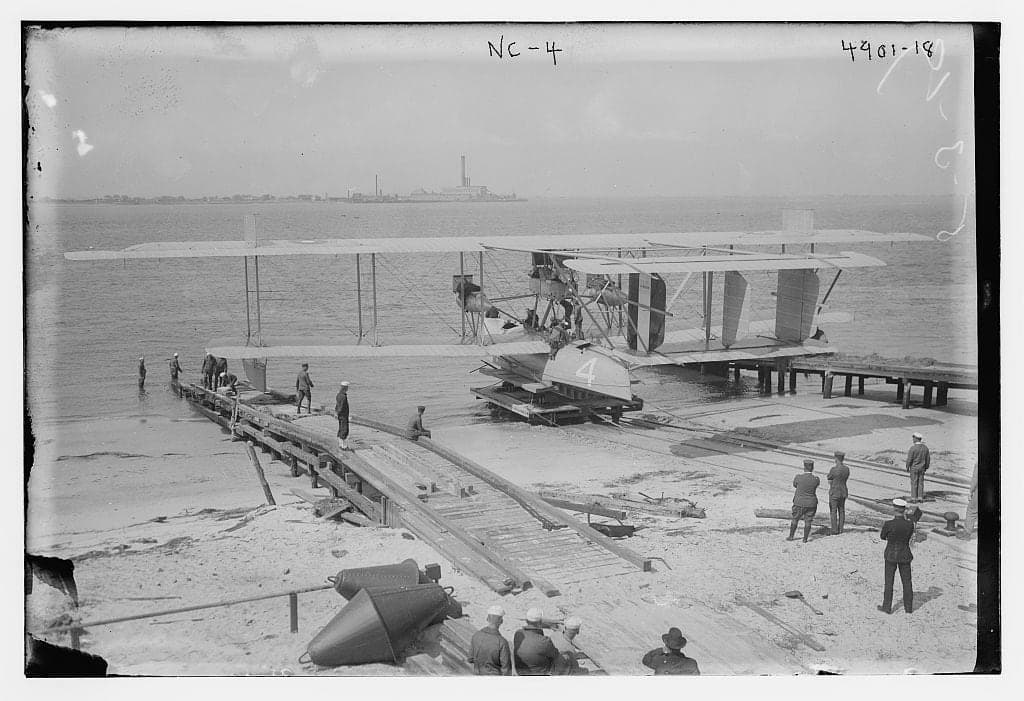
The United States Navy had its own plans and no interest in the prize. In May 1919 it sent three big Curtiss NC flying boats, the NC-1, NC-3 and NC-4, from Rockaway, New York, by way of Nova Scotia to Trepassey in Newfoundland, with dozens of warships stationed along the route as navigation marks and rescue boats. The Navy never intended to fly the ocean in under seventy-two hours, and its flying boats were not entered.
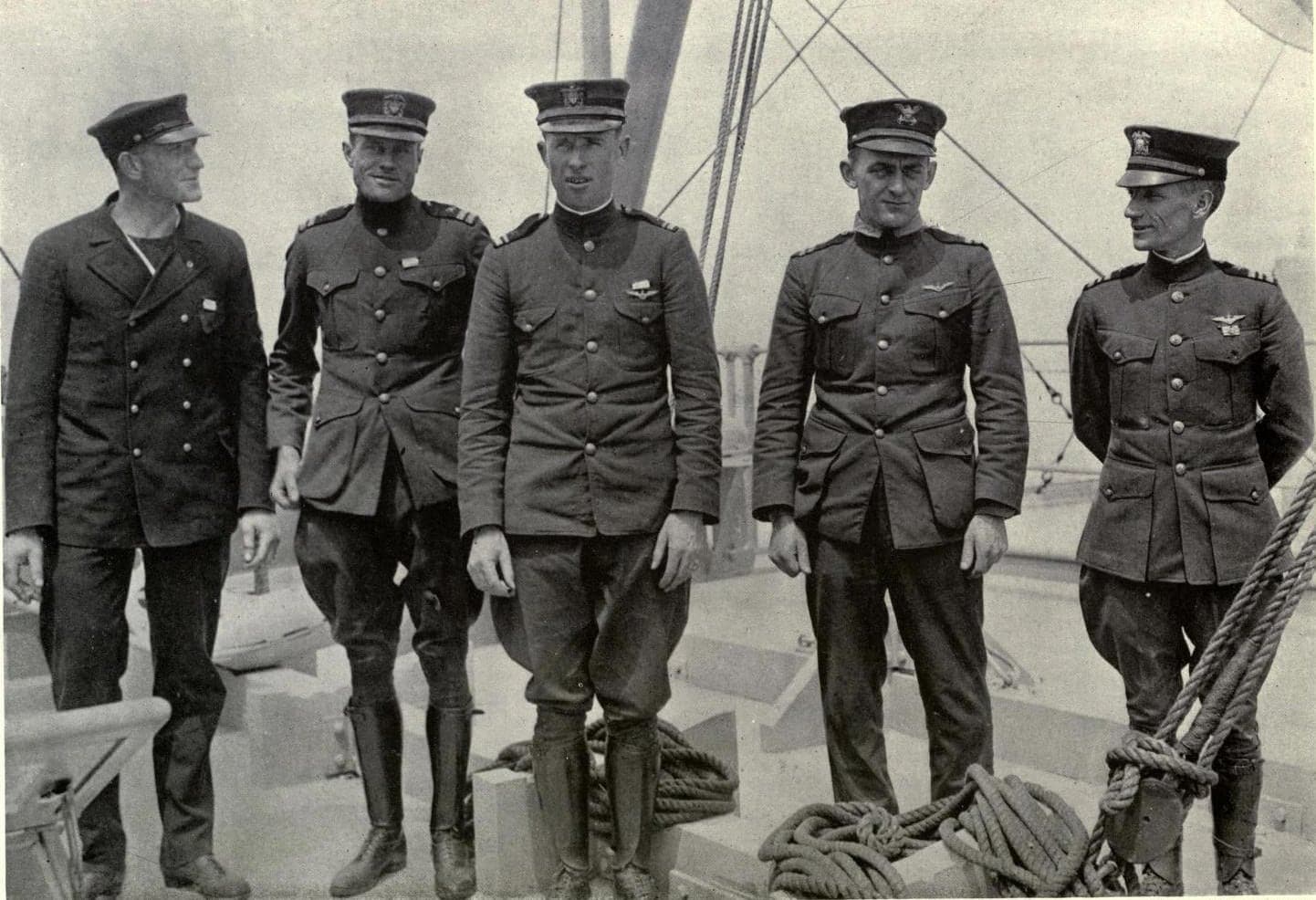
Only the NC-4 finished. The NC-1 and NC-3 came down on the sea short of the Azores, and the NC-4, commanded by Lieutenant Commander Albert C. Read, reached Horta and then, after repairs, landed in Lisbon harbour on 27 May 1919, the first aircraft to cross the Atlantic. It went on to Plymouth on 31 May. The American success was a spur to the British teams waiting in Newfoundland, who wanted at least to be the first to cross without a stop.
Development
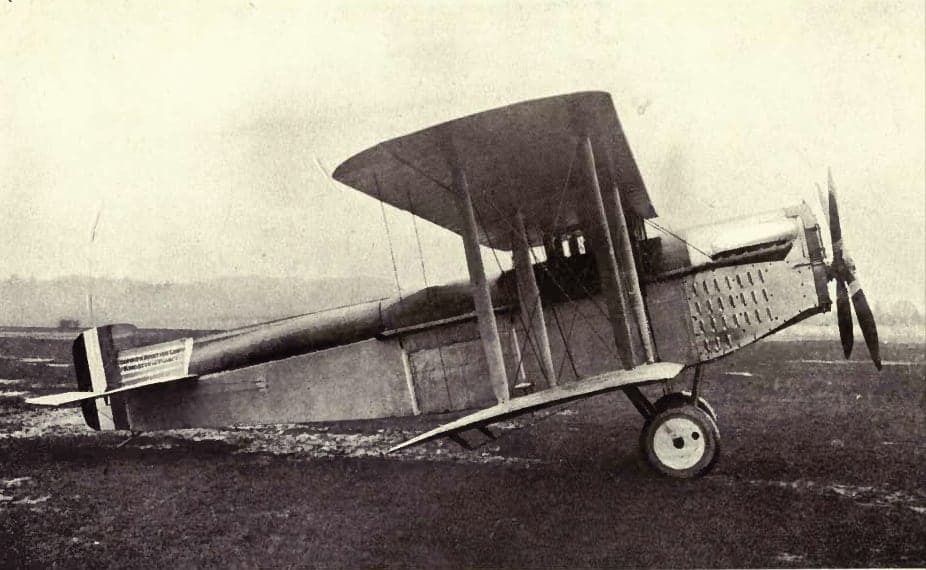
By the spring of 1919 the contest had become a race between British teams camped around St John's, a small city with no aerodrome and very little flat ground. The first to arrive was Sopwith. Its designer George Carter had built a big single-engined biplane, the Sopwith Atlantic, around a Rolls-Royce Eagle, with a deep fuselage full of petrol, an undercarriage that could be dropped after take-off to reduce drag, and a small boat built into the top of the fuselage behind the crew. The aircraft reached Newfoundland by ship on 28 March. Its crew were the Australian test pilot Harry Hawker and his navigator, Lieutenant Commander Kenneth Mackenzie-Grieve of the Royal Navy.
Martinsyde followed with the Raymor, a smaller single-engined machine powered by a Rolls-Royce Falcon, to be flown by Frederick Raynham with a navigator named Morgan. For weeks both teams sat in the Cochrane Hotel waiting for the snow to clear from their improvised fields and for the weather over the ocean to allow a start. On 18 May, news that the American NC-4 had reached the Azores pushed them into going at once, in weather that was far from favourable. The Raymor crashed on take-off from its small field, which could not be used into the wind of that day. The Sopwith Atlantic got away.
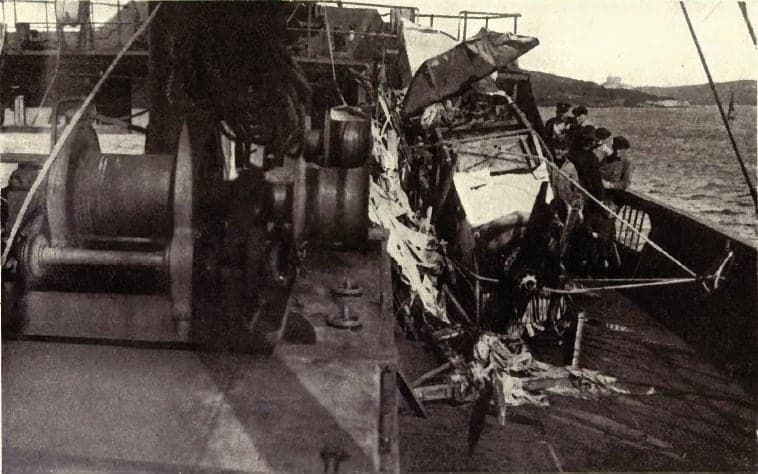
Hawker and Mackenzie-Grieve were more than halfway across when the Eagle began to overheat, probably because of a blockage in the cooling system. Diving and restarting the engine did not cure it, and with bad weather ahead they turned south towards the shipping lanes. They found the Danish steamer Mary and ditched beside her, some 982 nm out from St John's. The Mary carried no wireless, and for almost a week the world believed the two men were dead; King George V sent a telegram of condolence. They were landed safely when the ship reached Scotland on 25 May, and the Daily Mail gave them a consolation prize of £5,000. The floating wreck of their aircraft was later recovered by an American steamer.
The most imposing entry belonged to Handley Page. Its V/1500, a four-engined heavy bomber built too late for the war, arrived at Harbour Grace, on Conception Bay north of St John's, in more than a hundred crates. A runway some 2,400 ft long had to be cut for it, and a steam tractor was needed to move the fourteen-ton aircraft. The expedition was led by Rear Admiral Mark Kerr, with Major Herbert Brackley as first pilot and the Norwegian Tryggve Gran, a veteran of Scott's Antarctic expedition, as navigator. Kerr refused to start until the aircraft was in perfect condition, and test flights revealed a series of mechanical faults.
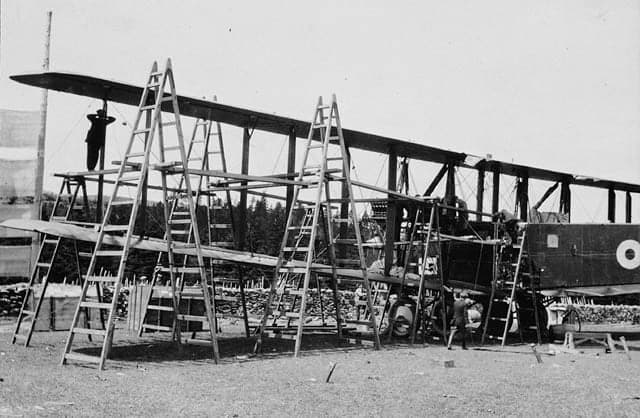
Vickers was the latecomer. John Alcock, recently released from the RAF, had approached the firm at Weybridge, which was considering an entry with its new Vimy bomber but had not found a pilot. Arthur Whitten Brown, looking for work secure enough to allow him to marry, was introduced to Alcock by chance on a visit to the Weybridge works, spoke up about navigation over the sea, and was taken on as navigator. The two men reached St John's on 13 May, while their aircraft was still at sea in crates, and found that every usable field near the city had already been taken.
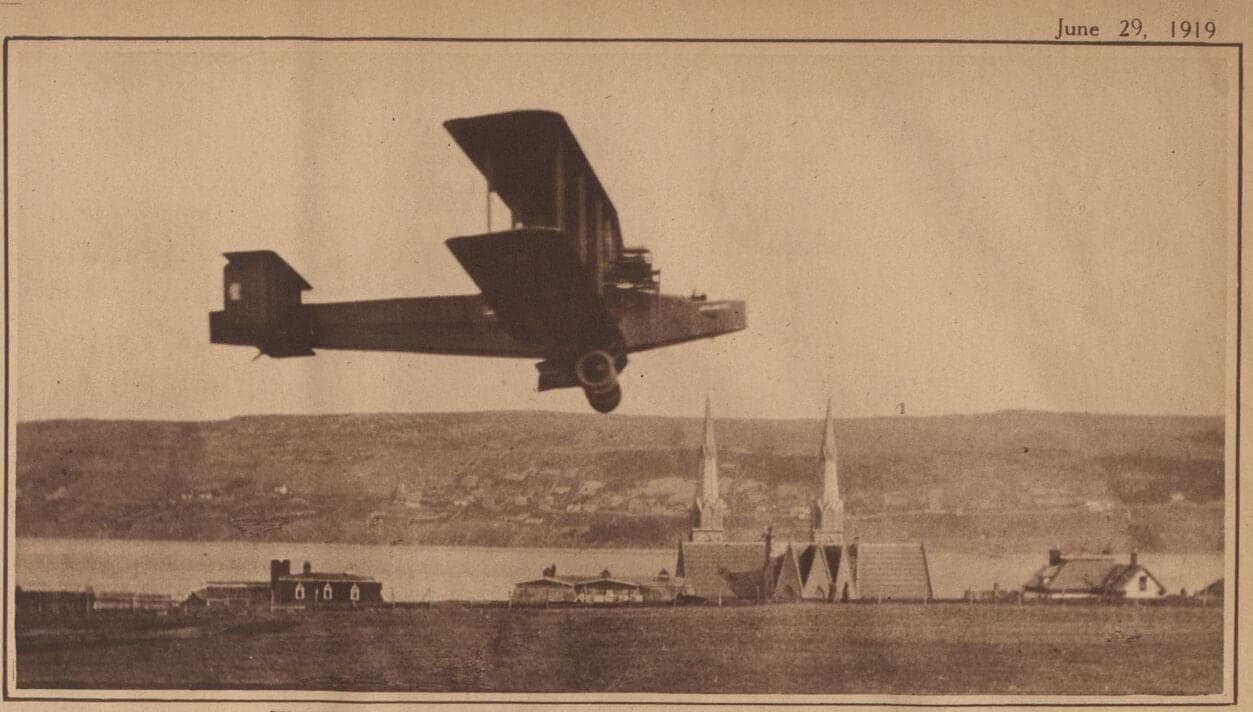
In the end none of the rivals mattered. The Vimy left first. The Handley Page crew set off from Harbour Grace for New York on 4 July, lost an engine in the night and put down at dawn on a racecourse at Parrsboro, Nova Scotia, where the aircraft caught wire fences and tipped onto its nose. It reached New York only in October.
The machine
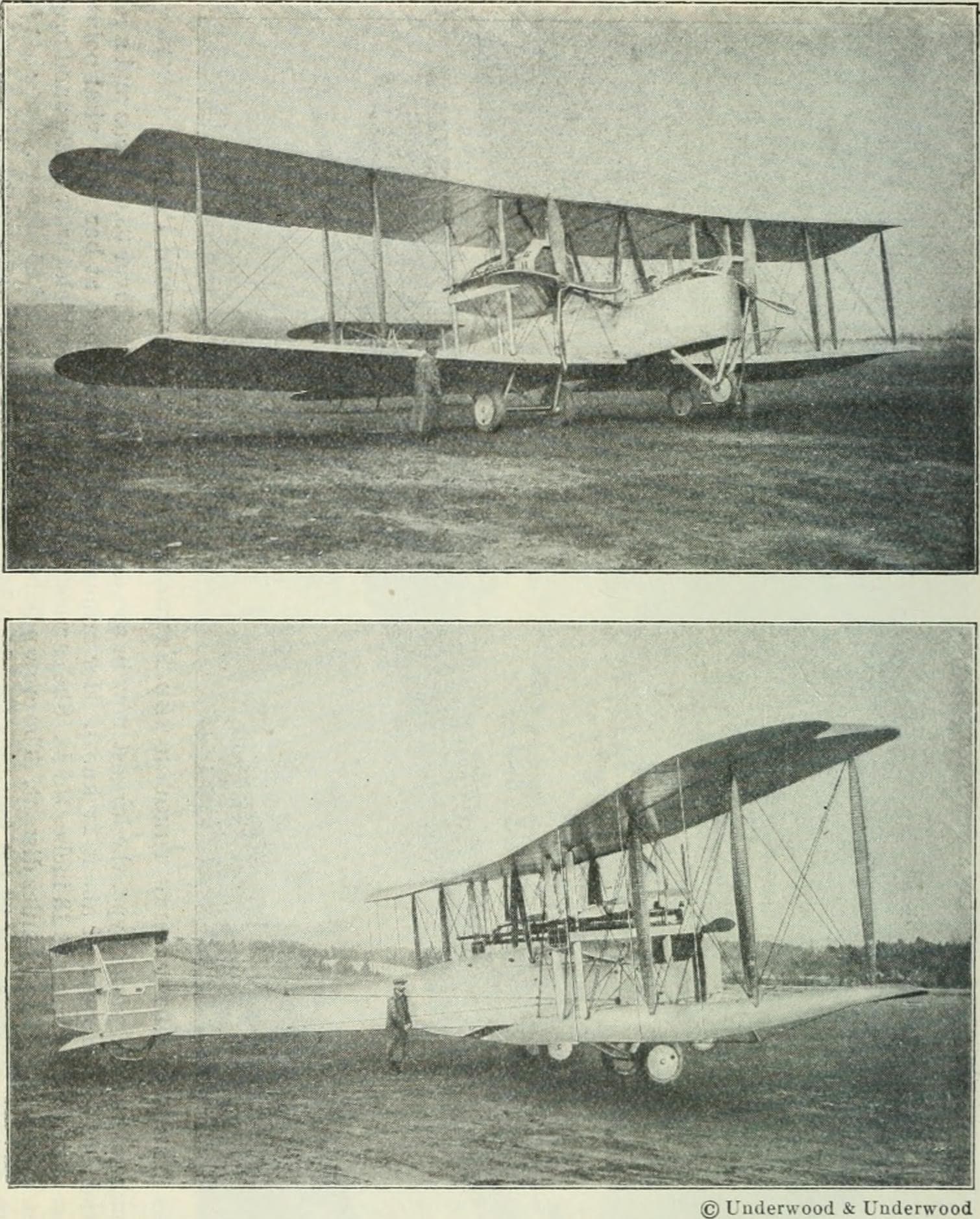
The Vickers Vimy had been designed in 1917 as a twin-engined night bomber to strike at targets in Germany, and it came into service just as the war ended. It was a large, conventional biplane of wood and fabric: a span of about 67.9 ft, a length of about 43 ft, a boxy fuselage, twin rudders and a pair of engines slung between the wings on either side. What made it attractive for the Atlantic was that it had been built to lift a heavy load a long way, and that its two engines gave a margin one engine could not.
The transatlantic machine was built at Weybridge. According to Brown, construction began on 13 February 1919 and it was the thirteenth Vimy of its class, a number the crew chose to regard as lucky. The bomb gear was removed and the space given to fuel. With its extra tanks the aircraft carried 1,040 US gal of petrol and 60 US gal of oil, and the Science and Industry Museum gives its mass as about 7,000 lb empty and about 13,000 lb fully loaded. The crew sat side by side in an open cockpit ahead of the wings.
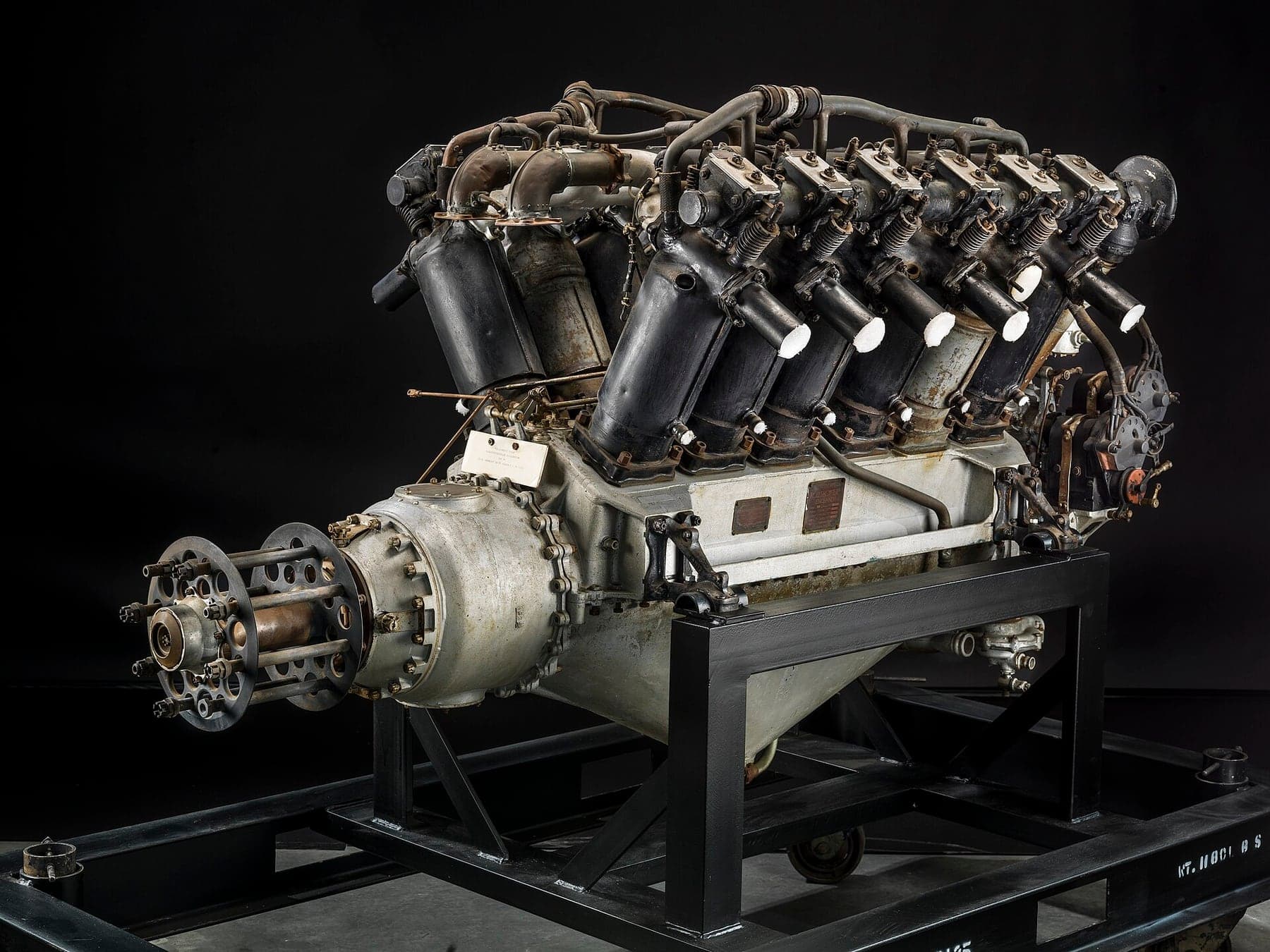
The engines were two Rolls-Royce Eagle VIII water-cooled V-12s of 360 horsepower each, driving four-bladed propellers. The Eagle had been designed during the war, and by 1919 it had a reputation for reliability that mattered more than power on a flight of this length. Rolls-Royce sent an engineer, Eric Platford, to look after the engines in Newfoundland. On the flight Alcock normally ran them at 1,650 to 1,700 revolutions per minute to spare them.
The Vimy's cruising speed was about 78 kt, and the prevailing westerly wind was counted on to add to it. For navigation Brown carried a sextant clipped to the instrument board, a drift indicator under his seat, a course and distance calculator, and a Baker navigating machine that held his charts. The wireless transmitter drew its power from a generator driven by a small propeller in the slipstream, and the crew's electrically heated flying suits were wired to a battery between the two seats. There were no gyroscopic flight instruments. In cloud, the only reference was the compass, an airspeed indicator, an altimeter and the pilot's sense of balance, which, as the flight would show, was no reference at all.
One detail of the conversion shaped the end of the story. Wartime Vimys normally carried a skid under the nose to stop the aircraft tipping forward on rough ground, and the transatlantic machine flew without it. On firm ground that did not matter. In a bog, it did.
Preparation
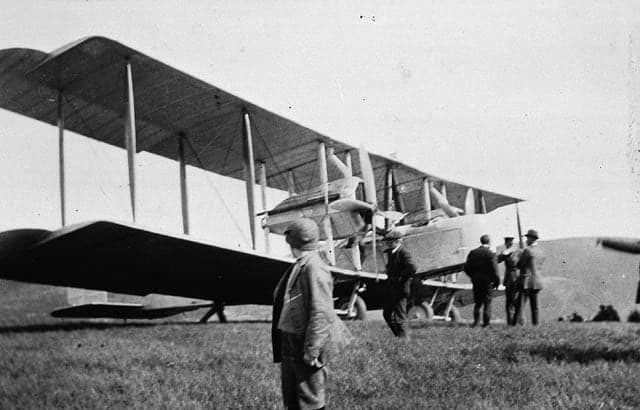
The Vickers party that sailed for Newfoundland numbered thirteen: Alcock, Brown, ten men from the works and a Rolls-Royce engine specialist. Alcock and Brown crossed on the Mauretania and went on by way of Halifax, Port aux Basques and the Newfoundland railway, while the aircraft followed in crates on a freighter. They found the other teams settled in and, as Brown wrote, the only suitable patches of ground already appropriated. Raynham, whose own attempt had just ended in a wrecked aircraft, generously lent them his field and hangar at Quidi Vidi, on the edge of the city, and the Vimy was assembled there in the open air after its crates arrived on 26 May.
The mechanics worked twelve to fourteen hours a day, improvising sheerlegs out of scaffolding poles. Crowds came to watch, prodded the fabric with umbrellas and leaned on the trailing edges, and a fence had to be put round the aircraft. The search for a take-off field went on all the while. A landowner at Harbour Grace offered a meadow of 450 ft by 900 ft for $25,000 plus the cost of preparing it; it was declined. At last Mr Lester, the carter who had been hauling the team's stores, offered a sloping field near Monday's Pool. By buying the use of four neighbouring fields on the hilltop the team obtained a run of about 1,500 ft, and thirty labourers levelled hillocks, blasted boulders and knocked down walls and fences to make it.
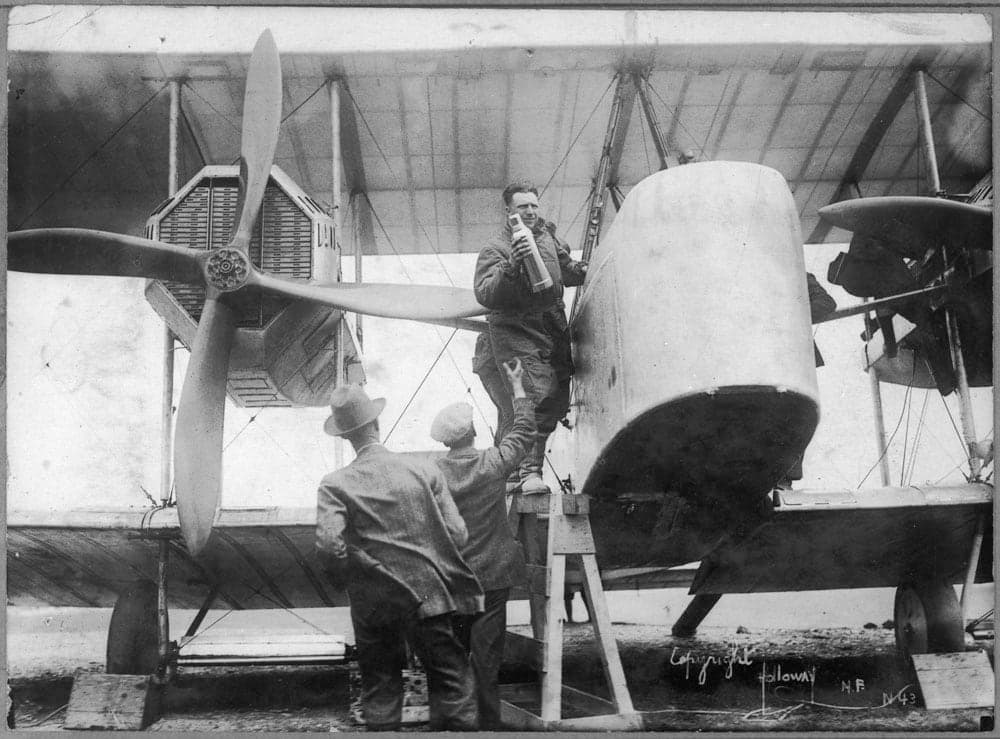
The Vimy flew for the first time in Newfoundland on 9 June, from Quidi Vidi, and landed on the new ground at what became known as Lester's Field. Everything worked except the wireless. A more serious worry followed: the petrol-benzol mixture shipped from England showed a sticky precipitate that might block the filters, and it had to be replaced with pure petrol, which a newly arrived ship fortunately brought. A second test flight on 12 June was again satisfactory apart from the wireless, which gave Brown a violent electric shock. The Royal Aero Club's representative sealed the aircraft, so that it could be proved that the machine that left Newfoundland was the one that reached Ireland.
The crew hoped to leave on Friday 13 June, but the work could not be finished in time and the start was put back to the early hours of Saturday. The tanks were filled through the night. By Brown's account the aircraft carried about 1,000 US gal of petrol and 48 US gal of oil; one of the extra tanks was shaped like a boat and could be released to serve as a raft. Food for the flight was sandwiches, chocolate, malted milk and two thermos flasks of coffee, with emergency rations in a cupboard in the tail, where the crew's two toy black cats, Lucky Jim and Twinkletoe, also travelled.
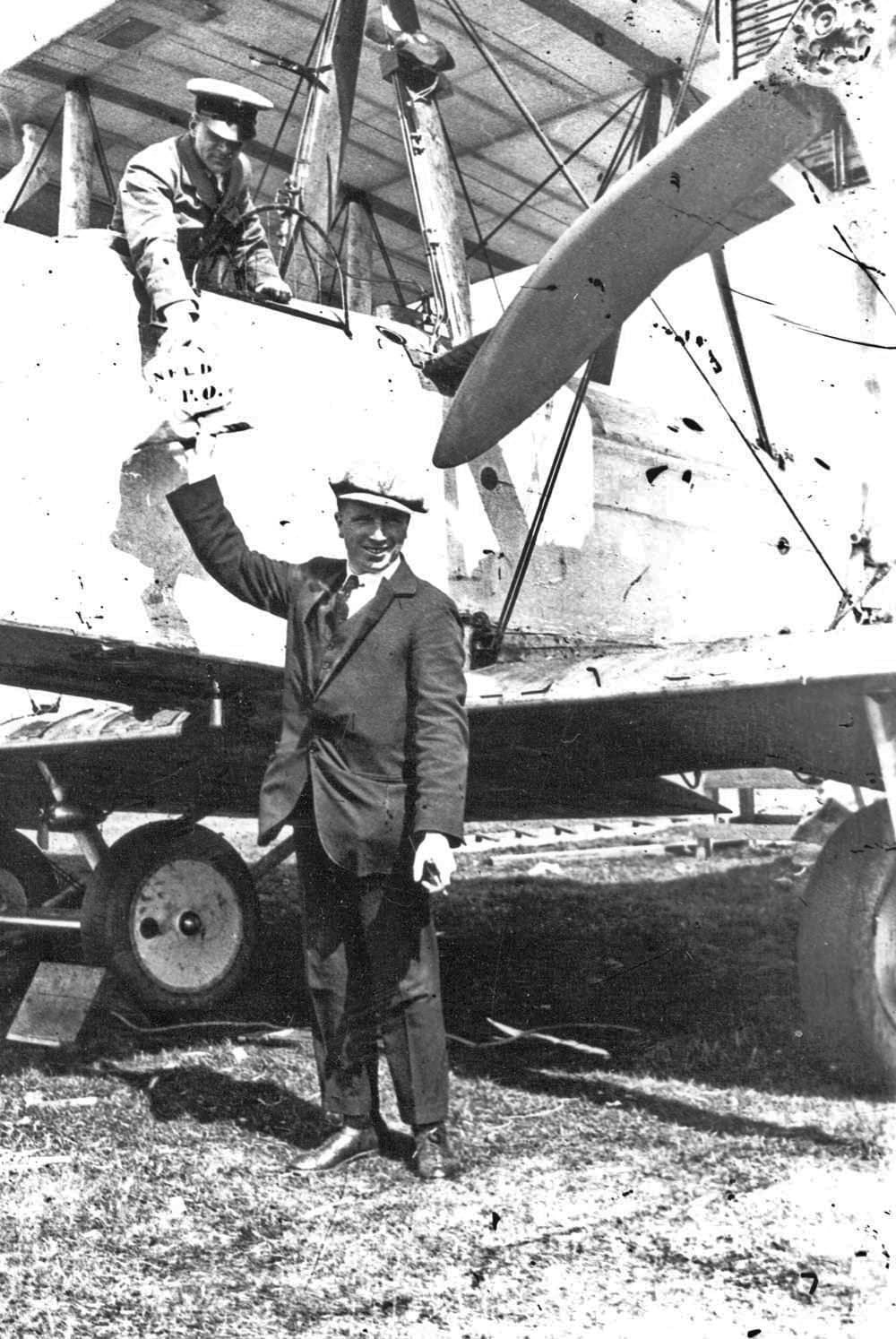
The mailbag had gone aboard the day before. Newfoundland's postal authorities overprinted stamps for the letters, which became the first mail carried across the Atlantic by air; Brown remembered some three hundred letters, while later counts give 196 letters and a parcel. Before dawn on 14 June Alcock and Brown were on the field, but a strong, gusty westerly was blowing, and the morning was spent waiting for it to ease. It did not. They resolved to go anyway, turned the aircraft to take off into the wind, and climbed aboard in their electrically heated suits, Burberry overalls and fur-lined helmets.
The event
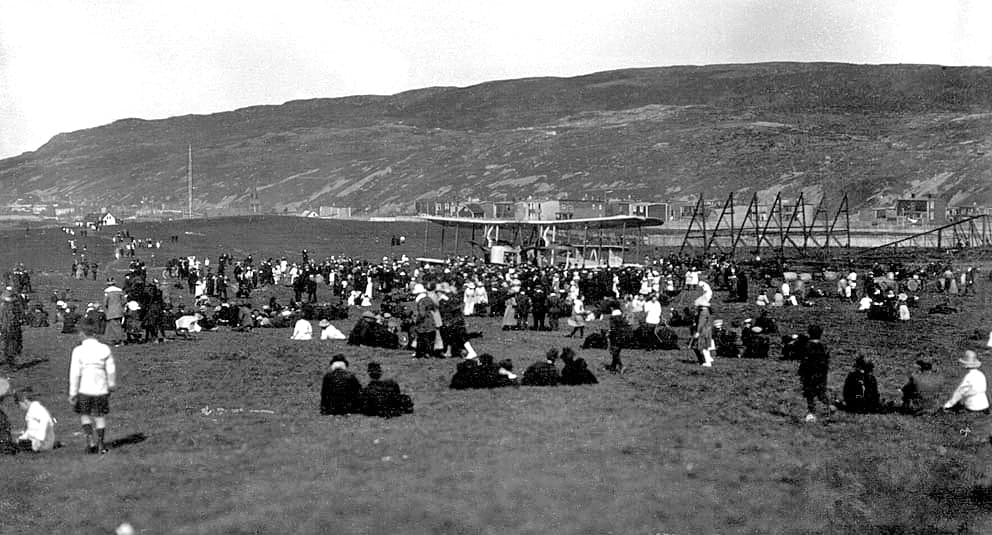
The Vimy began its take-off run at about 1.45 in the afternoon, local time, or 16:12 by Greenwich time, which Brown used in his log and which is used here for the rest of the flight. Gusts of up to forty-five knots were recorded, there was not room to start the run directly into the wind, and the heavily loaded aircraft lurched over about 900 ft of rough ground, up a slight slope, before it came unstuck close to the end of the field. Twice the wheels nearly touched down again, and Brown feared the undercarriage would catch a roof or a tree-top. Alcock held the aircraft straight into the wind until it had about 800 ft, then turned for the sea. They crossed the coast at 16:28, and Brown tapped out a wireless message to the naval station at Mount Pearl: "All well and started."
Within the first hours almost everything that could fail began to. A thick bank of fog closed over the sea, and the cloud above thickened until neither sun nor horizon could be seen. The small propeller that drove the wireless generator snapped off, leaving the crew cut off from the world for the rest of the flight. Just after 18:00 a chunk of exhaust pipe split away from the starboard engine, glowed red and then white-hot, crumpled and blew off, so that three cylinders exhausted straight into the air with a steady roar. For the rest of the flight the two men communicated largely by pencilled notes, and Brown watched uneasily as a small flame from the open exhaust played on a cross-bracing wire and turned it red-hot.
Brown navigated by dead reckoning until, at 20:30, a gap in the upper cloud gave him ten minutes of sun, and he found that the wind had been stronger than forecast and his reckoning was badly out. They climbed, looking for stars. At 00:25 the cloud broke to the north-east and he took sights on Vega and the Pole Star. The Vimy was at about 50° 7′ N, 31° W, slightly south of its course, having covered 850 nm at an average of 106 kt. With their position known, Alcock let the aircraft sink gently to rest the engines.
At about 03:10, at some 3,500–4,000 ft, they flew into a thick bank of cloud so dense that Alcock could not see his own wing tips. Without a horizon, and with no gyroscopic instruments, he lost all sense of balance. The airspeed indicator appeared to stick, the aircraft stalled, fell away into a spin or steep spiral, and the engines raced towards 2,200 revolutions a minute until Alcock throttled back. The altimeter unwound past 3,000 ft, 2,000 ft, 1,000 ft. Brown loosened his safety belt and made ready to save his notes. The Vimy came out of the bottom of the cloud less than a hundred feet above the sea, tilted so steeply that the water seemed to stand up beside them. Alcock levelled it at about fifty feet, so low that with the engines throttled back they could hear the waves, found the compass pointing west, and turned back towards Ireland.
Then came the worst of the weather. As they climbed the aircraft ran into rain, then snow, then hail and sleet. Sleet crusted the top of the wings, and at 8,800 ft the glass of the fuel overflow gauge on a centre-section strut became obscured. The pilot had to be able to read that gauge to guard against carburettor trouble, so Brown climbed out of the cockpit, knelt on top of the fuselage holding a strut, and rubbed the snow from the glass, and he had to repeat the performance at intervals until the storm ended. Sleet packed into the aileron hinges and jammed them, and for about an hour the aircraft had scarcely any lateral control. By 06:20 they were at 9,400 ft and still in cloud; later they reached about 11,000 ft, where a pinpoint of sun gave Brown a sight and, at 07:20, he fixed the position line and proposed going down to warmer air.
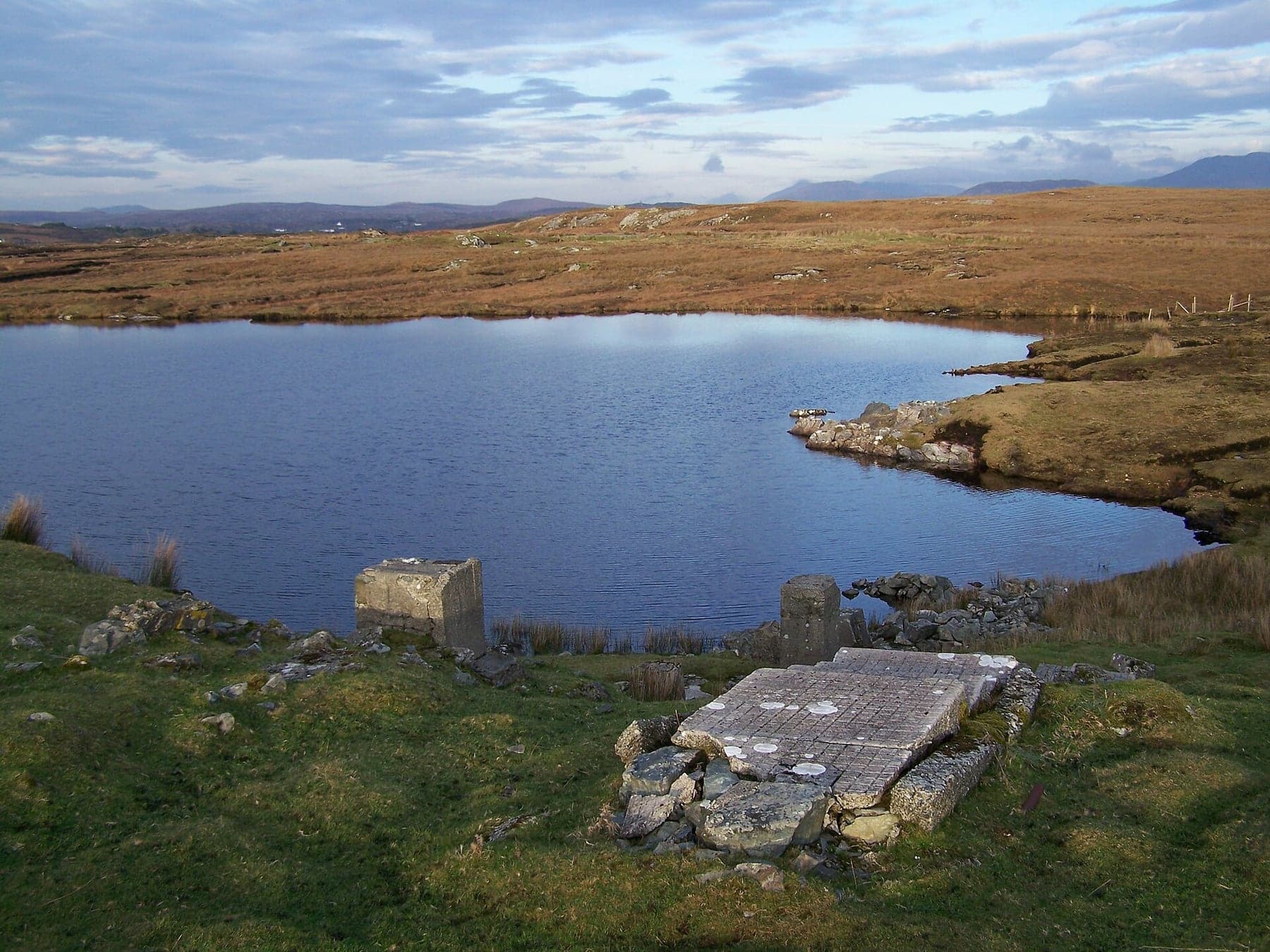
As they began the descent the starboard engine popped and backfired alarmingly, and cleared only after Alcock had glided with it throttled back. At 500 ft they came out under the cloud over a grey sea. Brown found they were north of track and set a new course for Galway. They ate sandwiches and chocolate for breakfast, Alcock steering with his right hand and holding the food with his left, the aircraft by now nose-heavy as the rear tanks emptied. At 08:15 Alcock grabbed Brown's shoulder and pointed: two specks of land, the islands of Eeshal and Turbot off the Connemara coast. They crossed the Irish coast at 08:25.
The wireless masts of the Marconi station at Clifden told them where they were. Hills ahead were lost in cloud, and rather than risk them Alcock decided to land at once, although, Brown later wrote, there was still fuel for about ten hours more. After firing flares and circling the village, they glided into wind towards a smooth green field near the wireless station and touched down at 08:40. The wheels ran for a moment, then sank; the Vimy stopped with a squelch, tipped forward and stood on its nose in the bog, the leading edge of its lower wing smashed and its fuel pipes snapped. Brown stopped himself with an outstretched arm and, as he put it, with the help of his nose; Alcock braced himself so hard that he bent the steel rudder bar. Petrol began to pour into the cockpit, but Alcock had switched off the magnetos and it did not catch fire. They climbed out unhurt, saved the mailbag and the instruments, and fired flares for help. They had been in the air for sixteen hours and twenty-eight minutes, and fifteen hours and fifty-seven minutes from coast to coast.
Aftermath
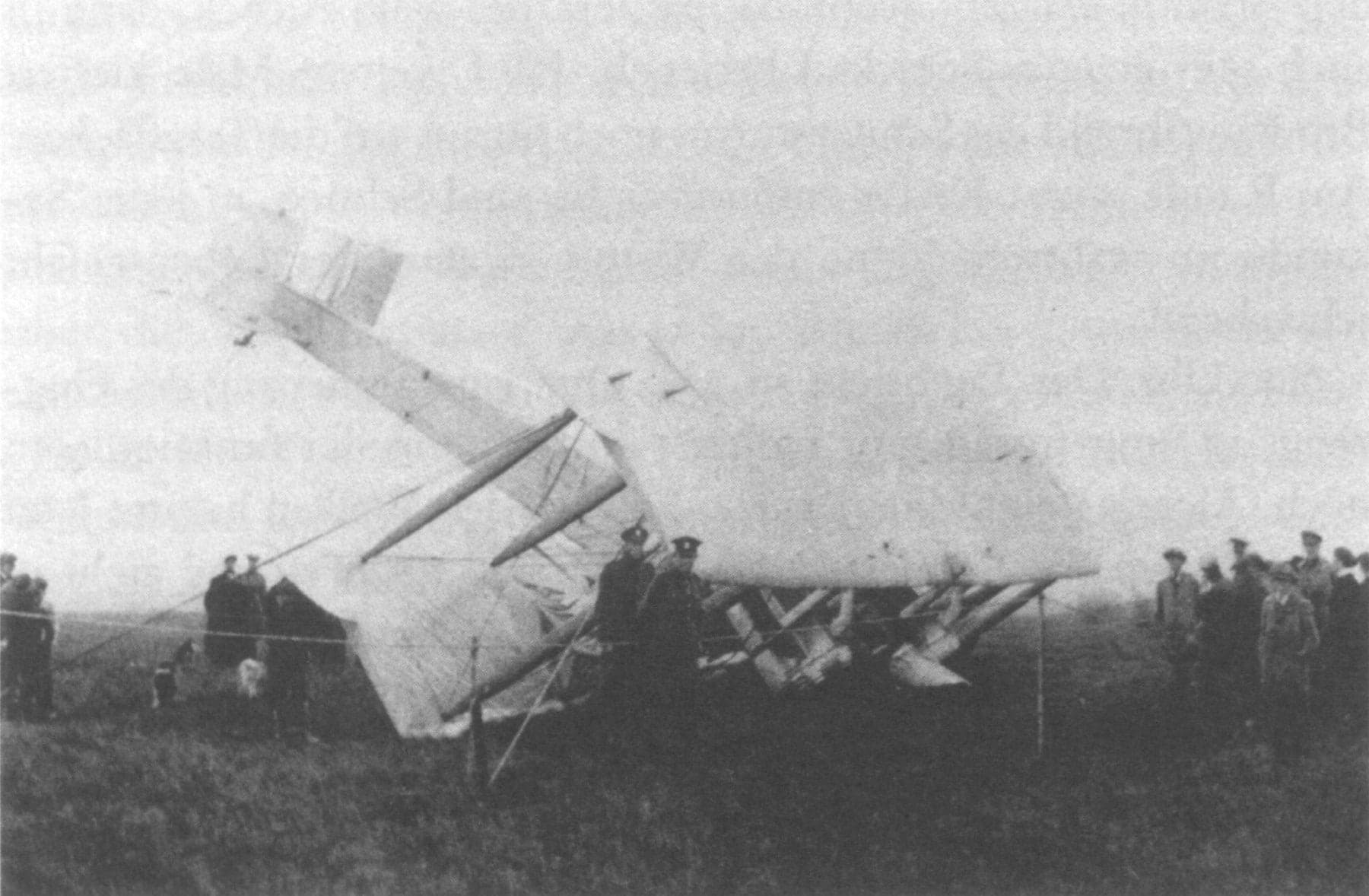
The first people to reach the aircraft were officers and men of the military detachment guarding the Clifden wireless station. Their opening question, Brown recalled, was whether anyone was hurt; the second was where the airmen had come from, and the answer "America" drew only a polite laugh until Alcock produced the mailbag from St John's. Then came cheers, handshakes and the officers' mess. From the wireless station the airmen telegraphed Vickers, the Daily Mail and the Royal Aero Club; soldiers were posted to keep souvenir hunters off the Vimy; and later that day the two men, deafened by sixteen hours of engine noise and very sleepy, were driven to Galway with a Daily Mail representative. Their first interview was given to a reporter from the Connacht Tribune.
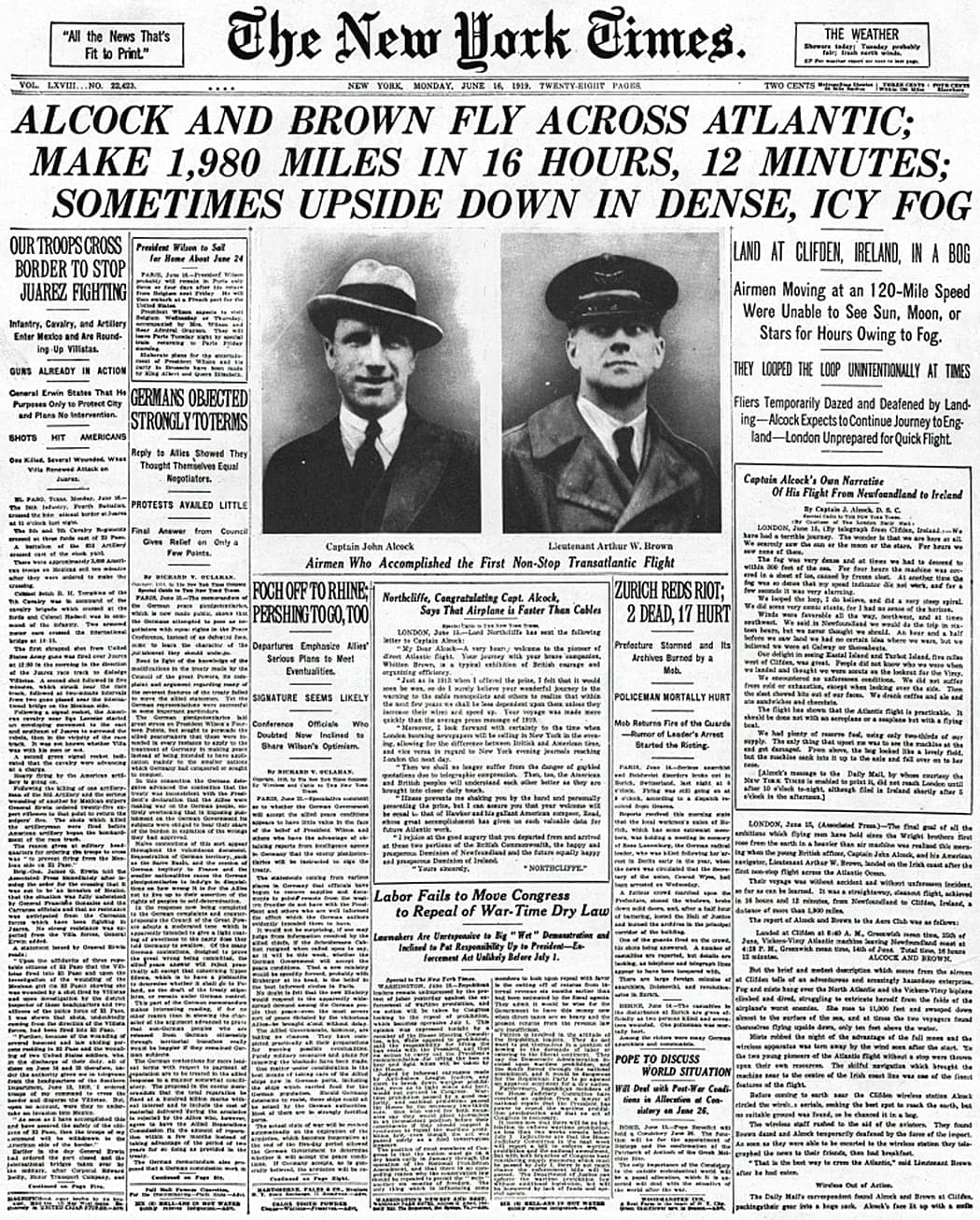
The journey to London became a procession. Crowds cheered them at each station on the railway to Dublin; they crossed to Holyhead by boat and were mobbed on landing; aircraft escorted their train towards London, where large crowds lined the streets. On 16 June the front pages on both sides of the Atlantic carried the story. The Daily Mail, whose prize they had won, carried the flight on its front page, and The New York Times led its front page with the landing in Ireland.
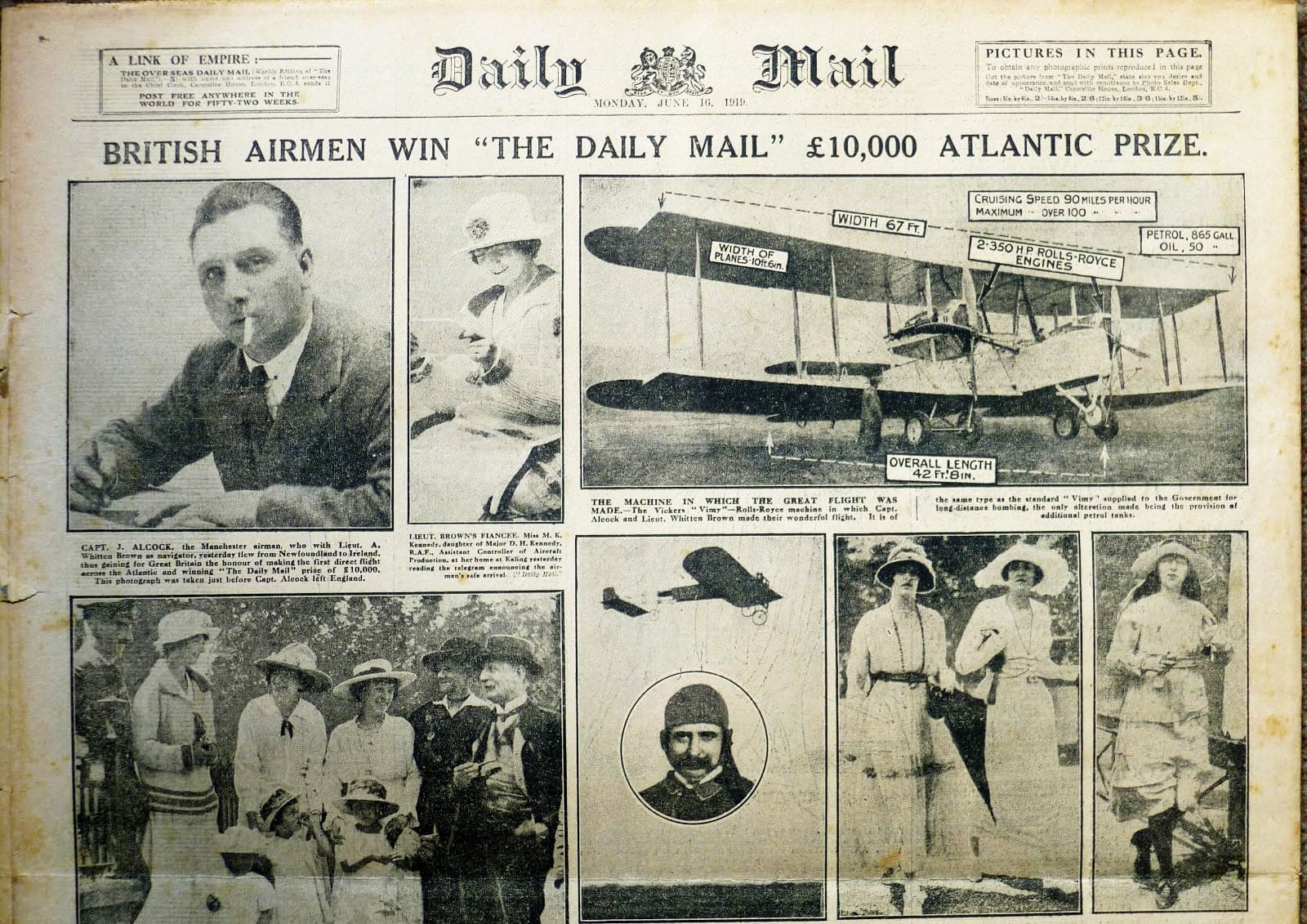
The Vimy was dug out of the bog, dismantled and shipped back to the Vickers works at Weybridge. There it was stripped, cleared of peat and reassembled with its original fuselage and larger components, although many smaller fittings had to be replaced. Vickers presented it to the nation, and on 15 December 1919, with Alcock present, it went on show at the Science Museum in London at the opening of a temporary aeronautics gallery.
The summer of 1919 was not finished with the Atlantic. On 2 July the British rigid airship R34, commanded by Major George Herbert Scott, left East Fortune in Scotland with a crew that included a stowaway and a kitten, and reached Mineola on Long Island on 6 July after 108 hours in the air, with very little fuel left. It was the first crossing from east to west, the first to carry passengers, and the first by an airship. An officer parachuted to the ground at Mineola to organise the landing party, becoming the first person to arrive in America by air from Europe.
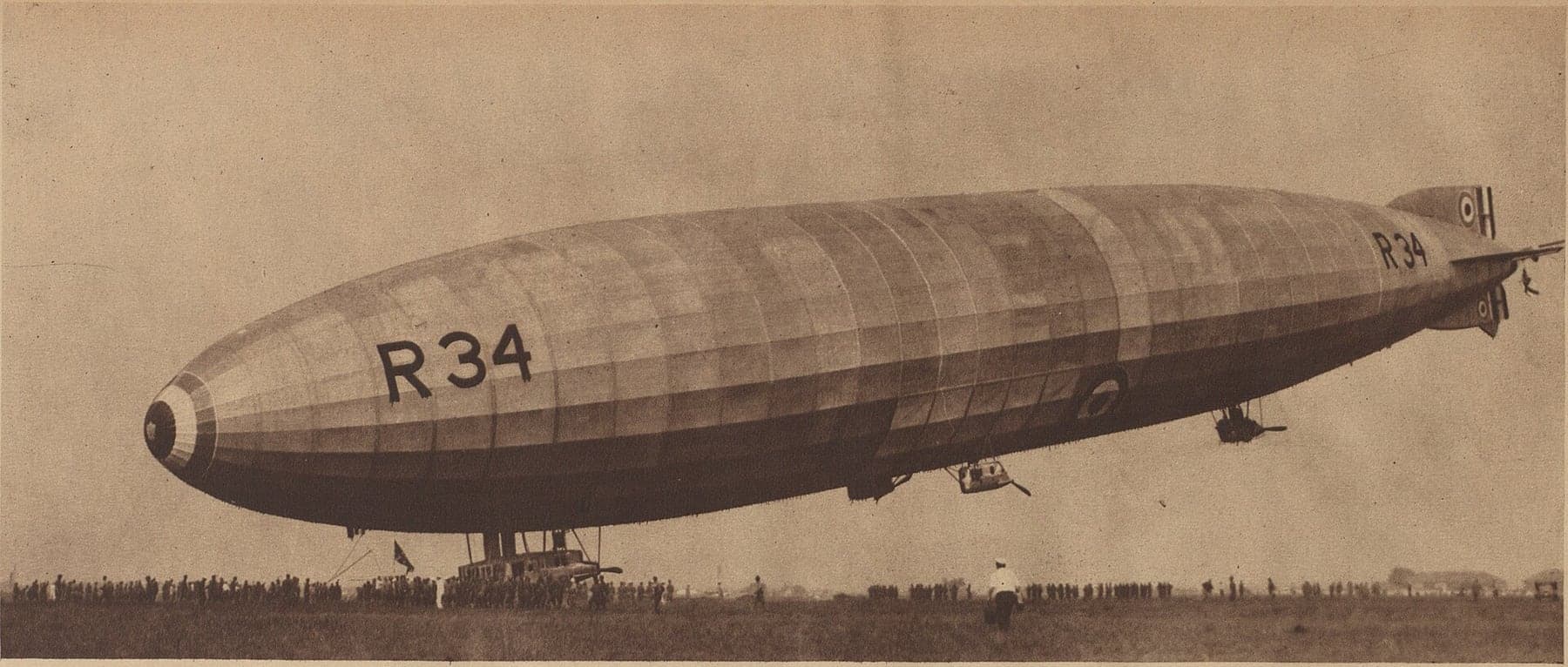
The R34 left again on 10 July and arrived at Pulham in Norfolk on 13 July after 75 hours, completing the first return crossing of the Atlantic by air. On its way home, one of its officers noted, its first sight of land was the same two islets off Connemara that had greeted Alcock and Brown. In barely two months the ocean had been crossed in stages by a flying boat, nonstop by an aeroplane, and in both directions by an airship.
The rival aeroplane teams dispersed. With the prize gone, the Handley Page crew gave up the ocean and set out instead for New York, a flight that ended on a racecourse in Nova Scotia, and Raynham's Martinsyde never crossed.
Controversy
The most famous single image of the flight is one nobody photographed: Arthur Whitten Brown crawling out along the wings of the Vimy in a snowstorm, thousands of feet above the Atlantic, to chip ice from the engines. The story appears in many popular retellings, in which Brown climbs out onto the wings to clear ice from the carburettors.
Brown's own account, published in 1920 as Flying the Atlantic in Sixteen Hours, describes something real but different. At 8,800 ft, in snow and sleet, the glass face of the fuel overflow gauge became clotted with snow. The gauge was fixed to one of the centre-section struts above the fuselage, and the pilot needed to read it to guard against carburettor trouble. The only way to reach it, Brown wrote, was to climb out of the cockpit and kneel on top of the fuselage, holding a strut for balance, in biting cold and a slipstream that tried to sweep him backwards. He rubbed the snow away and had to repeat the performance at fairly frequent intervals until the storm ended. He added that there was scarcely any danger in it as long as Alcock kept the machine level.
Nothing in Brown's book describes walking out along the wings or clearing ice from the engines, and modern writers have pointed out that doing so in icing conditions, in an aircraft with no safety line and a slipstream of around a hundred miles an hour, would very probably have been fatal. The likeliest explanation is that the true episode, a navigator climbing out of an open cockpit into a snowstorm, grew in the retelling into the more dramatic one. What Brown actually did was brave enough, and it is the version he told himself.
The people
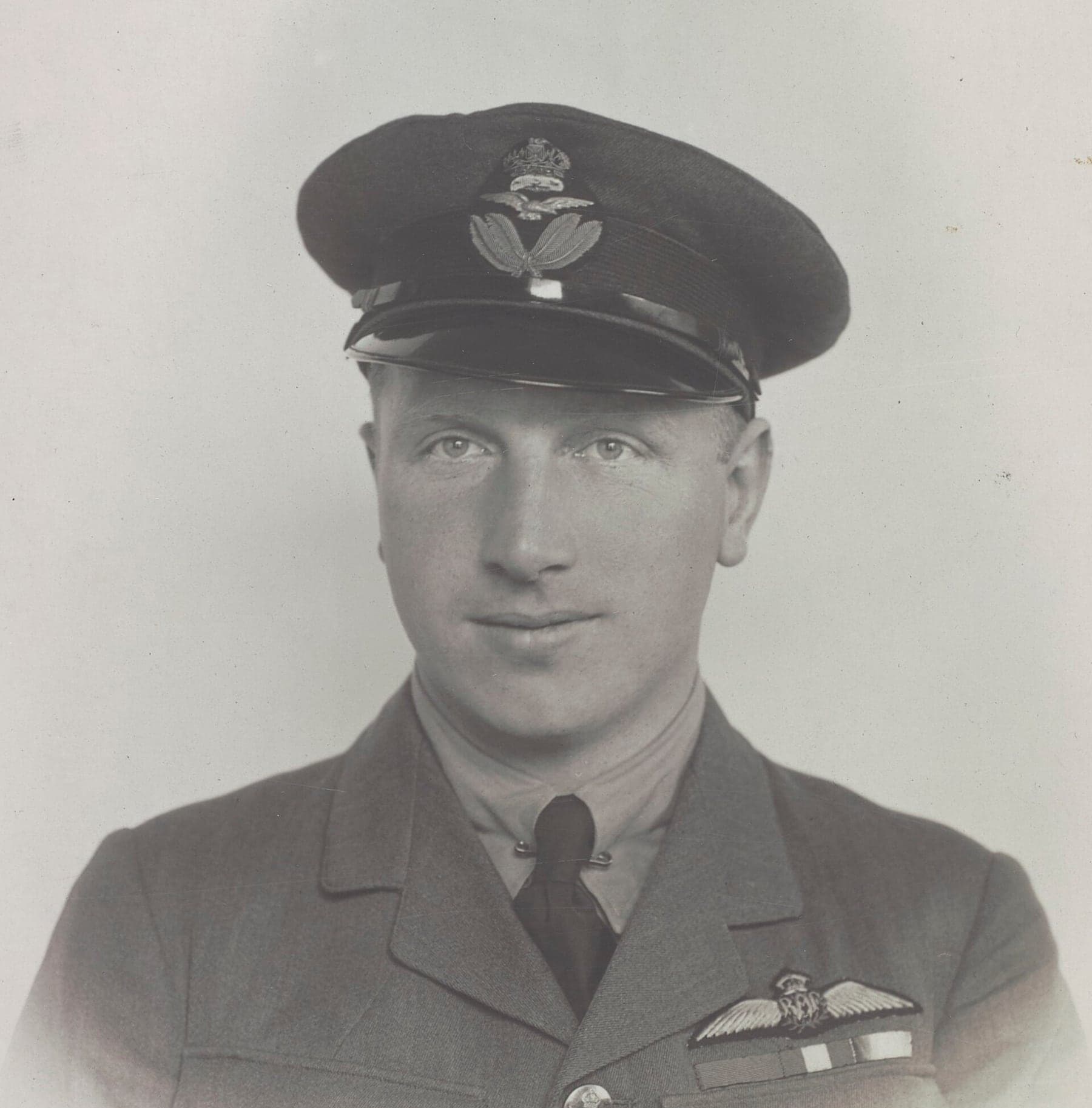
John William Alcock, known to his family as Jack, was born in Manchester on 5 November 1892. He was fascinated by flying from his teens, worked as a mechanic for the French aviator Maurice Ducrocq at Brooklands, learned to fly at Ducrocq's school and gained his pilot's licence in November 1912. Before the war he raced aeroplanes at Hendon, and in 1914 he joined the Royal Naval Air Service as an instructor at Eastchurch.
He was sent to the eastern Mediterranean, where in September 1917 he won the Distinguished Service Cross for an attack on three enemy seaplanes off Mudros. Days later, flying a Handley Page bomber on a raid towards Constantinople, he lost both engines one after the other and ditched near Suvla Bay. He and his two crewmen swam to the Ottoman shore and spent the rest of the war as prisoners. It was in captivity that he resolved to fly the Atlantic. He left the RAF in March 1919 and went straight to Vickers.
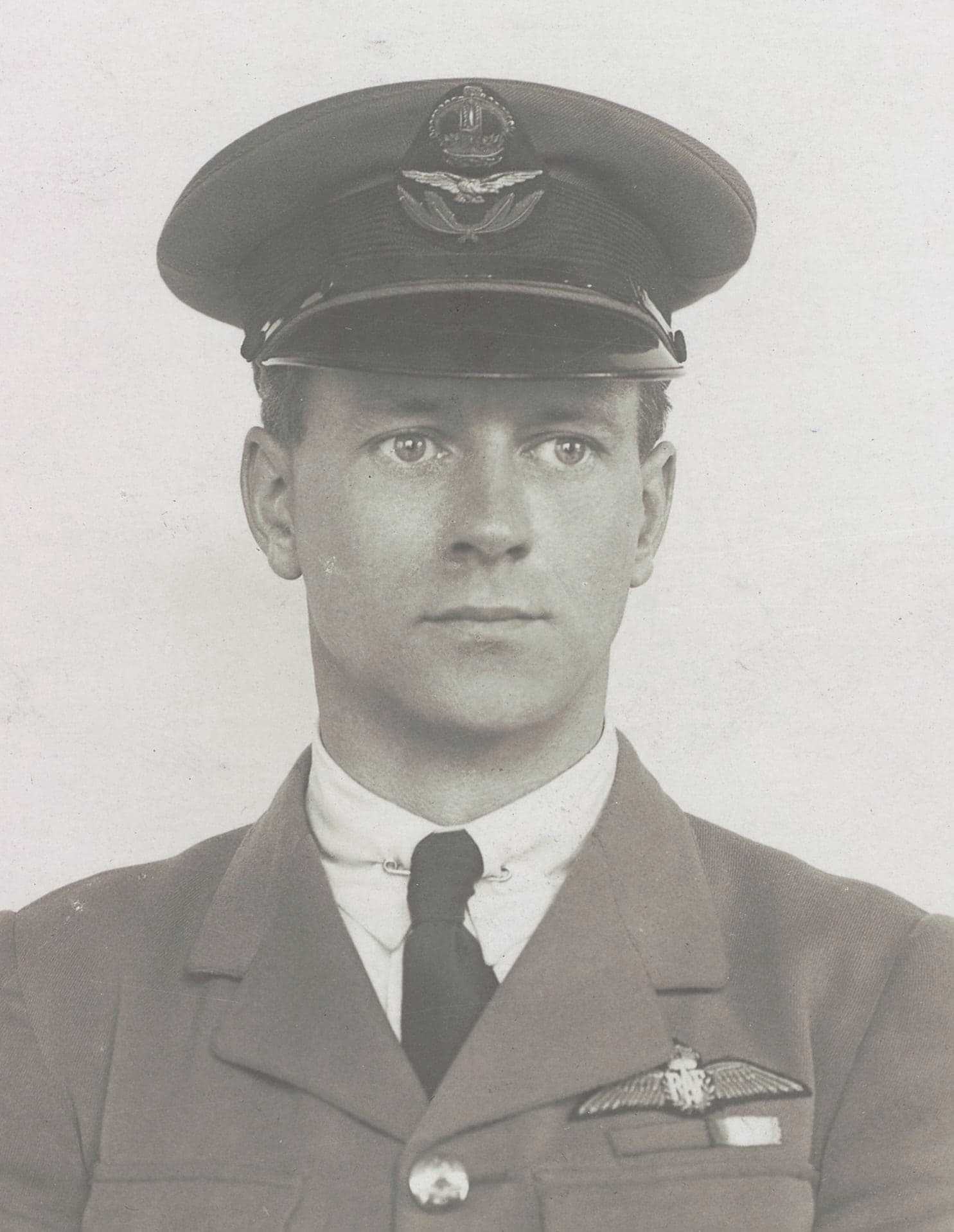
Arthur Whitten Brown was born in Glasgow on 23 July 1886 to American parents; his father, an electrical engineer, had been sent to Britain by Westinghouse, and the family settled in Manchester when the company built its works at Trafford Park. Brown served an engineering apprenticeship with British Westinghouse, enlisted in 1914, was commissioned in the Manchester Regiment and fought in France before transferring to the Royal Flying Corps as an observer.
He was shot down twice. The first time his machine was set on fire by anti-aircraft shells and crash-landed inside the British lines; the second, in November 1915, a bullet holed the petrol tank behind the German lines and he was taken prisoner. After fourteen months in Germany and nine interned in Switzerland he was repatriated, and worked at the Ministry of Munitions on the production of large aero engines. Captivity, he later wrote, was where he first found time to study aerial navigation seriously. After the Armistice he offered his ideas to several firms preparing for the Atlantic and was turned down by each. Then, visiting the Vickers works at Weybridge, he happened to be introduced to Alcock, the talk turned to the competition, and Vickers took him on as navigator.
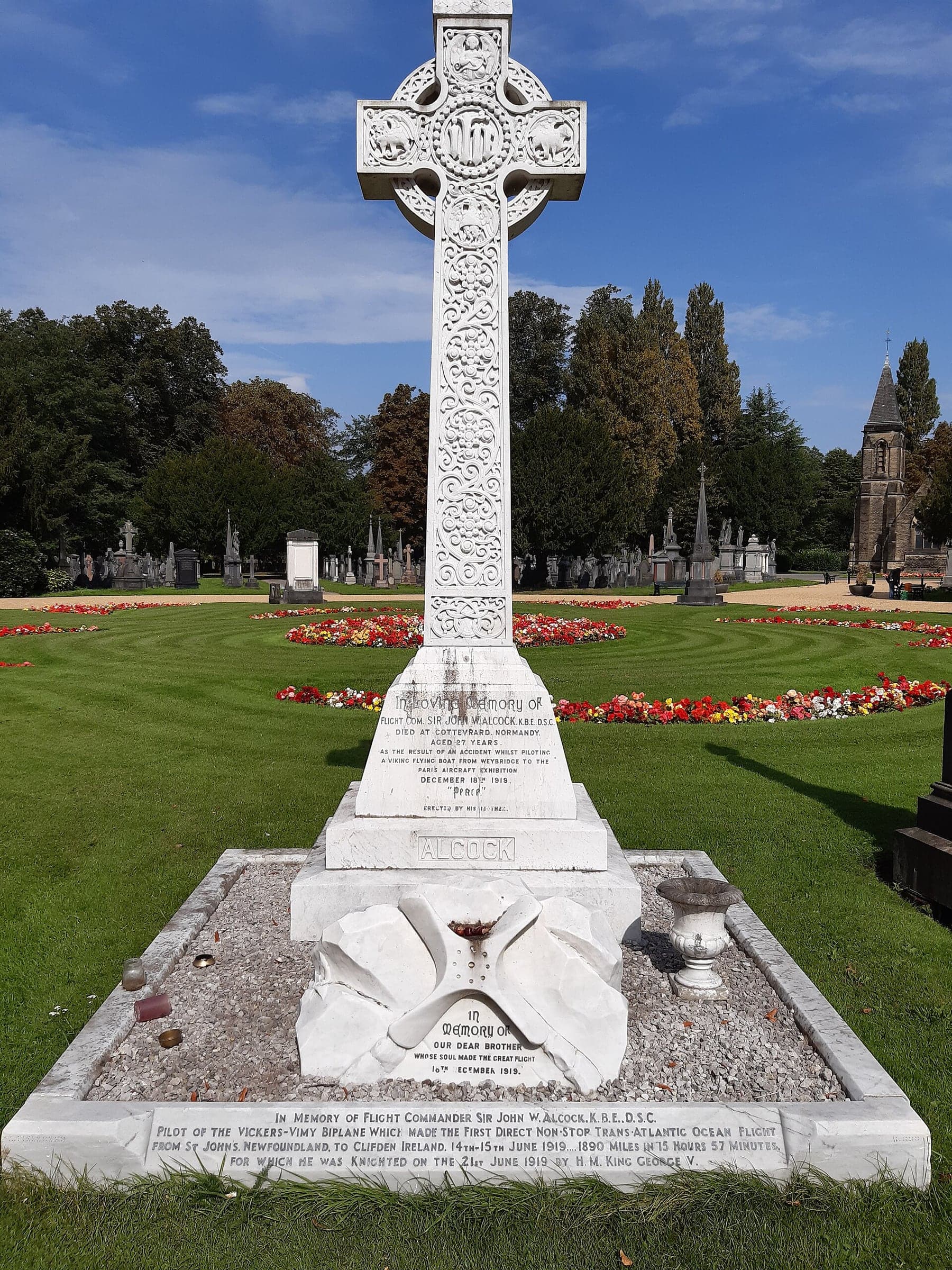
The flight would test each man at his own trade. Alcock, Brown noted, did not take his hands and feet off the controls in sixteen hours, with no autopilot and a rubber relief device that proved useless. Brown fixed positions with a sextant while kneeling on his seat in the slipstream and kept a log throughout. Both had grown up in Manchester, where both attended the Central High School for Boys, and both had spent long stretches of the war as prisoners.
Recognition
The two airmen were in London within two days of landing. On 20 June 1919, at a luncheon at the Savoy Hotel, the Secretary of State for Air, Winston Churchill, handed over the Daily Mail's cheque for £10,000, the prize offered in 1913 for a crossing of the Atlantic in under seventy-two consecutive hours, suspended by the war and reopened in 1918. The two men divided it, and gave a share to the six Vickers mechanics who had assembled and tuned the machine in a Newfoundland field.
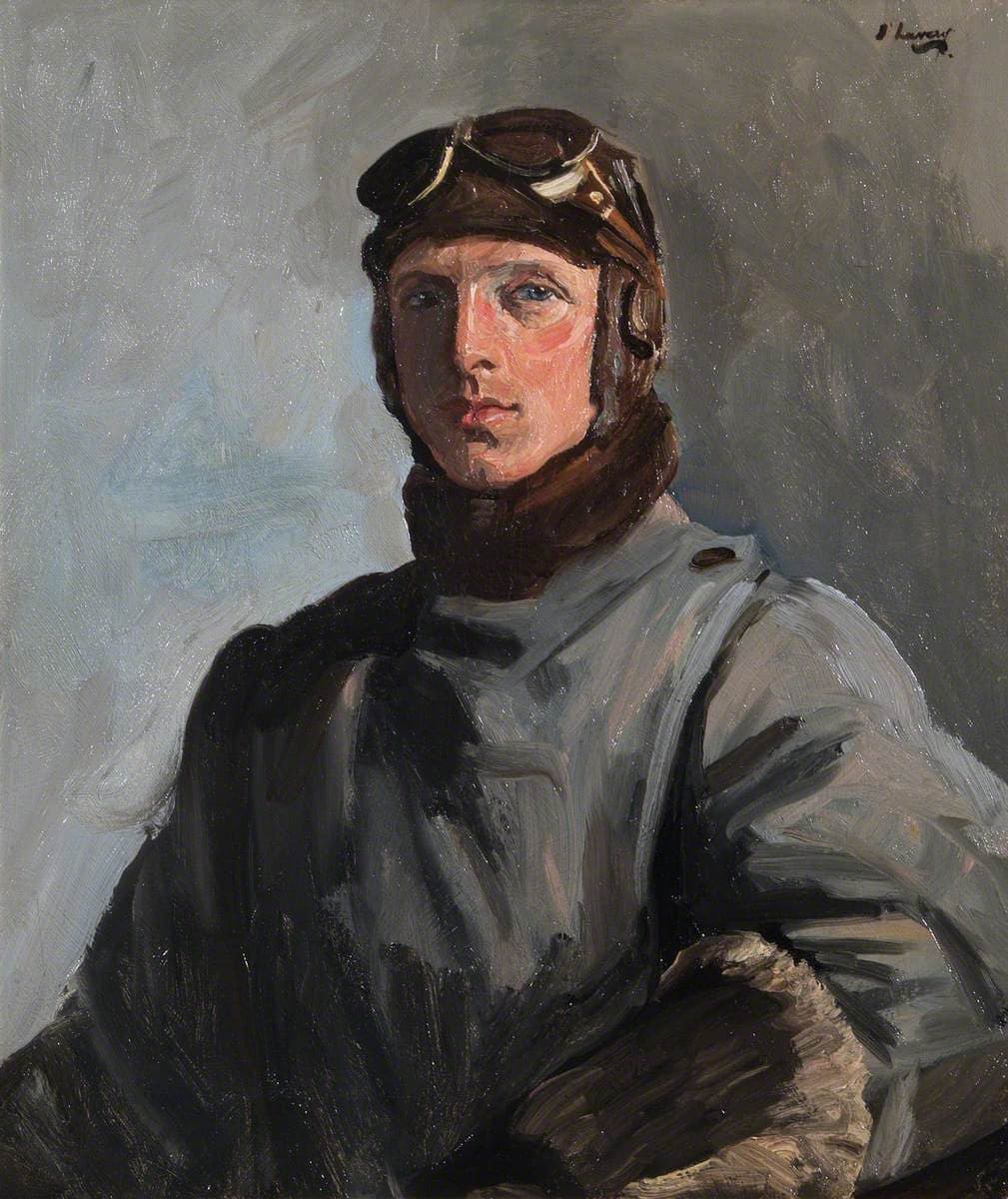
The following day King George V conferred a knighthood on each: Sir John Alcock and Sir Arthur Whitten Brown, Knights Commander of the Order of the British Empire. Both were still young men (Alcock twenty-seven, Brown thirty-three) and both had spent the war as prisoners, Alcock in Turkey after ditching a bomber in the Gulf of Xeros, Brown in Germany with a leg permanently damaged by the crash that brought him down.
The recognition had an edge of relief to it. Four crews had been waiting in Newfoundland that spring; one had already been fished out of the ocean by a passing Danish steamer, and for six days the world had believed Hawker and Mackenzie-Grieve dead. Britain had watched an American naval crew cross first, in stages, three weeks earlier. A nonstop crossing by two British airmen in a converted bomber arrived as a national answer.
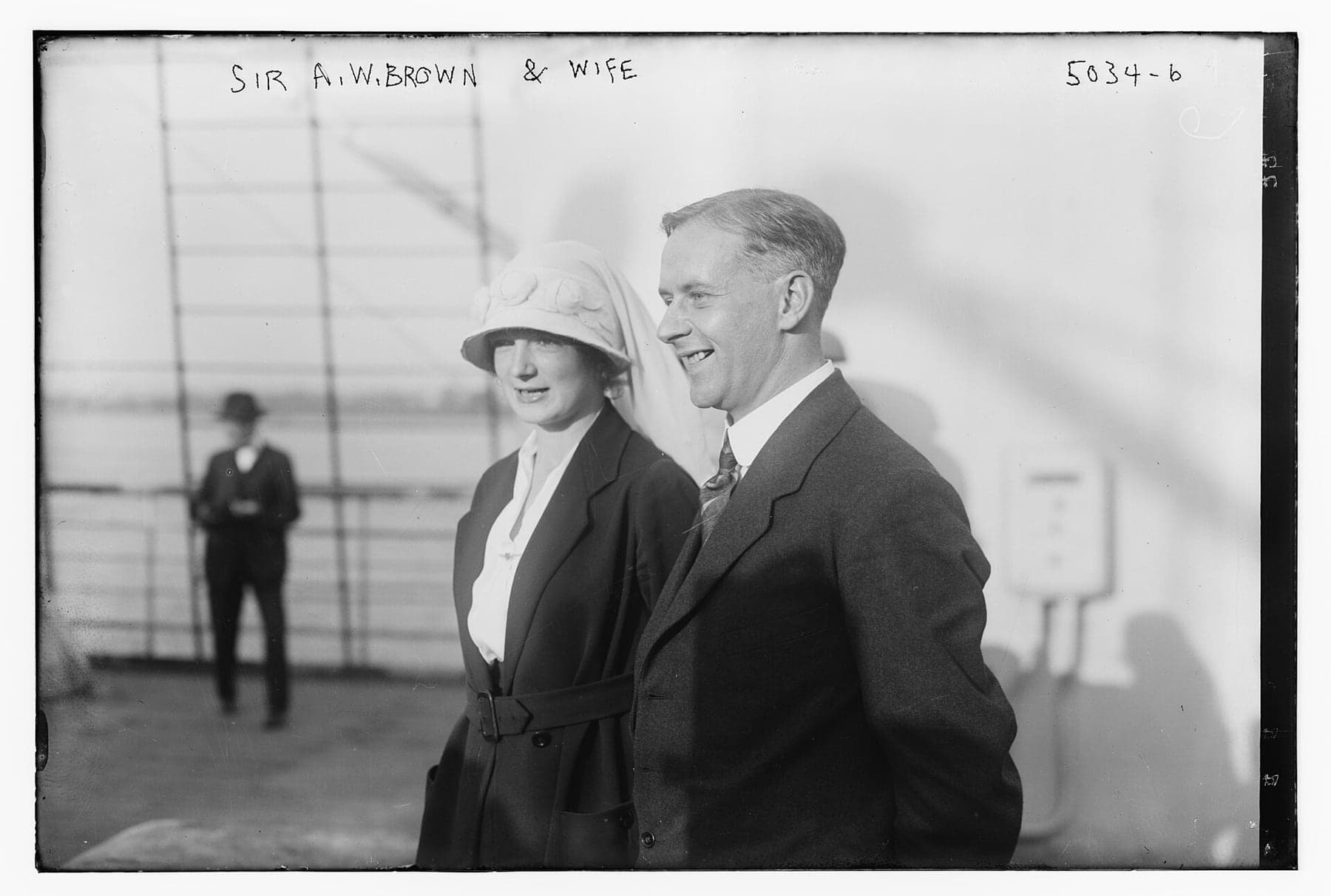
Alcock did not live out the year. On 18 December 1919 he was flying a new Vickers Viking amphibian to the Paris aeronautical show when he came down in fog at Côte d'Évrard, near Rouen, and died of his injuries the same day. He was twenty-seven. Brown, who had married Kathleen Kennedy days after the knighthood, never flew the Atlantic again and largely withdrew from aviation; he died in 1948.
Legacy
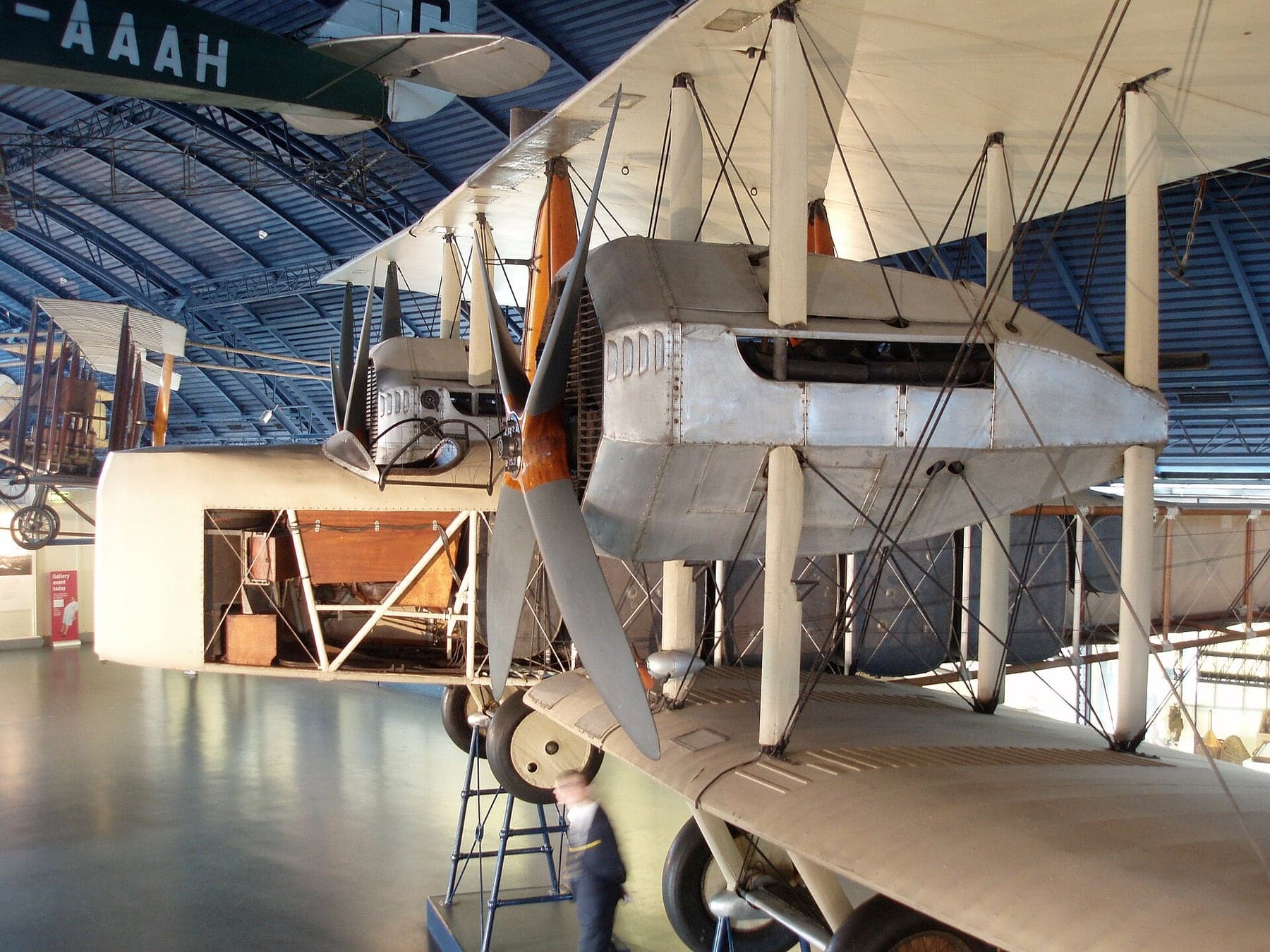
Vickers gave the aeroplane to the nation. The transatlantic Vimy was repaired, exhibited, and has hung in the Science Museum in London ever since, not a replica but the machine itself, fabric patched where the bog tore it, the same two Rolls-Royce Eagle VIII engines in its nacelles.
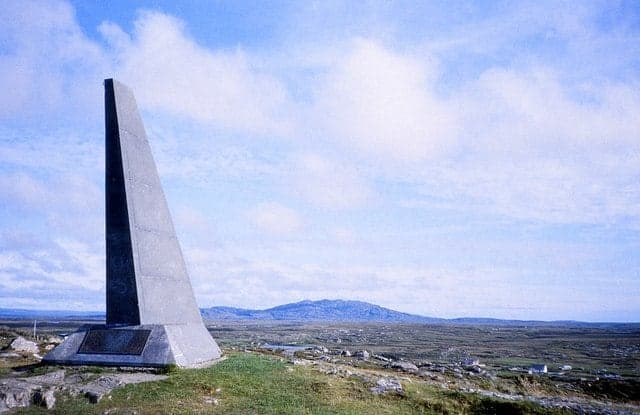
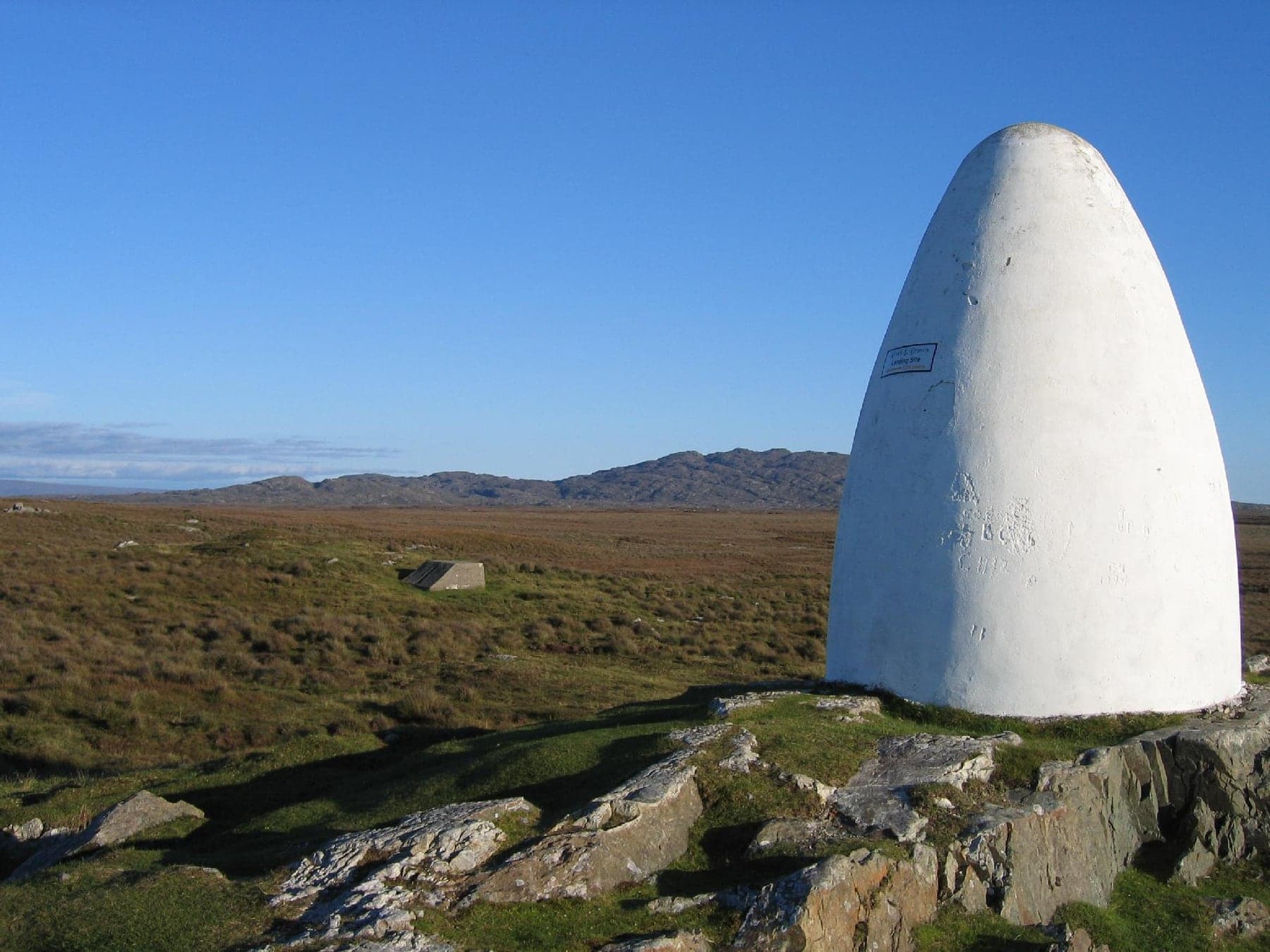
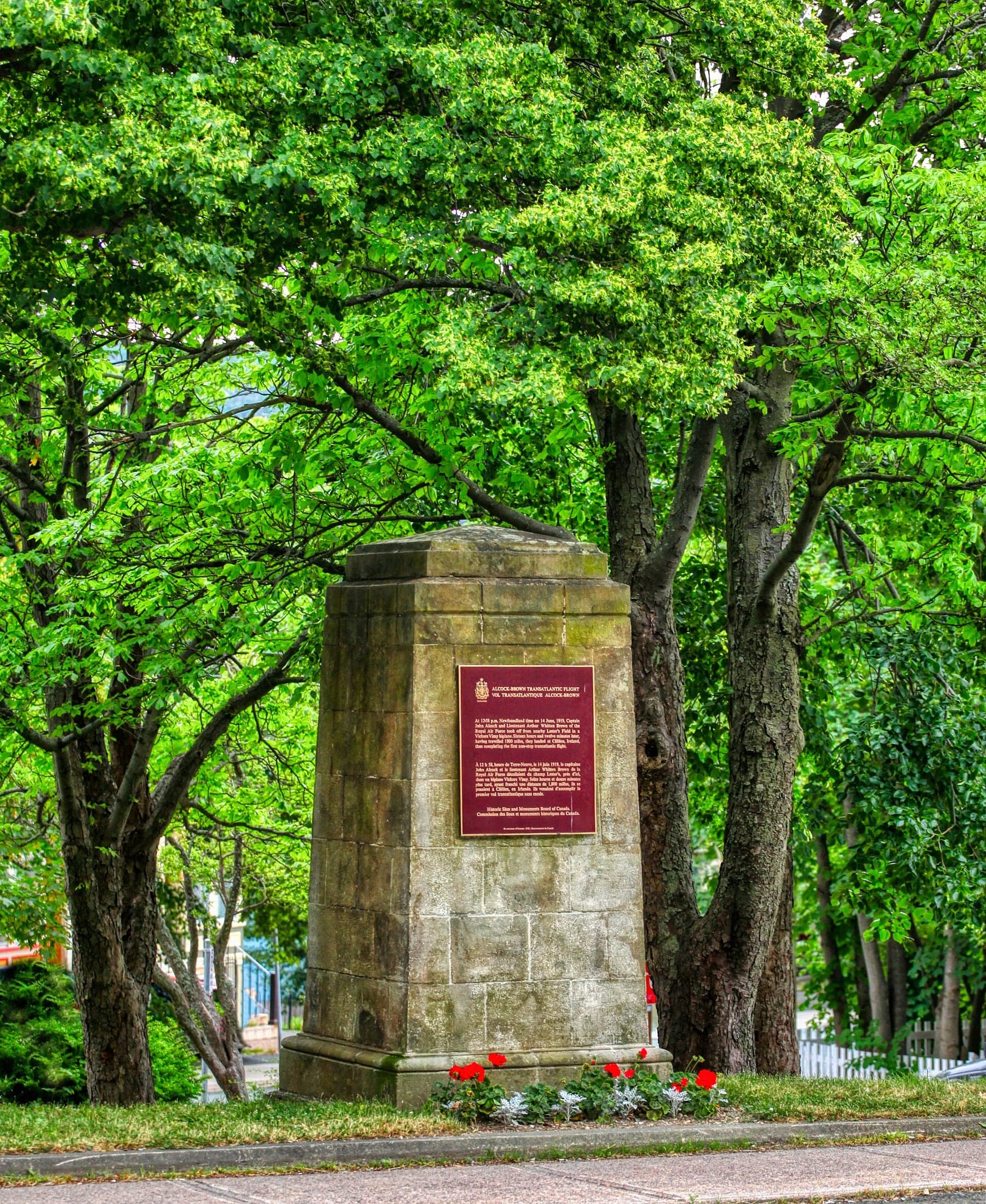
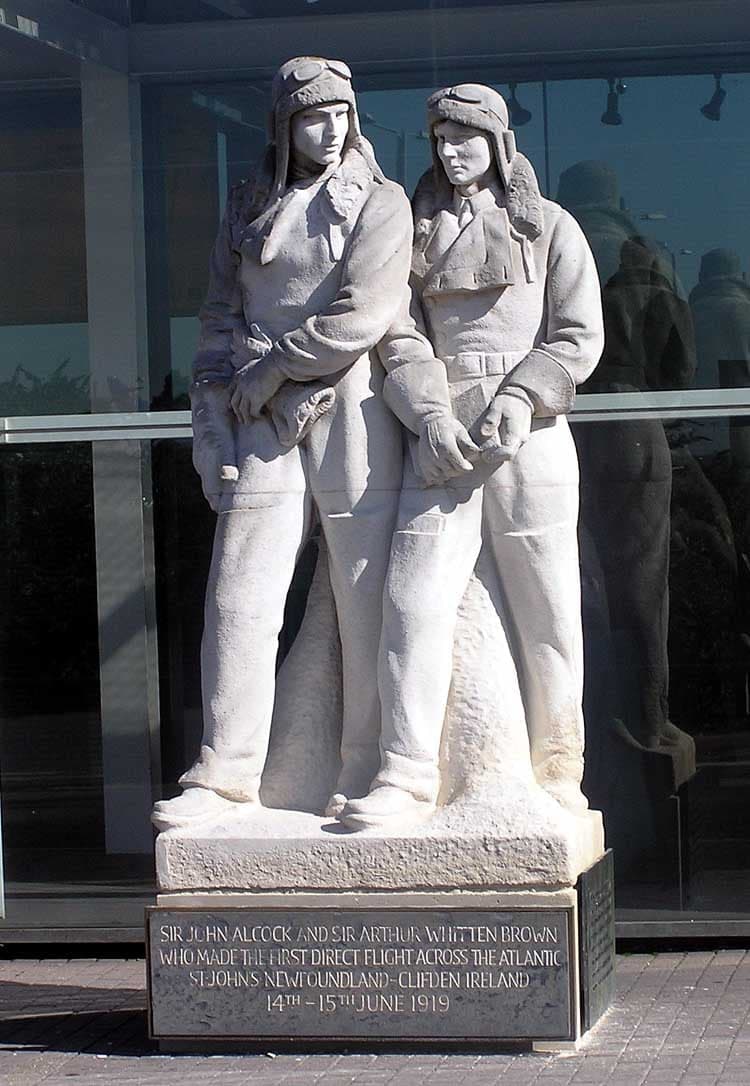
In Ireland the landing site is marked twice. A white limestone cairn shaped like an aircraft tail stands in the bog at Derrygimlagh where the Vimy nosed over, and a larger tail-fin sculpture rises on Errislannan Hill above it, put up in 1959 for the fortieth anniversary and visible from the road to Clifden. A few hundred metres away lie the concrete ruins of Marconi's transatlantic wireless station, whose operators were the first to reach the airmen: the two technologies that shrank the same ocean sit within sight of each other. At St John's a monument stands near the field they left from, and at London Heathrow William McMillan's bronze of the pair, unveiled in 1954, faces the terminals.
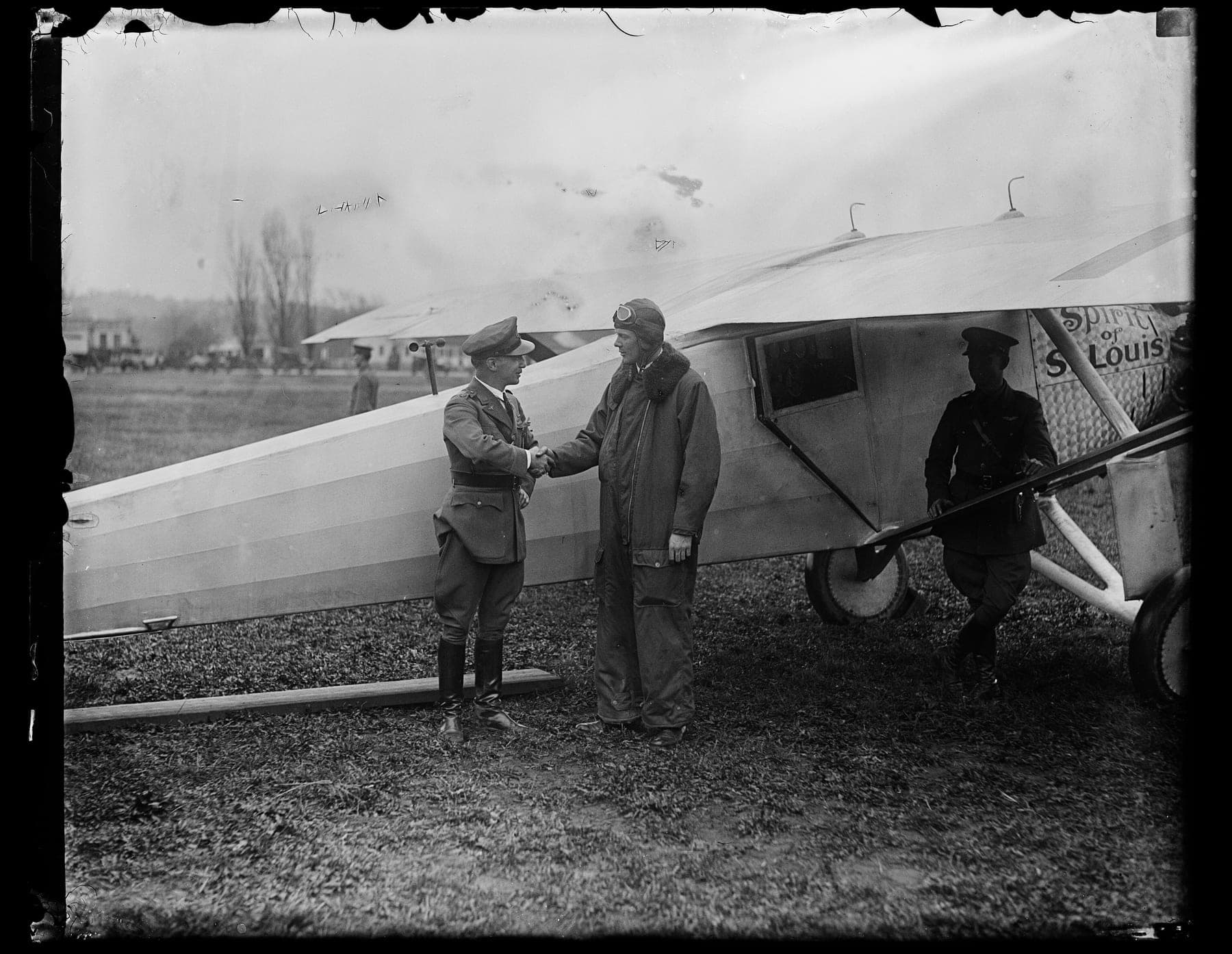
The flight's practical lesson was read quickly. Alcock and Brown had crossed with a war-surplus bomber, a sextant, a drift indicator and no radio after the first hour, and they had survived fog, icing and a spin recovered a hundred feet above the sea. What it proved was not that the Atlantic was ready for airline traffic, regular transatlantic services were still twenty years away, but that the distance itself was no longer the obstacle. Weather and navigation were.
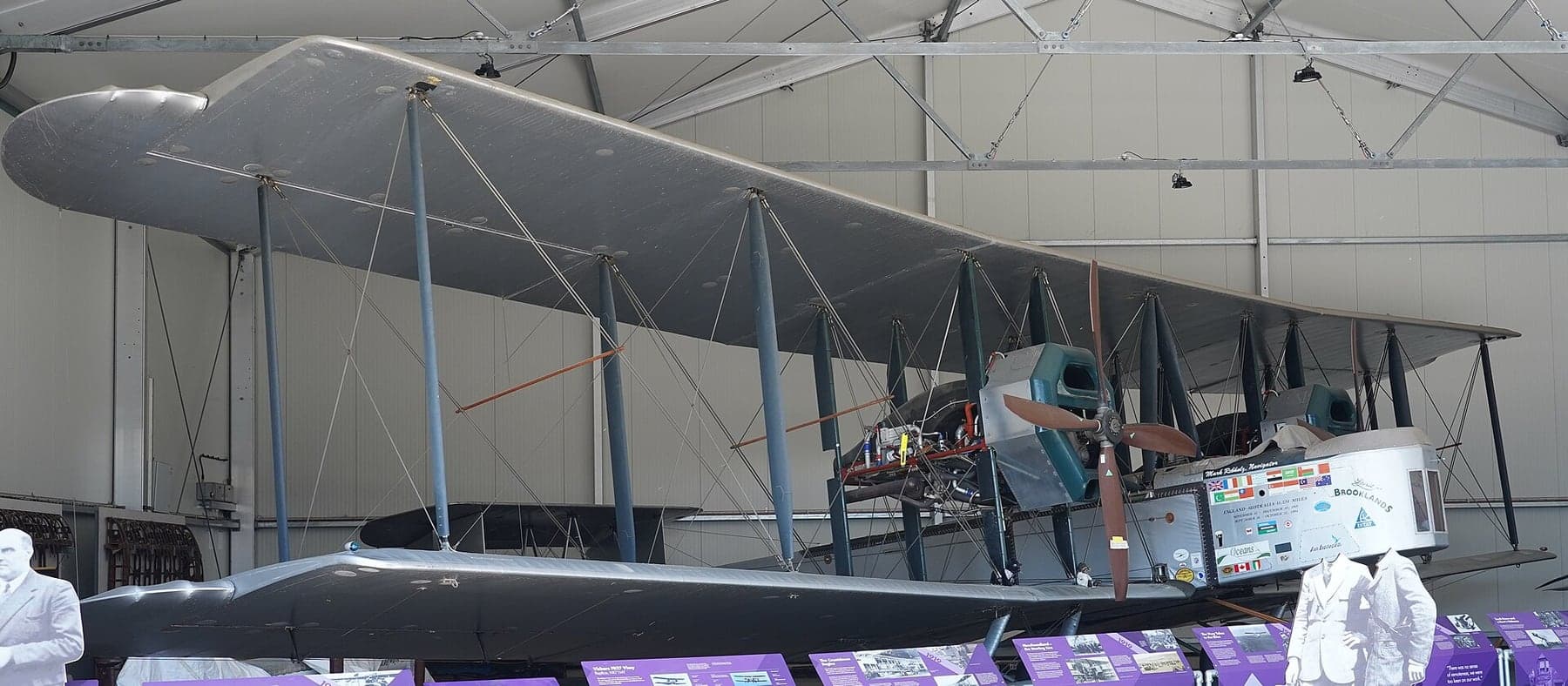
In 2005 an accurate flying replica, NX71MY, was flown from St John's to Clifden by Steve Fossett and Mark Rebholz, the same route in the same shape of aeroplane, with modern weather forecasting and modern instruments. It took them a little under nineteen hours. The comparison is the fairest measure of what the first crossing cost.
The race for the Atlantic prize
A prize offered before the war, reopened after it, and four crews waiting out the weather in Newfoundland in the spring of 1919.
April 1913
The Daily Mail offers £10,000
Lord Northcliffe's paper offers the sum for the first crossing of the Atlantic by aeroplane in under seventy-two consecutive hours, in either direction.
August 1914
The war suspends the competition
Aviation spends four years being pushed forward by other pressures. The aeroplanes that will attempt the Atlantic are the bombers those years produced.
November 1918
The prize is reopened
With the Armistice the offer stands again, and within months four teams ship machines to Newfoundland, the closest usable land to Ireland.
May 8, 1919Rockaway, New York
The US Navy's NC flying boats set out
Three Curtiss NC boats leave Rockaway for Newfoundland, supported by a line of destroyers stationed across the ocean.
May 18, 1919
Hawker and Mackenzie-Grieve ditch
The Sopwith Atlantic leaves Newfoundland, loses cooling and comes down in mid-ocean. A Danish steamer without wireless picks the crew up; for six days they are presumed dead.
May 27, 1919Lisbon, Portugal
The NC-4 reaches Lisbon
Read's boat completes the first aerial crossing of the Atlantic, by way of the Azores and in stages, nineteen days after leaving New York.
May 26, 1919St John's, Newfoundland
The Vimy arrives in crates
Vickers' machine is landed at St John's and assembled in the open at Lester's Field, a hayfield cleared of walls and boulders.
June 14, 1919Lester's Field, St John's
Alcock and Brown take off
Heavily loaded, the Vimy uses almost the whole field and clears the boundary by a few feet at 16:13 GMT.
June 15, 1919Derrygimlagh, County Galway
They land in a bog at Clifden
What looks like a green field is Derrygimlagh bog. The Vimy runs on, sinks and tips onto its nose; neither man is hurt.
June 20, 1919London
Churchill hands over the cheque
The £10,000 is presented at the Savoy; the airmen share part of it with the Vickers mechanics.
June 21, 1919Windsor
Both men are knighted
King George V confers a KBE on each at Windsor.
July 6, 1919Mineola, New York
The airship R34 reaches New York
Scott's airship crosses from Scotland and returns, the first east-to-west aerial crossing and the first there and back.
Sixteen hours over the ocean
A night crossing with a failed wireless, a split exhaust, no stars for most of it, and a spin recovered just above the water.
June 14, 1919
16:13 GMT, take-off
The Vimy leaves Lester's Field carrying 1,040 US gal of fuel, sandwiches, coffee and a small bag of mail.
June 14, 1919
The wireless dies
The generator fails within the first hour, leaving the crew without contact for the rest of the flight.
June 14, 1919
An exhaust pipe splits
A section of the starboard exhaust burns away and breaks off, and from then on the engine noise is loud enough to make speech impossible.
June 14, 1919
Fog and cloud close in
Brown loses the horizon and almost all sight of sun, moon and stars, the only references his sextant can use.
June 15, 1919
A spiral dive, recovered near the sea
In thick cloud the Vimy stalls and falls out of control. Alcock recovers with the aircraft close enough to the water for the crew to hear the sea.
June 15, 1919
Ice on the machine
Snow and freezing rain block the fuel gauges and coat the airframe; the flight climbs and descends looking for air that will not ice.
June 15, 1919
08:15 GMT, landfall over Ireland
Two small islands appear, then the Connemara coast: they have crossed with their navigation intact.
June 15, 1919
08:40 GMT, down in the bog
Aiming for the flattest green ground near the Marconi station, they land in peat. The machine tips; the flight is over after 15 hours 57 minutes.
Who was there
- John Alcock1892 to 1919
- PilotA Manchester-born pilot who had spent much of the war as a prisoner in Turkey after ditching a bomber in the Gulf of Xeros. He died six months after the crossing, flying a new Vickers amphibian to the Paris show.
- Arthur Whitten Brown1886 to 1948
- NavigatorGlasgow-born of American parents; a leg was permanently damaged when he was shot down over France. He navigated by sextant and dead reckoning through a night with almost no sight of the stars.
- Harry Hawker1889 to 1921
- Rival competitorWith Kenneth Mackenzie-Grieve he set out from Newfoundland on 18 May 1919 in the Sopwith Atlantic, ditched in mid-ocean and was picked up by a Danish steamer with no wireless. Both were believed dead for six days.
- Kenneth Mackenzie-Grieve
- Navigator to HawkerA Royal Navy officer who navigated the Sopwith attempt.
- Albert Cushing Read1887 to 1967
- Commander of the NC-4Commanded the US Navy flying boat that crossed to Lisbon by way of the Azores in May 1919: the first aerial crossing of the Atlantic, made in stages.
- Rex Pierson1891 to 1948
- Designer of the VimyVickers' chief designer, responsible for the Vimy bomber from which the transatlantic machine was converted.
- Lord Northcliffe1865 to 1922
- Proprietor of the Daily MailOffered the £10,000 prize in 1913 and reopened it after the war, one of a series of prizes he used to push aviation forward.
- Winston Churchill1874 to 1965
- Secretary of State for AirPresented the Daily Mail cheque at the Savoy on 20 June 1919.
- George Herbert Scott1888 to 1930
- Commander of the R34Took the airship R34 from Scotland to New York and back in July 1919, the first east-to-west aerial crossing and the first return.
Competing claims
Alcock and Brown
Accepted14 to 15 June 1919
The claim
The first nonstop flight across the Atlantic Ocean by aeroplane.
The evidence
Accepted, and the wording matters: nonstop, and by aeroplane. The Vimy left Newfoundland and landed in Ireland without touching down, observed at both ends, and the Daily Mail paid its prize within a week.
Albert Read and the crew of the NC-4
Accepted8 to 27 May 1919
The claim
The first aerial crossing of the Atlantic.
The evidence
Accepted as stated. The NC-4 crossed three weeks earlier by way of Newfoundland, the Azores and Lisbon, with a chain of destroyers beneath the route: a crossing in stages, which is why it does not compete with the nonstop claim.
The airship R34
Accepted2 to 13 July 1919
The claim
The first east-to-west crossing, and the first return crossing, by air.
The evidence
Accepted. Three weeks after the Vimy, Scott's airship flew from Scotland to New York against the prevailing wind and flew home again, a different achievement, by a different kind of aircraft.
Popular accounts of the flight
Disputed15 June 1919
The claim
Brown climbed out onto the wings in flight to chip ice from the engines.
The evidence
Disputed. The story is repeated widely, but Brown's own account of the flight describes clearing snow and ice from the fuel gauges and the instruments in the airflow beside the cockpit, not walking the wings. Museums that hold the aircraft tell it the cautious way; the cinematic version appears to have grown in the retelling.
Harry Hawker and Kenneth Mackenzie-Grieve
Rejected18 May 1919
The claim
That they would have crossed first but for a cooling failure.
The evidence
Rejected as a claim to the crossing, though the attempt was real and nearly fatal. They came down in mid-ocean, were rescued by a ship without wireless, and were presumed dead for six days. A crossing not completed is not a crossing.
Related entries
- Flying the Atlantic in Sixteen Hours (Arthur Whitten Brown, 1920), Project Gutenberg
- Alcock and Brown's Vickers Vimy Biplane (object 1919-476 Pt1), Science Museum Group Collection
- The first non-stop transatlantic flight, Science Museum Blog
- Alcock, Brown and the first non-stop transatlantic flight, Science and Industry Museum
- Beginnings: The Great Atlantic Air Race (1919), Digital Museums Canada — Aviation in Harbour Grace
- Parrsboro's connection to the Handley Page 'Atlantic', Historic Nova Scotia
- Our Atlantic Attempt (H. G. Hawker and K. Mackenzie Grieve, 1919), Internet Archive
- The Sun or the Moon or the Stars, Vintage Wings of Canada
- Transatlantic flight of Alcock and Brown, Wikipedia
- NC-4, Wikipedia
Checked September 15, 2026