Manufacturer
Supermarine
United Kingdom1913
Supermarine Aviation Works Ltd
Company
- Country
- United Kingdom
- Headquarters
- Woolston, Southampton
Founding
- Founded
- 1913Woolston, Southampton
- Founded as
- Pemberton-Billing Ltd
- Founders
- Noel Pemberton Billing
- Former names
- Pemberton-Billing Ltd (1913–1916)
Supermarine was the British maker of seaplanes and flying boats that won the Schneider Trophy outright with three consecutive victories and built the Spitfire. Founded in 1913 as Pemberton-Billing Ltd at Woolston, Southampton, it became part of Vickers in 1928, and its name disappeared when Vickers-Armstrongs joined the British Aircraft Corporation in 1960.
Supermarine was a small British aircraft firm on the River Itchen at Woolston, Southampton, which spent the 1920s building flying boats, won the Schneider Trophy outright for Britain with three consecutive victories, and then produced the Spitfire. It is one of the few companies whose entire reputation rests on a line that can be drawn from one of those things to the next.
The line is real but it is not as straight as it is usually told. The racing seaplanes taught R. J. Mitchell about speed, cooling and structural refinement, and the Rolls-Royce engines they were built around led to the Merlin. But the Spitfire did not emerge from the S.6B; it emerged from a failed aircraft, the Type 224, which Mitchell abandoned and redesigned from first principles.
The company was never large and was never independent for long. Vickers bought it in 1928, sixteen years before the Spitfire's peak production, and from 1938 Supermarine was a division of Vickers-Armstrongs that kept its own name and its own drawing office. That name disappeared in 1960 when Vickers-Armstrongs' aircraft interests were folded into the British Aircraft Corporation, by which time Supermarine had built the Royal Navy's first jet fighter and its last aircraft was already in service.
What happened in between is one of the harder industrial stories of the war. The Woolston and Itchen works were bombed out of existence in September 1940, and rather than rebuild them the company scattered Spitfire production across requisitioned garages, laundries and bus depots in half a dozen towns. The aeroplane that is remembered as a single beautiful object was, for most of its production life, made almost nowhere in particular.
Two things make the company worth a long entry rather than a paragraph attached to the Spitfire. The first is that it shows how a national capability can rest on a single drawing office of a few dozen people, and how fragile that is: Supermarine's decisive designer died in 1937 and its factory was destroyed in 1940, and the programme survived both only because of decisions taken by other people under pressure. The second is that its history runs the whole arc of the propeller era and into the jet one, from a quadruplane built to intercept Zeppelins to a carrier strike aircraft built to deliver a nuclear weapon, in forty-four years and on the same stretch of river.
Origins
Noel Pemberton Billing was a promoter before he was a manufacturer: a man who made and lost money in several trades and who, in 1911, set up a motor-launch business on the Itchen. He took his aviator's certificate in 1913, reportedly on a wager that he could qualify within a day of first sitting in an aeroplane, and turned the yard to building aircraft. Pemberton-Billing Ltd was formally established the following year.
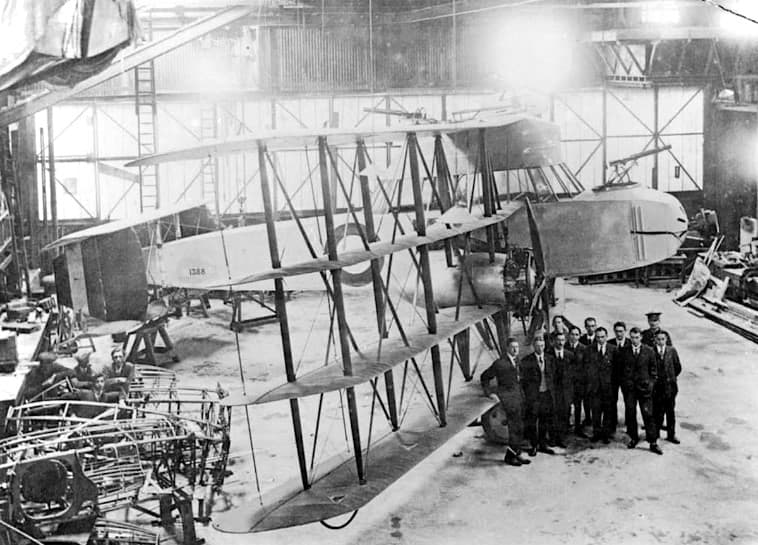
The early products were not a promising start. Pemberton Billing's own designs included two experimental quadruplanes, the P.B.29 and the Supermarine Nighthawk, built to loiter at altitude and shoot down Zeppelins: an idea that was tactically reasonable in 1916 and aerodynamically hopeless. Neither entered service, and neither hinted at what the works would eventually produce.
The decisive event was Pemberton Billing's departure. Elected to Parliament in 1916, he sold his shares to his associate Hubert Scott-Paine and the other directors, who re-registered the business as Supermarine Aviation Works Ltd on 27 June 1916. The founder's name came off the gate within three years of the company's creation, and the man whose aircraft the company is remembered for had not yet been hired.
Scott-Paine hired him. R. J. Mitchell joined in 1917 as a personal assistant, aged twenty-two, and rose fast enough that by 1919 he was chief designer and by 1920 chief engineer. He stayed for twenty years and designed, in that time, almost everything the company is known for. The pattern is worth noting because it recurs: Supermarine's significance came from individuals it found early rather than from scale, capital or any particular advantage of its site.
What the site did give it was water. The Itchen frontage made the works a natural home for marine aircraft at exactly the moment when the Royal Air Force and the airlines both believed the future of long-range flight belonged to the flying boat. For twenty years that belief was the company's business.
Scott-Paine's own later career is a reminder of how fluid this industry still was. Having bought the aircraft company and given Mitchell his start, he sold out in the 1920s and went on to build fast marine craft, a trade that led in time to the motor torpedo boats and rescue launches of the next war. The Itchen produced boats and aeroplanes more or less interchangeably for thirty years, and the people moved between them.
The early company was small, under-capitalised and dependent on Admiralty and Air Ministry orders that could be withdrawn without notice. It survived the lean years after 1918: when the market was flooded with war-surplus airframes and most British aircraft firms either closed or diversified into car bodies and furniture: largely because flying boats were a specialism the service could not get elsewhere, and because a racing programme kept its name in the newspapers.
Expansion
The Schneider Trophy was a seaplane race, and for a decade it was also the most-watched engineering competition in the world. The rule that mattered was the one about permanence: a nation winning three consecutive contests would keep the trophy outright, and the contest would end.
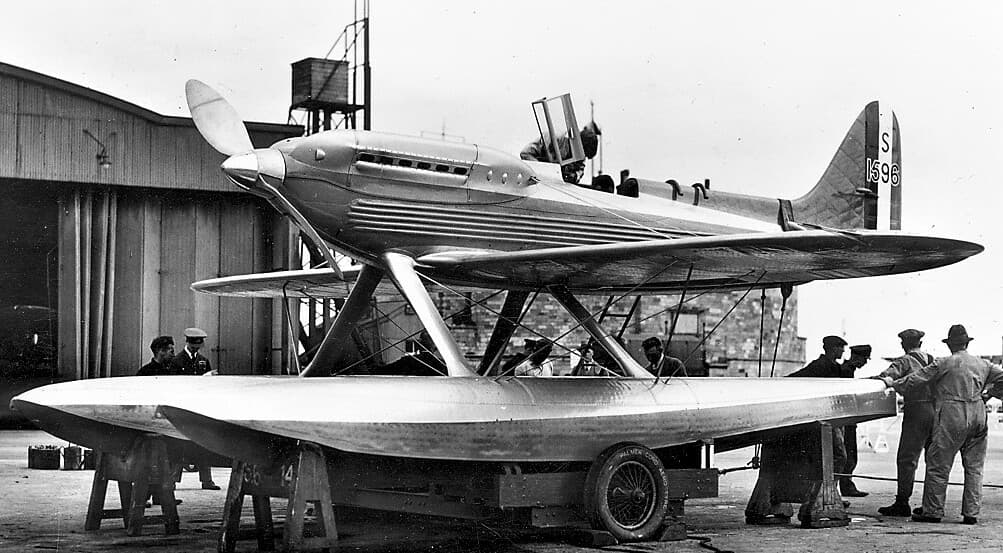
Mitchell's entries ran through a sequence of increasingly uncompromising machines. The S.4 of 1925 was a cantilever monoplane of startling cleanliness that crashed before it could race. The S.5 won at Venice in 1927. The S.6, built around a new Rolls-Royce engine, won at Calshot in 1929. Each was less an aeroplane than an airframe wrapped as tightly as possible around a motor, with the floats doing double duty as fuel tanks and the radiators built flush into the wing and float surfaces because there was no drag budget for anything that stood proud.
The third win nearly did not happen. The British government withdrew its support for the 1931 team on cost grounds, and the entry was saved by a private donation of £100,000 from Lucy, Lady Houston, after a public campaign. It is an uncomfortable fact for a national-triumph story that the decisive British victory in the Schneider Trophy was privately funded after the state declined to pay for it.
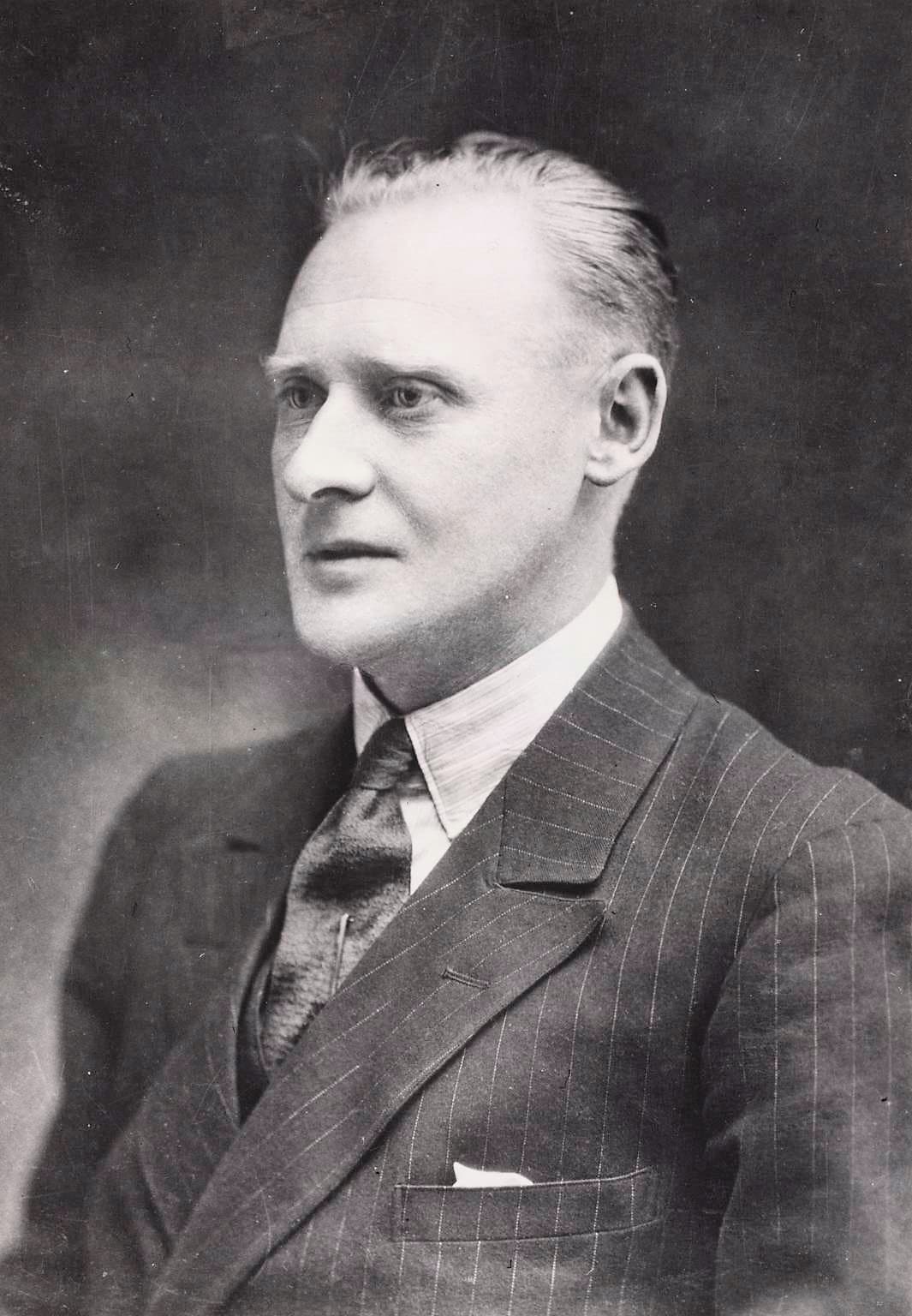
The S.6B was built around the supercharged Rolls-Royce R, a V-12 producing some 1,900 horsepower, and on 13 September 1931 at Calshot, John Boothman flew it round the course at an average of 295.52 kt. There was no competing entry; the race was a fly-over. It was still the third consecutive win, and Britain kept the trophy. Sixteen days later, on 29 September, George Stainforth took the same type to a world speed record of 354 kt.
The engineering inheritance was genuine, if indirect. The Rolls-Royce R's development fed into the Merlin; the discipline of wrapping a minimum airframe around a maximum engine shaped how Mitchell thought; and the company acquired a reputation for refinement that mattered when the Air Ministry came looking for a fighter. S1595, the winning S.6B, survives in the Science Museum.
It is worth being clear about what the racing programme actually was. These were not aircraft in any useful sense: they could not turn tightly, could not fly slowly, were close to unmanageable on the water and were flown by a specially formed Royal Air Force unit rather than by company pilots. The S.6B's engine ran for minutes at a time at power settings that would have destroyed it in sustained use. A Schneider machine was a test rig with a pilot in it.
That is also why the inheritance has to be stated carefully. The Spitfire did not borrow the S.6B's wing, structure or layout. What transferred was less tangible and more valuable: an understanding of how much drag a radiator costs and how to hide one, a working relationship with Rolls-Royce at the limit of what its engines could do, and a designer who had spent six years being told that a tenth of a per cent of frontal area was worth arguing about. The Science Museum's own framing: that the S.6B greatly influenced Mitchell's subsequent design of the Spitfire: is right as far as it goes, and is routinely stretched into something stronger than the evidence supports.
Wartime production
The aircraft that made Supermarine's name began as a failure. The Type 224, built to a 1930 Air Ministry specification for a fighter, flew in 1934 with a cranked wing, fixed spatted undercarriage and an evaporative cooling system that did not work. It was slower than the biplanes it was meant to replace, and the Air Ministry bought somebody else's design.
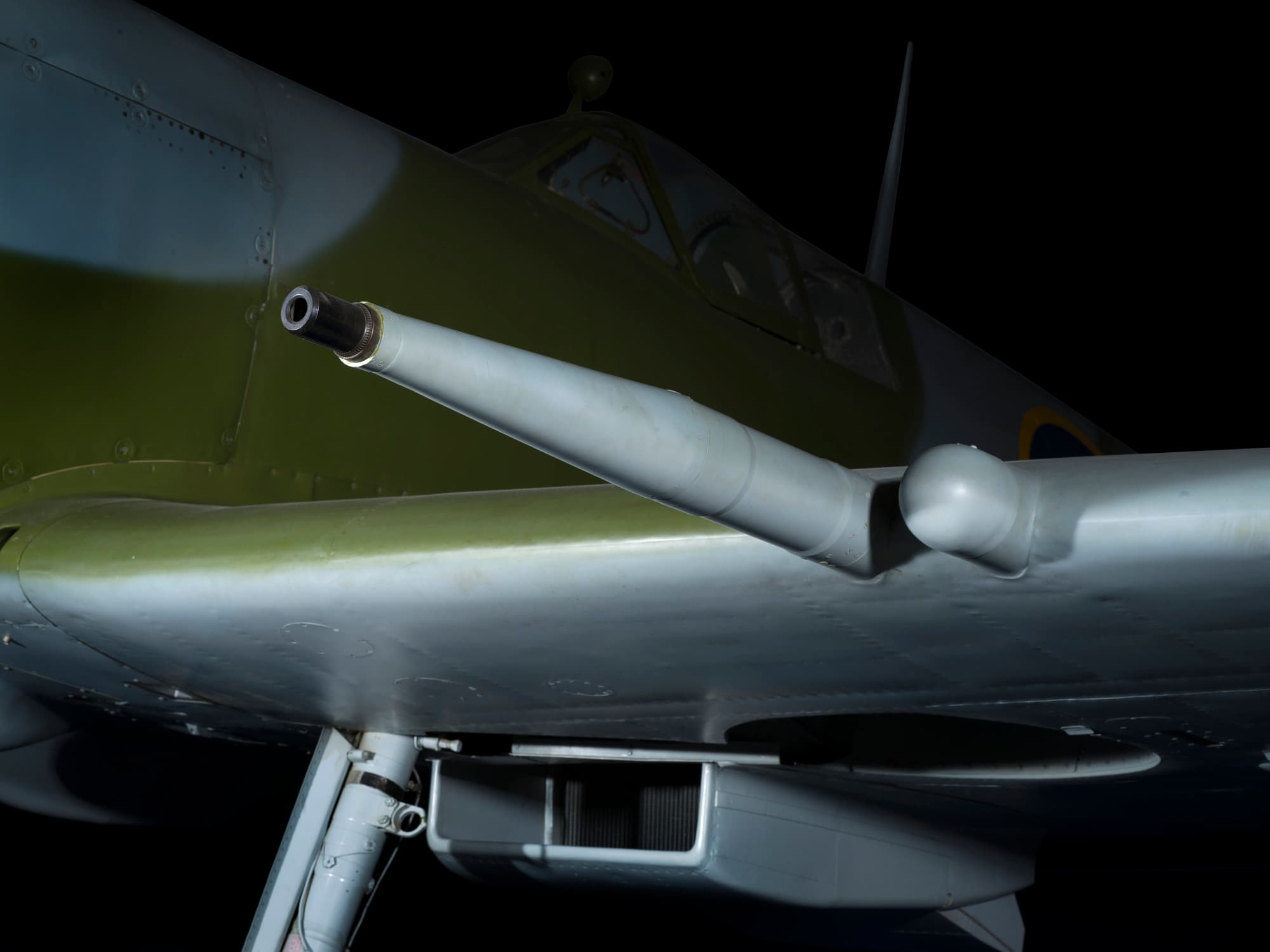
Mitchell started again, privately, and the second attempt discarded nearly everything. What replaced it was a thin elliptical wing, retractable undercarriage, enclosed cockpit, stressed-skin construction and the new Rolls-Royce PV-XII that would become the Merlin. The prototype, K5054, first flew from Eastleigh on 5 March 1936 in the hands of Vickers' chief test pilot Joseph "Mutt" Summers. The Air Ministry ordered 310 on 3 June 1936, before anyone could be sure the aircraft worked.
Mitchell did not see much of it. He had been diagnosed with cancer in 1933, was too ill to attend the first flight, and watched the aircraft fly from his garden in Southampton. He died on 11 June 1937, aged forty-two, by which time only a handful of Spitfires existed. His assistant Joseph Smith took over the drawing office and ran the design through the whole war and every mark that followed: which is the larger half of the work, and is routinely forgotten.
The first production aircraft, K9787, flew from Eastleigh in May 1937, and a further 200 were ordered in March 1938. Getting from there to quantity was the company's real crisis, and it is covered below.
Then the Luftwaffe arrived. Over 24 to 26 September 1940, raids on Southampton struck the Woolston and Itchen works directly. The buildings were wrecked and 179 people were killed. The works that had designed and built the Spitfire never produced another one. What saved the programme was that component jigs had already been moved out to subcontractors across Southampton and the Home Counties, a dispersal begun before the raids and completed, under government order, after them.
The aircraft's development through the war belongs as much to the company as to the airframe. A fighter designed in 1935 around a 1,000-horsepower engine was still competitive in 1945 around one of more than double that, which required continual redesign of the wing, the radiators, the fuselage and ultimately the whole airframe around the Rolls-Royce Griffon. Twenty-four marks were produced. That is not a tribute to the original drawing so much as to the office that kept editing it.
The naval conversion was the harder engineering problem and is the less celebrated. The Seafire took an aeroplane with a long, thin, low-mounted wing and a narrow-track undercarriage, an aircraft optimised for a long concrete runway, and asked it to stop on a moving deck. Folding wings, arrester gear and strengthened structure followed, and the type's deck-landing accident record stayed poor throughout. It is a fair illustration of a general rule: the characteristics that make an aeroplane exceptional in one role are usually the same ones that make it bad at another.
The jet age
Supermarine's war ended with two attempts to extend the Spitfire and a decision to stop. The Spiteful and its naval counterpart the Seafang replaced the elliptical wing with a new laminar-flow design, and both arrived too late to matter: the piston fighter was finished as a category and the company knew it.
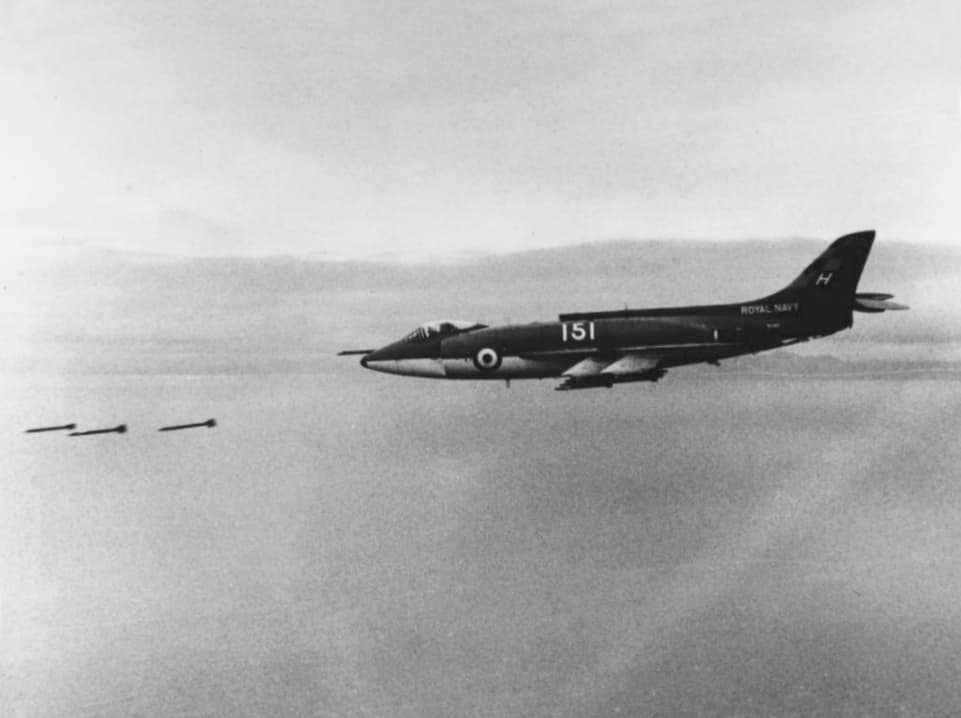
What the Spiteful did contribute was its wing, which was carried over onto a jet fuselage to produce the Attacker, the Royal Navy's first jet fighter. It was a transitional aircraft in the most literal sense, with a tailwheel undercarriage that made carrier work awkward, and it is remembered less for what it was than for what it started.
The Swift followed, swept-wing and intended as an RAF fighter, and it was not a success in that role. Its early marks had serious handling and control problems at altitude and it was withdrawn from the day-fighter job; it found genuine work in low-level fighter-reconnaissance instead. Supermarine's time as a maker of competitive land-based fighters had ended quietly, in a way the company's reputation has never quite registered.
The naval line continued, through a series of experimental types (the 508, 525 and 544) each feeding into the next, until the last of them became the Scimitar. The prototype flew in 1956 and the production aircraft served with the Royal Navy from 1958 to 1969: a large, twin-Avon, low-level strike aircraft built around the job of getting a nuclear weapon off a carrier deck. It was powerful, demanding and suffered a punishing accident rate.
The Scimitar was the last aircraft to carry the Supermarine name. By the time it left service the company that designed it no longer existed as a separate entity, which is a fitting end for a firm whose independence had ended thirty years before its name did.
The post-war decade exposed what the company had and had not been good at. Supermarine's strength was aerodynamic refinement of a known configuration; its weakness was being first into an unfamiliar one. Every British manufacturer was learning transonic aerodynamics at once, by building aeroplanes and finding out, and Supermarine's attempts were neither the best nor the worst of them: they were simply no longer exceptional, which for a firm whose entire standing rested on being exceptional was the same as failing.
The naval work was the better fit, and the reason is organisational rather than technical. Carrier aircraft are built in small numbers to demanding and unusual requirements, which suits a company with a strong drawing office and modest production capacity. The 508, 525 and 544 prototypes that led to the Scimitar were exactly that kind of programme: iterative, experimental, low-volume. It was a sustainable niche, and it was not large enough to protect the name when the government reorganised the industry around four large groups.
Products
Behind the two famous achievements sat twenty years of marine aircraft, which is what the company actually did for most of its life.
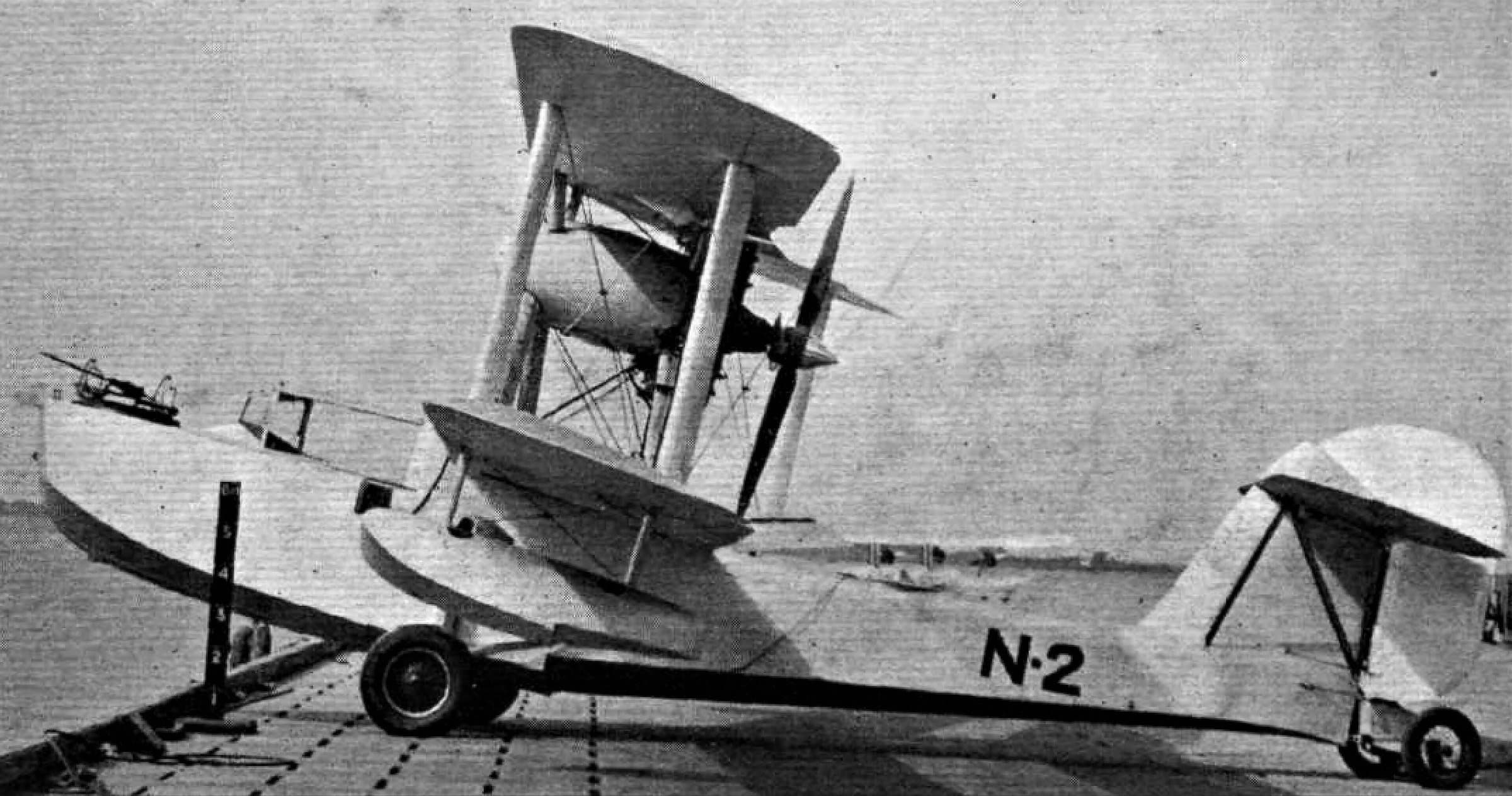
The flying boats were workmanlike and long-lived. The Southampton of the mid-1920s gave the Royal Air Force a reliable long-range patrol aircraft and a series of showpiece formation cruises that did more for British aviation prestige abroad than any single aircraft of the decade. The Stranraer followed in the 1930s, and was still in Canadian service long after the type had left the RAF.
The most useful of them was the smallest. The Walrus: an ungainly single-engined amphibian with a pusher propeller, developed from the Seagull V built for Australia: became the aircraft that pulled downed aircrew out of the sea. It was catapulted from cruisers for gunnery spotting and ended the war as the backbone of air-sea rescue, a role nobody had designed it for. Its successor, the Sea Otter, did the same job with a tractor propeller. Neither is beautiful and neither is much remembered, and between them they saved a great many lives.
Alongside these ran the racing seaplanes and, from 1936, the Spitfire and its naval derivative the Seafire: an adaptation that was harder than it sounds, since an aircraft designed around a long thin wing and a narrow-track undercarriage is close to the worst possible starting point for deck landings.
The range is the point. A company remembered for one fighter spent most of its existence building boats that happened to fly, for a customer that expected the future of long-distance aviation to be waterborne. That the expectation turned out to be wrong is not something anyone at Woolston could have known in 1925.
The flying-boat business also explains the company's geography and its limits. A marine aircraft manufacturer needs deep water at the factory door, which fixed Supermarine at Woolston and made it, in 1940, a target with a known address on a coastline the Luftwaffe flew along every night. A landplane manufacturer can be put anywhere; a flying-boat works cannot.
It explains the customer relationship too. Flying boats were bought by the Royal Air Force for colonial policing and maritime patrol and by the airlines for routes where there were no runways, which meant Supermarine's market was tied to the shape of the British Empire and to the state of airfield construction worldwide. Both changed fast. By 1945 there were long paved runways nearly everywhere, built for bombers, and the case for an aircraft that carried its own aerodrome around with it had largely evaporated. The company's original speciality did not decline because its aircraft got worse; it declined because the ground got better.
Manufacturing
The bombing of September 1940 forced the most unusual industrial response of the British war effort, and it is the part of Supermarine's story that deserves to be better known than it is.
Rather than rebuild a large, identifiable, coastal factory that the Luftwaffe had already found twice, the Ministry of Aircraft Production dispersed Spitfire manufacture. Production was scattered across more than thirty requisitioned sites in and around Southampton, with further clusters at Winchester, Salisbury, Trowbridge, Newbury and Reading. The premises were whatever was available and roofed: garages, laundries, bus depots, a brewery, workshops behind shops. Final assembly and flight testing happened at airfields; the components came from everywhere.
The design office moved too. Hursley Park, a country house outside Winchester, was requisitioned to rehouse the Supermarine design and production departments, with the move beginning on 7 December 1940. The drawings for the most-produced British fighter of the war were made in a requisitioned mansion while the aircraft itself was assembled in commandeered garages.
The supply chain beyond the dispersal sites was larger still, running to more than three hundred companies from Devon to Scotland. The scale of the subcontracting is why the system was, in the words of the trust that documents it, an unholy mess: and also why it was impossible to destroy by bombing. A factory can be found and hit. A thousand small premises cannot.
Volume, however, came from somewhere else. The government's shadow factory at Castle Bromwich in Birmingham, run by Vickers-Armstrongs from 1940 after a troubled start under the motor industry, built more Spitfires than everyone else combined, 12,129 by BAE Systems' account, with the last leaving in June 1945 and peak output around 320 aircraft a month. Even there only about half the aeroplane was made in house. In 1945 Vickers-Armstrongs acquired South Marston in Wiltshire, which became Supermarine's post-war home.
The dispersal had been started before it became urgent. Component jigs were already going out to subcontractors across Southampton and the Home Counties when the raids came, which is the only reason the September attacks did not stop Spitfire production outright. After them the policy became total, ordered from the top by the Ministry of Aircraft Production, and the company that had designed the aeroplane effectively stopped being the place where it was made.
What this cost in efficiency is not usually admitted. Running a fighter programme across hundreds of small premises, with components travelling by road between towns and no single plant able to see the whole aircraft, is an enormously wasteful way to build anything. It was adopted because the alternative was not a more efficient factory but no factory at all. Even at Castle Bromwich, the one site that looked like conventional mass production, only about half the aeroplane was made in house; the rest arrived from the same sprawling supply chain. The Spitfire's production history is a case study in deliberately accepting industrial inefficiency to buy survivability, which is a trade modern manufacturing has spent eighty years forgetting and rediscovering.
Workforce
Dispersal was an industrial decision with an immediate human consequence: the work went to wherever people could be found, and most of the people had never built an aeroplane.
The Woolston and Itchen works had drawn on Southampton and the towns around it, and employed a great many women and girls as the war went on. After the raids that workforce was spread across dozens of small premises and expanded rapidly with local recruits trained from scratch. The skills were taught on site, in garages, to people who in many cases had been doing something else entirely a few weeks earlier, and the output of that arrangement was a high-performance fighter built to tolerances that mattered.
The cost had already been paid in September 1940. The 179 people killed in the two raids on the works were overwhelmingly employees and local residents, not aircrew or soldiers, and they are the largest single body of deaths in this company's history by a wide margin. It is worth stating plainly: Supermarine's most-cited numbers are production totals and race speeds, and its largest number is a casualty list.
The dispersal also changed who could claim the aircraft. Because production was spread across ordinary premises in ordinary towns, a very large number of people in Hampshire and Wiltshire had some direct hand in building Spitfires, and the memory of that work is preserved locally rather than corporately, by a charitable trust in Southampton rather than by any surviving company. The firm that employed them was absorbed and renamed out of existence within fifteen years of the war's end.
There is a second, quieter consequence of building aeroplanes in garages. Dispersal put skilled aircraft work into premises that were part of ordinary civilian streets, which made the boundary between the war industry and the town essentially meaningless. A laundry making wing ribs is not a military target in any sense a bomber crew could identify, and that was precisely the point; but it also meant that the people doing the work had no protection, no shelter arrangements worth the name and no formal recognition of what they were doing.
The composition of that workforce matters to how the Spitfire should be understood. The aircraft is remembered through its pilots, who were few, young, overwhelmingly male and extensively photographed. It was built in large part by women in requisitioned buildings in Hampshire and Wiltshire, who were many, unphotographed and: because the sites were secret and the company that employed them was dissolved within fifteen years, largely undocumented at the time. The recovery of that record has been the work of local volunteers rather than of any institution with an interest in the aeroplane's fame.
Competition
Supermarine's rivalry with Hawker is the one everybody knows, and it was less a rivalry than a division of labour. Sydney Camm's Hurricane was in service first, was easier to build and to repair, and equipped more squadrons during the Battle of Britain than the Spitfire did. Mitchell's aircraft was faster, harder to manufacture and had far more development potential in it: which is why the Hurricane was obsolescent as a fighter by 1942 and the Spitfire was still being redesigned around new engines in 1945.
The more revealing conflict was internal, and it was about drawings. Getting the Spitfire into mass production required handing detailed manufacturing information to subcontractors who had never built aircraft, and Vickers-Armstrongs resisted releasing it. The Air Ministry's response was to threaten the company with having its capacity directed to building somebody else's aeroplane, the Bristol Beaufighter, until the management agreed. The most-produced British fighter of the war reached quantity partly because the state threatened its manufacturer.
That episode says something about where Supermarine sat. It was a designer of exceptional aircraft and a mediocre volume producer, inside a parent company that was neither especially fast nor especially cooperative. Its competitive advantage was a drawing office, and a drawing office does not scale.
After the war the competition changed shape and Supermarine lost it. In jet fighters the firm was outclassed by Hawker and by English Electric, whose Hunter and Canberra took the work the Swift failed to hold. The company's last decade was spent as a naval specialist, which is a narrower and more defensible position, and not one that survives a merger.
The Hurricane comparison is also a lesson in what "better" means in wartime procurement. Hawker's fighter was in service earlier because it used established methods, a steel-tube frame with fabric over much of it, which meant it could be built by workshops that already existed and repaired in the field by riggers rather than returned to a factory. In 1940 those were decisive advantages. The Spitfire's stressed-skin construction was the better long-term engineering and the worse short-term industrial proposition, and the Air Ministry's decision to buy both was not indecision but a reasonable hedge.
Supermarine's position within Vickers-Armstrongs also shaped what it could compete for. As a division rather than a company, it did not control its own capital allocation, its own factory investment or ultimately its own name. When the post-war contracts were awarded, the firm was bidding as part of a group whose priorities were set elsewhere, against competitors (Hawker Siddeley, English Electric) that were either better resourced or more focused. A drawing office with a brilliant record is a strong position in a design competition and a weak one in an industrial restructuring.
Mergers and ownership
Supermarine spent only twelve of its forty-four years as an independent company, and the ownership history explains a good deal about why the name vanished so completely.
Vickers took it over in 1928, reconstituting it as Supermarine Aviation Works (Vickers) Ltd. The motive was straightforward: Vickers wanted a flying-boat capability and Supermarine had one, along with a chief designer whose racing seaplanes were on the front pages. The acquisition left the Southampton operation largely alone, which is why the Schneider programme and then the Spitfire proceeded as they did.
The second step was administrative and more consequential. At the end of the 1930s Vickers-Armstrongs' aviation interests were brought together as Vickers-Armstrongs (Aircraft) Ltd, and Supermarine became a division of it rather than a company in its own right. It kept its name, its site and its drawing office, and the aircraft continued to be called Supermarines: but the legal entity that had been registered in 1916 had stopped being the thing that built them.
The third step ended it. In 1960 the British government forced the consolidation of the national aircraft industry, and Vickers-Armstrongs (Aircraft) was merged with Bristol, English Electric and Hunting to form the British Aircraft Corporation. The division names went with the merger. Supermarine, Vickers and the rest ceased to be used, and the corporate lineage ran on through BAC into British Aerospace and then BAE Systems, which holds the heritage today.
So the name died in a boardroom, not a bankruptcy. Supermarine was never a failed company; it was an absorbed one, twice over, and the second absorption was government policy rather than commercial failure.
The 1960 consolidation was not aimed at Supermarine and was not a judgement on it. The British government had concluded that the country supported far too many aircraft manufacturers for the size of its market, and made future contracts conditional on merger. Twenty-odd independent firms became, in effect, two airframe groups and two engine makers. Supermarine disappeared as part of a national industrial policy, in the same round that ended Bristol, Hunting, Blackburn, Folland and most of the other names of the propeller era.
What makes its disappearance unusually complete is that it had no separate legal existence left to defend. A company absorbed in 1928 and reduced to a division in the late 1930s had, by 1960, nothing to negotiate with: no independent board, no separate shareholders, no distinct balance sheet. The name was a label on a site and a drawing office, and labels are what mergers remove first. Vickers, a far larger and more famous name, survived in the new corporation's genealogy only slightly longer.
Legacy
What Supermarine left is a single aircraft that is probably the most widely recognised British machine of any kind, and a set of lessons about industrial organisation that are rarely drawn from it.
The Spitfire's production total is itself a small lesson in reading sources. BAE Systems gives between 20,300 and 20,400 built across twenty-four marks; the Spitfire Makers Charitable Trust puts the figure at just over 22,000. The gap is real and is mostly a question of whether naval Seafires are counted alongside the Spitfires they were derived from. Any single number quoted without that qualification should be treated with care.
The aircraft's reputation has also absorbed its company's. The Spitfire is remembered as Mitchell's, and Mitchell died in 1937 having seen barely a handful fly. Joseph Smith carried the design through twenty-four marks and a doubling of installed power, and almost nobody outside the subject knows his name. The same effacement applies to the organisation: a nationally famous fighter was built by a firm that most people could not place, in a city that is not generally thought of as an aviation centre.
The physical remains are scattered to match. S1595, the Schneider-winning S.6B, is in the Science Museum; Spitfires survive in museums and in flying condition around the world; the Woolston works are gone. The memory of the dispersed production is kept by a local charitable trust rather than by any company, because no company that employed those people still exists.
The longer legacy is the one about resilience. Britain's most important fighter programme survived the destruction of its factory because its production had been broken into pieces too small and too numerous to attack. That was improvised under extreme pressure, and it worked: a point about industrial concentration that has outlasted every aircraft in this article.
There is a final observation about how this company is remembered, and it is about place. Southampton is not thought of as an aviation city. It has no surviving aircraft industry, the Woolston works are gone, and the river frontage that made the business possible is now used for other things. Yet the Spitfire, the Walrus and the Schneider-winning seaplanes were all designed and first built within a few hundred metres of each other on the Itchen, by a workforce drawn from the surrounding streets.
The company's real monument is therefore distributed rather than located: an aeroplane in a museum in London, another in Washington and Ottawa and Canberra, a few dozen still flying, and a set of unremarkable buildings across Hampshire and Wiltshire where most of them were actually made. Supermarine built one of the most recognisable objects of the twentieth century and left almost no physical trace of itself. For a firm whose entire competitive advantage was a room full of people with drawing boards, that is a more fitting end than a preserved factory would have been.
Products
Programmes the company has built or is building. Entries that exist elsewhere in FLYPEDIA are linked.
Military aircraft
- Supermarine WalrusOut of production
An amphibian flying boat, developed from the Seagull V.
- Supermarine SpitfireOut of production
The fighter for which the company is best known.
- Supermarine SeafireOut of production
The naval version of the Spitfire.
- Supermarine SwiftOut of production
A jet fighter, also used for photo-reconnaissance.
- Supermarine ScimitarOut of production
The last Supermarine aircraft.
Prototypes
- Supermarine S.6BOut of production
R. J. Mitchell's racing seaplane; it won the 1931 Schneider Trophy.
Genealogy
Supermarine's line: Pemberton-Billing Ltd, renamed in 1916, taken over by Vickers-Armstrongs in 1928 and reorganised within Vickers-Armstrongs (Aircraft) in 1938, until the British Aircraft Corporation absorbed it in 1960.
Scroll to see the full diagram
Timeline
1913
Noel Pemberton Billing founds Pemberton-Billing Ltd
June 27, 1916
Registered as Supermarine Aviation Works Ltd under Hubert Scott-Paine
1927
First of three consecutive Schneider Trophy victories
1928
Vickers-Armstrongs takes over Supermarine
1931
The S.6B wins the Schneider Trophy outright
1940
The Woolston works are heavily bombed
1960
Vickers-Armstrongs joins the British Aircraft Corporation; the Supermarine name ends
- Vickers-Supermarine Spitfire, BAE Systems Heritage
- Supermarine Spitfire Mk. I, Royal Air Force Museum
- Spitfire, Royal Air Force Museum
- Supermarine Seaplane, S.6B, S1595, Science Museum Group
- Vickers-Supermarine Mk I Spitfire, c 1940, with separate Merlin engine, Science Museum Group
- Wind tunnel model of the Scimitar aircraft, Science Museum Group
- Our History, Spitfire Makers Charitable Trust
- Spitfire Production Sites, Spitfire Makers Charitable Trust
- Supermarine, Grace's Guide to British Industrial History
- Supermarine, Wikipedia
Checked October 5, 2026