Airline
Lufthansa
LH · DLH · LUFTHANSAGermany
Deutsche Lufthansa AG
387
Aircraft
In service at December 31, 2025
65.7M
Passengers
in 2025
Identity
- IATA
- LH
- ICAO
- DLH
- Callsign
- LUFTHANSA
- Founded
- January 6, 1953
- First service
- April 1, 1955
Company
- Legal name
- Deutsche Lufthansa AG
- Headquarters
- Cologne (registered office); operations run from Frankfurt Airport
- Country
- Germany
- Status
- Operating
Network
- Alliance
- Star Alliance, founding member (1997)
- Load factor
- 83.4 %
Hubs and bases
Frankfurt am MainFRA
Hub · since 1958
MunichMUC
Hub
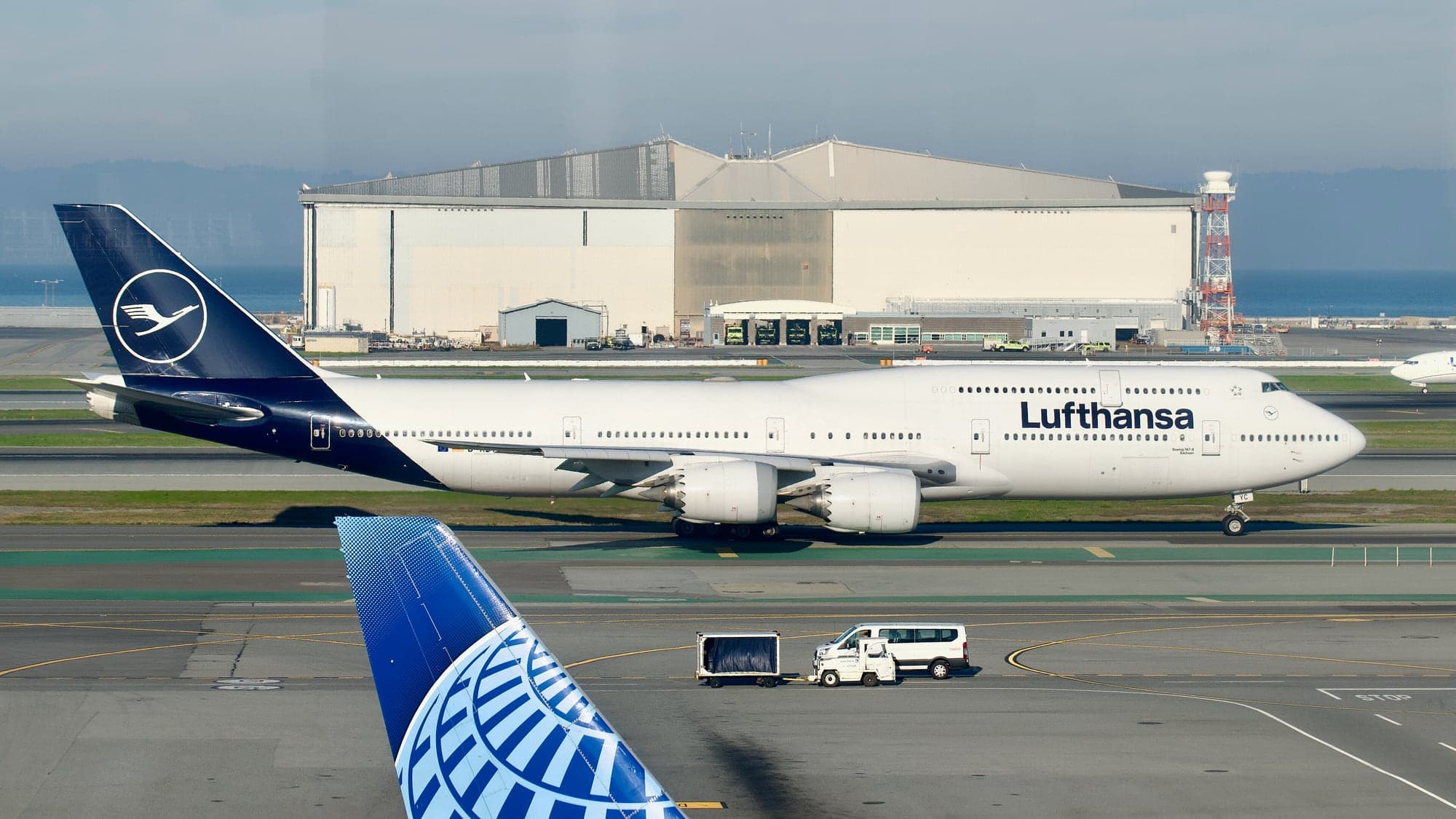
Lufthansa is the flag carrier of Germany and the core airline of the Lufthansa Group, one of the largest airline groups in the world. It is LH to the booking systems, DLH to air traffic control and LUFTHANSA on the radio. It flies from two hubs, Frankfurt and Munich, the two busiest airports in the country, and its crane in a circle is one of the oldest airline marks still in use.
The name is older than the company. Deutsche Luft Hansa was formed in Berlin in 1926, became the national airline of the Weimar Republic and then of the Nazi state, and ceased to fly in April 1945. The present company has no legal connection to it. It was founded in Cologne on 6 January 1953 as Luftag, bought the old name and emblem in 1954, and began scheduled flights on 1 April 1955. Lufthansa nevertheless claims the whole history since 1926 as its own, the dark years included, and in 2026 it marks its centenary.
At 31 December 2025 Lufthansa Airlines, counted with its regional airlines and the leisure carrier Discover, operated 387 aircraft, and over that year it carried 65.7 million passengers at a load factor of 83.4 per cent. The group around it is much larger: SWISS, Austrian Airlines, Brussels Airlines, Eurowings and a stake in ITA Airways, with 737 aircraft and 135 million passengers in 2025. Lufthansa was a founding member of Star Alliance in 1997, the same year the German state sold the last of its shares.
Formation
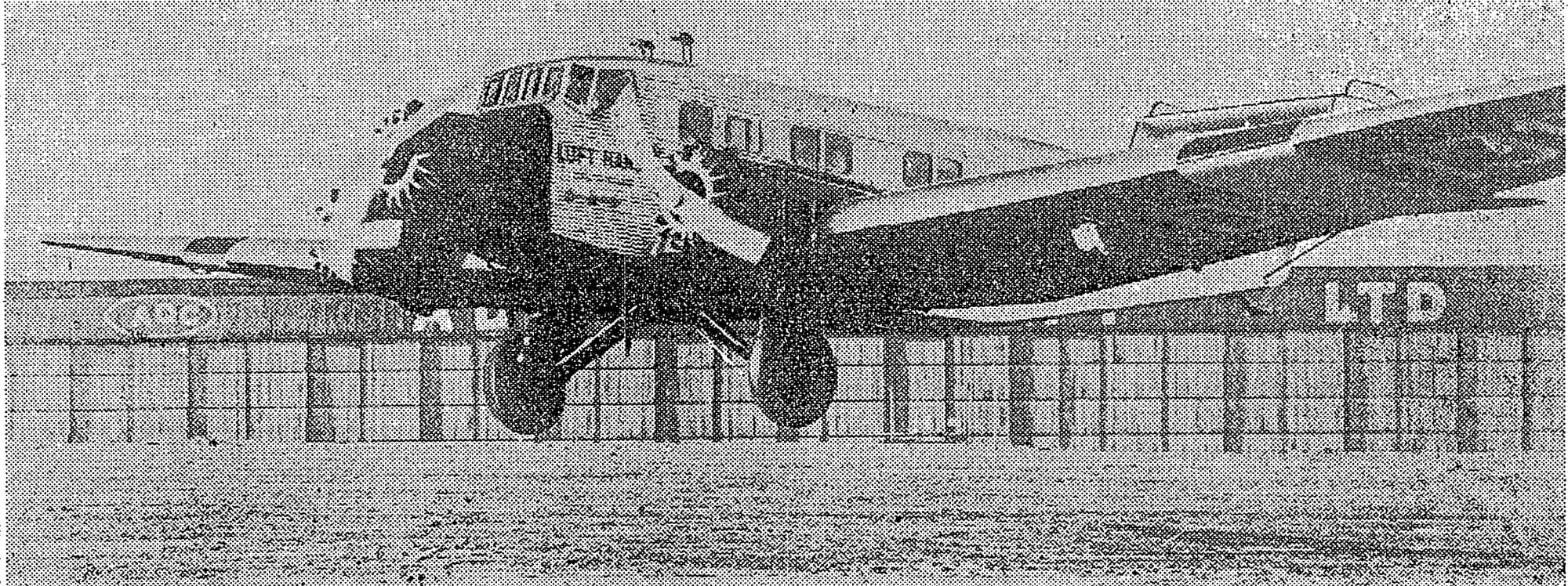
Deutsche Luft Hansa AG was founded in Berlin on 6 January 1926. The German government, which subsidised every airline in the country, forced its two largest carriers, Deutscher Aero Lloyd and Junkers Luftverkehr, into a single company and let the rest close. The name meant a Hanseatic League of the air. The new airline began with 162 aircraft, most of them outdated, and 1,527 staff, and on 6 April 1926 a Fokker F.II left Berlin Tempelhof on its first scheduled service, to Zurich by way of Halle, Erfurt and Stuttgart. By the end of the year it had carried 56,268 passengers.
The network grew quickly across Germany and into Europe through agreements with the airlines of neighbouring countries. Luft Hansa was one of the first airlines to fly at night, between Berlin and Königsberg, and it took stakes in companies abroad: Deruluft with the Soviet Union, Syndicato Condor in Brazil, Eurasia in China and, through cooperation, the young Iberia in Spain. In April 1928 the Luft Hansa pilot Hermann Köhl, with Baron von Hünefeld and the Irish airman James Fitzmaurice, made the first east-west crossing of the North Atlantic in the Junkers W 33 Bremen.
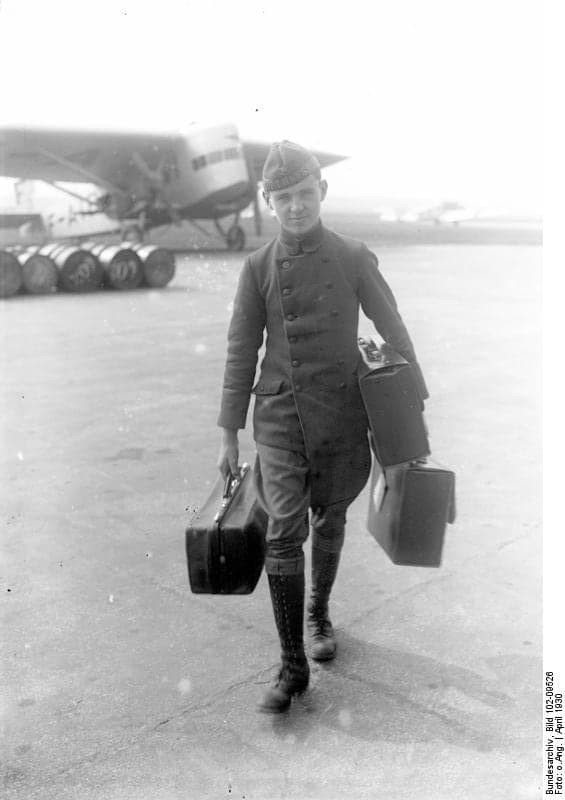
The early 1930s were financially hard, but the airline kept reaching further. In 1934 it opened a scheduled airmail service between Europe and South America, the first regular airline service across an ocean: Dornier Wal flying boats were catapulted from ships stationed in the South Atlantic to complete the crossing. At home, the Junkers Ju 52/3m became the workhorse of the European network, and fast services linked Berlin, Hamburg, Cologne and Frankfurt.
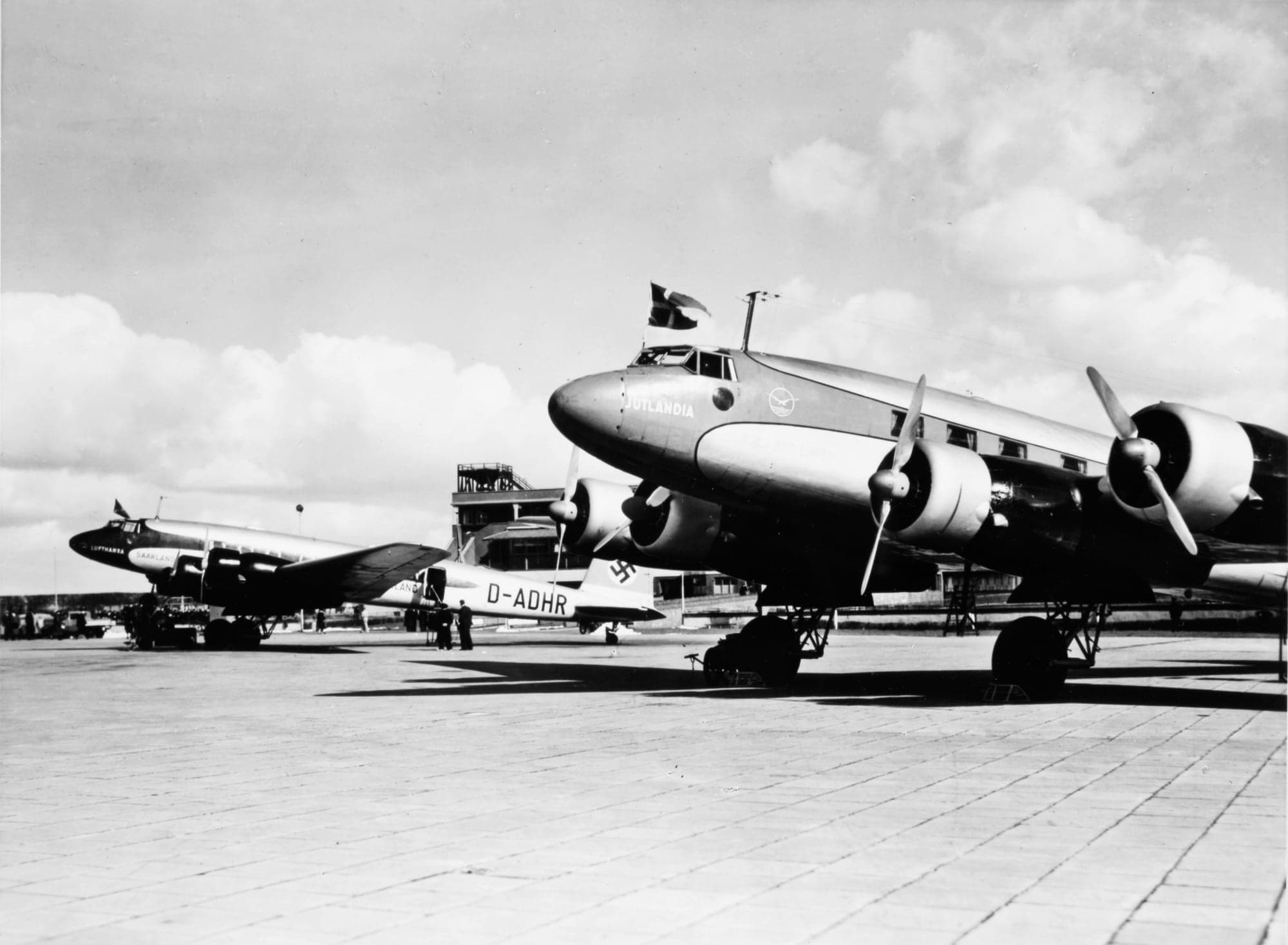
In August 1938 a Focke-Wulf Fw 200 Condor flew non-stop from Berlin to New York. The same year was the best in the company's history: 254,713 passengers carried, 19.3 million kilometres flown on the European routes. It was also an airline deep inside the regime. An aircraft had been put at Hitler's disposal for his 1932 election campaign; Erhard Milch, who had run the airline since 1926, became state secretary in Göring's aviation ministry in 1933; and historians have described the company in those years as a front for the secret build-up of the air force.
The war years
When Germany invaded Poland on 1 September 1939, Luft Hansa's civil operations came to an end as the airline had known them. Its fleet and most of its staff were placed under the command of the Luftwaffe. Some scheduled passenger flights continued within Germany and to occupied and neutral countries, but seats were restricted to the needs of the war, and in the later years most passenger aircraft were converted into military freighters. The company's principal work became the maintenance and repair of aircraft.
That work relied on forced labour. During the war Luft Hansa employed more than 10,000 forced labourers from occupied countries, children among them, and Jewish forced labourers particularly between 1940 and 1942. They assembled, repaired and maintained aircraft, military aircraft included, and installed radar equipment, and they were held in barracks run by the airline at Tempelhof and elsewhere in Berlin, behind barbed wire and under armed guard. In 1999 the modern Lufthansa joined the German industry initiative to compensate forced labourers and commissioned a historical study of its predecessor; it was criticised for taking more than a decade to publish it.
The airline's foreign ventures were dismantled one after another. Deruluft ended in 1940, Eurasia was shut down by the Chinese government that November, and Brazil nationalised Syndicato Condor in 1943 as Cruzeiro do Sul. The last scheduled flight of Deutsche Luft Hansa, from Berlin to Munich on 21 April 1945, crashed before arrival; a final non-scheduled flight the next day ended flight operations. After the surrender, the Allies seized every aircraft in Germany and the company was dissolved. Its remaining assets were liquidated on 1 January 1951.
Nationalisation and reconstruction
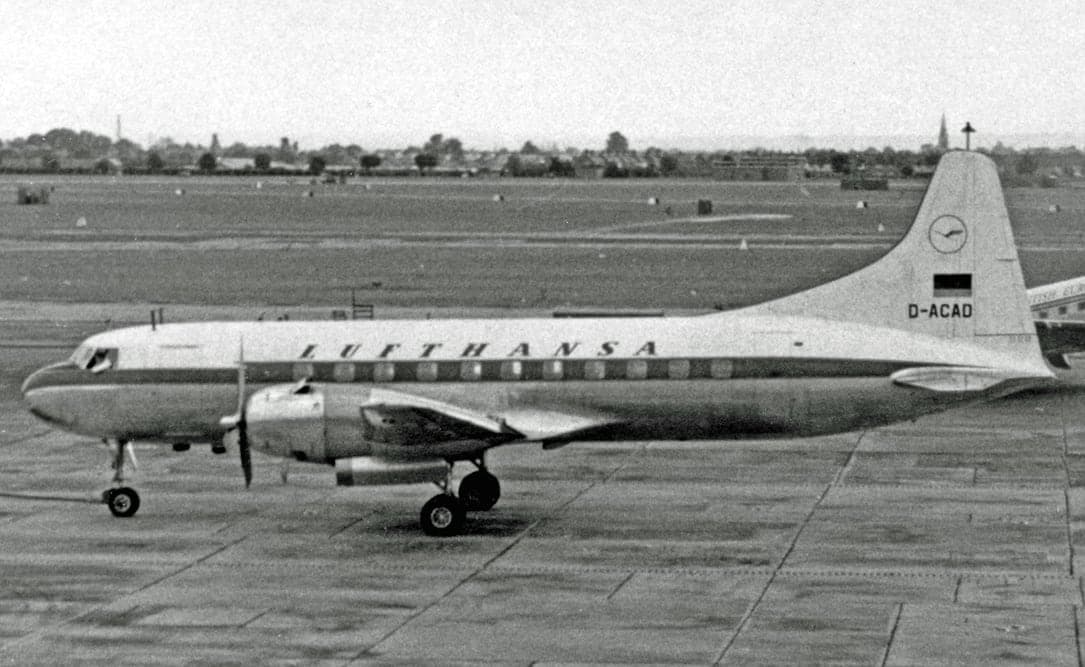
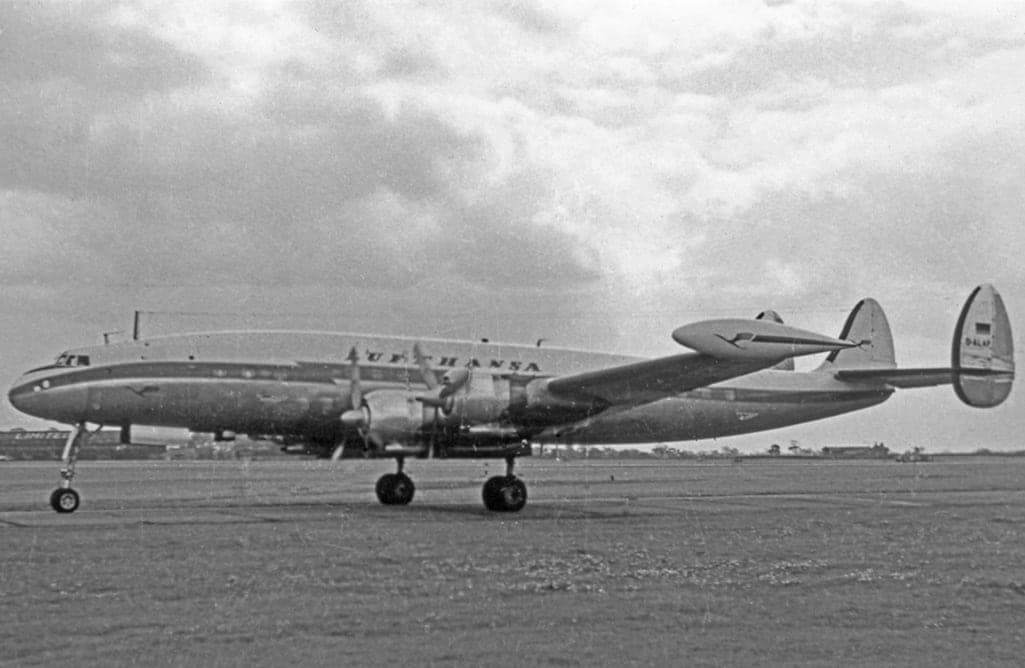
West Germany had no airline and no sovereignty over its own airspace when, on 6 January 1953, a company called Aktiengesellschaft für Luftverkehrsbedarf, Luftag for short, was set up in Cologne. Many of its people had worked for the old Luft Hansa. Nobody knew when it would be allowed to fly, but that year it ordered four Convair CV-340s and four Lockheed L-1049 Super Constellations and set up a maintenance base at Hamburg. On 6 August 1954 it bought the name and the crane of the liquidated Deutsche Lufthansa for DM 30,000.
On 1 April 1955 Lufthansa was cleared to begin scheduled domestic flights, on a network joining Hamburg, Düsseldorf, Frankfurt, Cologne and Munich. International services followed on 15 May to London, Paris and Madrid, and on 1 June the Super Constellations began flying to New York; the South Atlantic followed in August 1956. The company that did this was not the private enterprise its predecessor had nominally been: it was the state's airline, its capital held largely by the Federal Republic.
Berlin was closed to it. The four occupying powers did not allow a West German airline to fly to any part of the divided city, and the hope of moving the headquarters and main base back to the capital was never realised. Frankfurt, well placed and served by a large airport, became the main hub in 1958. In East Germany a second 'Lufthansa' was founded in 1955; after losing the right to the name to the western company in the courts, it was wound up and replaced by Interflug in 1963.
The jet age
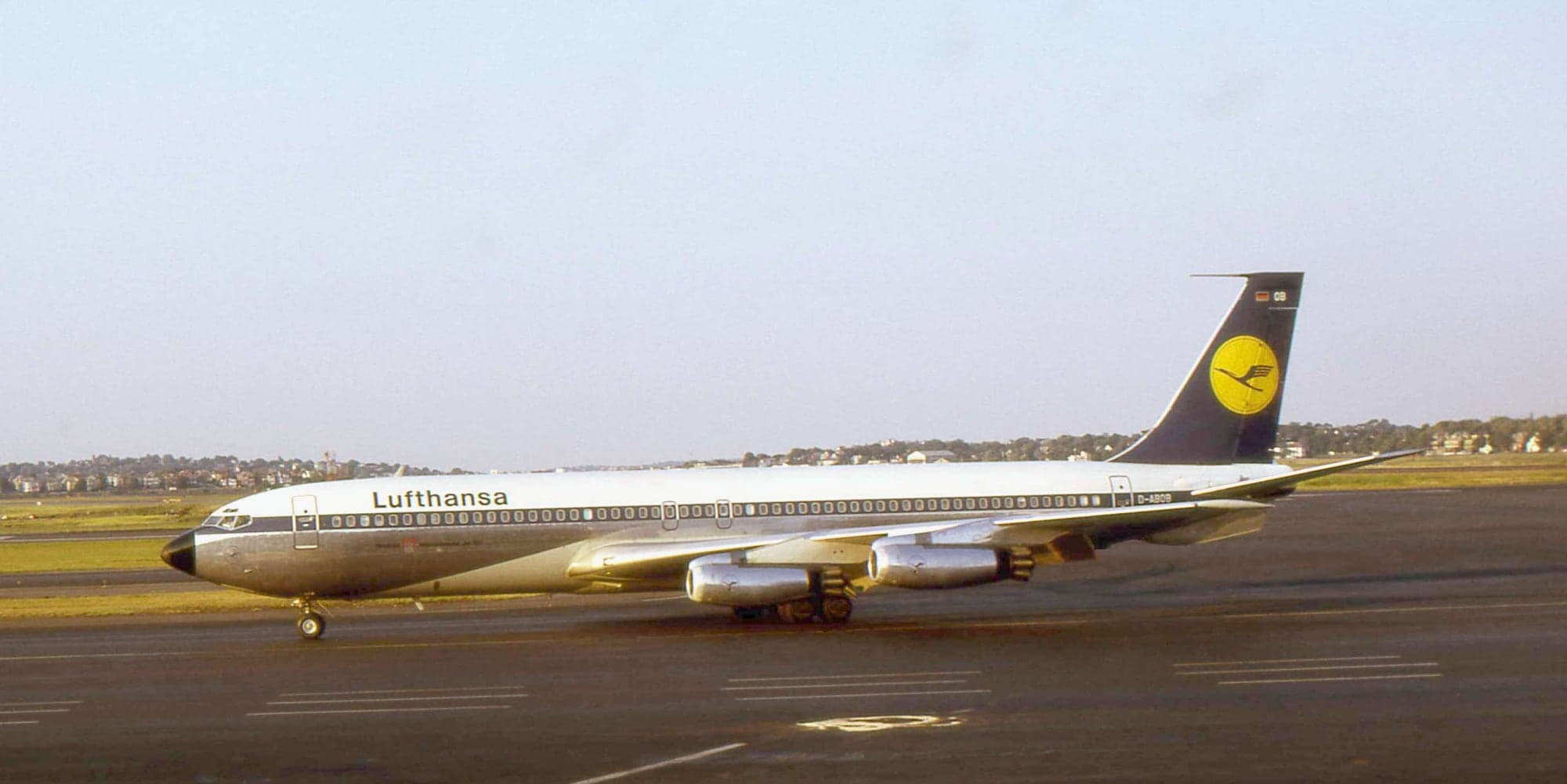
Lufthansa ordered four Boeing 707s in 1958 and began flying jets between Frankfurt and New York in March 1960. One of the first, D-ABOB, was named Hamburg; Boeing 720Bs, a shorter-field derivative, followed for the routes that needed them. The network spread with the new aircraft: Hong Kong and Tokyo beyond Bangkok in February 1961, Lagos and Johannesburg in 1962.
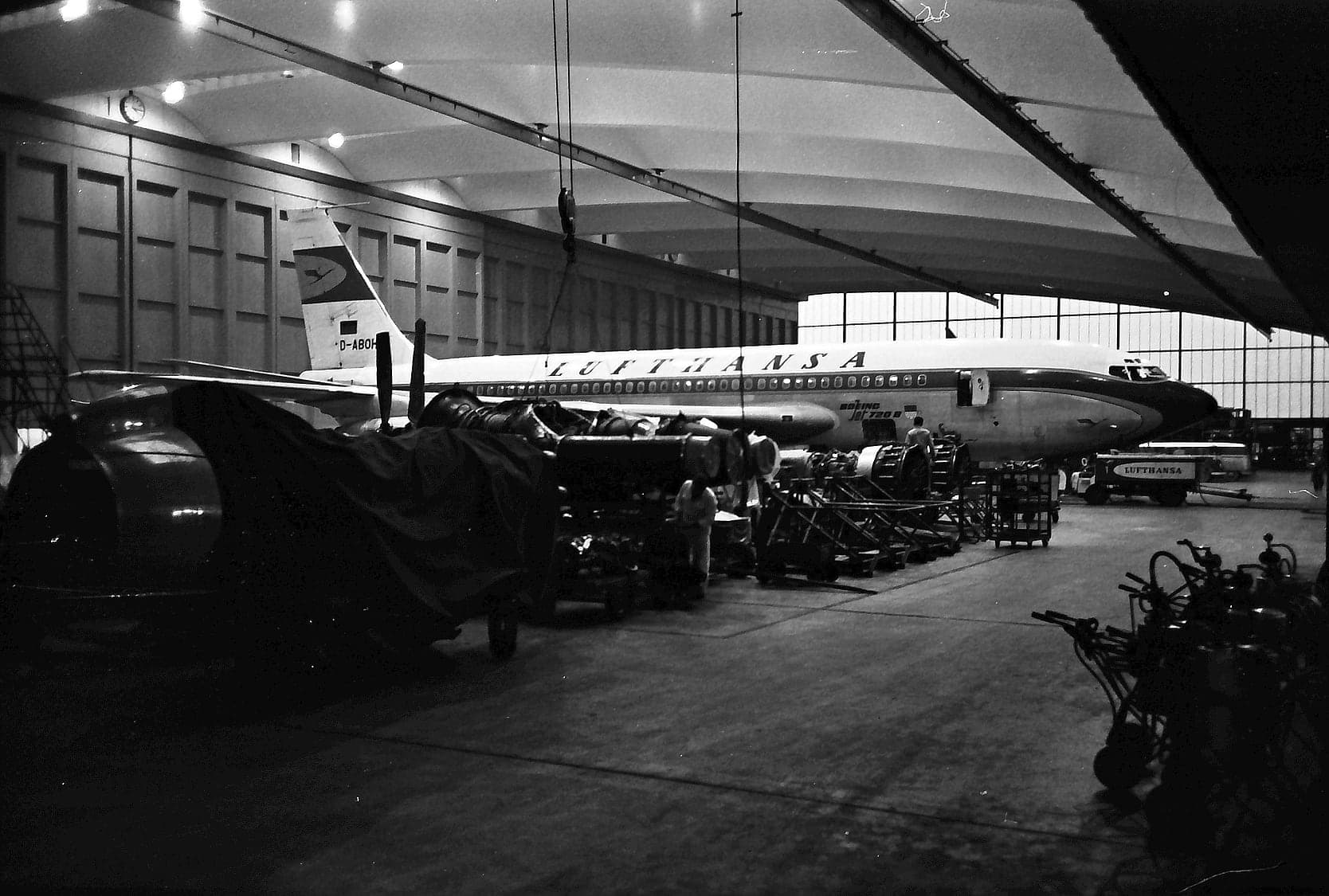
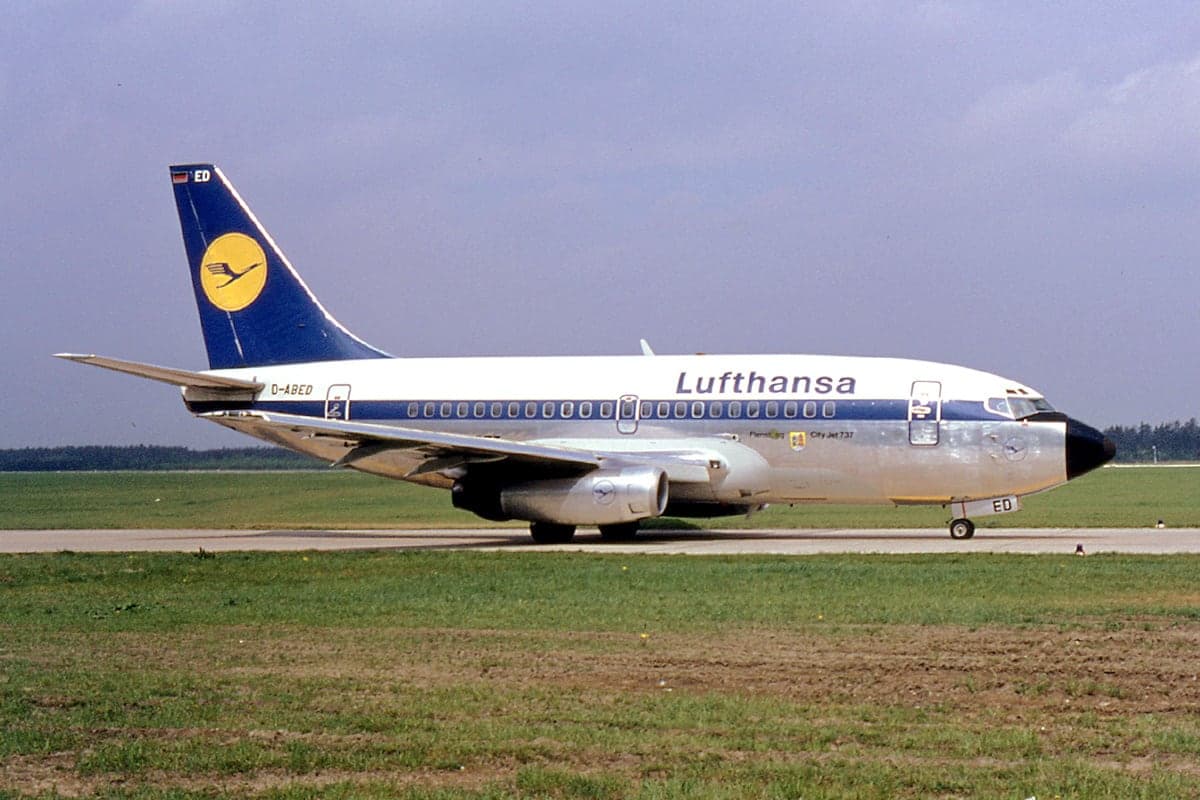
The Boeing 727 arrived in 1964, and that May Lufthansa opened a polar route from Frankfurt to Tokyo by way of Anchorage. In February 1965 it ordered twenty-one Boeing 737s and became the launch customer of the type, the first foreign airline to launch a Boeing airliner. The first aircraft was delivered on 27 December 1967 and entered service in 1968. Lufthansa went on flying 737s in one version or another for almost half a century, until the last, a 737-300, came home from Milan to Frankfurt on 29 October 2016.
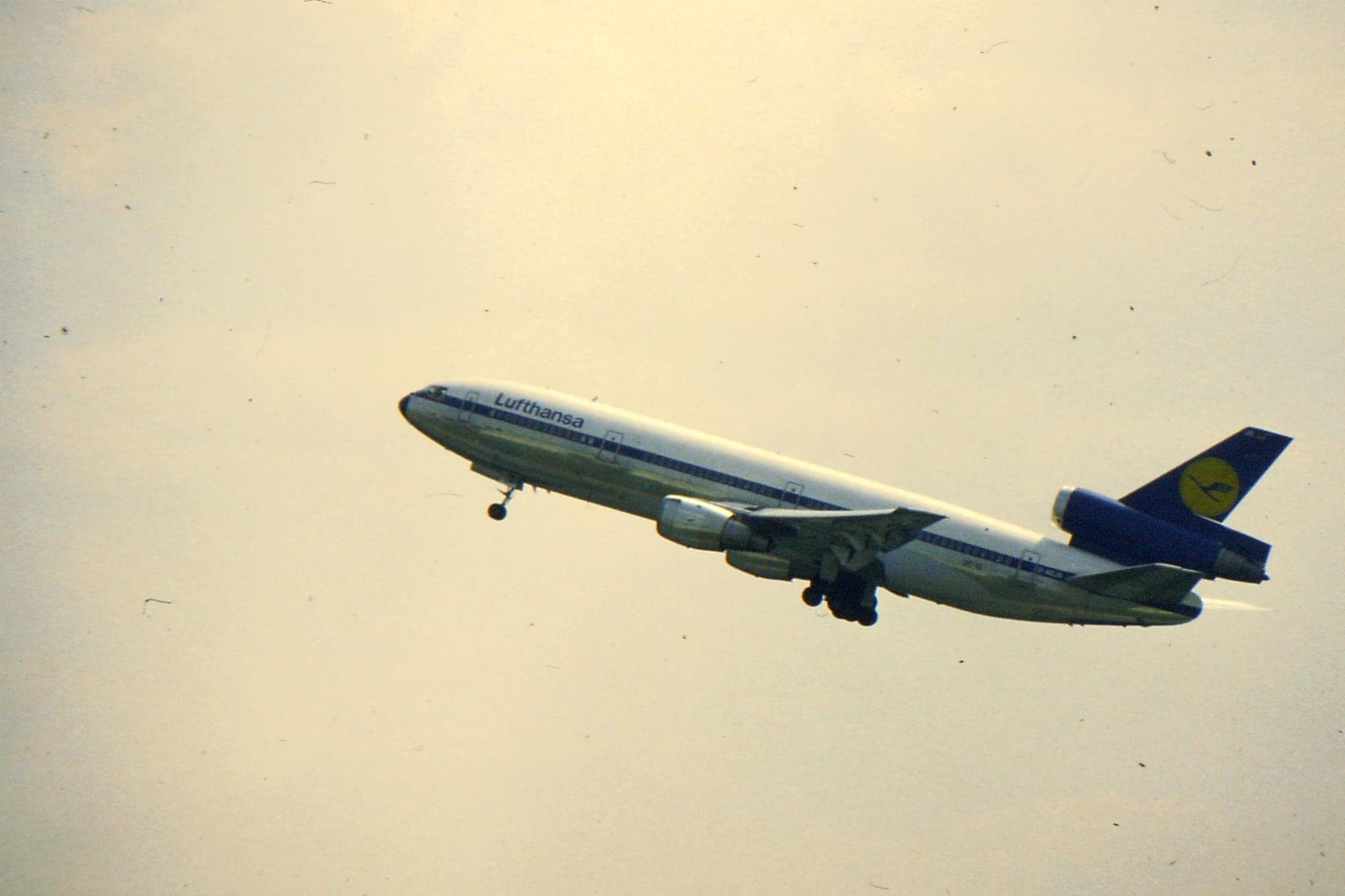
The wide-body era began with a Boeing 747 service on 26 April 1970, the first jumbo jets in Germany. The McDonnell Douglas DC-10-30 followed on 14 January 1974 and the Airbus A300 in 1976; in 1979 Lufthansa and Swissair launched the Airbus A310 with an order for twenty-five. From the 1980s the long-haul fleet was built around the 747 and later the Airbus A340, and the airline became one of the most loyal customers the 747 ever had.
That loyalty lasted into the present century. In 2010 Lufthansa introduced the first of fourteen Airbus A380s, and in 2012 it became the launch customer for the Boeing 747-8 Intercontinental, eventually taking nineteen. Few airlines flew both of the largest passenger aircraft ever built side by side, and at the end of 2025 Lufthansa still had twenty-seven 747s and eight A380s in service.
Consolidation and merger
Lufthansa shares had been traded on the German stock exchanges since 1966, but the state remained the controlling owner for decades. In 1993 the federal government still held 51.6 per cent. A capital increase in 1994 reduced its stake to little more than a third, and in the same years the airline was restructured into a group: maintenance became Lufthansa Technik, freight became Lufthansa Cargo, information technology became Lufthansa Systems. In October 1997 the government sold its remaining 37.5 per cent, and Lufthansa became a wholly private company.
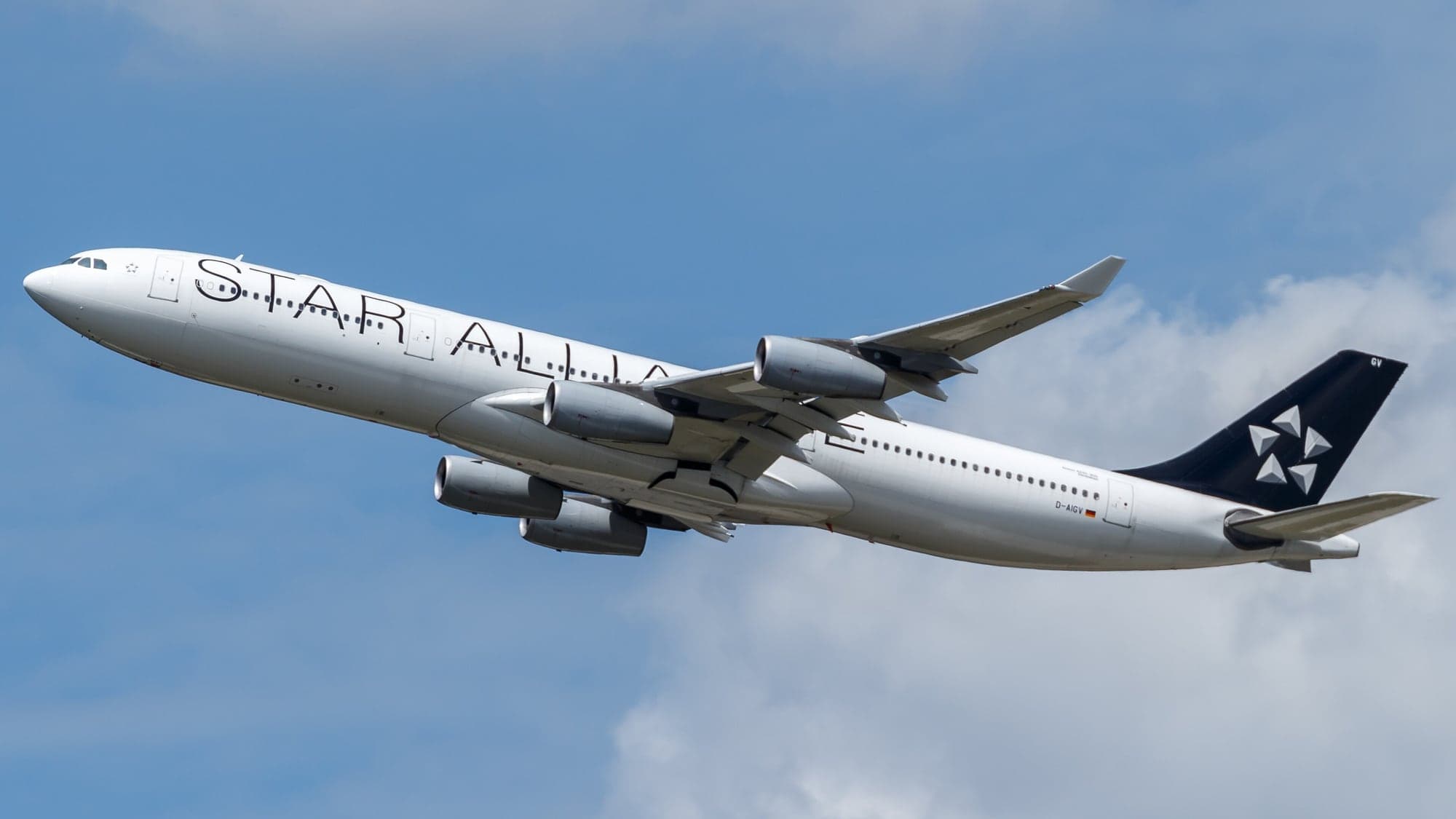
That spring, on 14 May 1997, Lufthansa, Air Canada, SAS, Thai Airways International and United Airlines had founded Star Alliance, the first multilateral airline alliance. Lufthansa has remained at its centre ever since, and the transatlantic joint venture it runs with United and Air Canada is one of the pillars of its long-haul business.
From the mid-2000s Lufthansa turned itself into the owner of other airlines. Swiss International Air Lines, the successor of the bankrupt Swissair, joined the group in 2005. Austrian Airlines followed in 2009, and Brussels Airlines was acquired in stages and wholly owned from 2017. Short-haul flying outside the hubs was handed to Germanwings from 2012 and later to Eurowings, which became the group's point-to-point airline. On 17 January 2025 Lufthansa completed the purchase of 41 per cent of ITA Airways, the successor of Alitalia, and made it the group's fifth network airline.
The group has also been through its crises. During the COVID-19 pandemic Lufthansa cancelled almost all of its flights in March 2020, and in June its shareholders accepted a €9 billion rescue package from the German state, which took a 20 per cent stake in the company once more.
Network and hubs
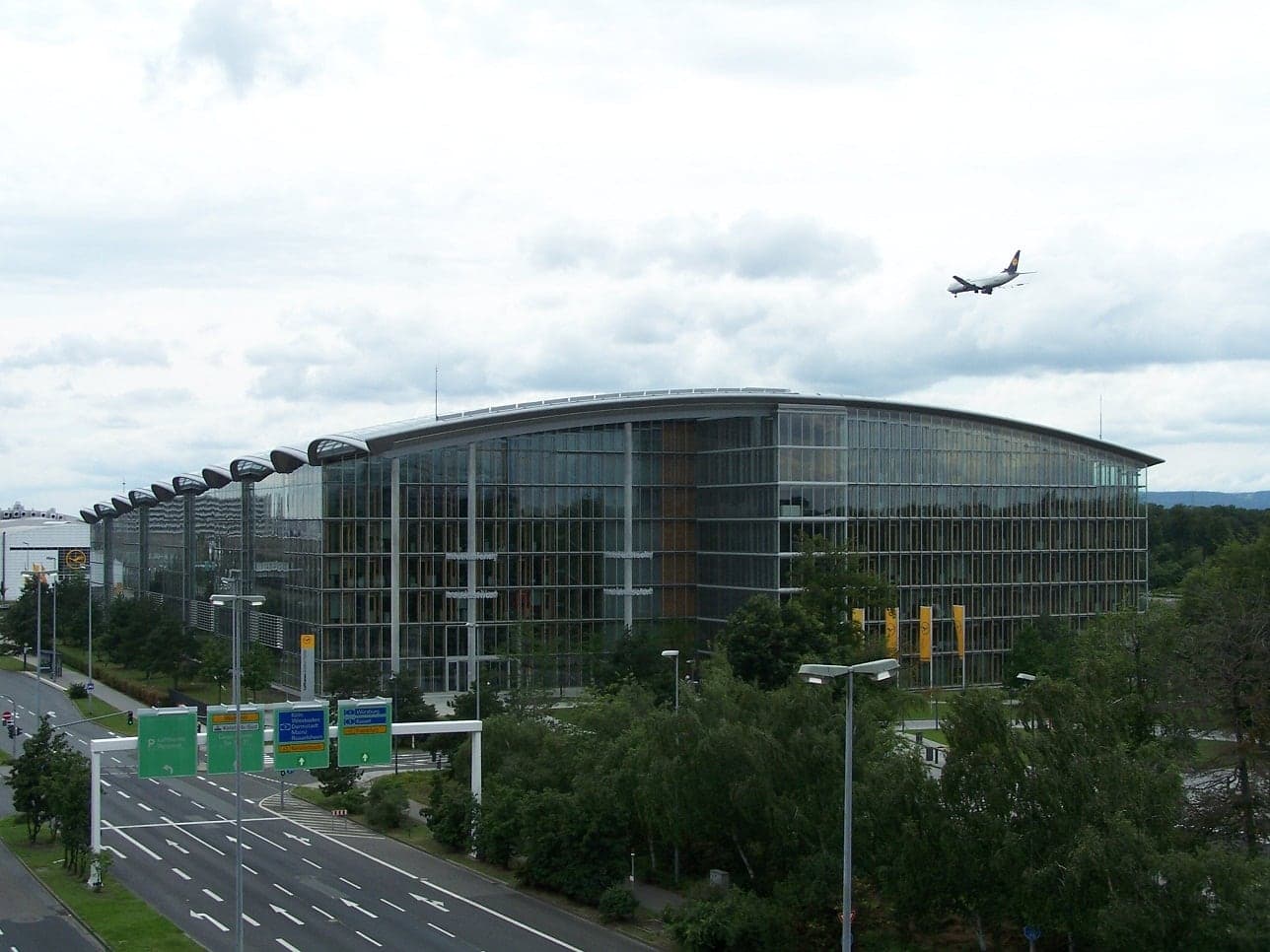
Lufthansa is built on two hubs rather than one. Frankfurt, its main base since 1958, is where the airline's operations are run from and where most of its long-haul flying begins; the Lufthansa Aviation Center beside the airport houses much of its management, although the company's registered office remains in Cologne. Munich, the second hub, grew as Frankfurt became congested and has its own long-haul fleet. There Lufthansa is a shareholder in the company that owns Terminal 2, a building used by the airline and its Star Alliance partners.
The two hubs feed each other and are fed in turn by the rest of the group. SWISS at Zurich, Austrian at Vienna and Brussels Airlines at Brussels run hubs of their own, and since the end of March 2025 ITA Airways has used the Lufthansa Group terminal areas at Frankfurt and Munich. Around them sit the regional operations that bring passengers in from smaller European cities: Air Dolomiti and Lufthansa City Airlines, which has flown A320neos from Munich since 2024 and began flying from Frankfurt in February 2026.
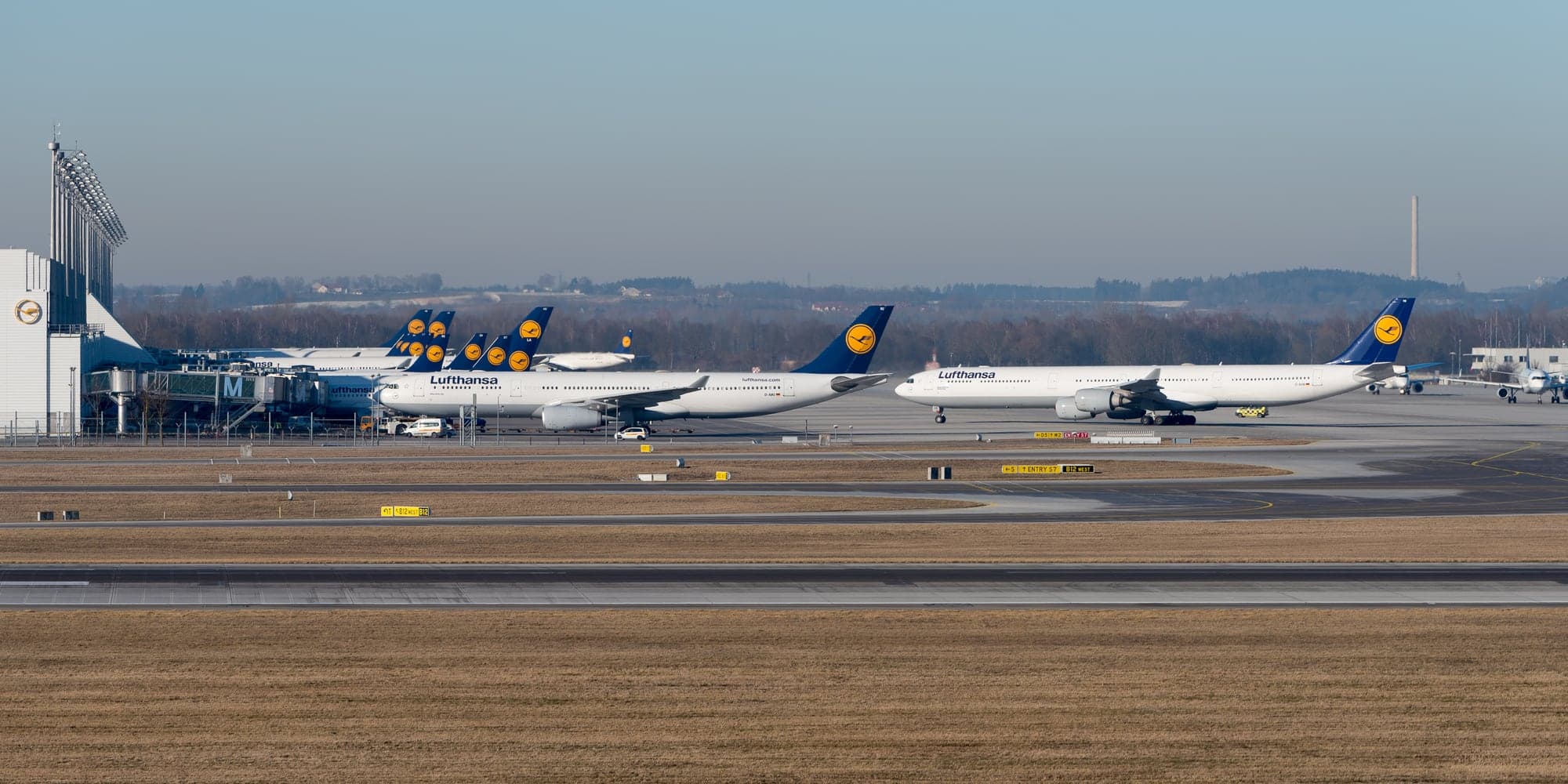
The network is also held together by partners outside the group. Lufthansa runs joint ventures with United and Air Canada across the North Atlantic, with All Nippon Airways to Japan, with Singapore Airlines, and with Air China. And it has pushed passengers onto the railways where a train does the job better: under the Lufthansa Express Rail partnership, Deutsche Bahn trains are sold as part of a Lufthansa journey.
Berlin, the city where the old airline was founded, has never been a hub. Lufthansa returned there within weeks of German reunification in October 1990, but its long-haul network has stayed in Frankfurt and Munich, where the decisions of the 1950s placed it.
Fleet
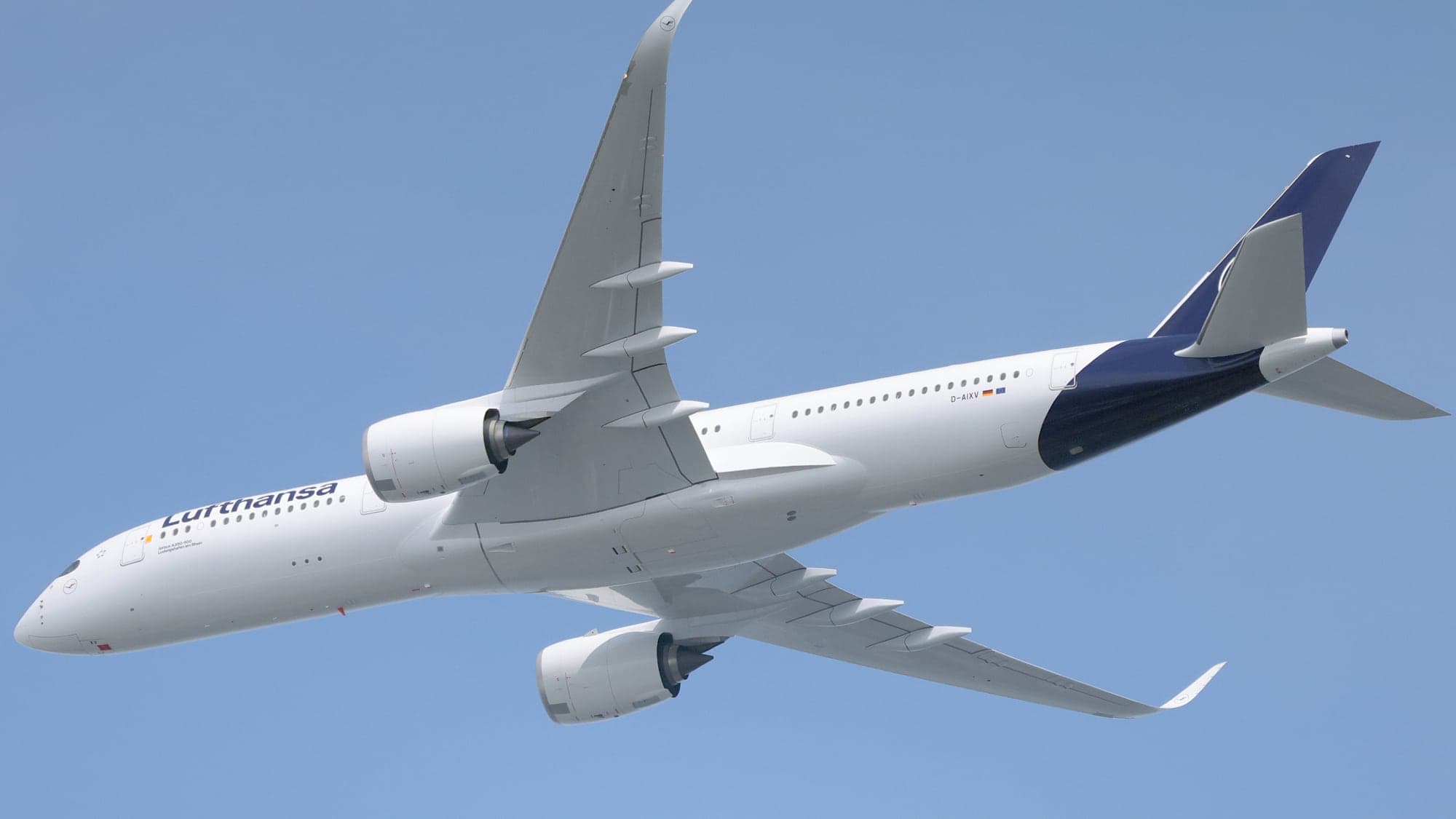
At 31 December 2025 Lufthansa Airlines, counted as the group counts it, with its regional airlines, Germanwings and Discover Airlines, had 387 aircraft. The long-haul fleet was an unusual mixture of old and new: twenty-seven Boeing 747s and eight Airbus A380s, thirty-one A350s, twenty-three A340s, twenty-one A330s and twelve Boeing 787s. The short- and medium-haul fleet was made up of the Airbus A320 family, and the regional airlines flew Embraer and Bombardier CRJ jets.
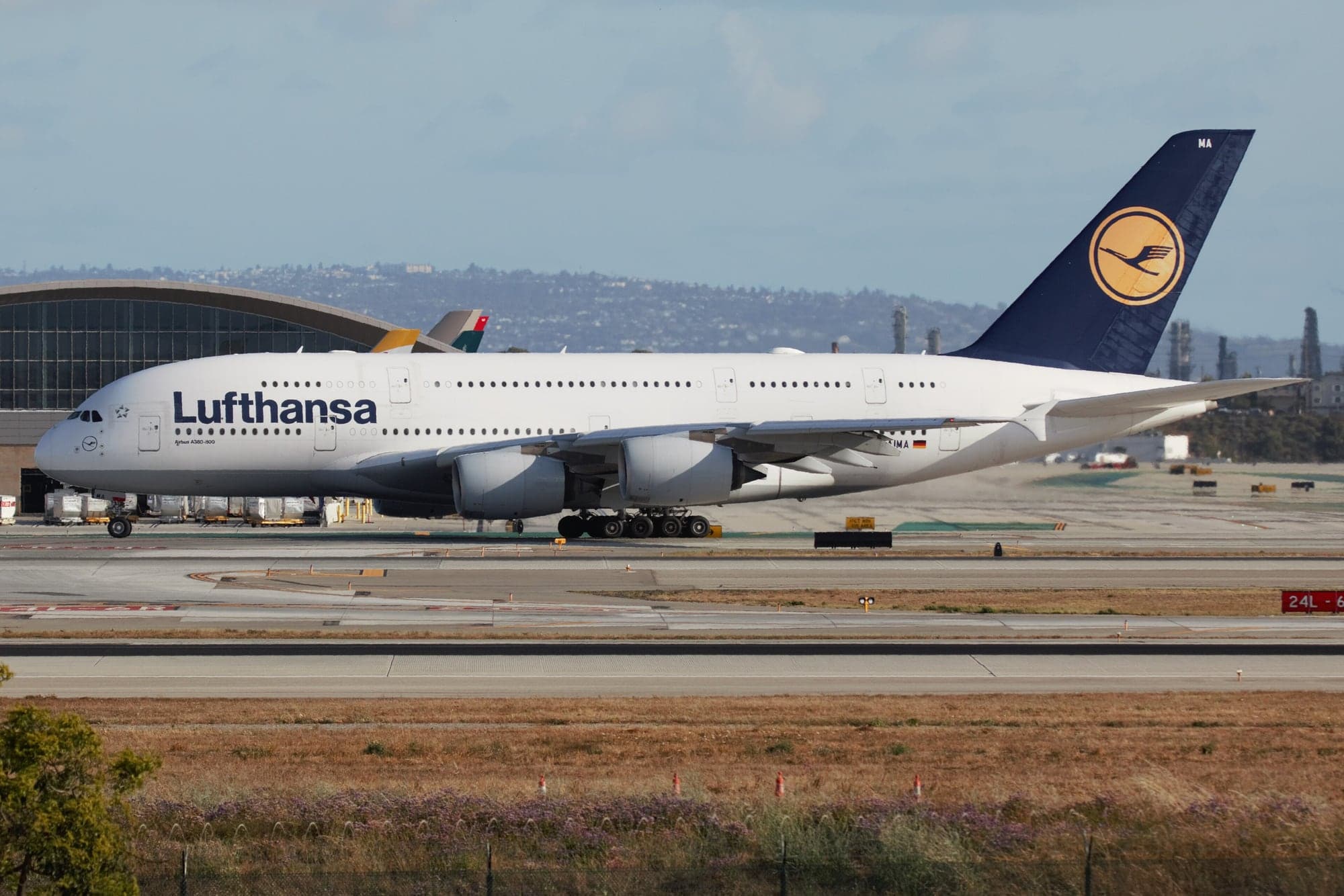
The A380s had been written off once. Grounded in 2020, the whole fleet was declared retired in March 2022, and six of the fourteen were sold back to Airbus. Delays in the delivery of new long-haul aircraft changed the plan; the remaining eight were reactivated at Munich, and the last of them re-entered service in the first quarter of 2025.
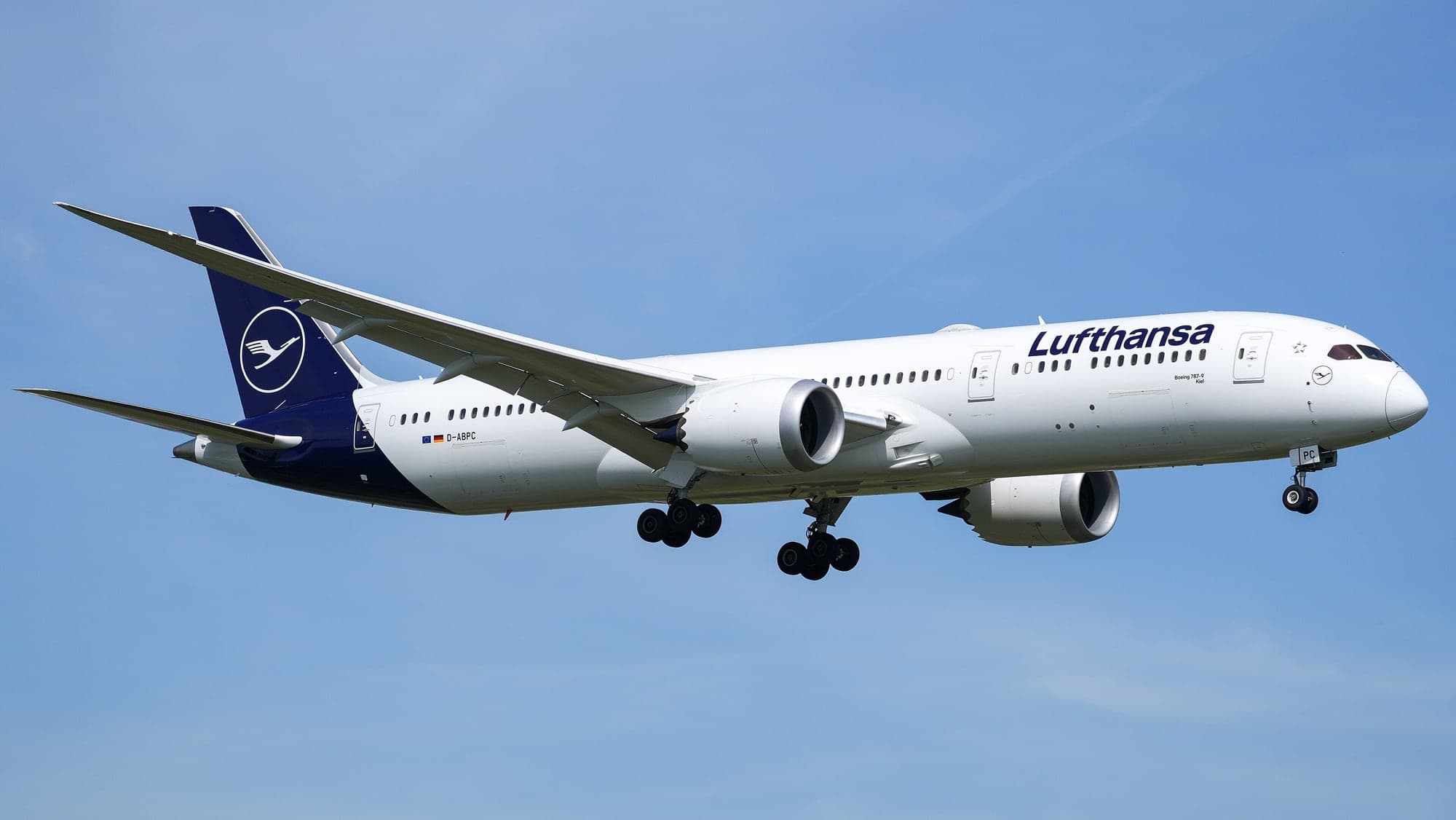
The replacements are twin-engined. During 2025 Lufthansa Airlines took seven Boeing 787-9s and one A350-900, all with the new Allegris cabin, and at the end of the year the group's order book held 219 aircraft, among them Airbus A350-1000s, Boeing 777-9s, further 787-9s and A350-900s, and Boeing 737-8s for short-haul flying from 2028. The first A350-1000s are due at Munich in the second half of 2026. Two 747-8s are to be sold in 2026, and the group plans to retire the 747-400, the A340 and the A330-200 entirely.
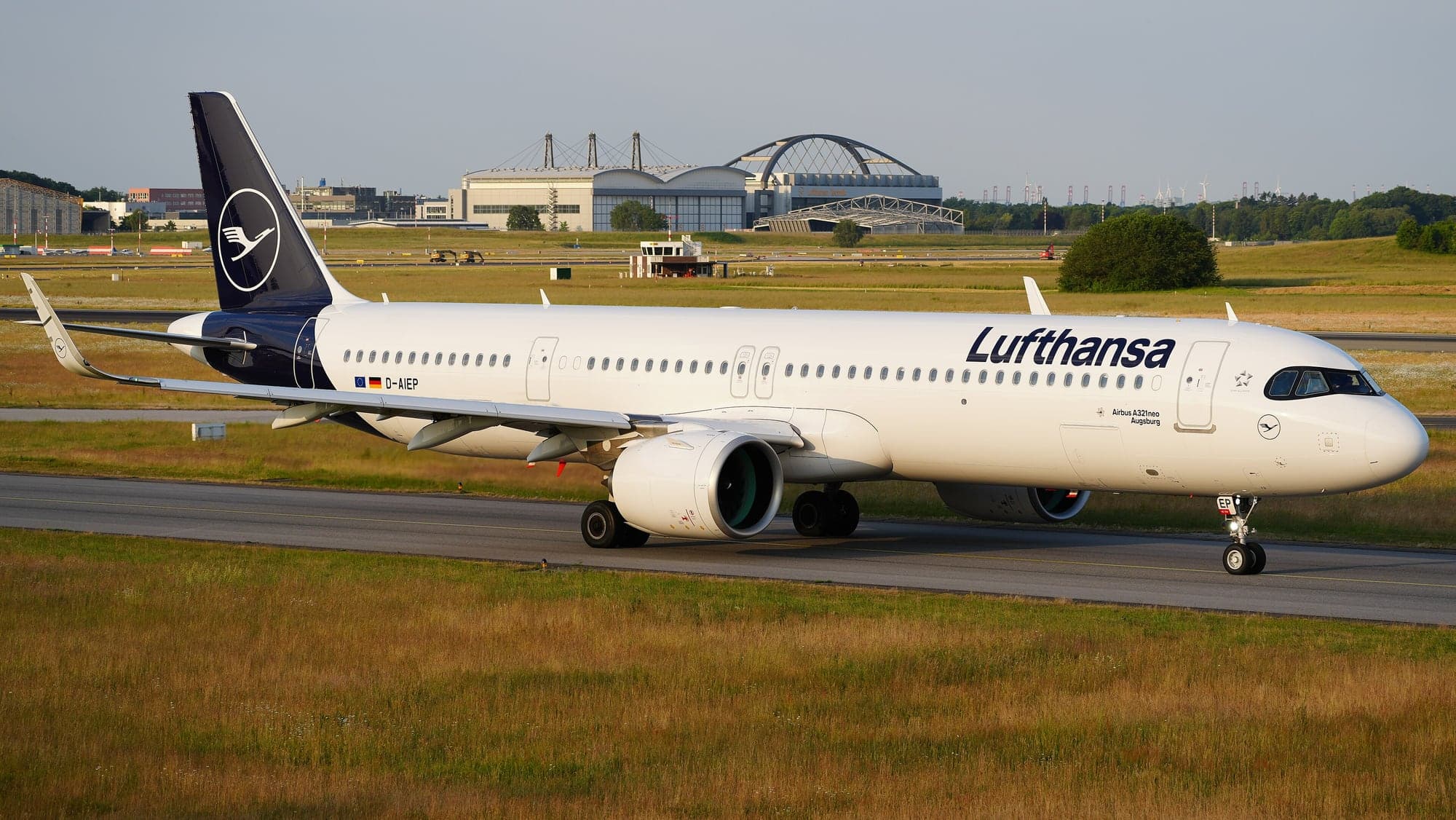
Lufthansa Cargo flies its own fleet of eighteen Boeing 777Fs, some of them through AeroLogic, a cargo airline in which the group holds half the shares, and Lufthansa Technik in Hamburg maintains not only the group's aircraft but those of other operators around the world.
Cabins and service
Lufthansa sells four classes on long-haul routes, First, Business, Premium Economy and Economy, and two in Europe, where Business Class is the front of the same single-aisle cabin as Economy. Its premium product has long been its commercial argument: the First Class Terminal at Frankfurt was named the world's best First Class lounge at the Skytrax World Airline Awards in June 2025.
The airline's reputation for its cabins has not been steady. In December 2017 Lufthansa became the first European airline to receive a Skytrax five-star rating, awarded partly for a new Business Class that had been announced but not yet installed; the seat was delayed for years, and in May 2022 the rating was reduced to four stars.
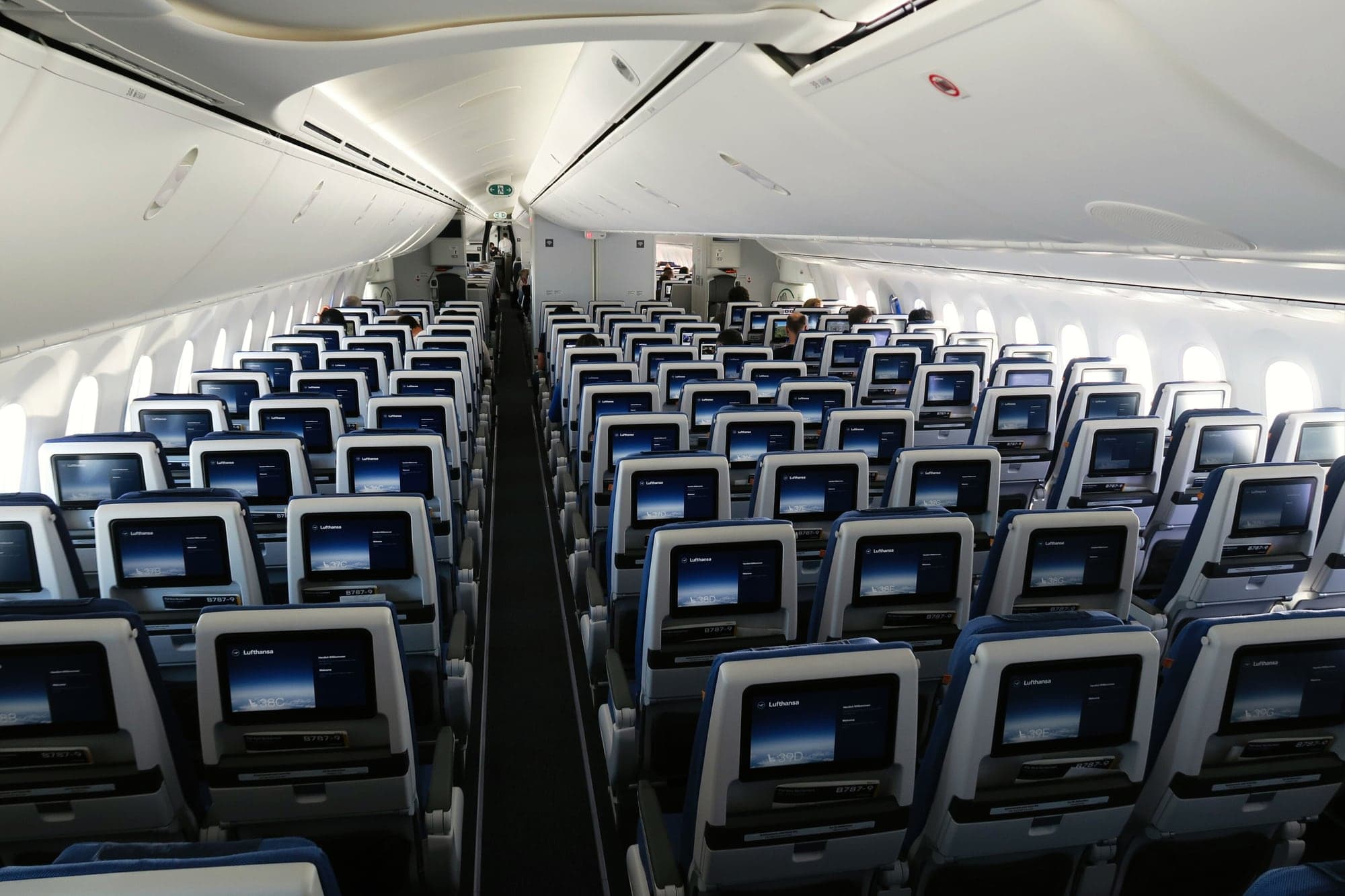
That seat, and the cabin around it, became Allegris. Launched in 2024, it replaces every class on the long-haul fleet with a new generation of seats, with several seat types within Business Class and a First Class cabin on the A350. At the end of 2025 ten A350-900s at Munich and four Boeing 787-9s at Frankfurt were flying with it, and older aircraft are being refitted. In Economy on the 787-9, seats are arranged nine abreast with a screen at every place.
Livery and identity
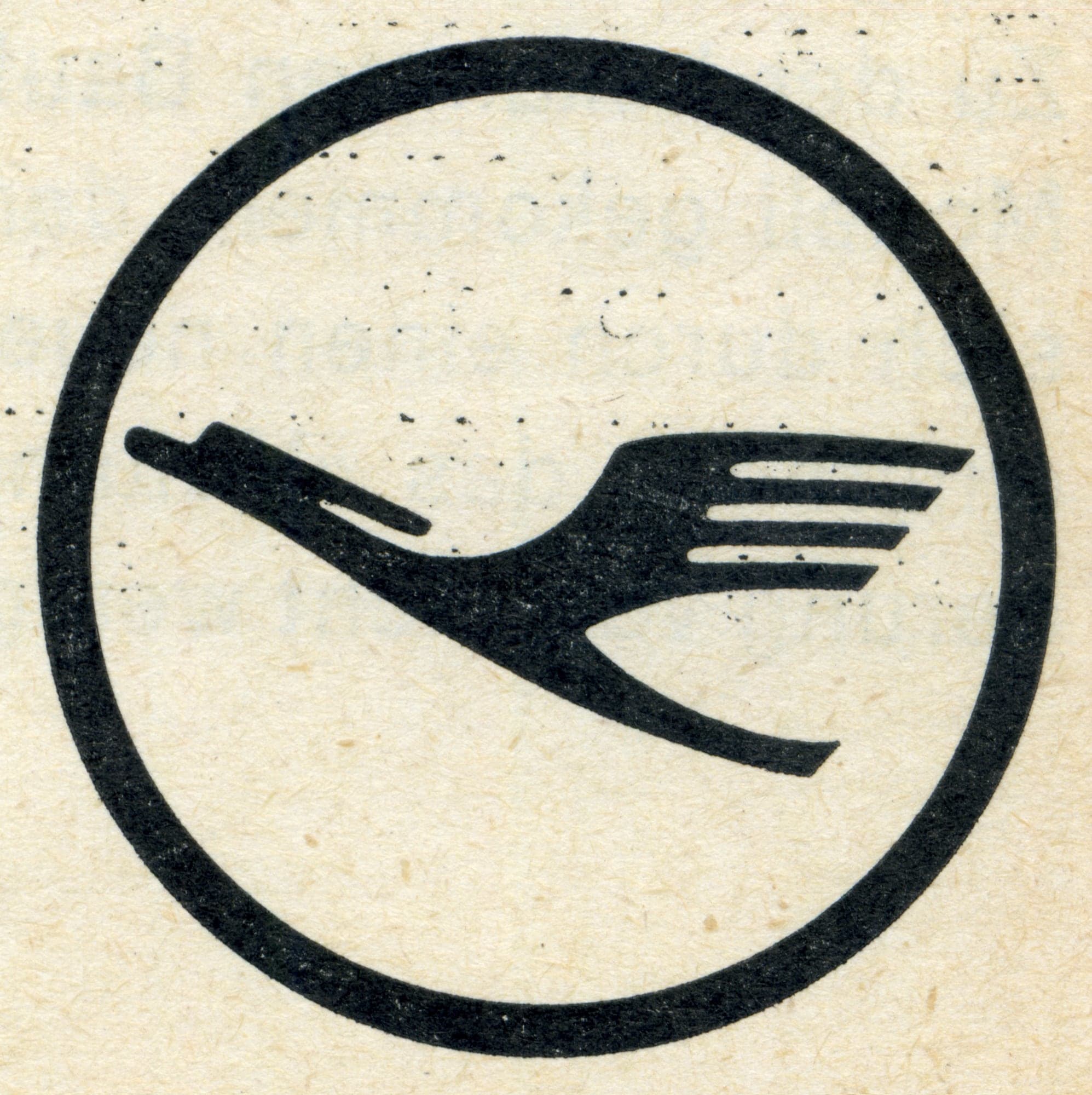
The crane is older than Lufthansa and older than Luft Hansa. The graphic designer Otto Firle drew the stylised bird in flight in 1918 for Deutsche Luft-Reederei, the first German airline, which began flying on 5 February 1919. Deutsche Luft Hansa took it over in 1926, and when Luftag bought the old name in 1954 it bought the crane with it, deliberately claiming the continuity that the law did not give it.
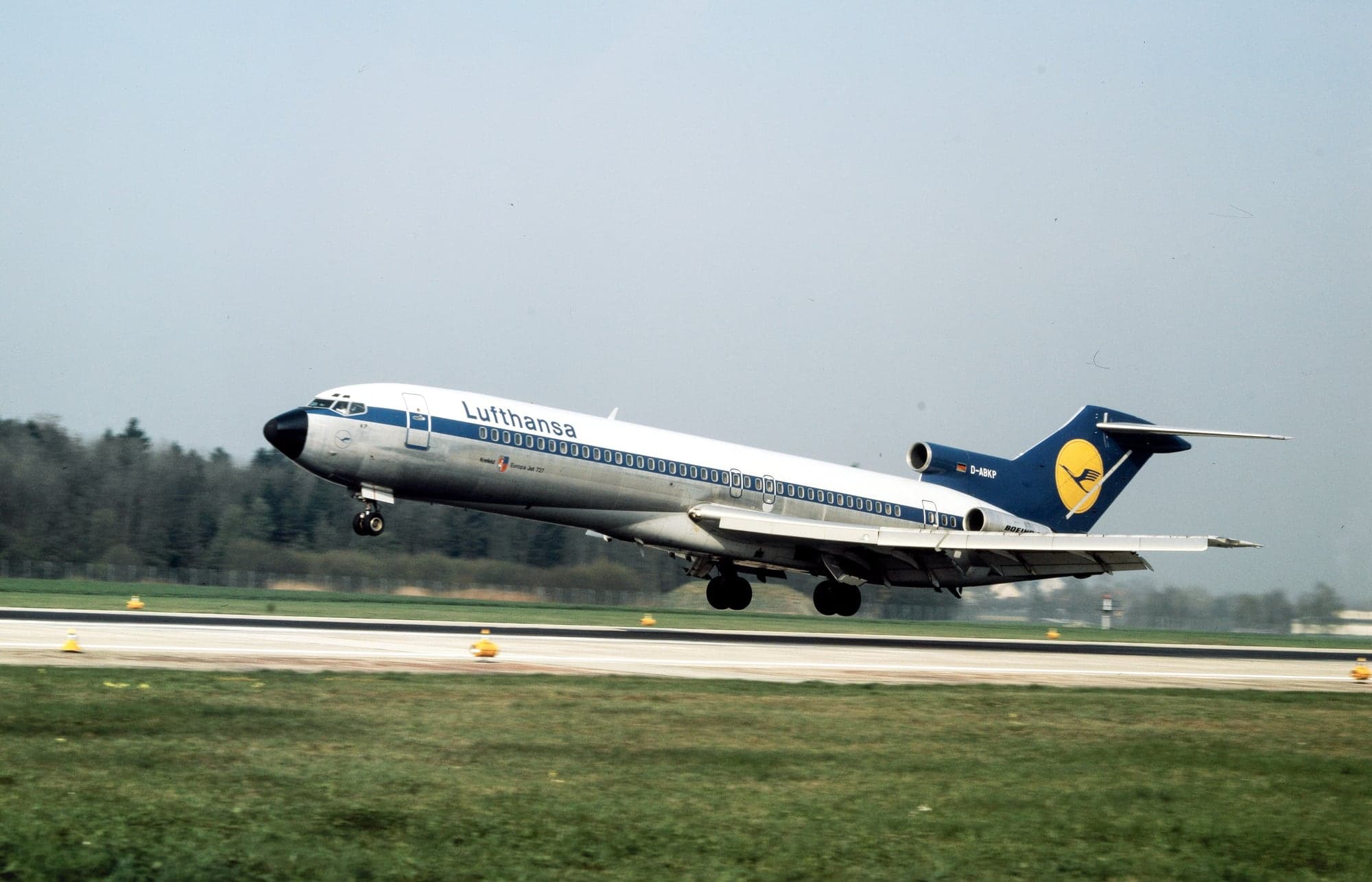
The mark was redrawn in the 1960s, and in 1967 the designer Otl Aicher gave the airline a complete corporate design. The crane was always to sit inside a circle, yellow on the blue fin of the aircraft; Helvetica set the name on the fuselage and in every publication; blue and yellow were the colours. Aicher's system survived for half a century with only small changes. The 1988 livery removed the window cheatline and painted the fuselage grey, but kept everything else.
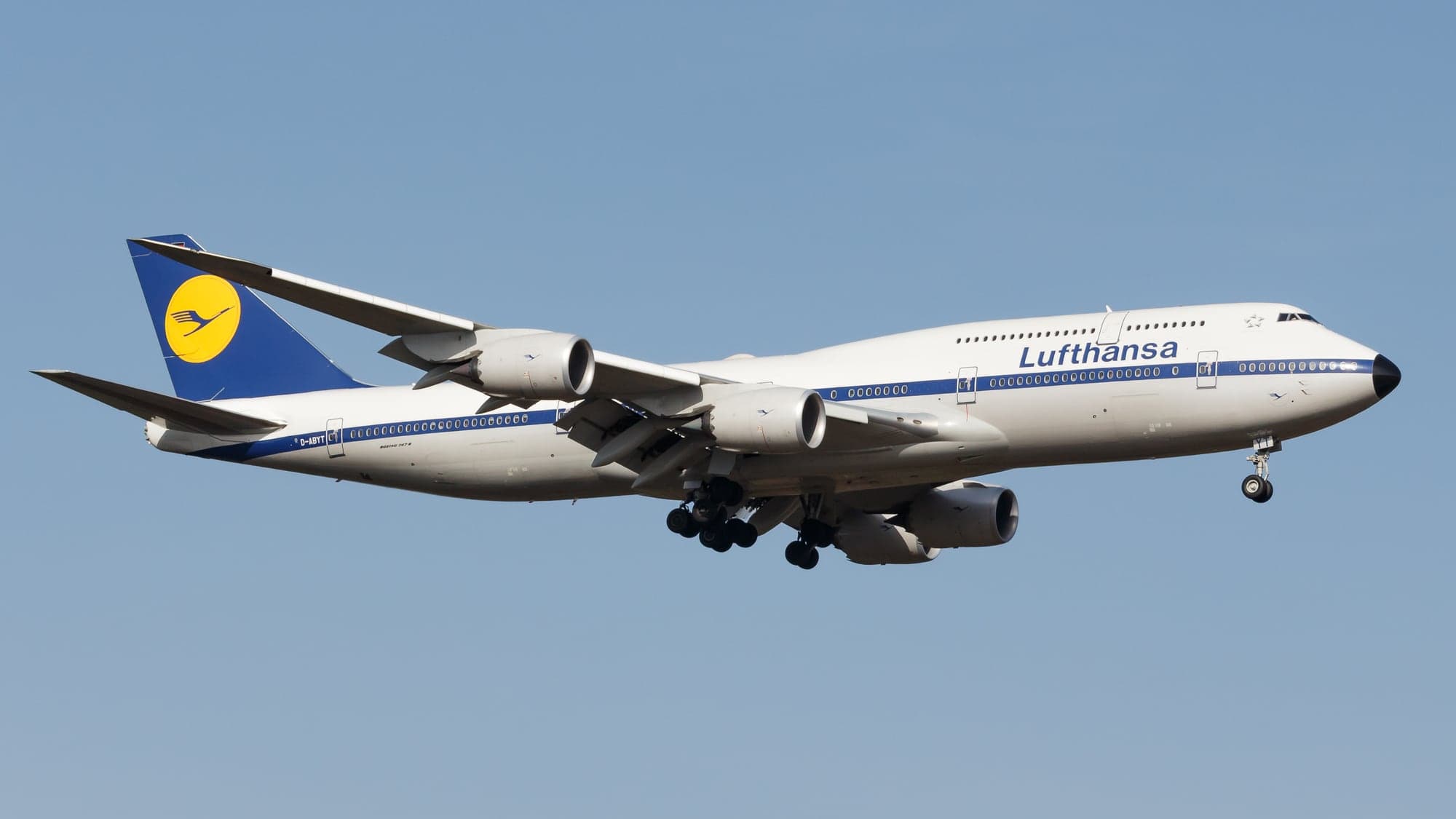
In February 2018 Lufthansa changed its livery. The crane was kept in its circle, but the yellow disappeared: the fin and the rear of the fuselage became dark blue, the rest of the aircraft white, with the name in dark blue above the windows. For its heritage, the airline has also painted a Boeing 747-8 in the retro colours of the 1970s and kept a Junkers Ju 52, D-AQUI, in the markings of the 1930s.
Safety record
The first fatal accident of the post-war Lufthansa happened on 11 January 1959, when a Super Constellation on approach to Rio de Janeiro descended too low and crashed near the shore; thirty-six of the thirty-nine people on board were killed. The deadliest in the airline's history followed on 20 November 1974 at Nairobi, where Boeing 747 D-ABYB took off with its leading-edge slats retracted, stalled and crashed just beyond the runway. Fifty-nine of the 157 people on board died. It was the first fatal accident of any 747.
On 14 September 1993 an Airbus A320 landing at Warsaw, its crew working from an out-of-date weather report that gave a crosswind where there was in fact a tailwind, touched down fast and late, could not deploy its spoilers and reversers in time, and ran off the end of the runway into an embankment. The co-pilot and one passenger were killed; sixty-eight people survived.
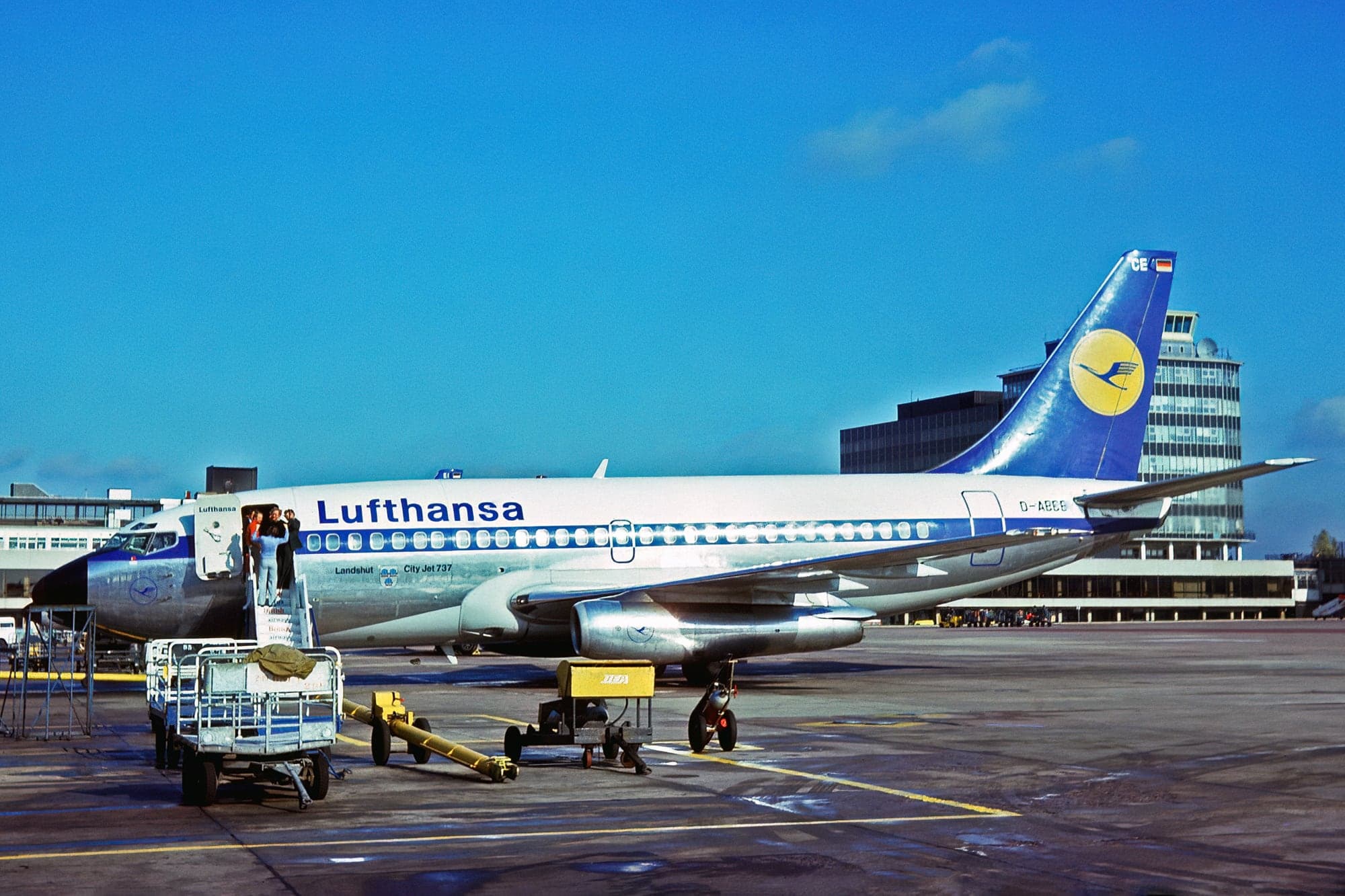
Lufthansa aircraft were also the targets of terrorism. In October 1977, during the German Autumn, four members of the Popular Front for the Liberation of Palestine hijacked the Boeing 737 Landshut, flight LH181 from Palma de Mallorca to Frankfurt, to force the release of Red Army Faction prisoners. The captain, Jürgen Schumann, was murdered at Aden. At Mogadishu, early on 18 October, the West German GSG 9 unit stormed the aircraft; three hijackers were killed and all eighty-seven passengers and four remaining crew were freed.
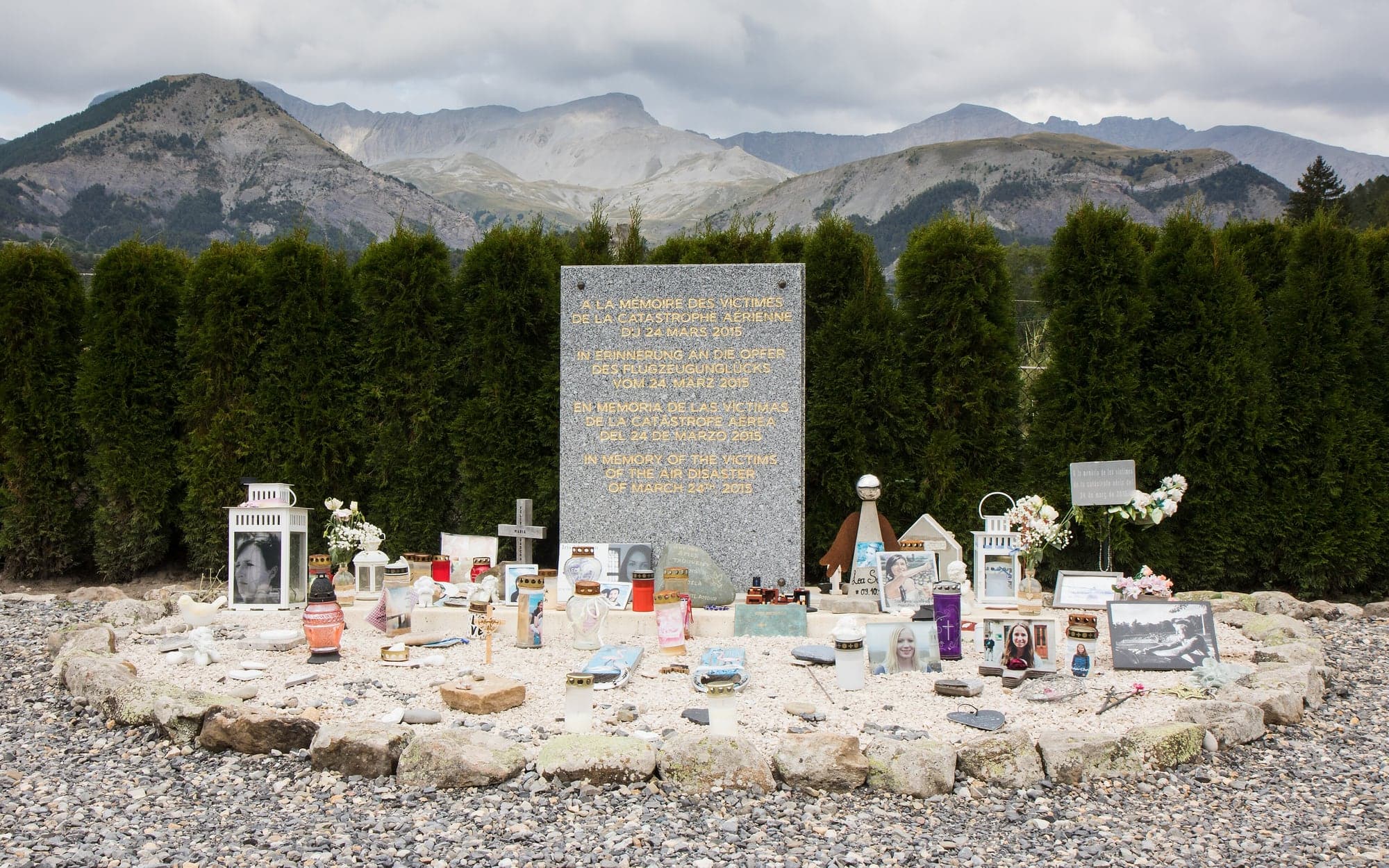
The group's worst day came on 24 March 2015. Germanwings flight 9525, an Airbus A320 flying from Barcelona to Düsseldorf for Lufthansa's low-cost subsidiary, flew into a mountainside in the French Alps, killing all 150 people on board. The French investigators of the BEA found that the co-pilot, who had concealed a mental illness from his employer, had locked the captain out of the cockpit and deliberately put the aircraft into a descent. Lufthansa's chief executive called it the darkest day in the company's history. The investigation led to new scrutiny of how the medical fitness of pilots is monitored.
Legacy
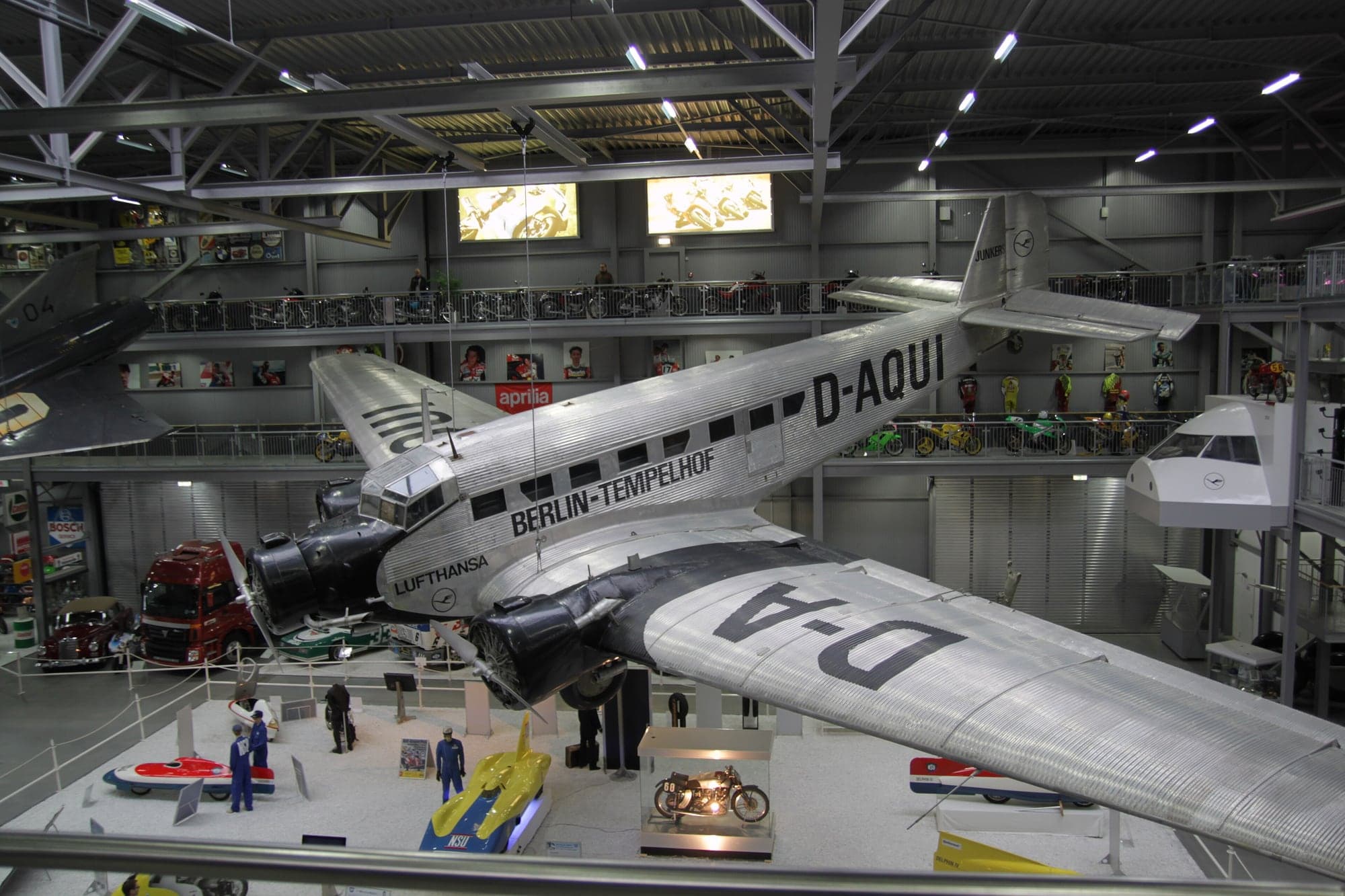
Lufthansa carries two histories under one name. One is the story it tells gladly: the airline that rebuilt German civil aviation from nothing in 1955, launched the Boeing 737, flew the 747 for more than half a century and made Frankfurt one of the great crossroads of world air travel. The other is the history of the company whose name it bought, which flew for the Nazi state and used forced labour in its hangars. Lufthansa has chosen to claim both, and the argument over how fully it has faced the second has never quite ended.
What it built after the war rests on two choices: to make an alliance the frame of its network, and to buy other flag carriers while leaving their names, crews and liveries intact: SWISS is still Swiss, Austrian still Austrian. In 2025 the group that grew from the airline carried 135 million passengers.
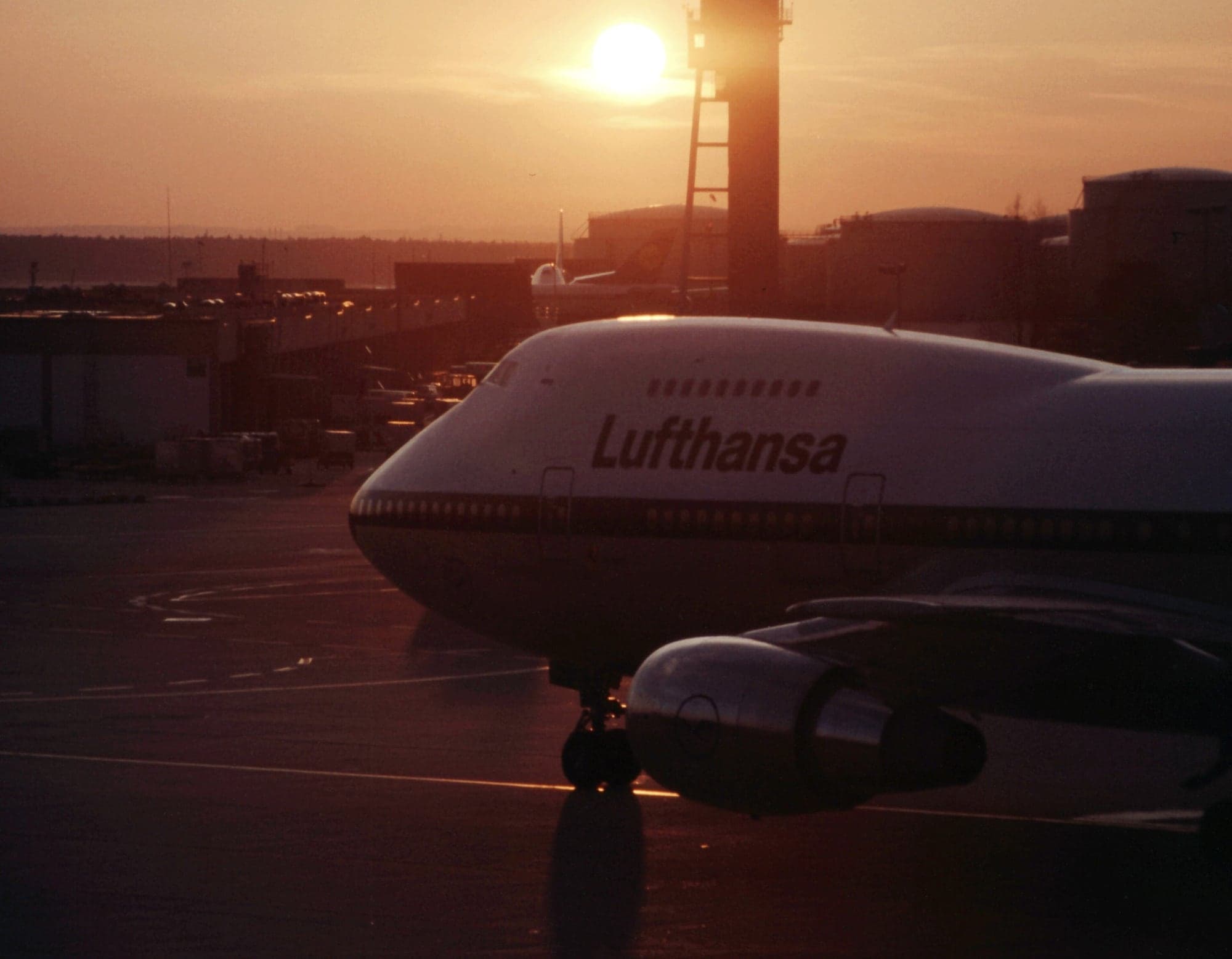
In its centenary year Lufthansa is also a transitional airline: its long-haul fleet still includes four-engined aircraft that many airlines have already retired, alongside new Boeing 787s and Airbus A350s as the group prepares to receive new aircraft at a rate of almost one a week. The Junkers Ju 52 in 1930s markings and the Boeing 747-8 in 1970s colours are there to say that the crane on the tail has meant the same airline all along. The record says it is more complicated than that, and the record is part of the airline too.
The fleet
In service at December 31, 2025
Long-haul
Total122
Medium-haul
Airbus A321
54
Airbus A321neo
18
Airbus A320
62
Airbus A320neo
41
Airbus A319
40
Total215
Regional
Embraer
27
Bombardier CRJ
23
Total50
Cabins
First Class
The smallest cabin, sold on a part of the long-haul fleet, with its own terminal building at Frankfurt for departing First Class passengers. The Allegris generation brings First Class to the A350, with the A350-1000 due to carry it from 2026.
Available onSelected long-haul aircraft
Business Class
On long-haul aircraft, a lie-flat seat; the Allegris version, fitted to new Boeing 787-9s and Airbus A350-900s and being retrofitted, offers several seat types within the same cabin. On European routes, Business Class is the front of a single-aisle cabin.
Available onAll long-haul aircraft; front rows in Europe
Premium Economy
A separate cabin between Business and Economy on long-haul aircraft, with wider seats and more legroom.
Available onLong-haul aircraft
Economy Class
The main cabin on every aircraft. On the Boeing 787-9 it is laid out nine abreast with a seat-back screen at every place.
Subsidiaries
- SWISS
- Swiss International Air Lines, with its leisure airline Edelweiss; part of the group since 2005.
- Austrian Airlines
- The Austrian flag carrier at Vienna, acquired in 2009.
- Brussels Airlines
- The Belgian network carrier, taken over in stages and wholly owned since 2017.
- ITA Airways
- The Italian flag carrier; a 41 per cent stake was acquired on 17 January 2025.
- Eurowings
- The group's point-to-point airline, based in Düsseldorf.
- Discover Airlines
- The group's German leisure airline, flying A330s and A320s.
- Air Dolomiti
- An Italian regional airline flying Embraer jets for Lufthansa from Munich and Frankfurt.
- Lufthansa City Airlines
- A regional airline flying A319s and A320neos from Munich, and from Frankfurt since February 2026.
- Lufthansa Cargo
- The freight airline, flying Boeing 777Fs from Frankfurt.
- Lufthansa Technik
- Maintenance, repair and overhaul, based in Hamburg.
Genealogy
Where Lufthansa comes from. Deutsche Luft Hansa was formed in 1926 from Deutscher Aero Lloyd, itself built on the Deutsche Luft-Reederei of 1917, and Junkers Luftverkehr. It was wound up after the Second World War and liquidated in 1951; Luftag, founded in 1953, took over its name and colours as Deutsche Lufthansa AG in 1954. The warm line is the one the company counts as its own, which is why it marked its centenary in 2026, though the post-war airline is a new company, not the same one continued.
Scroll to see the full diagram
Timeline
January 6, 1926
Deutsche Luft Hansa is founded
Deutscher Aero Lloyd and Junkers Luftverkehr are merged in Berlin into a single national airline.
April 6, 1926
First scheduled flight
A Fokker F.II leaves Berlin Tempelhof for Zurich by way of Halle, Erfurt and Stuttgart.
1934
Scheduled airmail across the South Atlantic
The first regular airline service across an ocean, flown by catapult-launched Dornier Wal flying boats.
August 1938
Berlin to New York non-stop
A Focke-Wulf Fw 200 Condor flies non-stop between the two cities.
September 1, 1939
Placed under the Luftwaffe
With the outbreak of war, the fleet and most of the staff come under military command.
April 21, 1945
Last scheduled flight of Deutsche Luft Hansa
The company is dissolved after the surrender; its remaining assets are liquidated on 1 January 1951.
January 6, 1953
Luftag is founded in Cologne
August 6, 1954
Luftag buys the Lufthansa name and crane
April 1, 1955
Scheduled flights resume
Domestic services link Hamburg, Düsseldorf, Frankfurt, Cologne and Munich; New York follows on 1 June.
March 1960
First jet services
Boeing 707s begin flying between Frankfurt and New York.
1968
Launch customer of the Boeing 737
The first 737, delivered on 27 December 1967, enters service.
April 26, 1970
The Boeing 747 enters service
October 18, 1977
The Landshut is freed at Mogadishu
May 14, 1997
Star Alliance is founded
Lufthansa, Air Canada, SAS, Thai Airways International and United Airlines form the first multilateral airline alliance.
October 1997
Privatisation completed
The federal government sells its remaining 37.5 per cent stake.
2005
SWISS joins the group
2009
Austrian Airlines is acquired
2010
The first Airbus A380
2012
Launch customer of the Boeing 747-8 Intercontinental
March 24, 2015
Germanwings flight 9525
The group's deadliest accident: 150 people are killed in the French Alps.
February 2018
A new livery in dark blue
January 17, 2025
41 per cent of ITA Airways acquired
Accidents and defining events
Recorded as the investigators recorded them: what happened, where, and how many people died. Fatal accidents and the events that changed the airline, in date order.
January 11, 1959
LH502
Lockheed L-1049G Super ConstellationRio de Janeiro, Brazil
On approach to Galeão airport in rain, on a flight from Hamburg, the aircraft descended too low, struck the water and crashed near the shore. All 29 passengers and seven of the ten crew were killed. Investigators could not establish the cause with certainty and considered pilot error the most likely.
36 deaths39 people on board
November 20, 1974
LH540
Boeing 747-130Nairobi, Kenya
The aircraft took off for Johannesburg with its leading-edge slats retracted, failed to climb, and crashed just beyond the runway and caught fire. Fifty-four passengers and five crew were killed. It was the first fatal accident of a Boeing 747 and remains the deadliest in Lufthansa's history.
59 deaths157 people on board
October 13, 1977
LH181
Boeing 737-230CHijacked over the Mediterranean; ended at Mogadishu, Somalia
Four members of the Popular Front for the Liberation of Palestine hijacked the Landshut on a flight from Palma de Mallorca to Frankfurt to demand the release of Red Army Faction prisoners. The captain, Jürgen Schumann, was murdered at Aden. On 18 October the GSG 9 unit stormed the aircraft at Mogadishu, killing three hijackers; all 87 passengers and four crew were freed.
September 14, 1993
LH2904
Airbus A320-200Warsaw, Poland
Landing on a flight from Frankfurt with an outdated wind report, the aircraft touched down fast and far along the runway in a tailwind. Spoilers, reversers and brakes engaged late, and it ran off the end into an embankment and caught fire. The co-pilot and one passenger were killed.
2 deaths70 people on board
March 24, 2015
4U9525
Airbus A320-200 (Germanwings)Prads-Haute-Bléone, French Alps, France
Operated by Lufthansa's subsidiary Germanwings from Barcelona to Düsseldorf. The BEA found that the co-pilot, alone in the cockpit, locked the door and deliberately flew the aircraft into the mountains. All 144 passengers and six crew were killed.
150 deaths150 people on board
In the catalogue
Aircraft central to this airline's story, as the encyclopedia records them.
Related airlines
- Annual Report 2025, Lufthansa Group
- Lufthansa Group increases operating profit by 20 percent and achieves highest revenue in company history, Lufthansa Group
- Final report: Accident on 24 March 2015 at Prads-Haute-Bléone (Alpes-de-Haute-Provence, France) to the Airbus A320-211 registered D-AIPX operated by Germanwings, BEA — Bureau d'Enquêtes et d'Analyses pour la sécurité de l'aviation civile
- Deutsche Lufthansa AG, International Directory of Company Histories, via Encyclopedia.com
- Government clears way for full Lufthansa privatisation, FlightGlobal
- Lufthansa, Wikipedia
- Deutsche Luft Hansa, Wikipedia
- Lufthansa Flight 502, Wikipedia
- Lufthansa Flight 540, Wikipedia
- Lufthansa Flight 181, Wikipedia
Checked September 15, 2026