Airline
Delta Air Lines
DL · DAL · DELTAUnited States
Delta Air Lines, Inc.
1,004
Aircraft
In service at June 30, 2026
200M
Passengers
in 2025
Identity
- IATA
- DL
- ICAO
- DAL
- Callsign
- DELTA
- Founded
- March 2, 1925
- First service
- June 17, 1929
Company
- Legal name
- Delta Air Lines, Inc.
- Headquarters
- Atlanta, Georgia
- Country
- United States
- Status
- Operating
Network
- Alliance
- SkyTeam, founding member (2000)
- Load factor
- 84 %
Hubs and bases
AtlantaATL
Hub · since 1941
DetroitDTW
Hub · since 2008
Minneapolis to St. PaulMSP
Hub · since 2008
Salt Lake CitySLC
Hub · since 1987
BostonBOS
Secondary hub
Los AngelesLAX
Secondary hub
New York to JFKJFK
Secondary hub
New York to LaGuardiaLGA
Secondary hub
Seattle/TacomaSEA
Secondary hub
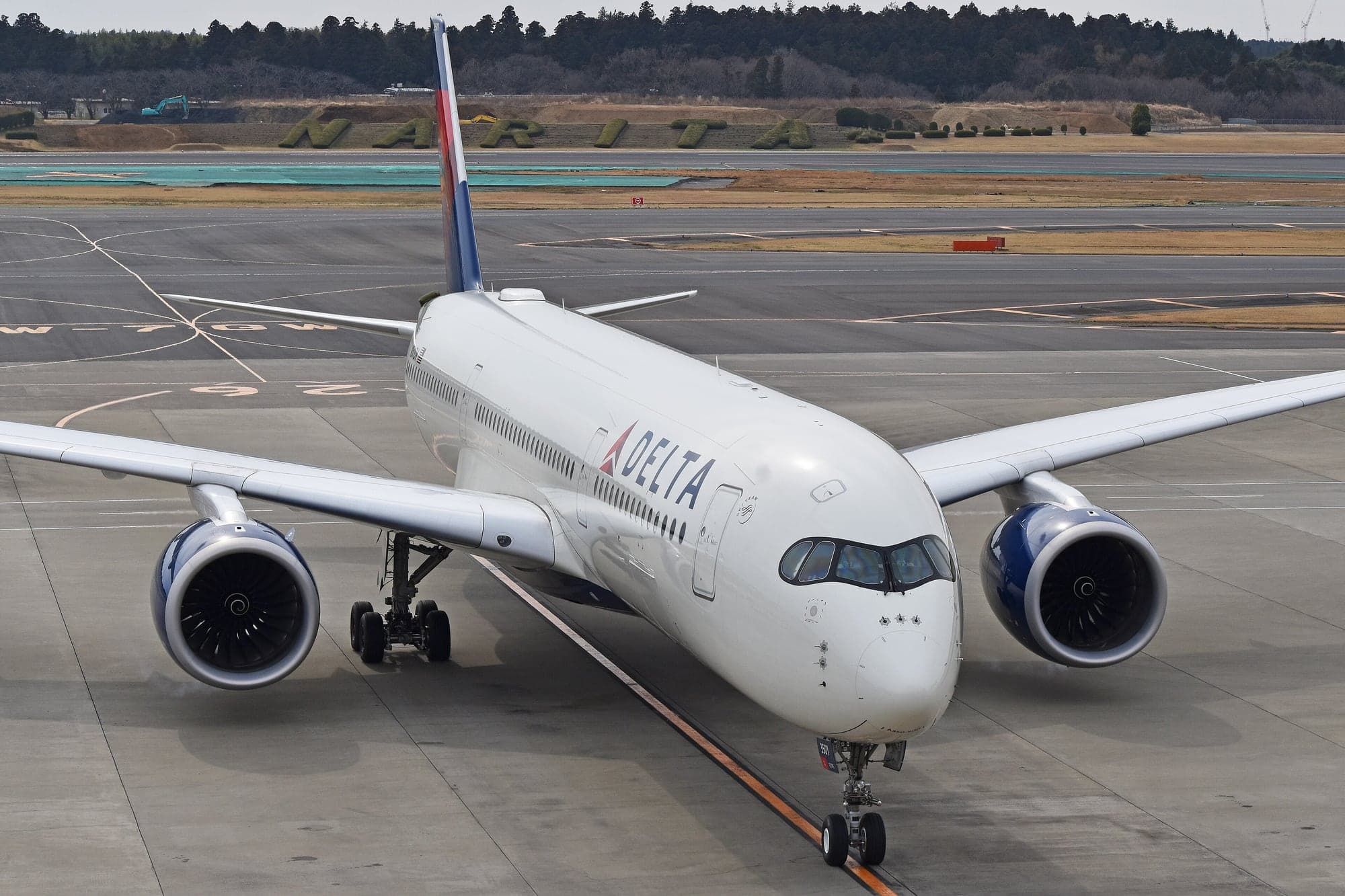
Delta Air Lines is one of the three large network carriers of the United States and, by revenue, the largest airline in the world. It is DL to the booking systems, DAL to air traffic control and DELTA on the radio, and it is run from a campus on the northern edge of Hartsfield to Jackson Atlanta International Airport, the busiest passenger airport on earth and the hub around which the rest of the airline is arranged.
It began as something else entirely. Huff Daland Dusters, founded at Macon, Georgia, on 2 March 1925, was the world's first aerial crop-dusting company, formed to fight the boll weevil in the cotton fields of the South. It moved to Monroe, Louisiana, that summer; in 1928 its general manager, C. E. Woolman, led a group of local investors in buying the business, and they renamed it Delta Air Service after the Mississippi Delta the aircraft flew over. Passengers first boarded on 17 June 1929. Delta therefore counts its age from the dusting company, and marked its centenary in 2025.
The airline that exists today was assembled from other airlines. Chicago and Southern came in 1953, Northeast Airlines in 1972, Western Airlines in 1986, the transatlantic network of Pan American World Airways in 1991 and Northwest Airlines in 2008: each acquisition adding a region Delta had not served. In 2000 it was one of the four founders of the SkyTeam alliance.
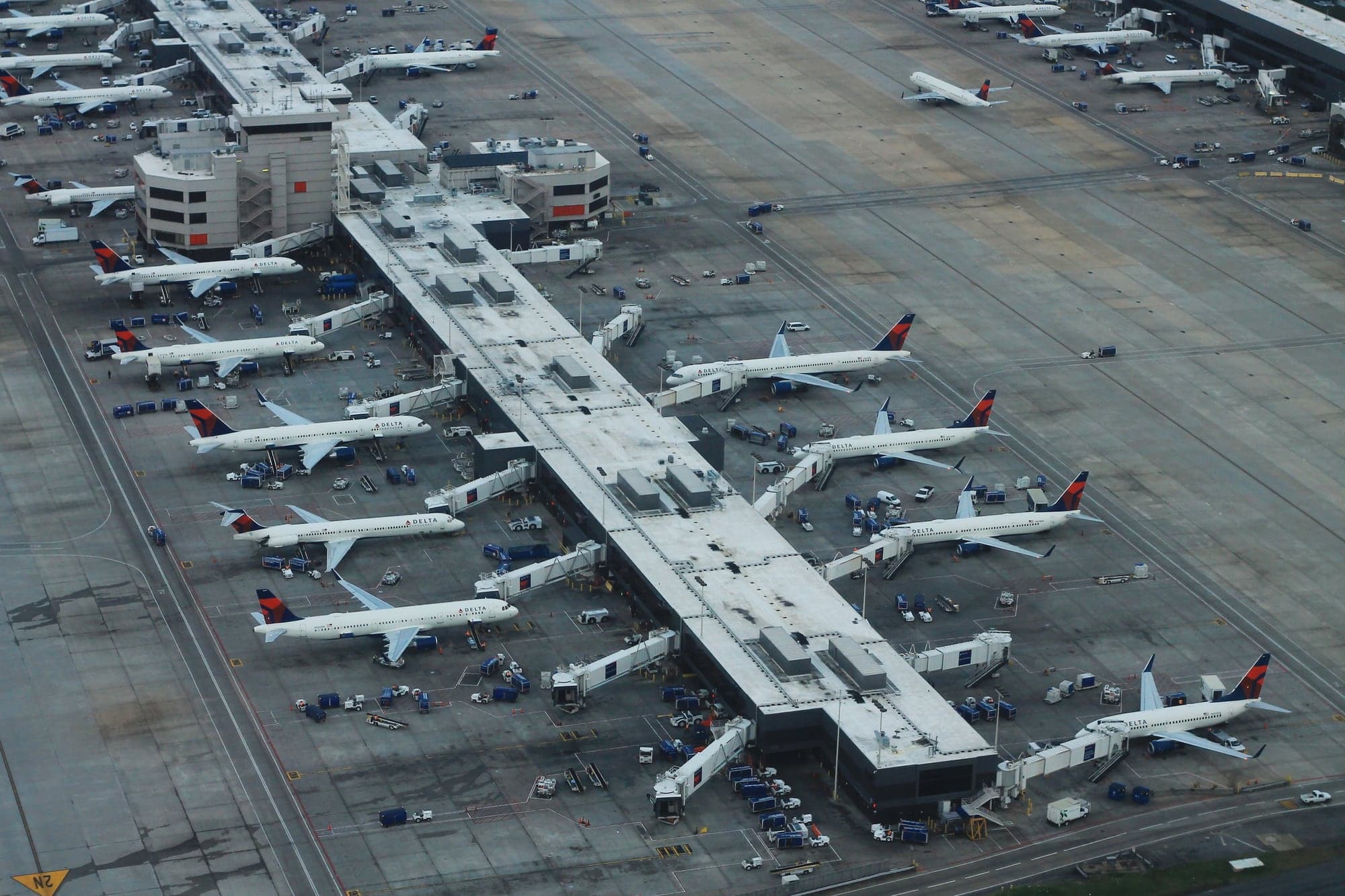
At 30 June 2026 the mainline fleet numbered 1,004 aircraft, with a further 325 regional jets flown on Delta's behalf as Delta Connection. Delta says it served more than 200 million customers in 2025, at an annual passenger load factor of 84 per cent, and employed about 103,000 people. It is unusual among its peers in owning an oil refinery, and in having almost no unionised staff outside the flight deck.
Formation
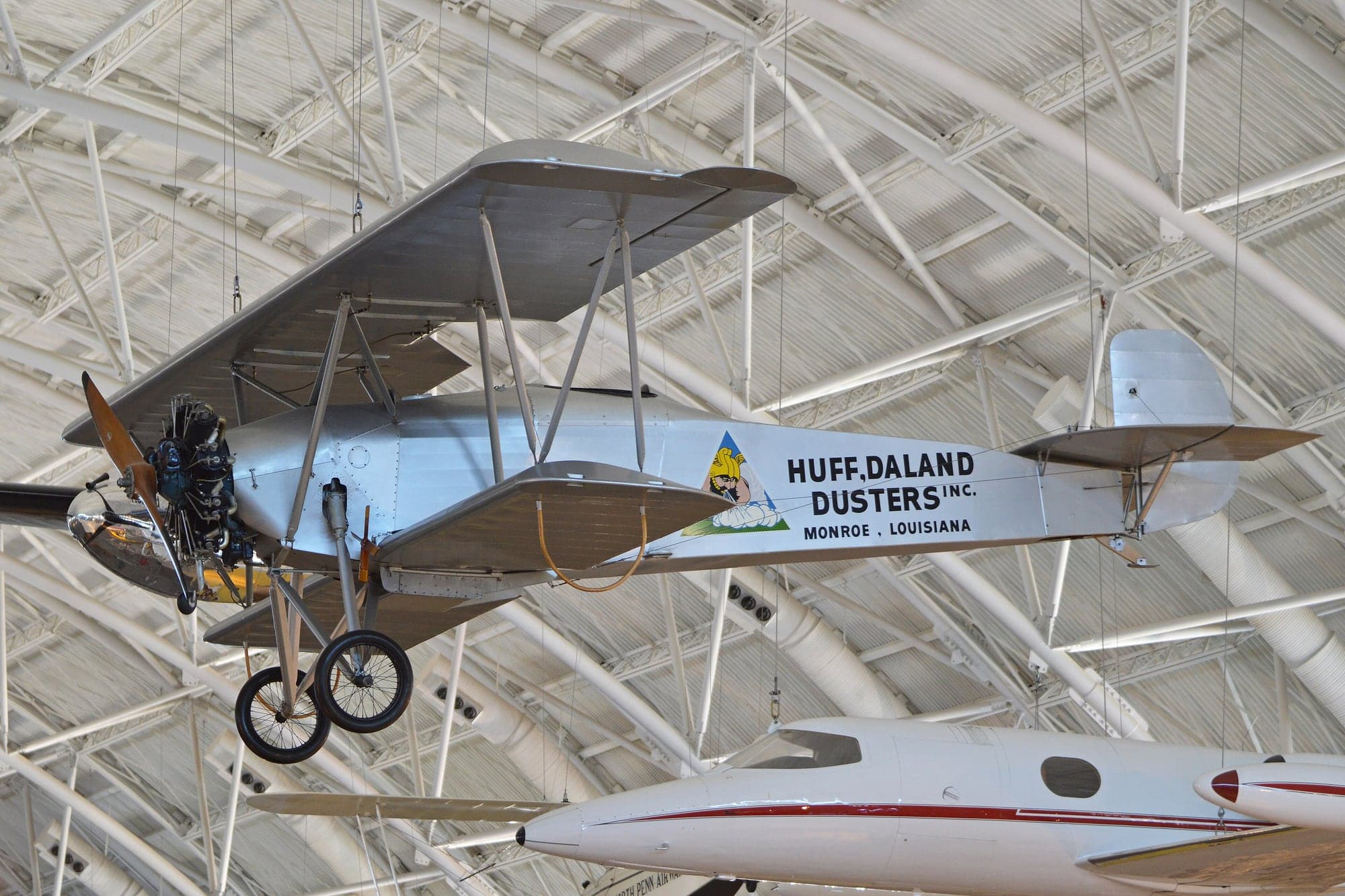
The boll weevil had been eating its way through the cotton of the American South since the 1890s. At a United States Department of Agriculture laboratory at Tallulah, Louisiana, the entomologist B. R. Coad worked out with borrowed Army pilots that dusting insecticide from an aeroplane was the most effective way to treat a field. The Huff-Daland Aero Corporation built the first aircraft designed for the job, and on 2 March 1925 set up a subsidiary at Macon, Georgia, to sell the service: Huff Daland Dusters, the first crop-dusting company in the world. It moved to Monroe, Louisiana, in the summer, and in the northern off-season its aircraft and crews worked in Peru.
The general manager was Collett Everman Woolman, an agricultural extension agent from Louisiana State University who had gone into aviation through entomology rather than through flying. In 1928 he led a group of Monroe investors in buying the dusting assets, and they incorporated Delta Air Service on 3 December. The name was suggested by Catherine FitzGerald, a secretary who later became a company officer, for the Mississippi Delta the aircraft crossed. On 17 June 1929 a five-seat Travel Air left Dallas for Jackson, Mississippi, by way of Shreveport and Monroe: the first passengers. By June 1930 the line ran east to Atlanta and west to Fort Worth.
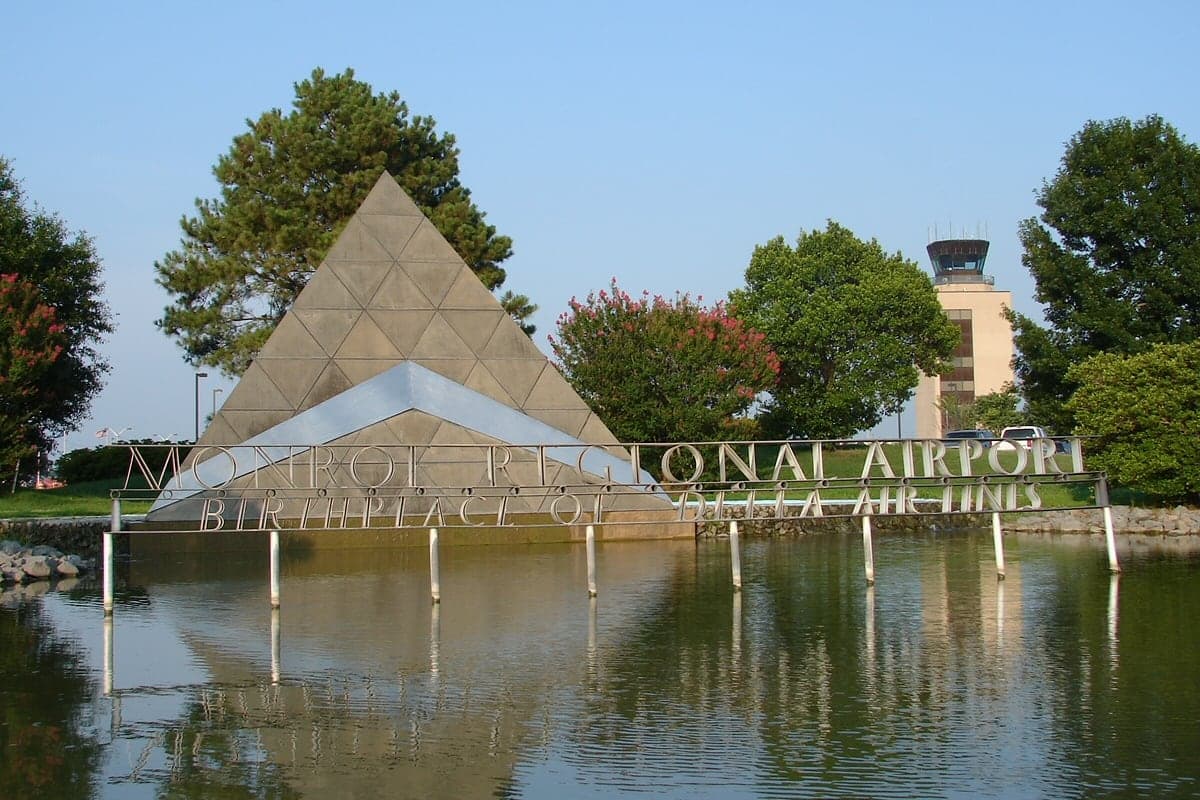
It did not last. In October 1930, after the Post Office awarded the airmail contract for the route Delta had opened to a predecessor of American Airlines, Delta Air Service stopped carrying passengers and sold its assets to the winner. Without mail there was no airline. A Monroe banker, Travis Oliver, acting as trustee, bought the dusting business back with Woolman and the other local investors and incorporated it as Delta Air Corporation on 31 December 1930.
The reprieve came from Washington. After the airmail scandal of 1934 the contracts were rebid, and Woolman won Mail Route 24 at a low bid, Charleston, South Carolina, to Fort Worth by way of Columbia, Augusta, Atlanta, Birmingham and Meridian. Mail flew from 4 July 1934 and passengers from 5 August, under the trading name Delta Air Lines. The dusting division stayed at Monroe until Delta gave it up in 1966.
Growth and expansion
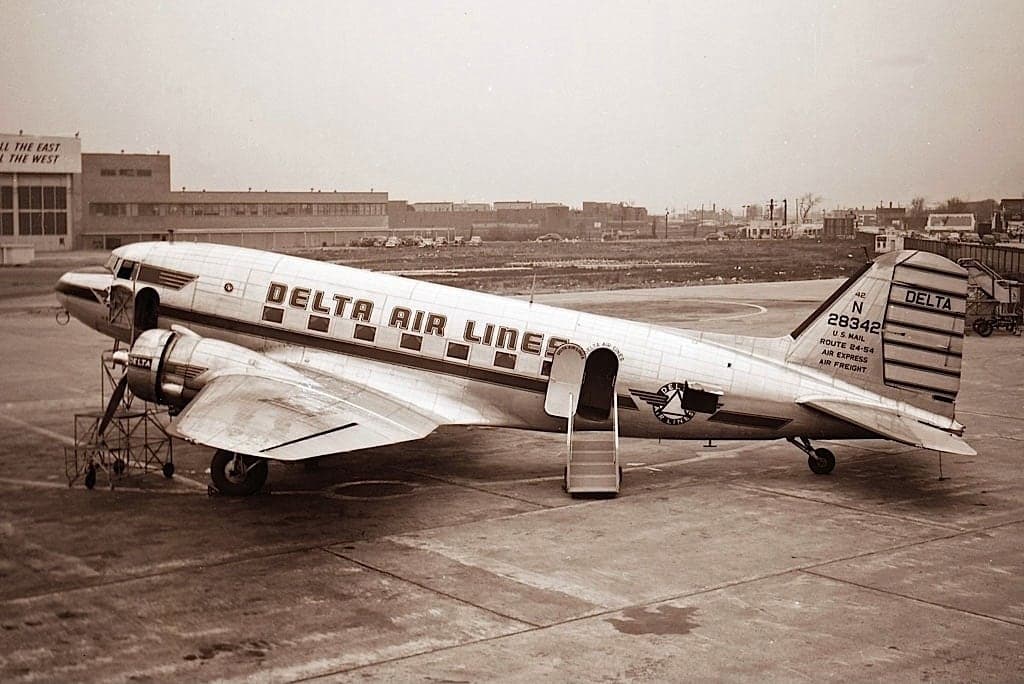
Mail Route 24 gave Delta a line but not a network. Until 1941 the airline was an unbranched string of twelve cities from Fort Worth to Charleston; that December it scheduled ten departures a day at Atlanta (three to Fort Worth, one to Birmingham and two each to Cincinnati, Charleston and Savannah) and those ten flights and their returns were the entire timetable. In 1941 the head office moved from Monroe to Atlanta, where it has stayed.
The network then began to branch north and south: New Orleans in 1943, Chicago and Miami in 1945. The company name became Delta Air Lines formally in 1945, and scheduled freight service began in 1946. In 1949 Delta introduced the first discounted coach fares between Chicago and Miami, an early gesture at a market that did not yet exist.
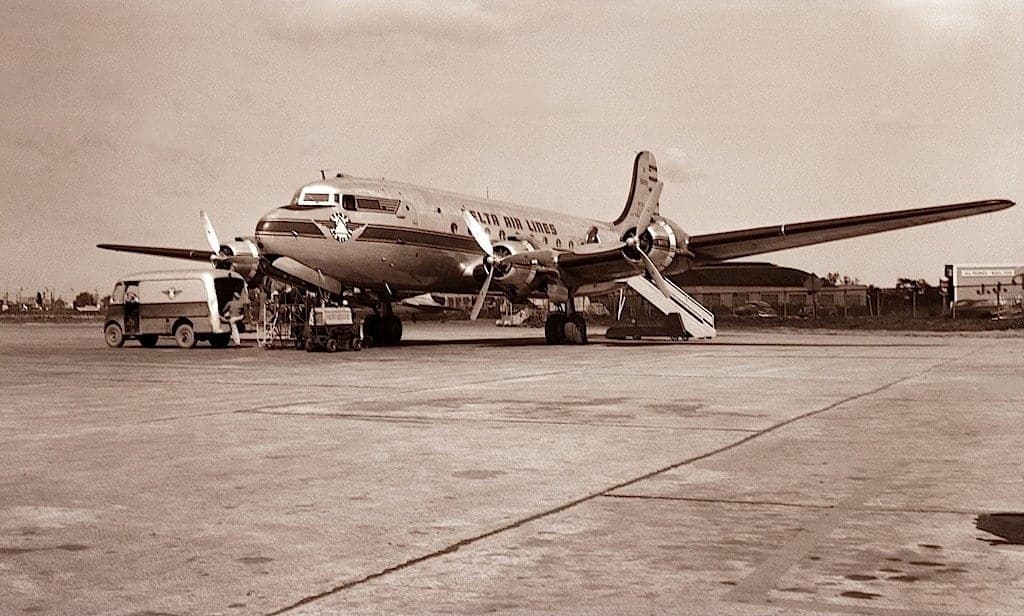
The decisive purchase of the propeller years was Chicago and Southern Air Lines in 1953. For two years the airline traded as Delta-C&S. C&S brought a north-south network from Chicago and Detroit down to Houston and New Orleans, and Delta's first international route: New Orleans to Caracas by way of Havana. Washington and New York followed in 1956.
By the end of the 1950s Delta was a solid, conservatively run trunk carrier of the American South, still led by Woolman, who remained chief executive until his death in 1966. What it did not have was the Northeast: there was no Delta flight between New England and Florida until 1972.
The jet age
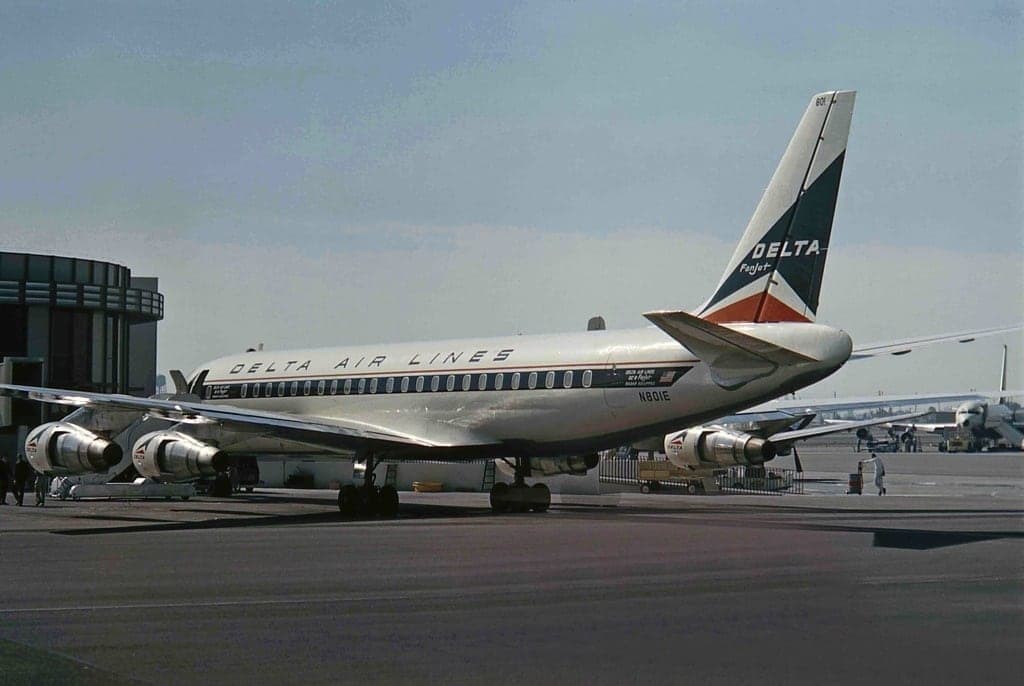
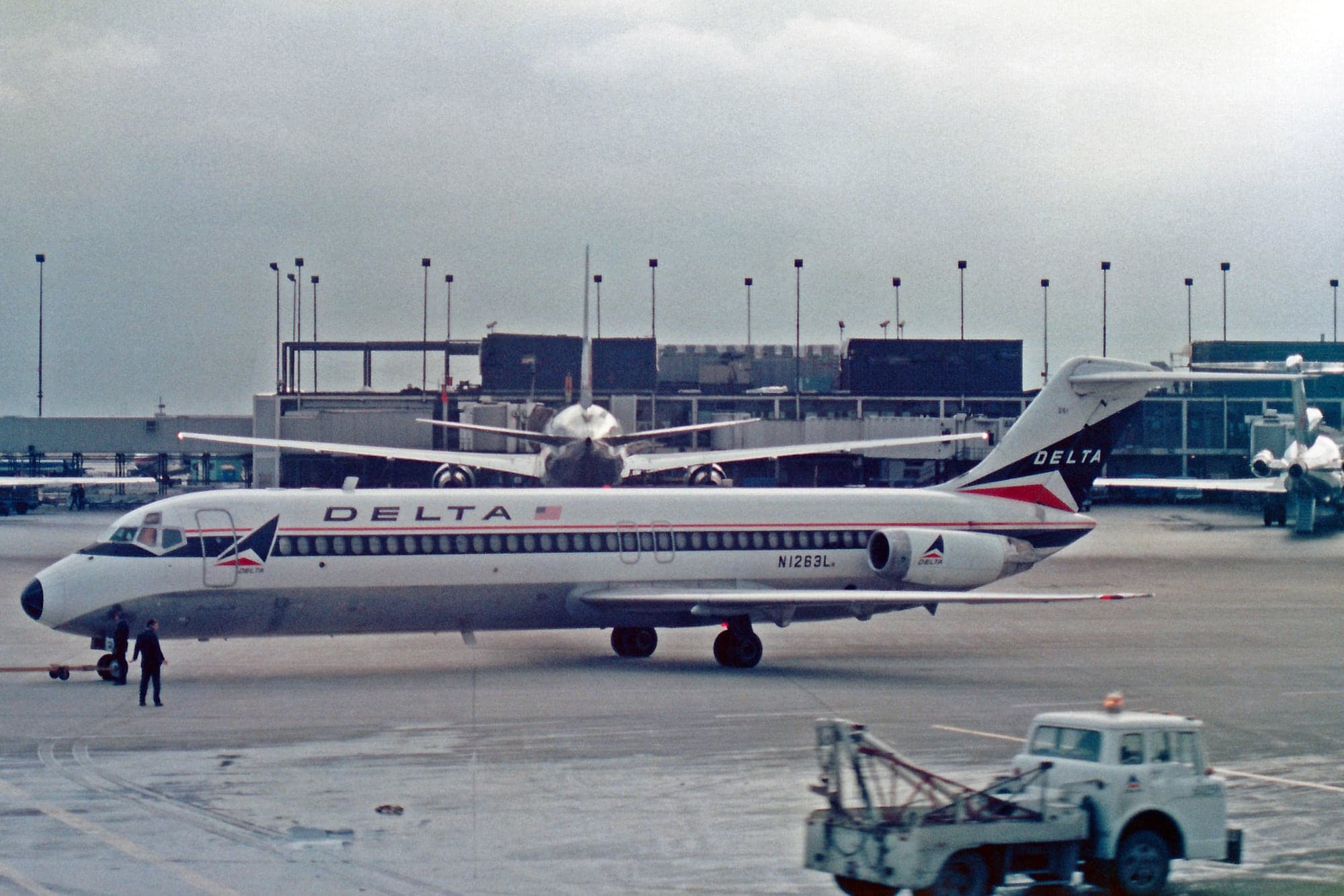
Delta was first with three American jets in seven years. The Douglas DC-8 entered service on 18 September 1959, the first of the type anywhere; the Convair 880 followed in 1960, and in 1965 Delta was the first airline to fly the McDonnell Douglas DC-9. None of this was accidental. A short-haul network of many thin city pairs rewarded an airline that bought the right small jet early, and the DC-9: and later its MD-88 and MD-90 descendants, of which Delta became the largest and, for the MD-90, the only operator, suited Atlanta's connecting banks better than anything larger.
The triangular mark that came with the jets is still on the tail. Adapted from the Greek letter delta and from the swept wing of the new aircraft, the widget was applied with a blue and red cheatline in a livery that survived, with small changes, for some thirty-five years.
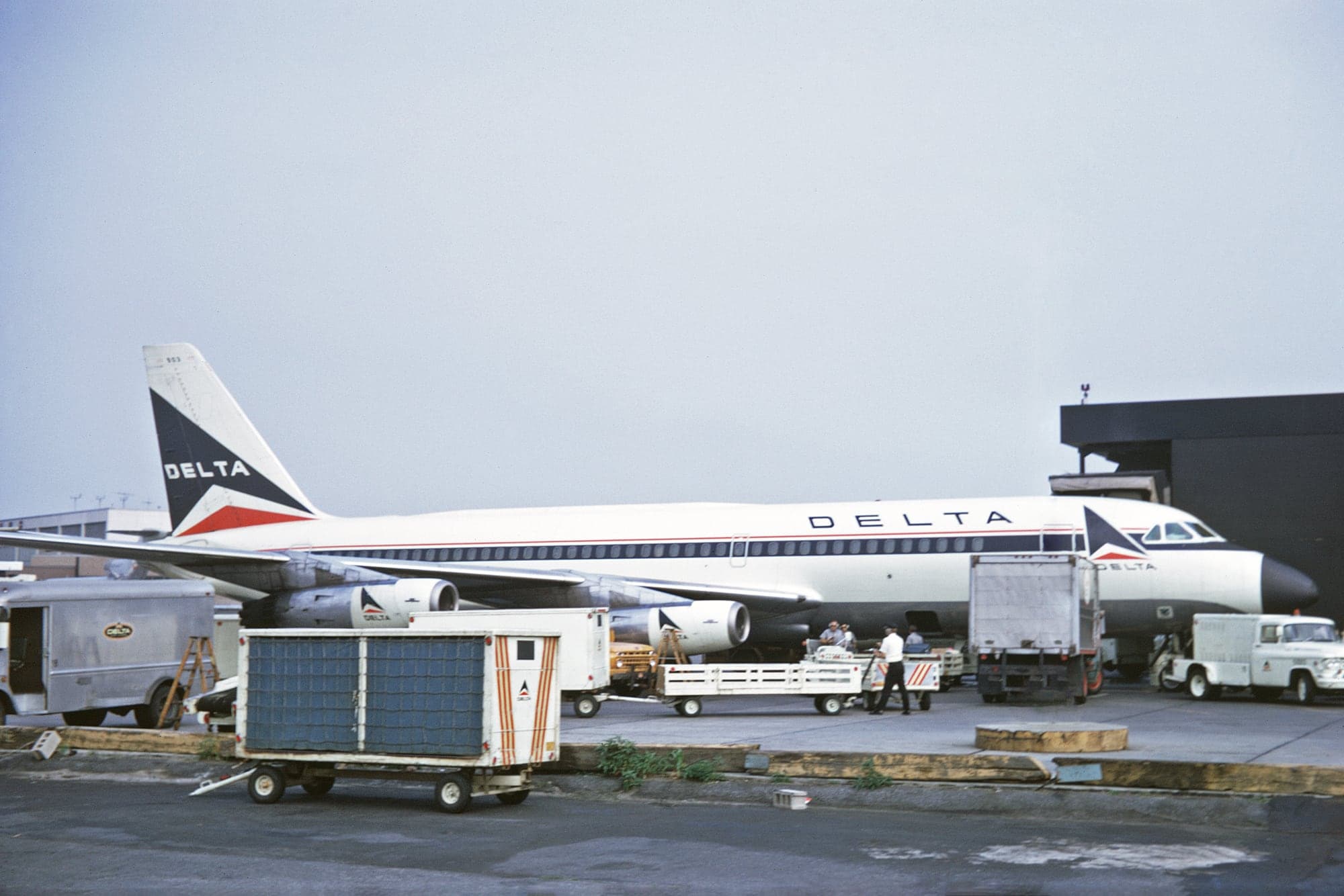
By 1970 Delta had retired its last propeller aircraft and was an all-jet airline. It bought five Boeing 747-100s, found them too large for its network and sold them on to China Airlines, preferring the Lockheed L-1011 TriStar; it eventually operated seventy TriStars, more than any other type of widebody it has flown, and they carried its international network for nearly thirty years.
Northeast Airlines came in August 1972. Deregulation in 1978 opened the route map, and in the same year Delta began flying the Atlantic, nonstop from Atlanta to London. In 1981 it started a frequent-flyer programme, which became SkyMiles in 1995.
The airline's self-image in these years is best captured by an aeroplane. In 1982, in the first difficult years after deregulation, three flight attendants organised a collection among employees, retirees and Delta's suppliers that bought the company a Boeing 767. It was named the Spirit of Delta and it flew for the airline until 2006.
Consolidation and merger
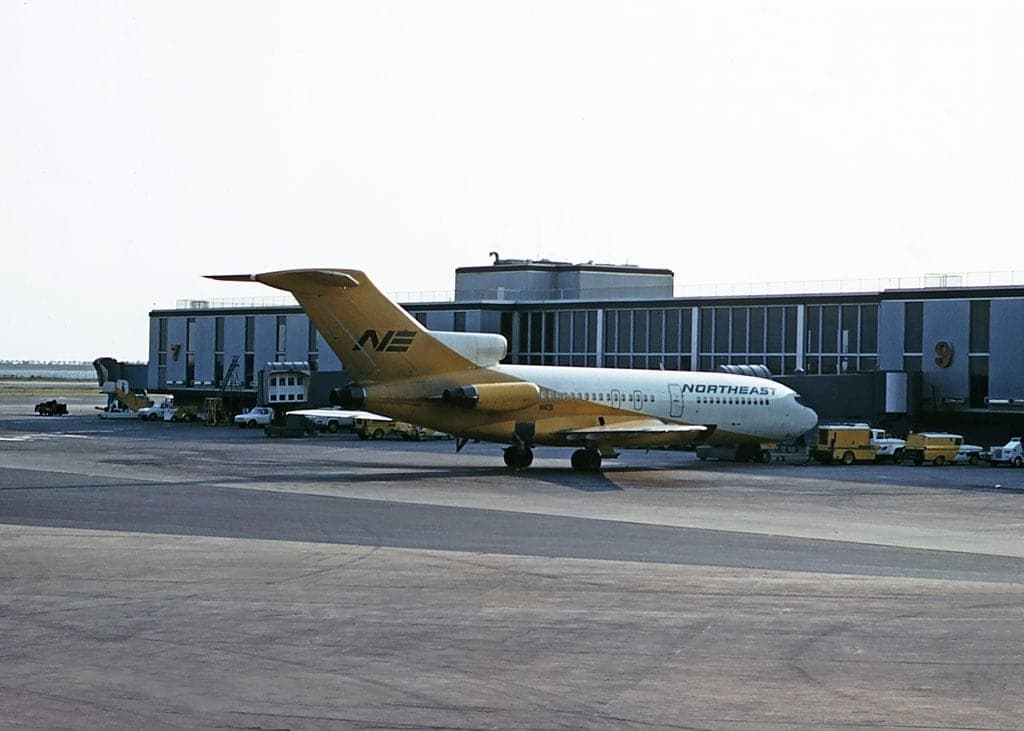
Northeast Airlines was a Boston carrier less than half the size of the next smallest trunk airline and had been losing money for years. It first agreed to merge with Northwest Airlines, which walked away in March 1971; Delta announced its own plan the following month, the Civil Aeronautics Board approved it in May 1972 on condition that Delta not fly Miami to Los Angeles, and the merger was completed that August. Delta got New England, the Northeast-to-Florida market, Bermuda and the Bahamas, and its first Boeing 727s, of which it became for a time the world's largest operator of the -200.
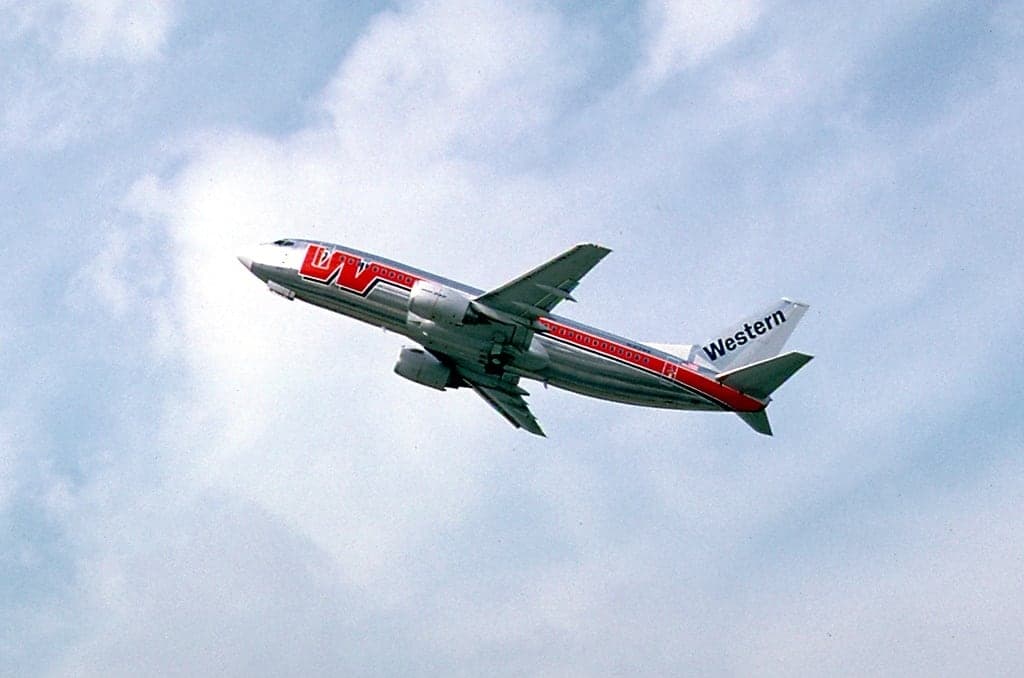
Western Airlines, the trunk carrier of the American West, was next. Delta and Western signed an agreement and plan of merger on 9 September 1986; the Department of Transportation approved it on 11 December and shareholders on 16 December, making Western a wholly owned subsidiary of Delta. The Western brand was withdrawn and the two workforces fully merged on 1 April 1987. Delta inherited Salt Lake City and Los Angeles, and with them the Rocky Mountain and Pacific coast networks it had never had; transpacific flying began the same year, Atlanta to Tokyo by way of Portland.
The largest prize came from a collapse. When Pan American World Airways failed, Delta agreed on 1 September 1991 to buy its East Coast and European routes, its intra-European network from Frankfurt and the Pan Am Shuttle, for a total of some 1.3 billion dollars, and took a controlling interest in what was left of the company. Delta had promised further money to keep Pan Am flying and a month later decided against it; Pan Am stopped on 4 December 1991. The creditors' committee sued Delta for more than 2.5 billion dollars, and in December 1994 a federal judge found that Delta was not liable for Pan Am's end. What Delta had bought made it the largest United States carrier across the Atlantic, which it has remained.
The last merger was the largest. Delta and Northwest Airlines announced on 14 April 2008 that they would combine under the Delta name; the Department of Justice approved on 29 October 2008, concluding that the two networks barely overlapped. Northwest flew as a wholly owned subsidiary until its operating certificate was merged into Delta's on 31 December 2009, and the brand was retired on 31 January 2010 when the reservation systems were joined. The combined airline was then the largest in the world, with 786 aircraft.
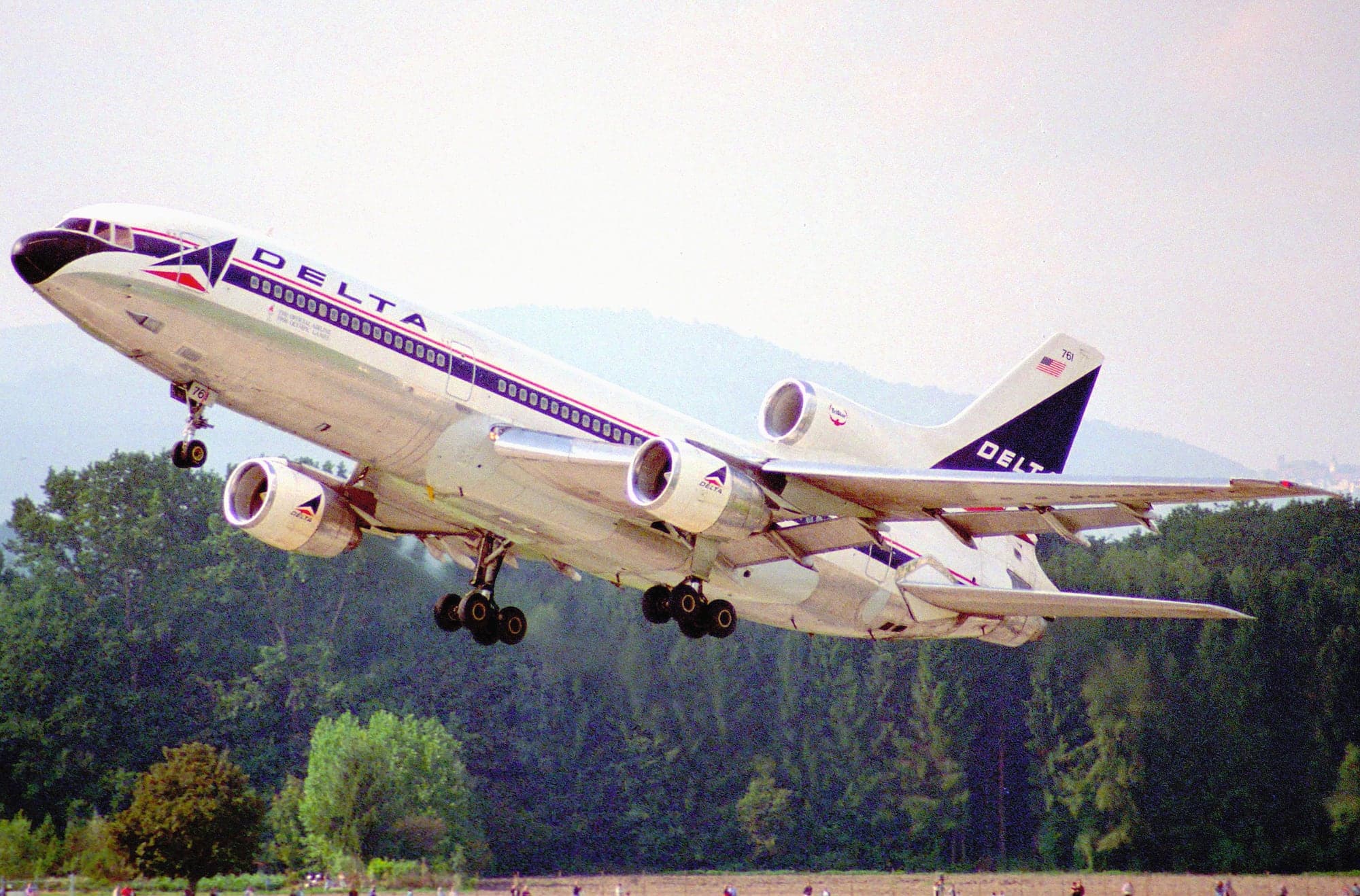
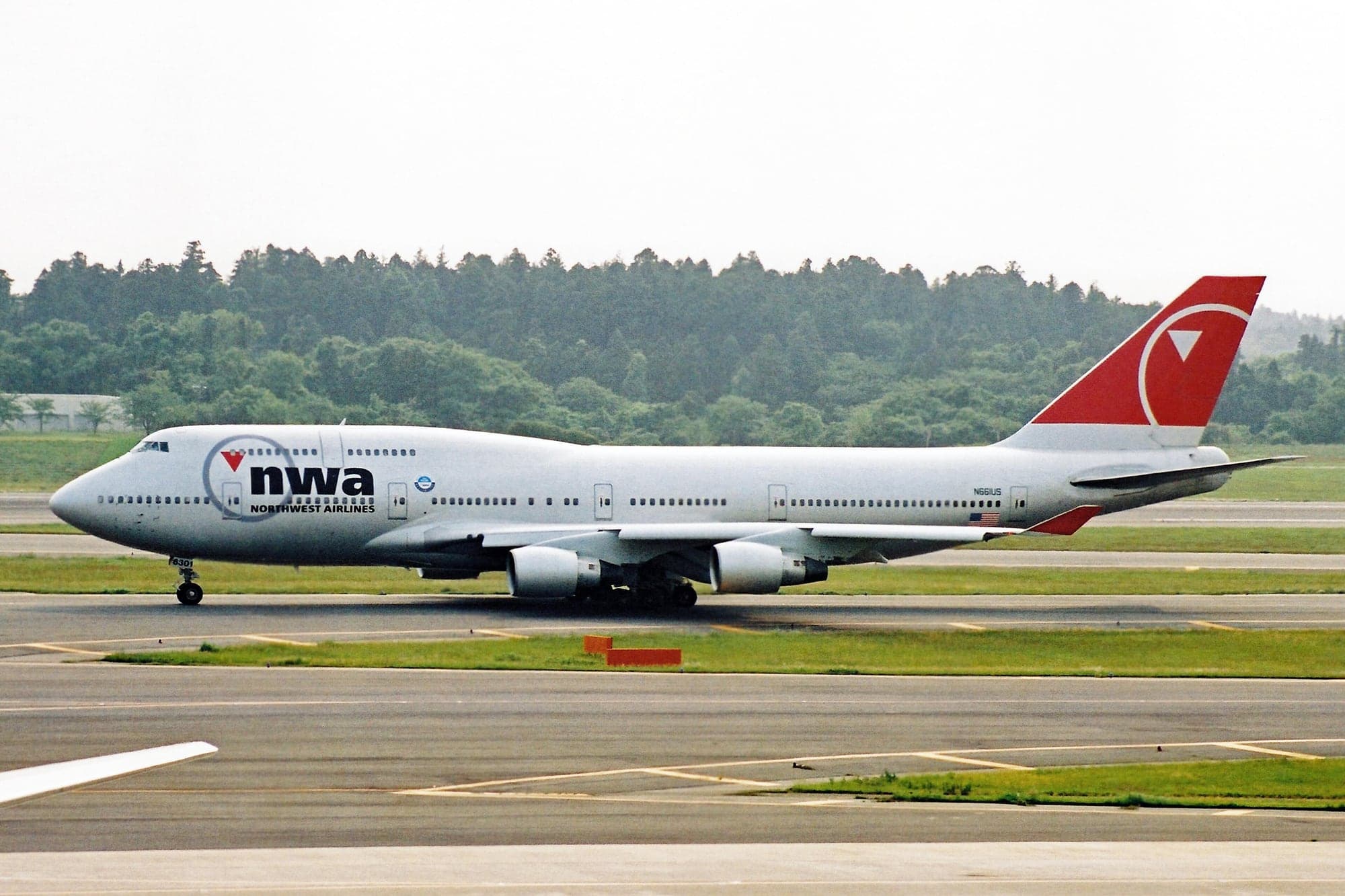
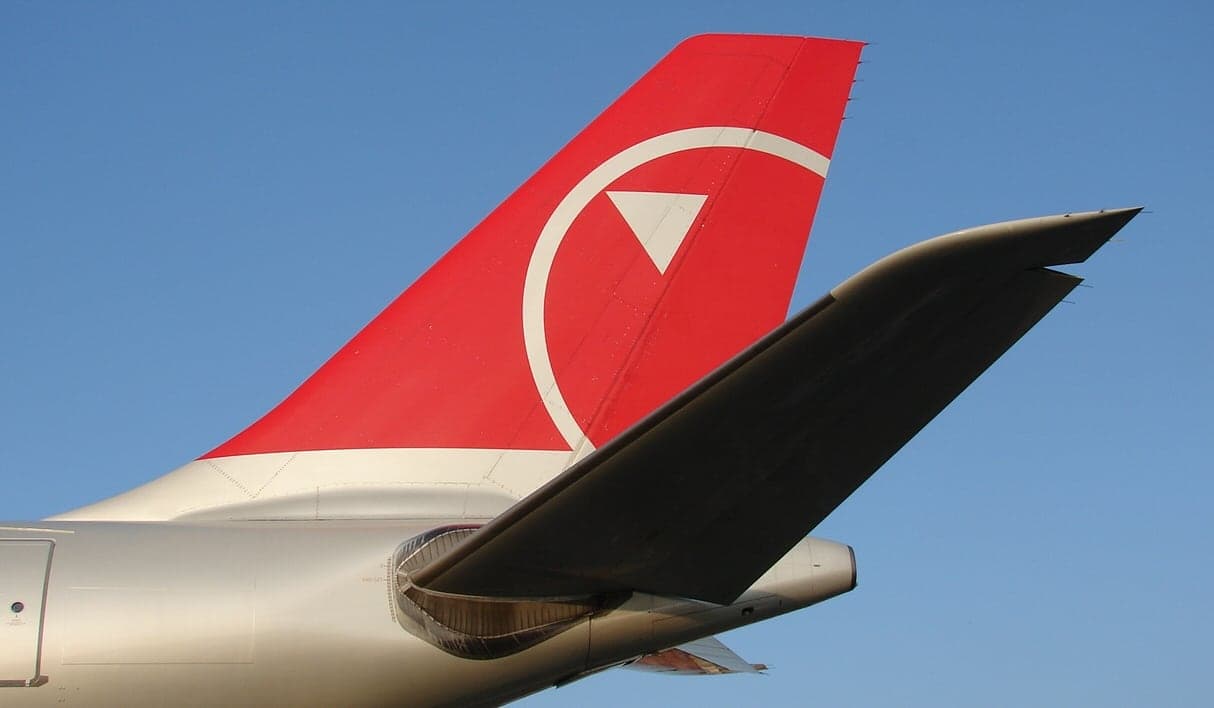
Northwest brought Detroit, Minneapolis to St. Paul, a Pacific network built on Tokyo and the airline's first Airbus aircraft, which are now the majority of the fleet. The two Midwest hubs it added remain, with Atlanta and Salt Lake City, what Delta calls its core hubs.
Deregulation and decline
The years after 2001 were the worst in Delta's history. Traffic fell after the September 11 attacks, fuel rose, and the low-cost carriers took the domestic markets that had paid for everything else. Delta answered in 2003 with Song, a low-fare airline within the airline, and from 2004 with cuts: seven thousand jobs, a pay reduction of 32.5 per cent for the pilots at the start of 2005 and 14 per cent more in December, and the sale in August 2005 of the Delta Connection carrier Atlantic Southeast Airlines to SkyWest for 425 million dollars, at a price analysts thought well below its worth.
It was not enough. On 14 September 2005 Delta filed for protection under Chapter 11 in the bankruptcy court in Manhattan, owing some 28.3 billion dollars. Northwest Airlines filed in the same court on the same day. Delta cut a quarter of its flights at Cincinnati, moved the aircraft to Atlanta and Salt Lake City, and set out to take three billion dollars a year out of its costs.
In November 2006 US Airways offered eight billion dollars for the bankrupt airline, and raised the offer twice. Delta's board refused, and its employees campaigned publicly against the bid under the slogan Keep Delta My Delta. On 31 January 2007 the creditors rejected the takeover and US Airways withdrew. Delta's plan of reorganisation was confirmed on 25 April 2007 and the airline left bankruptcy on 30 April as an independent company, with new shares, a new livery and a redrawn widget.
The merger with Northwest followed eighteen months later, and the integration ran to January 2010. It gave Delta the scale it had been short of, and the decade after it was the most profitable in the company's history, interrupted by the coronavirus pandemic, which in March 2020 cut planned capacity by forty per cent and brought forward the retirement of the MD-88 and MD-90 fleets to 2 June 2020.
The airline has also learned how much of itself is now software. On 19 July 2024 a faulty update to a third-party security product disabled Windows systems worldwide; Delta's crew-tracking system could not be recovered quickly and the airline cancelled more than 7,000 flights over five days, disrupting more than half a million passengers. Delta put its losses at about 550 million dollars, and the affair is still in litigation.
Network and hubs
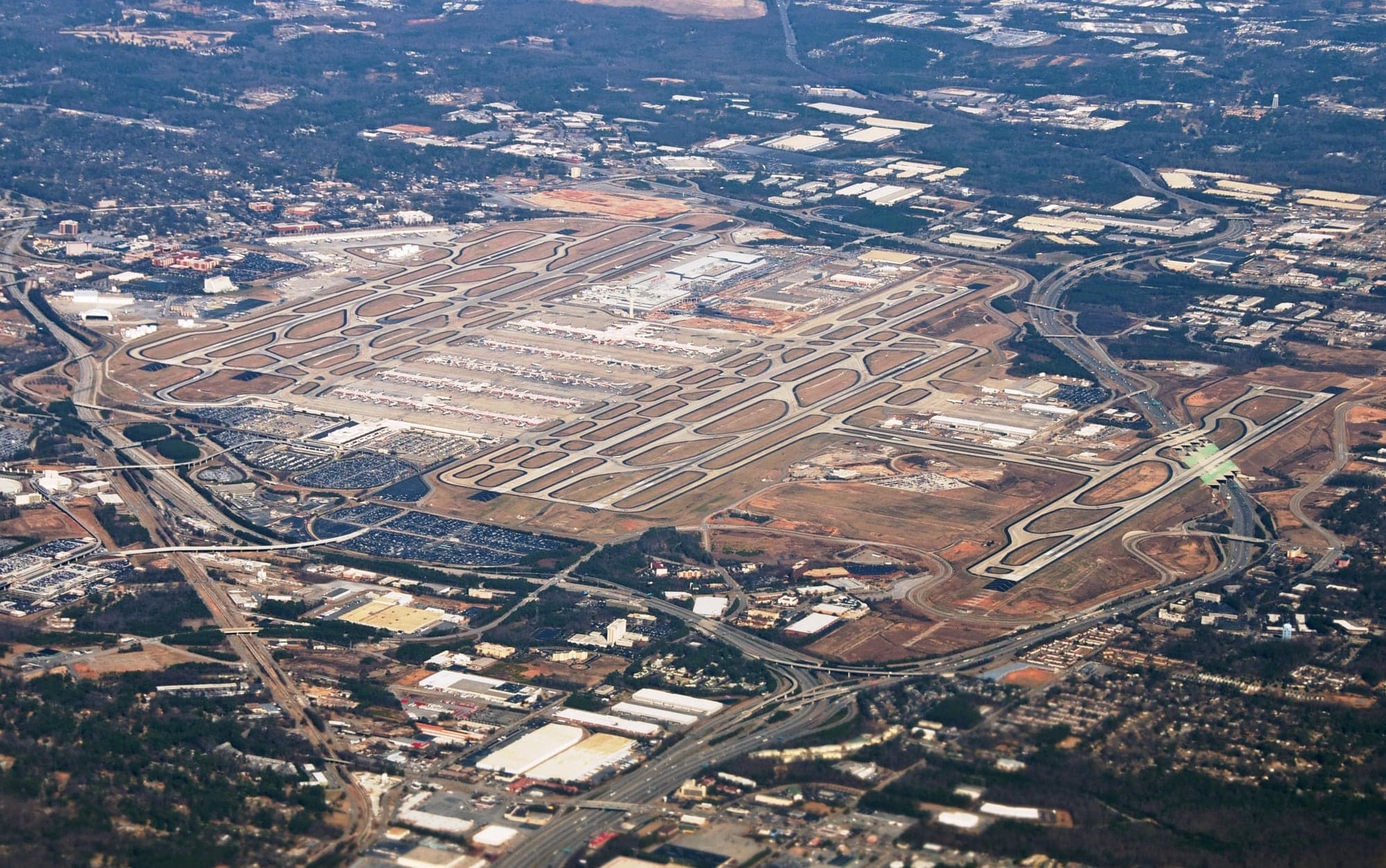
Delta divides its American hubs into two kinds. Four are core hubs, Atlanta, Detroit, Minneapolis to St. Paul and Salt Lake City, where Delta holds a large share of the local traffic, a dense bank structure and, by its own account, its strongest margins. Five are coastal hubs, Boston, Los Angeles, New York to LaGuardia, New York to JFK and Seattle, which exist for the size of the markets they sit in and for the international flying they feed. At the end of 2025 the airline was offering up to 5,500 flights a day at peak to more than 300 destinations on six continents.
Atlanta is the hub against which the others are measured. Hartsfield to Jackson has been the busiest airport in the world by passenger numbers almost every year since 1998, and Delta's headquarters, its Delta TechOps maintenance base and its museum all stand on its northern edge. The concentration is the point: a single mid-continent airport, within two hours' flying of most of the population of the eastern United States, can connect more city pairs per aircraft than any coastal one.
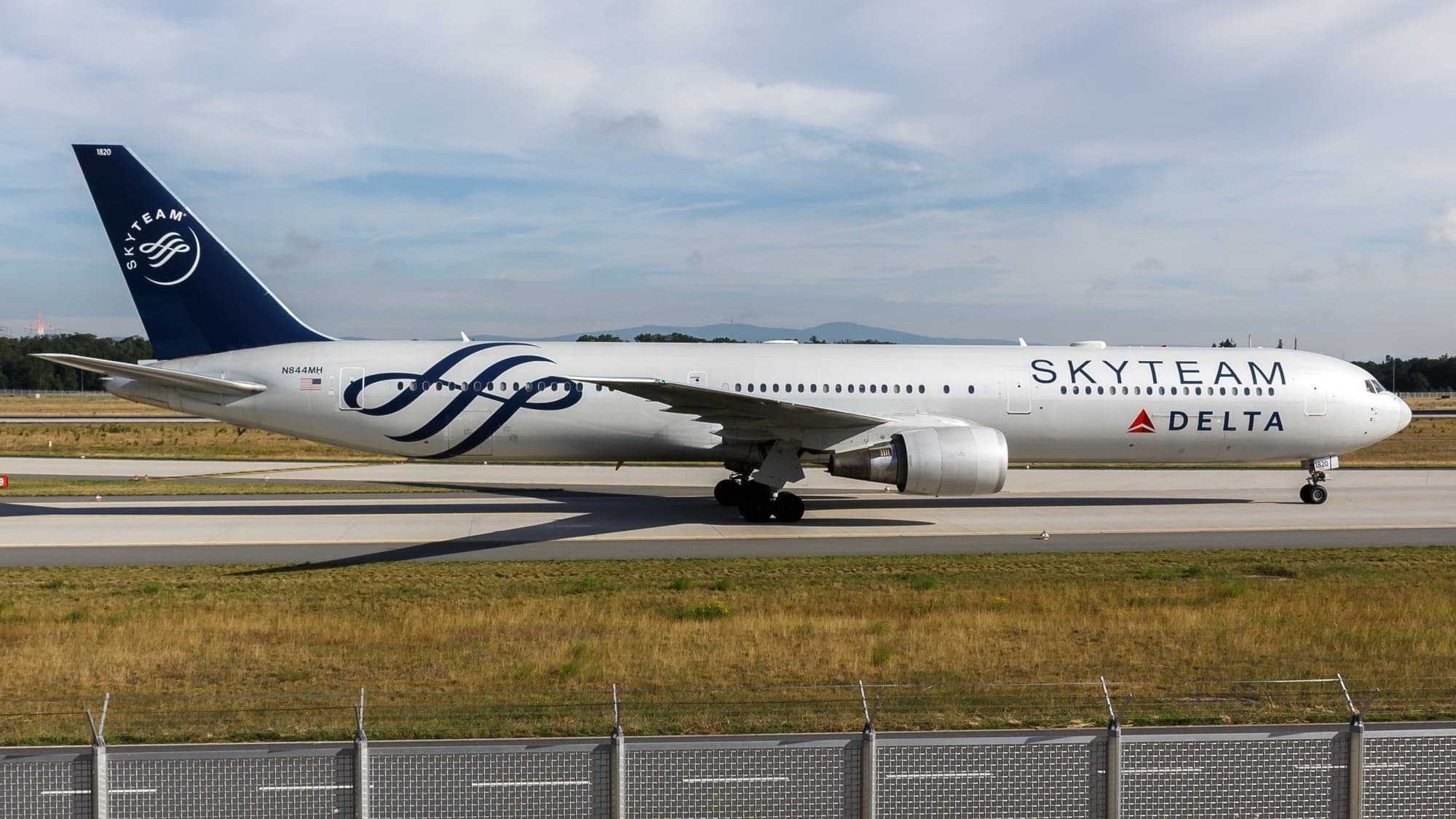
Abroad, Delta works through SkyTeam, which it founded in June 2000 with Aeroméxico, Air France and Korean Air, and through a small number of deep bilateral joint ventures, with Air France-KLM and Virgin Atlantic across the Atlantic, with Korean Air and China Eastern across the Pacific, with Aeroméxico, LATAM and WestJet across the Americas. Several are reinforced by shareholdings: 49 per cent of Virgin Atlantic's parent, about 19 per cent of Aeroméxico's, about 11 per cent of LATAM and about 13 per cent of WestJet. Where an American airline once flew its own metal everywhere, Delta now sells a network that its partners largely operate.
It also buys jet fuel in an unusual way. In 2012 its subsidiary Monroe Energy bought the shuttered Trainer refinery on the Delaware River near Philadelphia from Phillips 66; the plant restarted that September, reconfigured so that a larger share of its output is jet fuel, and it supplies Delta's north-eastern stations through its own pipelines. No other major airline owns a refinery, and Delta reports it as a separate segment of the business.

Below the mainline sits Delta Connection, the regional network flown under contract by the wholly owned Endeavor Air and by SkyWest and Republic. At 30 June 2026 it comprised 325 regional jets: 161 Bombardier CRJ-900s, 133 Embraer 175s, 20 CRJ-700s and 11 Embraer 170s.
Fleet
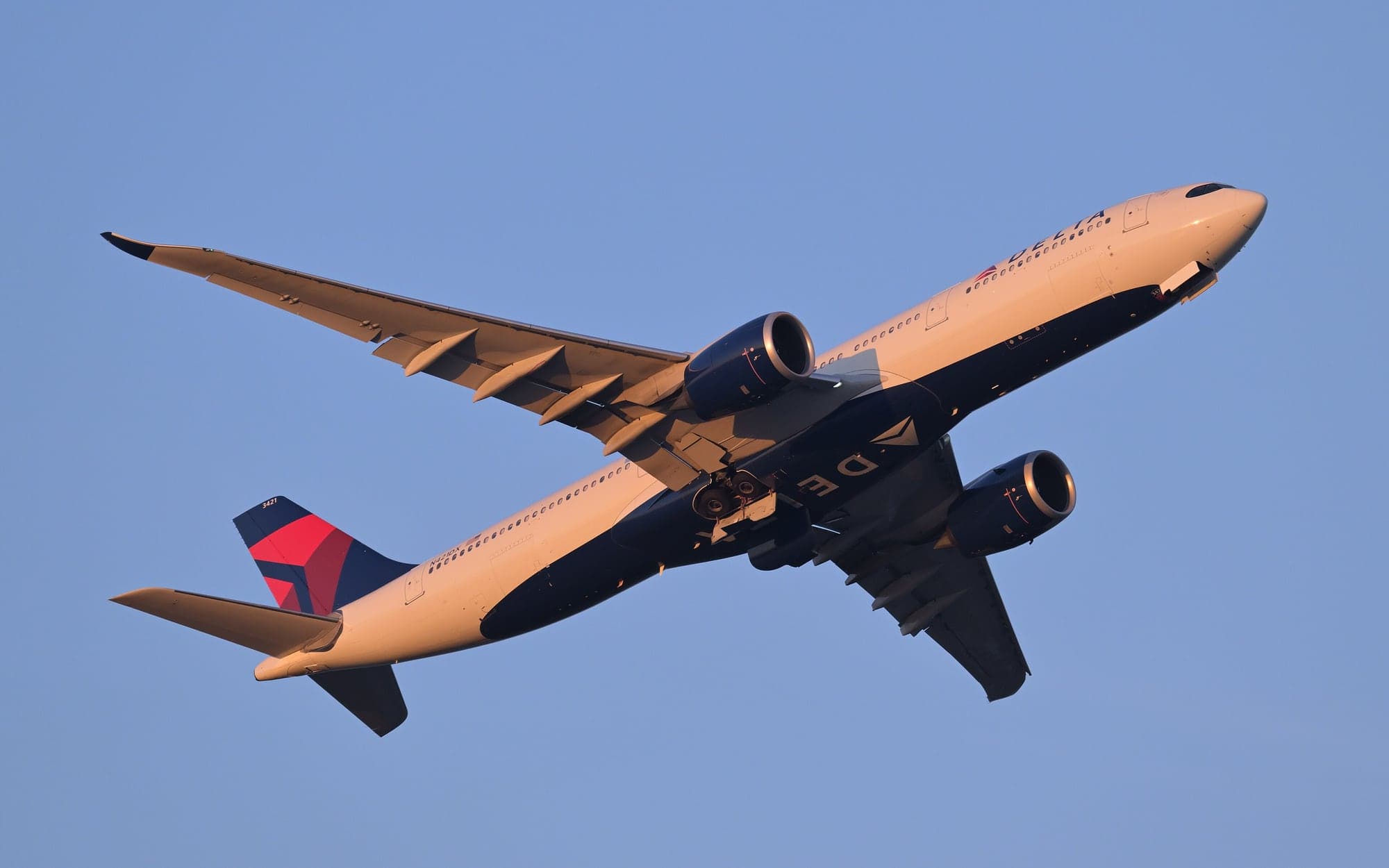
At 30 June 2026 Delta's mainline fleet was 1,004 aircraft, the third largest in the world, with an average age of fifteen years. Of those, 893 were owned outright, 24 held on finance leases and 87 on operating leases. The ownership figures matter: Delta has long preferred to buy used and older-generation aeroplanes cheaply and keep them flying, rather than lease new ones, and it can do so because Delta TechOps is large enough to maintain almost anything.
The long-haul fleet is a mixture of Airbus and Boeing widebodies: 41 Airbus A350-900s, 39 A330-900s, 42 older A330-200s and -300s, and 58 Boeing 767-300ERs and -400ERs. The 767s are the oldest large aircraft on the property, averaging more than twenty-five years, and Delta is the largest passenger operator of the type in the world; the orders for 30 Boeing 787-10s, 20 Airbus A350-1000s and 18 more A350-900s are what will replace them.
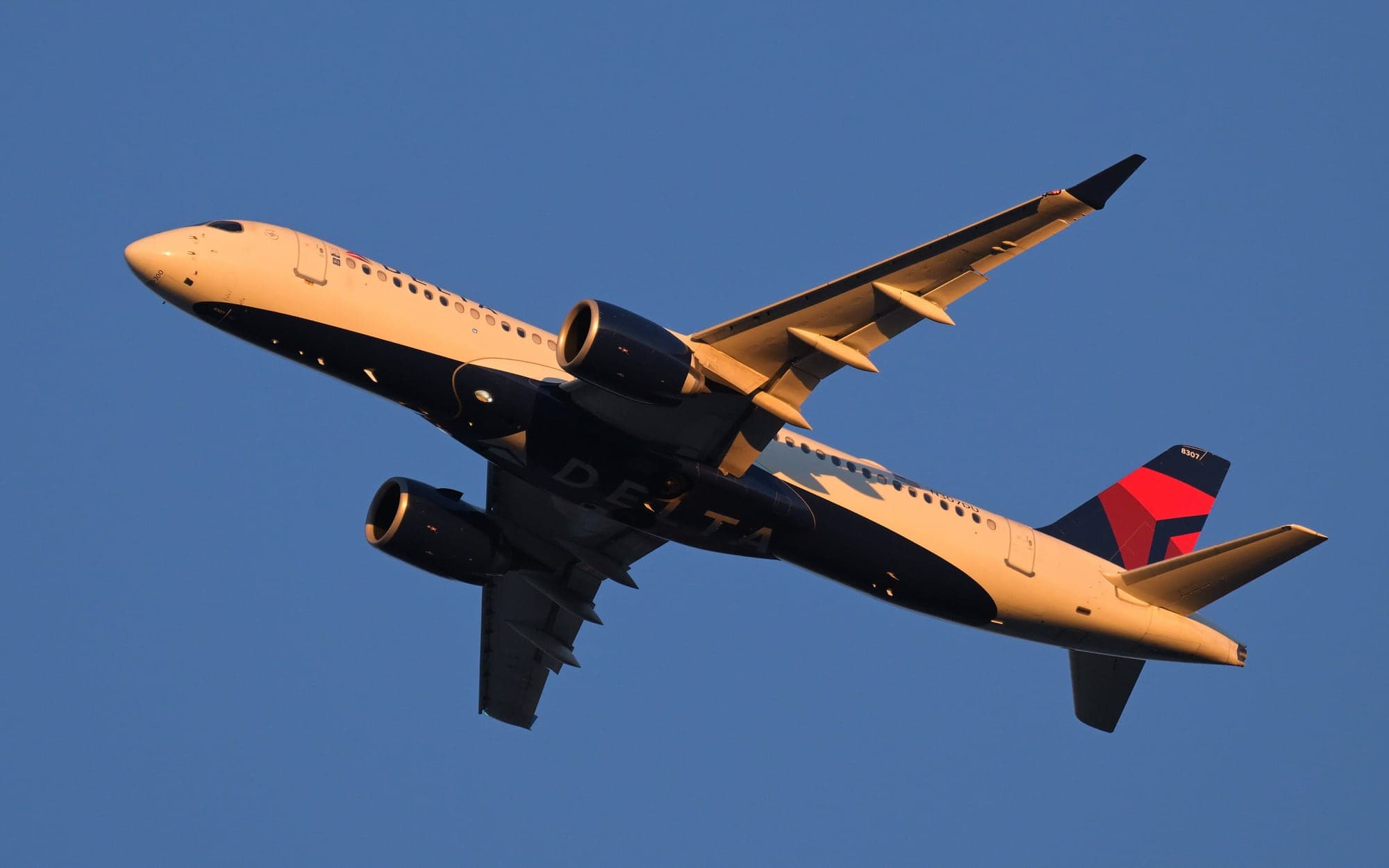
The short-haul fleet is more varied than any comparable airline's, and every part of it has a history. The 80 Boeing 717s were leased second-hand from Boeing and Southwest in 2012 to replace the DC-9s. The A319s and A320s came from Northwest. The 75 Boeing 757-200s and 16 757-300s are a type no longer built, which Delta keeps because nothing on offer does the same job. The 163 Boeing 737-900ERs and 127 Airbus A321-200s are the current backbone.
The most consequential recent order was for the aircraft now called the Airbus A220. Delta ordered 75 Bombardier CS100s in April 2016 at less than 20 million dollars each: below the cost of building them, Boeing argued in the trade case that followed. Delta now flies 45 A220-100s and 42 A220-300s, with 58 more A220-300s on order.
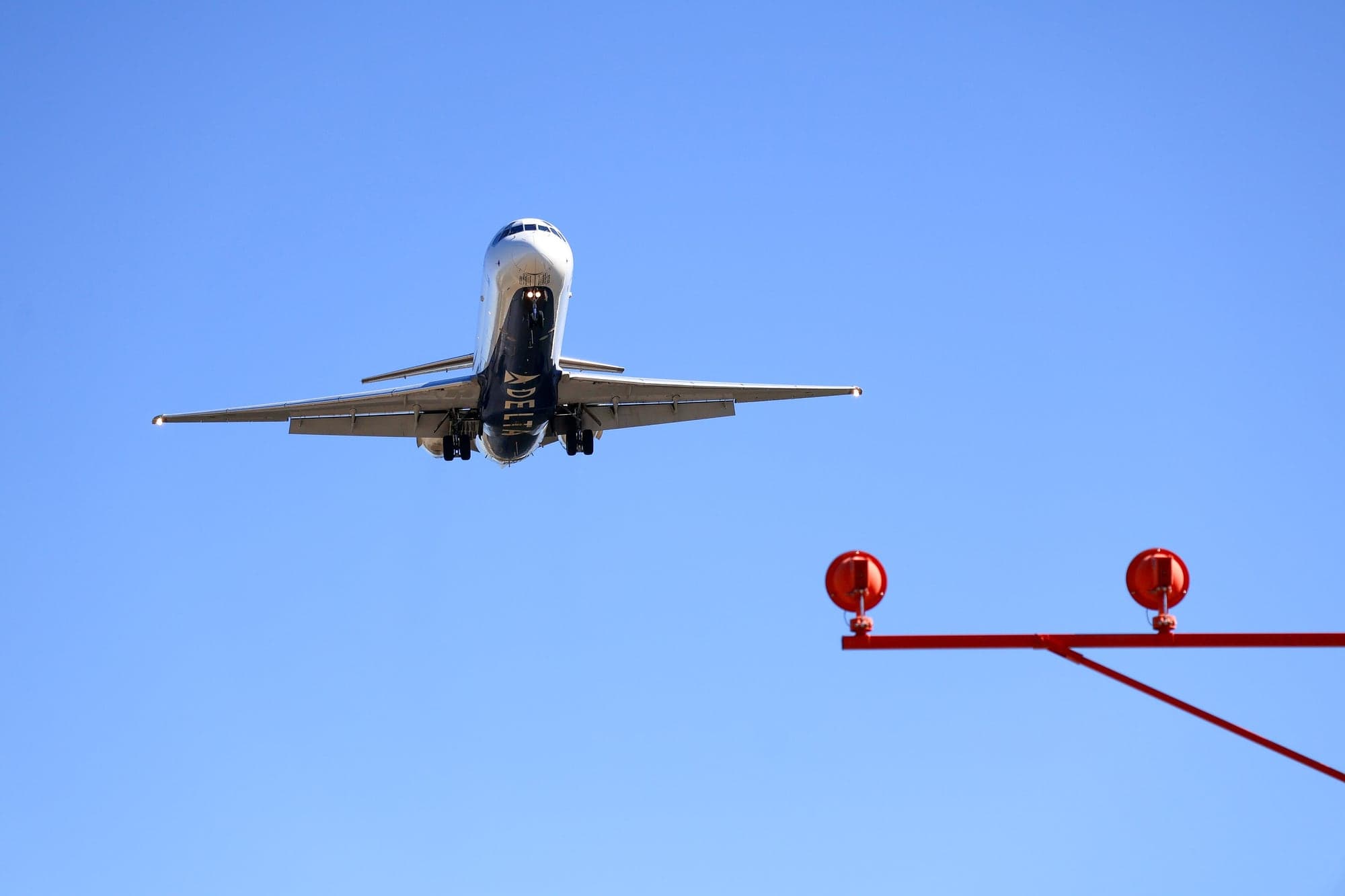
Commitments at the same date came to 332 aircraft, with options on 126 more: A220-300s, A321neos, A330-900s, A350-900s and -1000s, 100 Boeing 737-10s and 30 787-10s. Delta has retired the Boeing 737-700, the 747-400, the 777, the DC-9, the MD-88 and the MD-90 since the Northwest merger.
Cabins and service
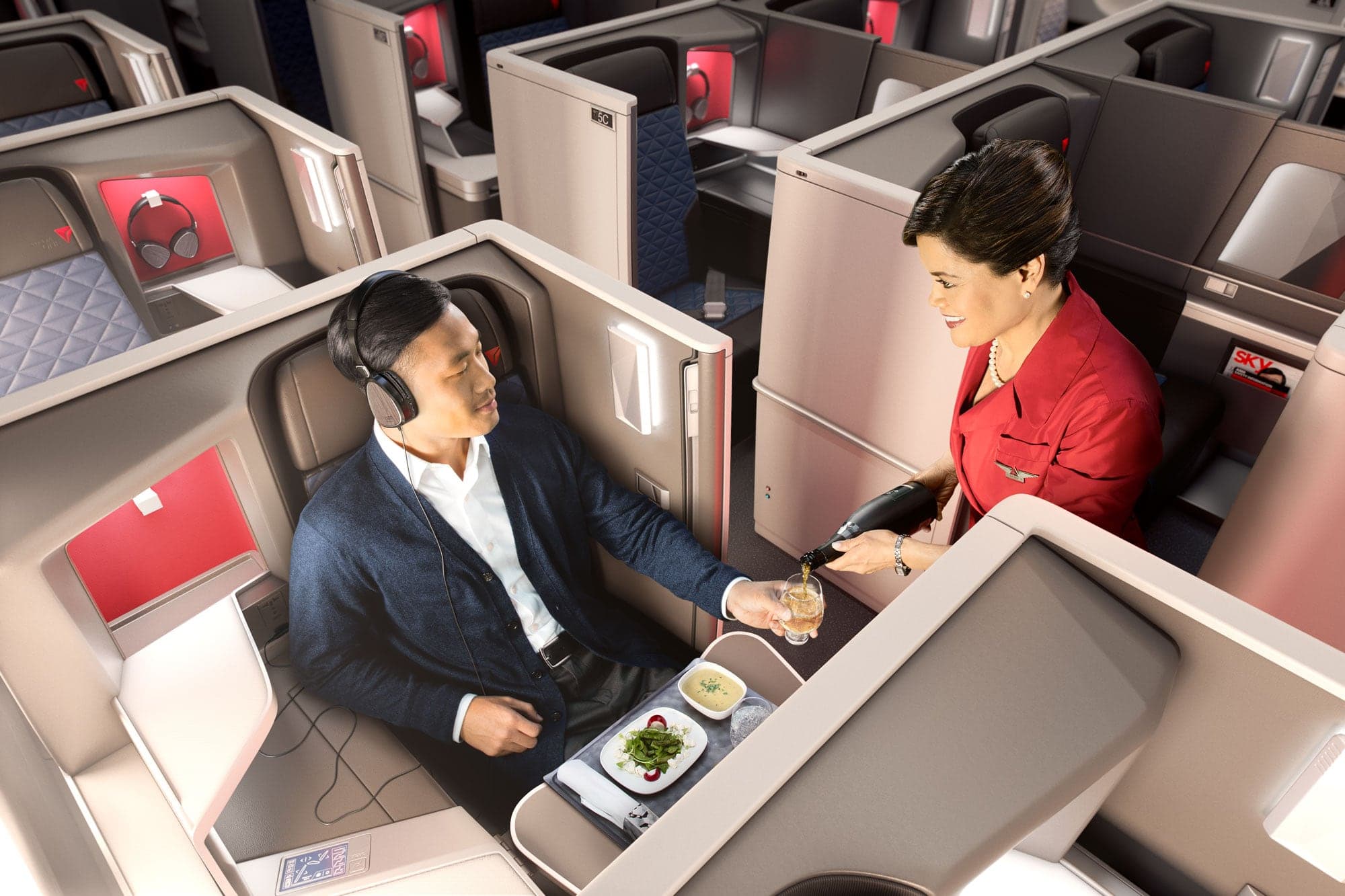
Delta rebranded its cabins in 2015 and has sold five of them since. Delta One is the long-haul business cabin, a lie-flat seat with direct aisle access on all but the oldest aircraft. On the Airbus A350, which Delta first took in 2017, and on the A330-900 and part of the Boeing 767 fleet, it is sold as the Delta One Suite, with a door to the aisle, the first such door offered by an American airline. Delta One is also flown on the transcontinental routes from New York to JFK to Los Angeles and San Francisco.
Premium Select, announced in 2016 and introduced on the A350, is a separate premium-economy cabin with more pitch, more width and an adjustable leg rest; it has since been retrofitted to much of the older widebody fleet. First Class is the domestic front cabin, on mainline aircraft and on the larger Delta Connection regional jets.
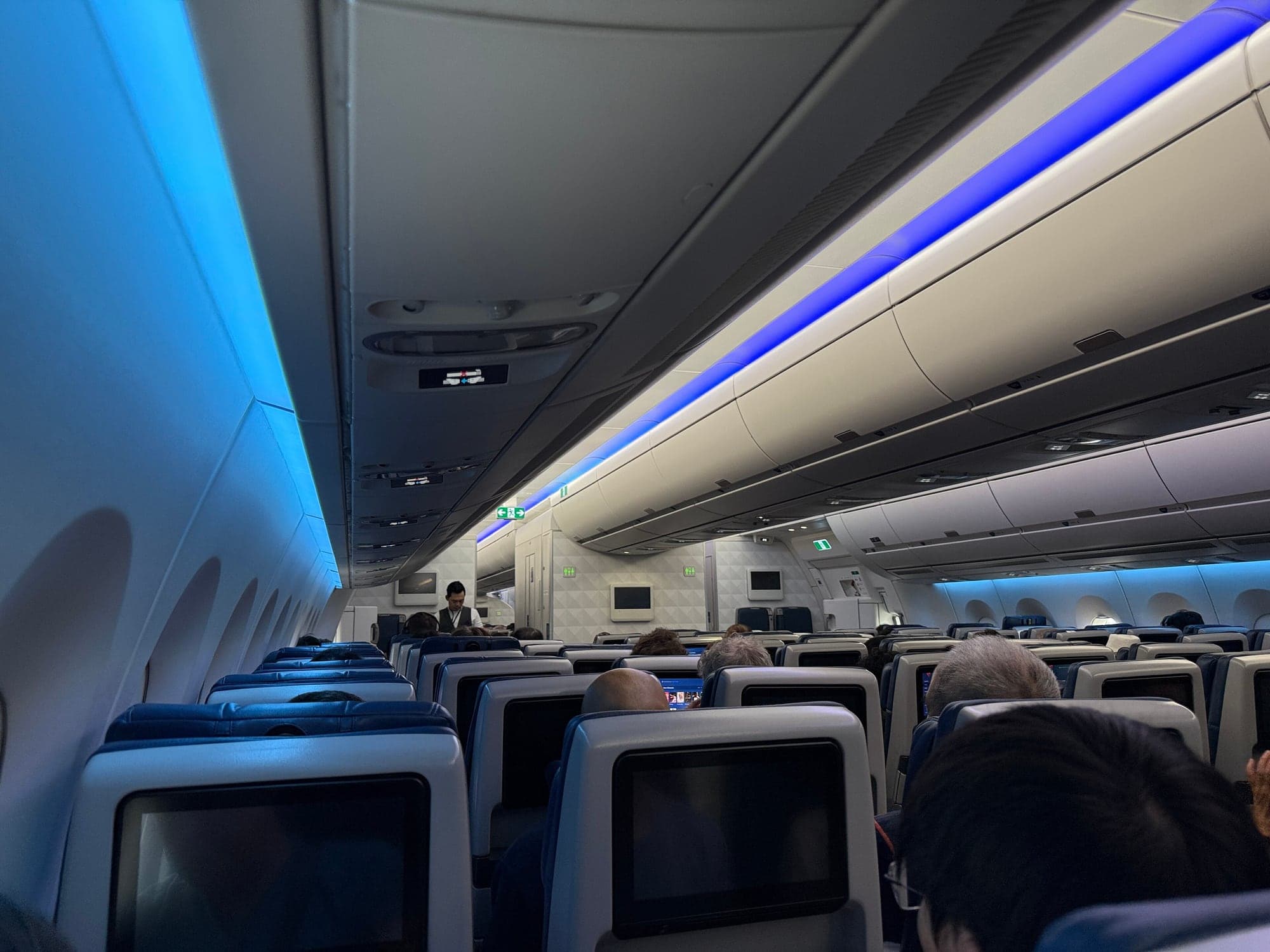
Delta Comfort is a block of extra-legroom rows at the front of the main cabin, fitted across the whole fleet. Main Cabin is economy. Beneath it Delta sells Basic Economy, which is the same seat under a fare that gives up seat selection, changes and upgrades; since December 2021 it has earned no miles at all.
The airline's premium mix has grown steadily, and the fleet orders reflect it: aircraft are now specified with more seats in front of the wing than Delta would have ordered a decade ago, and cabin retrofits are a standing line in the capital budget.
Livery and identity
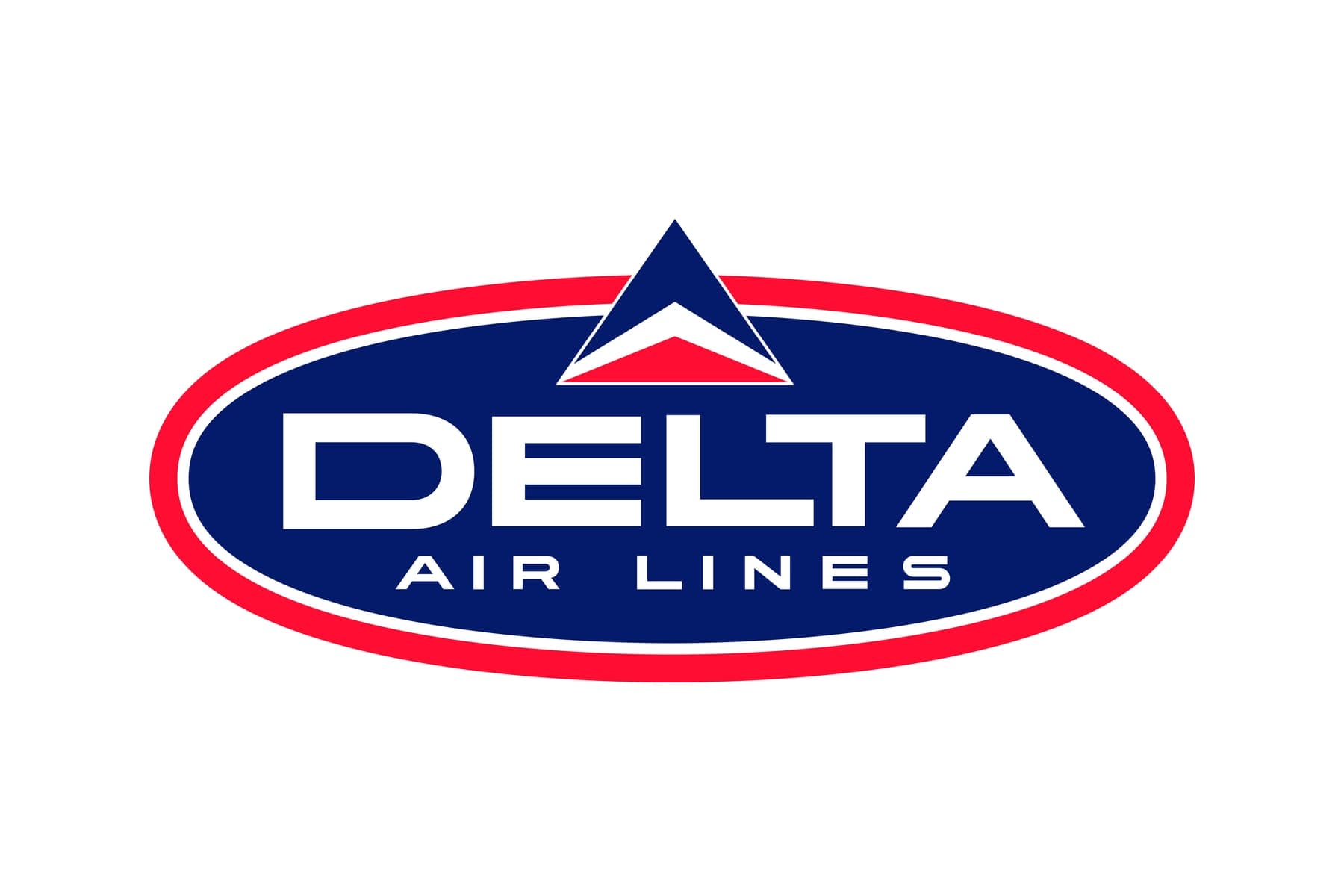
Everyone calls the logo the widget. It is a triangle, taken from the Greek letter delta, split into a light and a dark half so that it reads as a swept wing seen from in front: the wing of the DC-8, the jet Delta was first to fly. It arrived with the jets around 1960 and has been on the tail ever since, which makes it one of the longest-lived marks in the industry.
The livery it sits on has changed four times. The scheme of the early 1960s: white fuselage, bare metal below, a blue cheatline with a thin red line above it, and the widget set at an angle on the fin, lasted, with small revisions, for some thirty-five years. In 2000 Landor Associates softened the widget's corners and gave the tail a three-tone design of what was officially called Colors in Motion and universally called Wavy Gravy. In 2004 the angled widget came back. In 2007, leaving bankruptcy, Delta adopted the scheme it still uses: an off-white fuselage, a dark blue belly and tail, and a widget redrawn by Lippincott in two shades of red so that it reads as a folded, three-dimensional object.
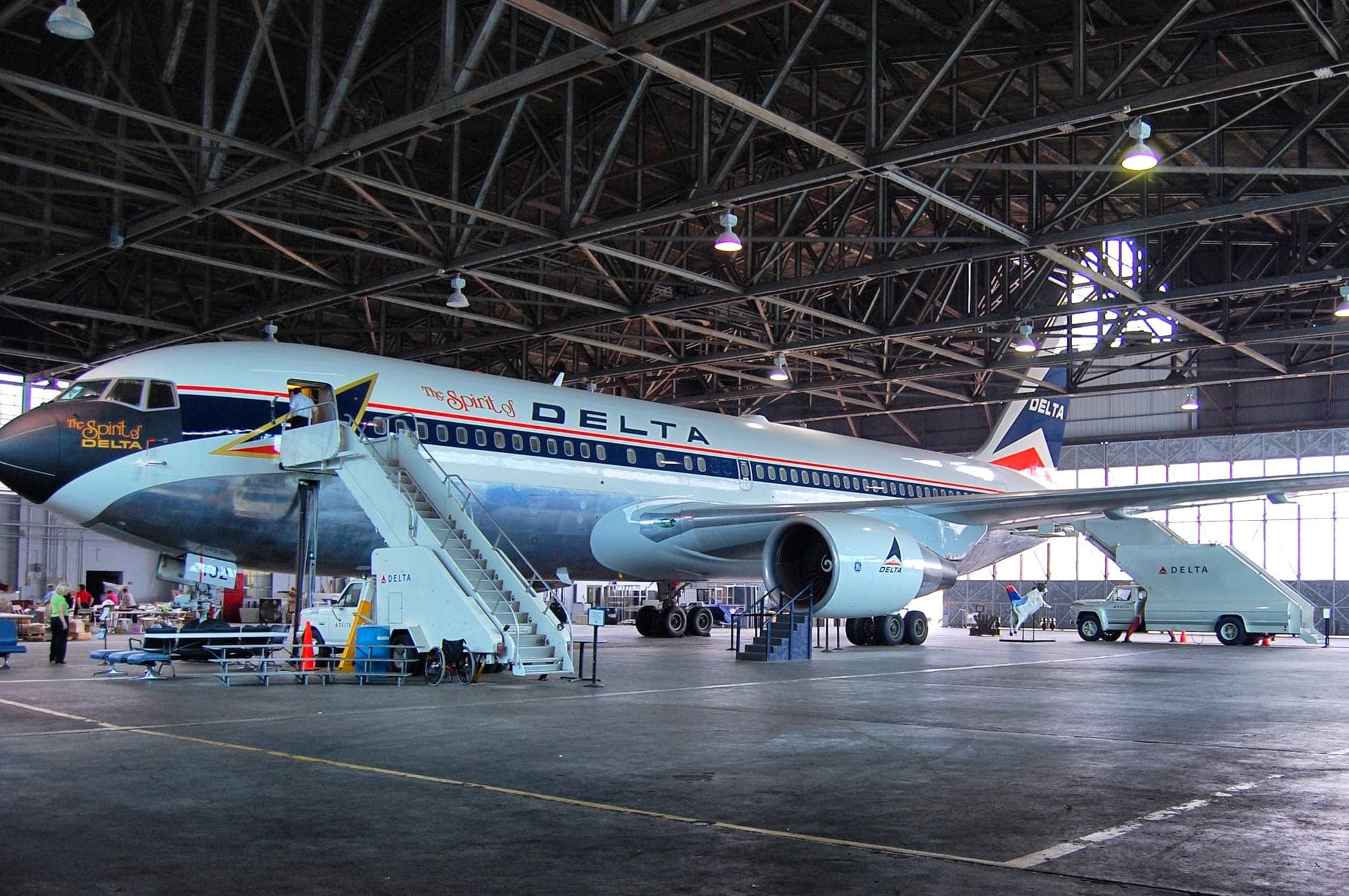
The company's sense of itself is bound up with two things that are not marks at all. One is the Spirit of Delta, the Boeing 767 that employees and retirees bought for the airline in 1982 and that now stands in the museum. The other is the near-absence of unions: apart from the pilots, who are represented by ALPA, and about 180 flight dispatchers, Delta's American staff are not organised, which is true of no other large United States airline except JetBlue.
The headquarters has been on the north side of the Atlanta airport since 1941. In March 2021 its main office building was renamed for Andrew Young, the civil-rights leader, mayor of Atlanta and United States ambassador to the United Nations.

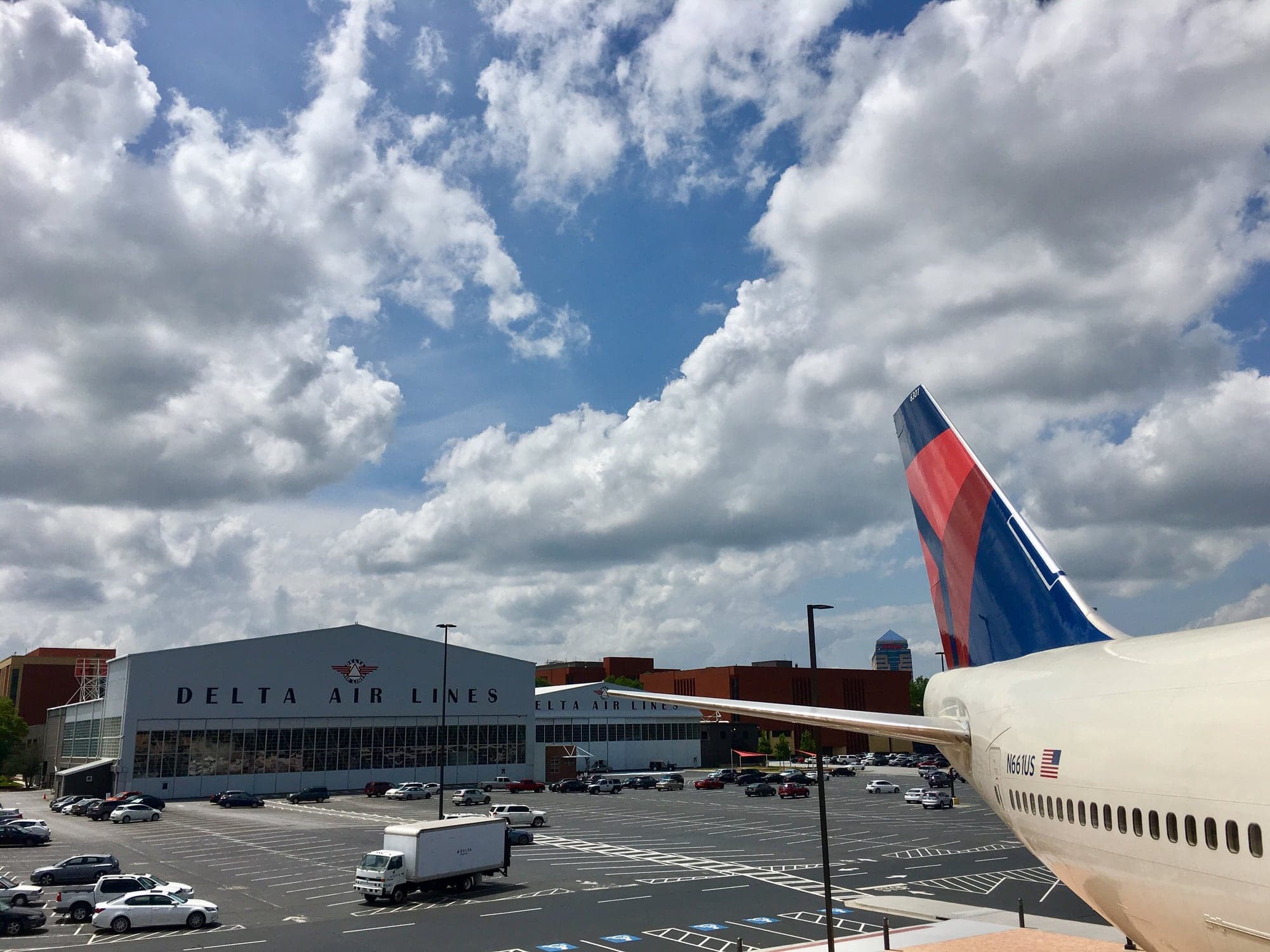
Next door, in two maintenance hangars built in the 1940s, is the Delta Flight Museum, where the airline keeps a replica Huff-Daland Duster, the DC-3 Ship 41 restored to its 1941 delivery condition, the Spirit of Delta, and, parked outside, the first Boeing 747-400 built for passenger service.
Safety record
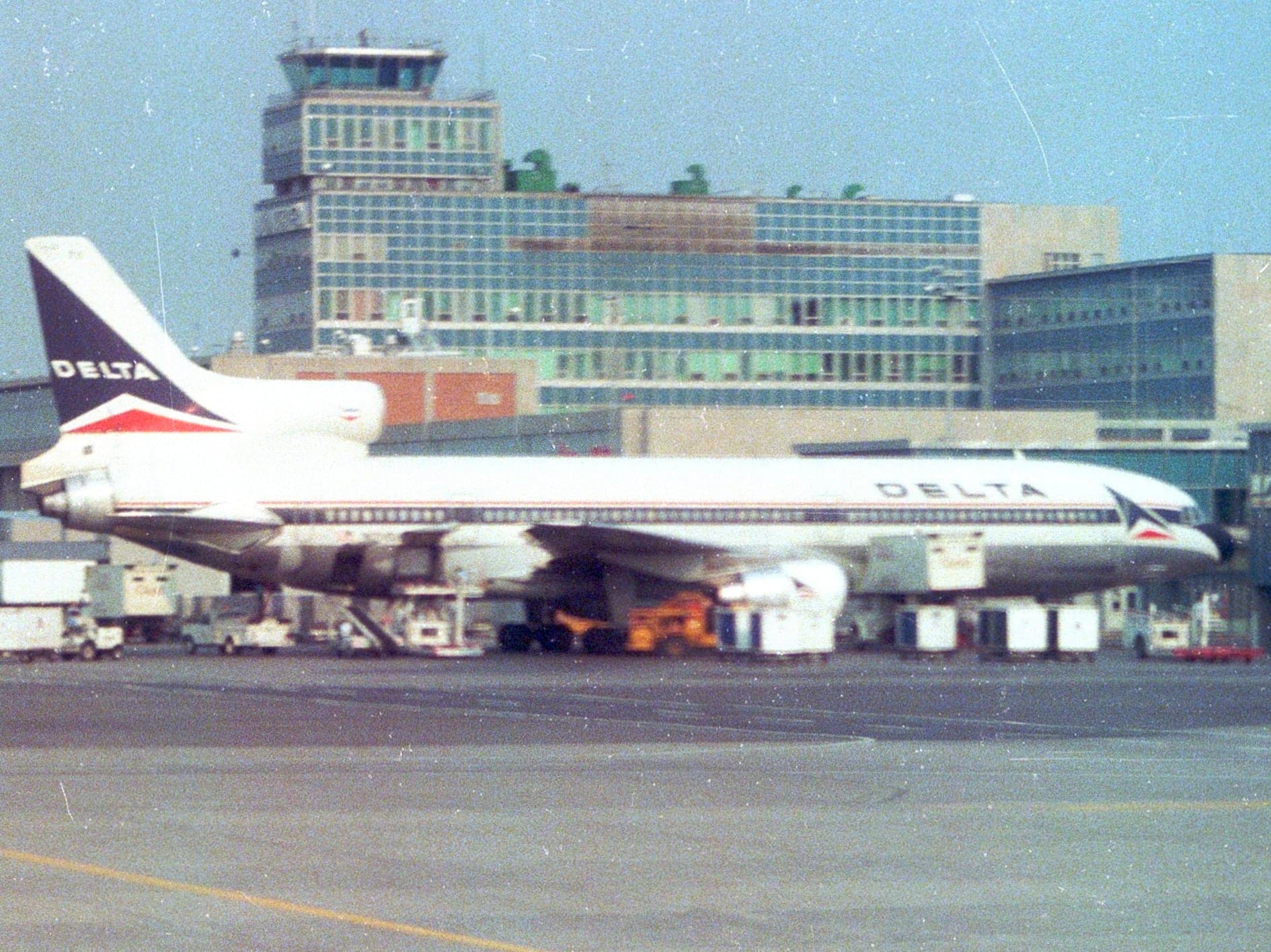
Delta's safety record is dominated by one accident, and by what the industry built afterwards. On 2 August 1985 flight 191, a Lockheed L-1011 TriStar on approach to Dallas/Fort Worth, flew into a microburst: a column of air descending from a thunderstorm and spreading outward at ground level, which gives an aircraft a headwind, then a downdraught, then a tailwind, in the seconds when it has least height and least speed to spare. The aircraft struck the ground short of the runway, crossed a highway and hit two water tanks. One hundred and thirty-six of the 163 people on board were killed, along with a driver on the highway below.
The investigation found no fault with the aeroplane. The National Transportation Safety Board cited the crew's decision to fly through a thunderstorm, the wind shear the microburst produced, and, the finding that mattered most, the absence of any procedure or training for recognising a microburst and escaping one. Pilots were being asked to survive a phenomenon the industry had not yet taught them to see.
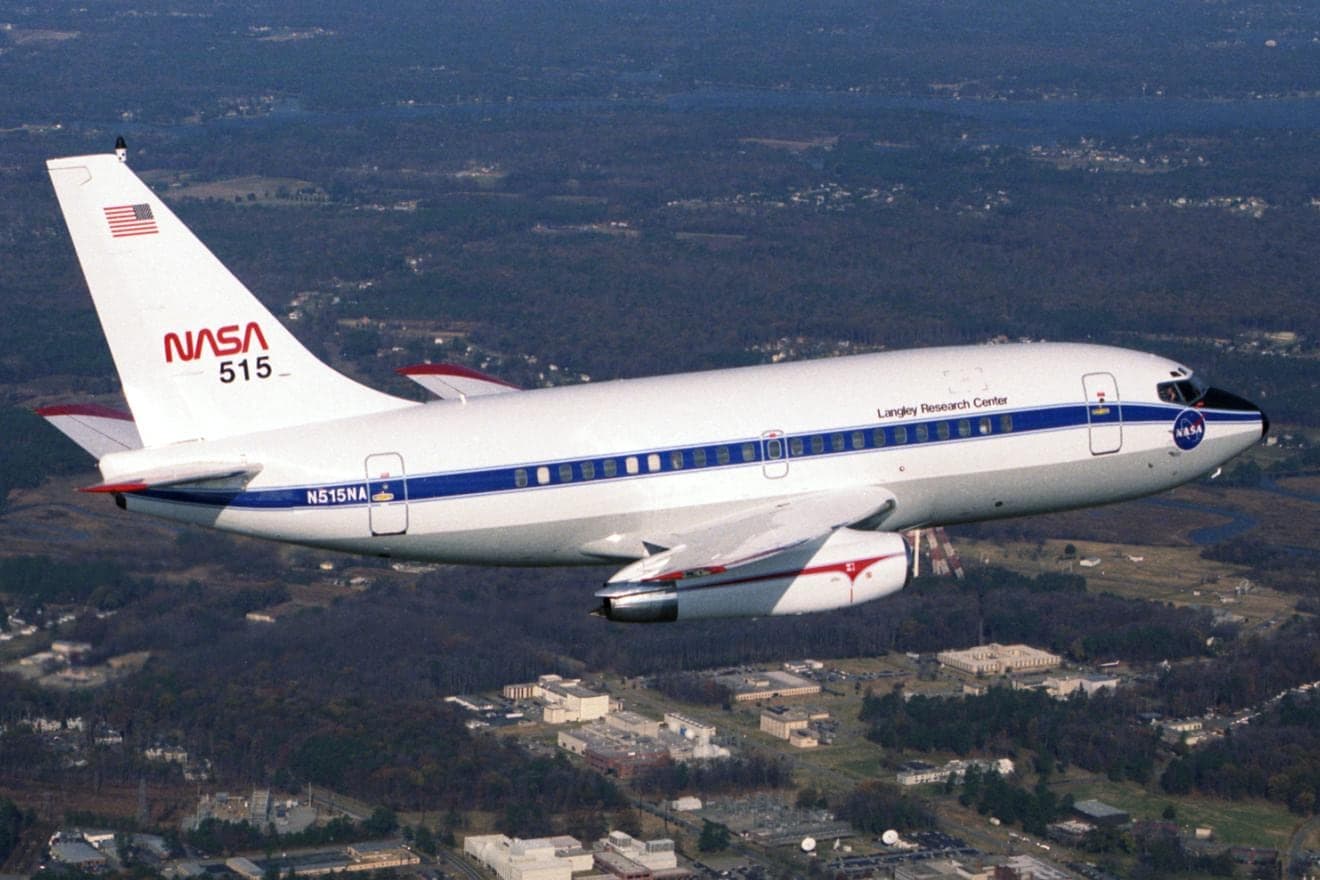
What followed was one of the most effective safety programmes in aviation history. NASA's Langley Research Center, flying a Boeing 737 laboratory aircraft, developed airborne forward-looking wind shear detection, and the Federal Aviation Administration went on to require detection systems on US airliners and terminal Doppler weather radar at major airports. Microburst recognition and escape manoeuvres entered recurrent training everywhere. Wind shear had brought down airliners repeatedly in the preceding two decades; it has caused almost no fatal accidents to US airliners since.
Delta's other fatal accidents belong to an earlier era of operation: flight 723 at Boston in 1973, flown into a seawall on an unstabilised approach in fog; flight 1141 at Dallas/Fort Worth in 1988, which attempted to take off with its flaps and slats retracted; and flight 1288 at Pensacola in 1996, where an engine fan hub fractured during the take-off roll and debris entered the cabin. The most recent fatal accident carrying the Delta name was not flown by Delta: on 27 August 2006 Comair flight 5191, operating as Delta Connection, took off from the wrong and much shorter runway at Lexington, Kentucky, killing 49 of the 50 people aboard. Comair was a wholly owned Delta subsidiary with its own certificate, management and pilots.
Legacy
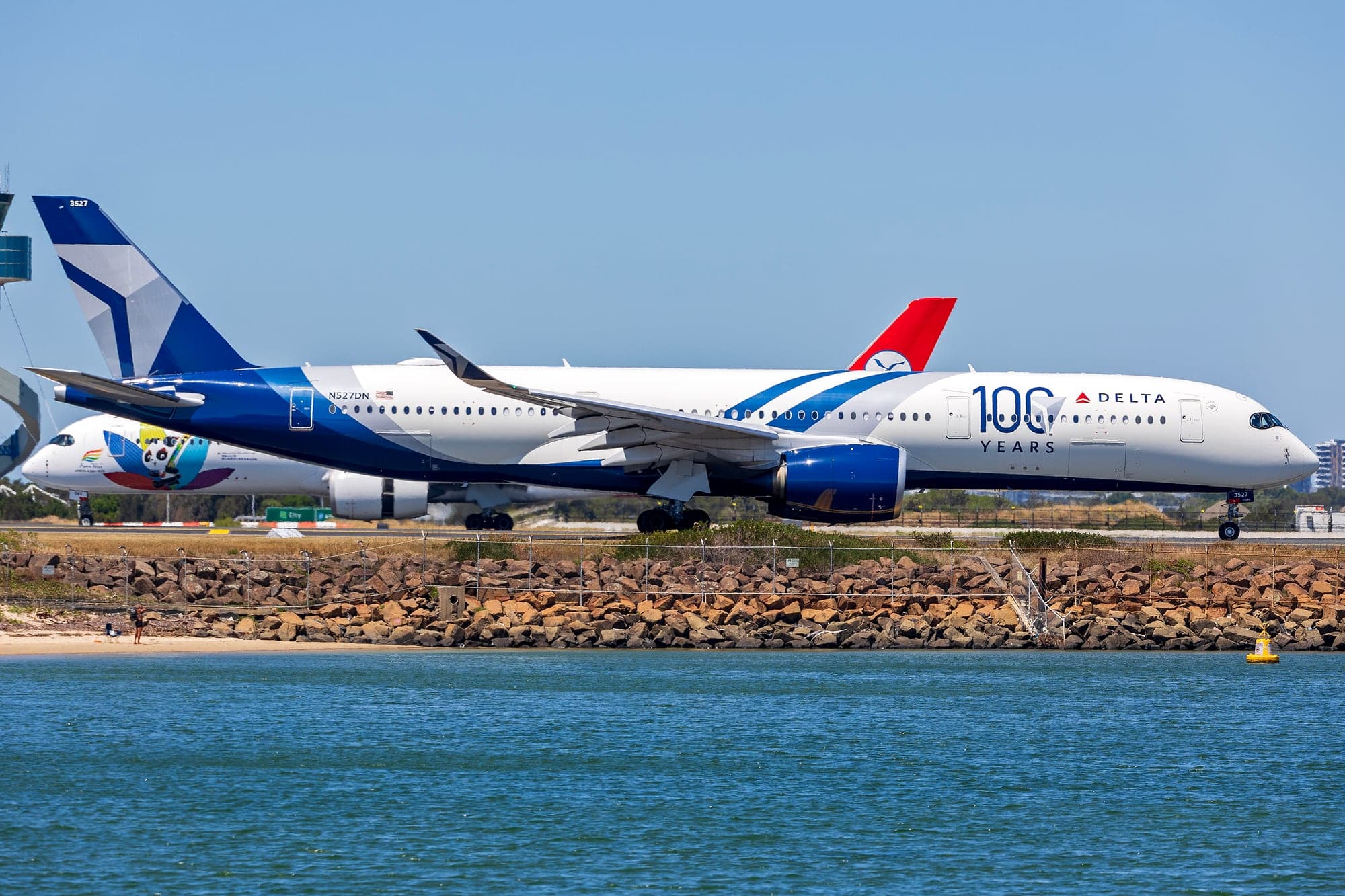
Delta reached its centenary on 2 March 2025, a hundred years after a crop-dusting company was incorporated at Macon, Georgia. Very little of the airline's present shape was visible in its first fifty years: it was a southern regional carrier with a reputation for being well run and unspectacular, and it became a global airline mainly by buying the wreckage of others, Northeast, Western, Pan Am's Atlantic, Northwest.
What it kept through all of that is a particular corporate character. Delta remained non-unionised among its pilots' colleagues in most work groups where its competitors did not, ran a profit-sharing scheme that has paid out more than a billion dollars in a single year, and in 2012 bought an oil refinery, which no other airline has attempted at that scale. The company's own explanation for each of these is the same: it prefers to own the thing it depends on.
The record of the first century is kept at the Delta Flight Museum in Atlanta, housed in the airline's two pre-war maintenance hangars beside the head office. It holds the first Boeing 767 the employees bought for the company in 1982, the oldest surviving Douglas DC-3 airliner, and a Boeing 747-400 from the Northwest fleet: three aircraft that between them cover most of what the airline has been.
The fleet
In service at June 30, 2026
Long-haul
Airbus A330-200
11
Airbus A330-300
31
Airbus A330-900neo
39+ 16 on order
Airbus A350-900
41+ 18 on order
Airbus A350-1000
0+ 20 on order
Boeing 767-300ER
37
Boeing 767-400ER
21
Boeing 787-10
0+ 30 on order
Total180
Medium-haul
Airbus A220-100
45
Airbus A220-300
42+ 58 on order
Airbus A319-100
57
Airbus A320-200
43
Airbus A321-200
127
Airbus A321neo
99+ 90 on order
Boeing 717-200
80
0+ 100 on order
Boeing 757-200
75
Boeing 757-300
16
Total824
Cabins
Delta One
The long-haul business cabin, a lie-flat seat with direct aisle access on most types. On the Airbus A350, the Airbus A330-900 and part of the Boeing 767 fleet it is sold as the Delta One Suite, with a door to the aisle.
Available onLong-haul aircraft and the transcontinental routes from New York to JFK to Los Angeles and San Francisco
Delta Premium Select
A separate premium-economy cabin introduced on the A350 in 2017, with more pitch and width than the main cabin and an adjustable leg rest.
Available onMost long-haul aircraft
First Class
The front cabin on domestic and short-haul international flights, on mainline aircraft and on the larger Delta Connection regional jets.
Available onDomestic mainline and regional aircraft
Delta Comfort
Extra-legroom rows at the front of the main cabin, fitted across the fleet.
Main Cabin
The economy cabin on every aircraft. Delta also sells Basic Economy, the same seat under a fare that gives up seat choice, changes and upgrades.
Subsidiaries
- Endeavor Air
- A wholly owned regional airline flying Bombardier CRJ-700s and CRJ-900s as Delta Connection, with its main base at Minneapolis to St. Paul.
- Monroe Energy
- The subsidiary that has owned and run the Trainer oil refinery near Philadelphia since 2012, together with the pipelines that carry its jet fuel to Delta's north-eastern stations.
- Delta TechOps
- The airline's maintenance, repair and overhaul arm at Atlanta, which also services engines and components for other operators.
Genealogy
Delta's line, from the crop-dusting Huff Daland Dusters of 1925 (Delta Air Service from 1928, Delta Air Lines from 1945) and the airlines merged into it: Chicago and Southern in 1953, Northeast in 1972, Western in 1987, Pan Am's Atlantic routes in 1991 and Northwest in 2008. Northwest brought its own tree with it: Republic Airlines, formed in 1979 from North Central and Southern and joined by Hughes Airwest, had been absorbed by Northwest in 1986.
Scroll to see the full diagram
Timeline
March 2, 1925
Huff Daland Dusters is incorporated
A crop-dusting company at Macon, Georgia, the oldest ancestor Delta counts as itself.
1928
C. E. Woolman buys the company
Renamed Delta Air Service after the Mississippi Delta it dusted. Woolman ran the airline until his death in 1966.
June 17, 1929
First passenger service
Dallas to Jackson by way of Shreveport and Monroe, in a five-seat Travel Air S-6000B.
1930
Passenger flying stops
The company loses out in the award of air mail contracts and suspends its passenger services.
July 1934
Air Mail Route 24
Delta wins the Fort Worth to Charleston mail route and resumes passenger flying alongside it.
March 1941
The head office moves to Atlanta
From Monroe, Louisiana. Atlanta has been the airline's home and principal hub ever since.
1945
Renamed Delta Air Lines, Inc.
May 1, 1953
Merger with Chicago and Southern Air Lines
Delta's first merger, and its first international routes, to the Caribbean and Caracas.
September 18, 1959
The jet age
Delta flew the first scheduled Douglas DC-8 service, New York to Atlanta.
August 1, 1972
Northeast Airlines is absorbed
Adds New England and the Florida routes.
1978
Deregulation
The Airline Deregulation Act ends federal control of routes and fares.
December 15, 1982
The Spirit of Delta
Employees raised the money to buy the airline a Boeing 767 and presented it to the company. It is preserved at the Delta Flight Museum.
April 1, 1987
Western Airlines is absorbed
Brings the Salt Lake City hub and a western network.
November 1991
Pan Am's transatlantic network is bought
Delta acquired most of Pan Am's European routes, its Frankfurt hub and the Pan Am Shuttle weeks before Pan Am stopped flying.
June 22, 2000
SkyTeam is founded
With Air France, AeroMéxico and Korean Air.
September 14, 2005
Chapter 11
Delta filed for bankruptcy protection on the same day as Northwest Airlines.
April 30, 2007
Out of bankruptcy
October 29, 2008
The Northwest Airlines merger closes
Created what was then the largest airline in the world, and brought the Pacific network and the Amsterdam partnership with KLM.
June 2012
Delta buys an oil refinery
The Trainer refinery in Pennsylvania, bought to hedge jet fuel: a step no other airline has repeated at this scale.
March 2020
The pandemic
Traffic collapsed; the Boeing 777 and the last McDonnell Douglas MD-88 and MD-90 aircraft were retired early.
March 2, 2025
One hundred years
Delta marked its centenary with a commemorative livery on an Airbus A350.
Accidents and defining events
Recorded as the investigators recorded them: what happened, where, and how many people died. Fatal accidents and the events that changed the airline, in date order.
July 31, 1973
DL723
McDonnell Douglas DC-9-31Boston Logan International Airport, Massachusetts, United States
N975NE struck a seawall about 3,000 ft short of the runway during an unstabilised instrument approach in fog. The NTSB found that the crew had failed to monitor altitude and to recognise passage through decision height. All 89 people on board died; one passenger survived the impact and died later.
89 deaths89 people on board
August 2, 1985
DL191
Lockheed L-1011-385-1 TriStarDallas/Fort Worth International Airport, Texas, United States
N726DA flew into a microburst on final approach and struck the ground short of the runway, crossing a highway and hitting two water tanks. Of the 163 people on board 136 were killed, along with the driver of a car on the highway. The NTSB cited the decision to fly through a thunderstorm, the microburst-induced wind shear, and the absence of procedures or training for avoiding and escaping microbursts.
137 deaths (including 1 on the ground)163 people on board
August 31, 1988
DL1141
Boeing 727-232 AdvancedDallas/Fort Worth International Airport, Texas, United States
N473DA attempted to take off with its flaps and slats retracted and crashed beyond the end of the runway. The NTSB found inadequate cockpit discipline behind the configuration error, and that the takeoff warning system had not sounded. Fourteen of the 108 people on board were killed.
14 deaths108 people on board
July 6, 1996
DL1288
McDonnell Douglas MD-88Pensacola Regional Airport, Florida, United States
The left engine's front compressor fan hub fractured during the take-off roll on N927DA and debris entered the cabin. The take-off was rejected successfully, but two passengers seated at the rear were killed. The NTSB traced the failure to a manufacturing crack that inspection had not detected.
2 deaths142 people on board
In the catalogue
Aircraft central to this airline's story, as the encyclopedia records them.
Related airlines

- Delta Air Lines, Inc. 2025 Form 10-K, Delta Air Lines, Inc., via the U.S. Securities and Exchange Commission
- Delta Air Lines, Inc. Form 10-Q for the quarter ended 30 June 2026 (fleet information, page 26), Delta Air Lines, Inc.
- Corporate Stats and Facts, Delta Air Lines — Delta News Hub
- Aircraft Accident Report: Delta Air Lines, Inc., Lockheed L-1011-385-1, N726DA, Dallas/Fort Worth International Airport, Texas, August 2, 1985 (NTSB/AAR-86/05), National Transportation Safety Board
- Delta Air Lines, Wikipedia
- History of Delta Air Lines, Wikipedia
- Delta Air Lines fleet, Wikipedia
- Northeast Airlines, Wikipedia
- Western Airlines, Wikipedia
- Northwest Airlines, Wikipedia
Checked September 16, 2026