Airline
Emirates
EK · UAE · EMIRATESUnited Arab EmiratesThe Emirates Group
Emirates Airline
277
Aircraft
In service at March 31, 2026
53.2M
Passengers
in 2026
Identity
- IATA
- EK
- ICAO
- UAE
- Callsign
- EMIRATES
- Founded
- March 15, 1985
- First service
- October 25, 1985
Company
- Legal name
- Emirates Airline
- Headquarters
- Al Garhoud, Dubai
- Country
- United Arab Emirates
- Parent
- The Emirates Group
- Status
- Operating
Network
- Load factor
- 78.4 %
Hubs and bases
Dubai InternationalDXB
Hub · since 1985
Emirates is the airline of Dubai. It is wholly owned by the Investment Corporation of Dubai, the emirate's sovereign holding company, and it flies from a single hub at Dubai International: an arrangement that is unusual among the world's largest carriers and is the key to almost everything else about it. There is no domestic network to fall back on, no second continent's home market, and no alliance. Every passenger Emirates carries either begins, ends or changes aircraft in Dubai.
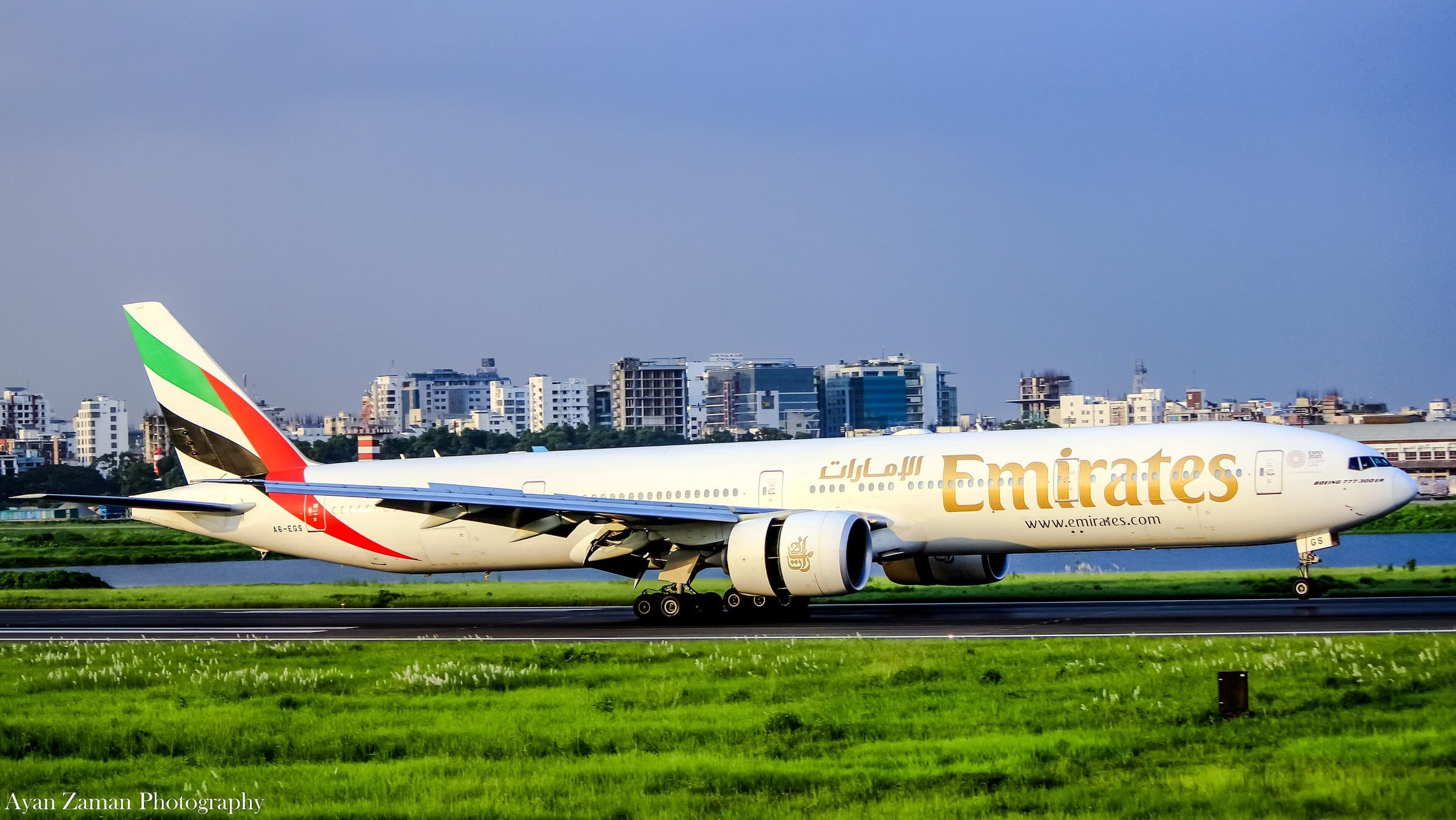
That has been enough to make it the largest international airline in the world by capacity. In the financial year to 31 March 2026 Emirates carried 53.2 million passengers at a passenger seat factor of 78.4 per cent, flew 60.6 billion available tonne-kilometres of passenger and cargo capacity, and served 152 cities in 80 countries; its cargo division, Emirates SkyCargo, uplifted 2.4 million tonnes of freight. Revenue was AED 130.9 billion and profit before tax AED 22.8 billion, which the airline states was the best result in the industry for that reporting year. The workforce stood at 74,980.
The fleet is the narrowest of any carrier of this size and the most distinctive. As at 31 March 2026 it comprised 277 aircraft of four types: 116 Airbus A380s, 119 Boeing 777-300ERs, ten Boeing 777-200LRs, nineteen Airbus A350-900s and thirteen Boeing 777 freighters. Emirates is by a wide margin the largest operator of both the A380 and the Boeing 777 that has ever existed, and until the A350 arrived in November 2024 it had taken no new aircraft type into service for sixteen years.
Emirates sits inside The Emirates Group, which also contains dnata, one of the largest combined air-services businesses in the world, and which the two companies' common management reports together although they are not a group under IFRS. Beyond the group sits a wider Dubai aviation system (Dubai Airports, Dubai Air Navigation Services, the low-fare carrier flydubai) that has been built around the airline rather than the other way round, and whose fortunes are correspondingly bound to it. In March 2026, when military activity in the Gulf closed UAE airspace, Emirates stopped flying altogether for the first time since the pandemic.
Formation
Emirates exists because another airline withdrew. Through the first half of the 1980s Dubai's air links were largely in the hands of Gulf Air, the carrier jointly owned by Bahrain, Qatar, Abu Dhabi and Oman, which objected to the open-access policy Dubai operated at its airport and began cutting capacity to the emirate in protest. Dubai's response was not to negotiate but to build a competitor. Sheikh Mohammed bin Rashid Al Maktoum, then the emirate's Defence Minister, gave the project his backing, and in March 1985 Emirates was constituted with US$10 million of government start-up capital and an explicit condition attached: there would be no further subsidy, and the airline would have to pay its own way.
The man given five months to do it was Maurice Flanagan, a former Royal Air Force pilot who had worked for BOAC, British Airways and Gulf Air and was then running dnata, Dubai's ground-handling company. Sheikh Ahmed bin Saeed Al Maktoum, a nephew of the ruler and twenty-six years old at the time, became chairman; he is still chairman and chief executive four decades later, which makes Emirates one of the few large airlines in the world to have had a single figure at the top of it for its entire existence. Tim Clark, later the airline's president and the architect of its route network, joined in the same founding period.
The aircraft came from Pakistan. Pakistan International Airlines provided the new carrier with a Boeing 737-300 and an Airbus A300B4-200 on wet lease, gave it technical and administrative help, and trained its first cabin crew at Karachi; two Boeing 727-200s from the Dubai Royal Air Wing made up the rest of the equipment. It was, in effect, an airline assembled out of other people's assets and other people's expertise, and the debt was acknowledged: the first service, flight EK600, left Dubai for Karachi on 25 October 1985, and Karachi remains the airline's oldest international destination. Emirates marked forty years of the route in 2025, by which point it had flown more than 87,000 services between the two cities and carried over nineteen million passengers on that sector alone.
Bombay and Delhi followed within days. The first year produced about 260,000 passengers and 10,000 tonnes of freight: a rounding error against present figures, but enough to establish the pattern that has never changed since. Emirates did not build a point-to-point airline serving the resident population of a small emirate, because there was no such market to serve. It built a connecting operation, selling the journey between two other places by way of Dubai, and it did so from an airport whose government had already decided that any airline could fly there on any terms it liked. The open-access policy that had provoked Gulf Air into leaving turned out to be the foundation the new airline was laid on.
Growth and expansion
The first aircraft Emirates owned rather than borrowed arrived on 3 July 1987: an Airbus A310-300, registered A6-EKA. Three days later the airline began a daily non-stop service to London Gatwick, and by the end of that year it had eleven destinations, Frankfurt and Malé among them. The Far East followed in 1989 with Bangkok, Manila and Singapore. In 1991, in the months after the Gulf War had emptied the region's skies and a good many of its competitors' order books, Emirates won slots at London Heathrow and opened Hong Kong. By 1995 the network reached 37 cities in 30 countries with a fleet of six Airbus A300s and eight A310s, and revenue had passed half a billion dollars.
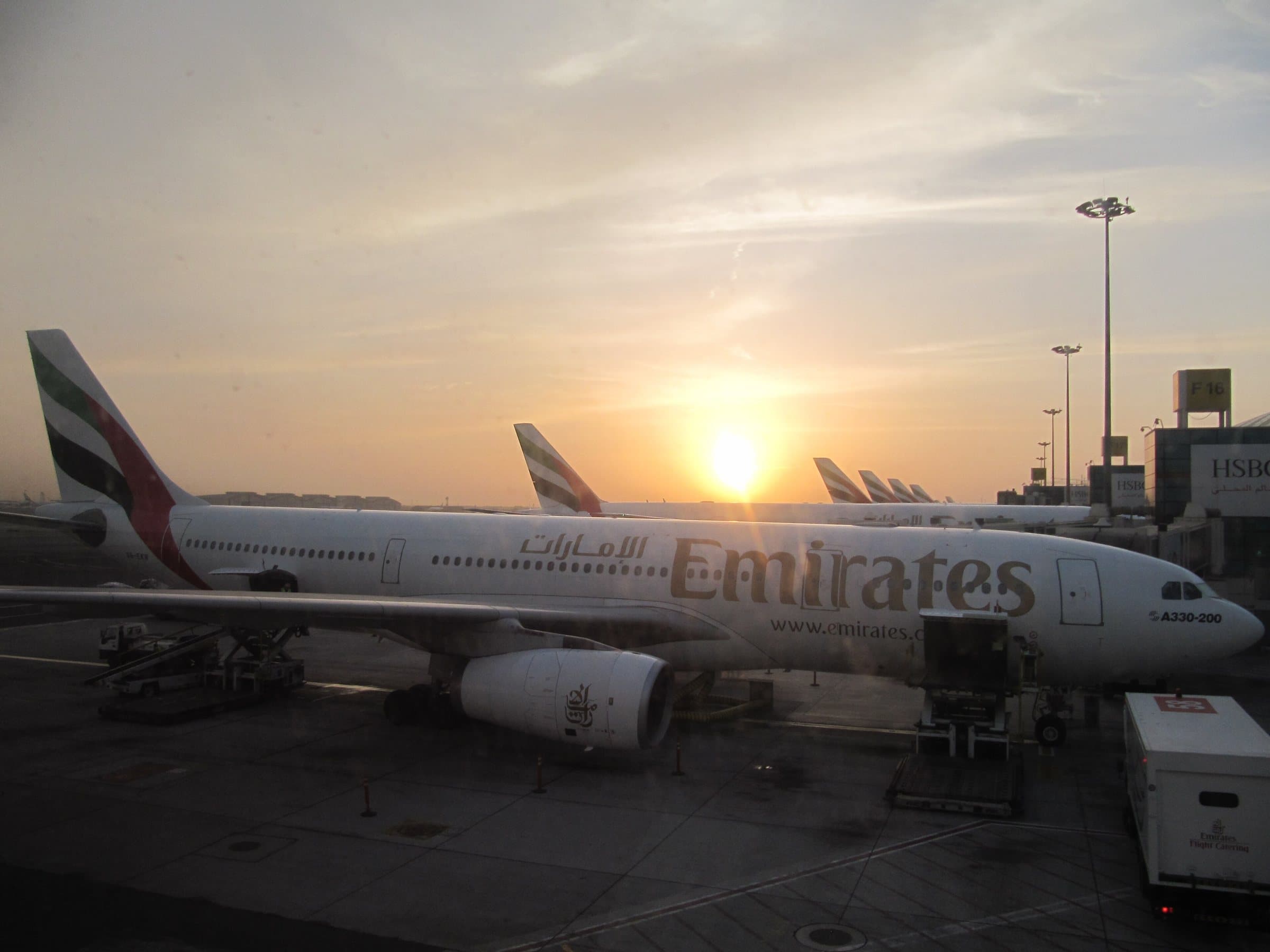
The decisive decade was the one that followed, and the decisive decision was to buy very large aircraft in very large numbers. The first Boeing 777-200 arrived in 1996 and was followed by 777-200ERs; the Airbus A330-200 joined in 1999. Then, in 2000, Emirates placed the order that defined it: twenty-five Boeing 777-300s, eight Airbus A340-500s, three A330-200s and twenty-two of the double-deck aircraft Airbus was then calling the A3XX. Emirates was the first airline in the world to announce an order for what became the A380, at the Farnborough air show of that year, and it launched its Skywards frequent-flyer programme in the same period. In 2005 it ordered 42 more Boeing 777s in a deal worth US$9.7 billion, at the time the largest 777 order ever placed.
What the aircraft were for was a proposition that had no real precedent. Roughly two-thirds of the world's population lives within eight hours' flying of Dubai, and a very large majority within twelve; an aircraft with the range of a 777-300ER or an A380 can reach almost any city that matters from a single point on the Gulf. Emirates set out to fly enough of them, often enough, that a traveller from Manchester to Melbourne, or Hamburg to Hyderabad, would find the Dubai connection quicker and cheaper than the route through their own national carrier's hub. The airline was in effect competing with every long-haul network in the world at once, and doing it without a home market of its own.
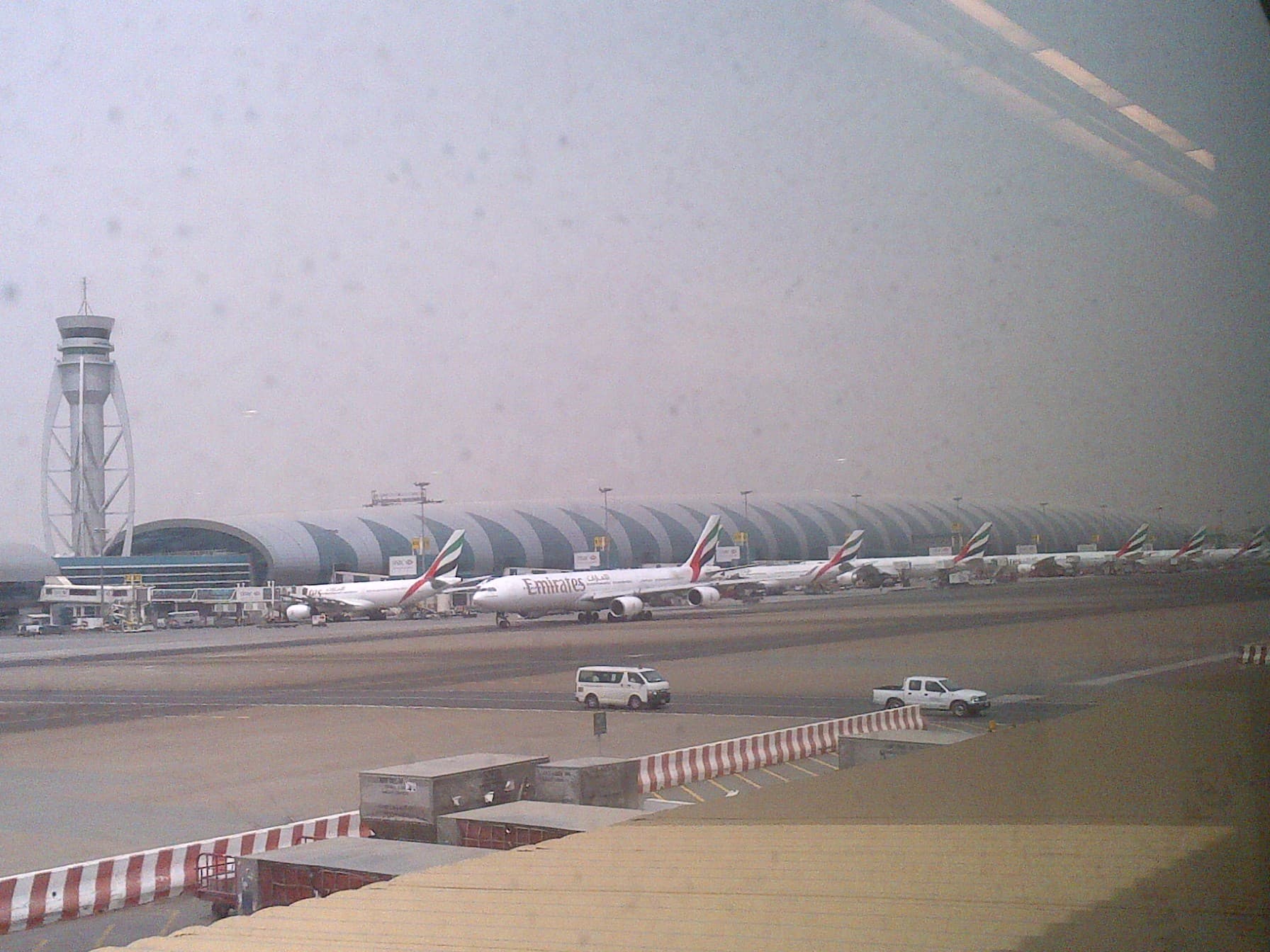
The infrastructure was built to match. Dubai International's Terminal 3, constructed for Emirates alone and opened on 14 October 2008 (a building of more than 18,440,000 ft² of floor space, most of it underground) gave the airline a concourse of its own and later a second dedicated to the A380. The first A380 commercial service flew Dubai to New York on 1 August 2008. By 2009 Emirates was the largest Boeing 777 operator in the world; by November 2017 it had taken its hundredth A380.
The pandemic interrupted this for the first time. Emirates suspended almost all passenger operations from 25 March 2020, and the Dubai government committed to inject equity into the airline, beginning with AED 7.3 billion. Traffic fell from 58.6 million passengers in 2018-19 to 6.6 million in 2020-21, at a seat factor of 44.3 per cent, and the airline recorded a loss before tax of AED 20.3 billion in 2020-21 and a further AED 3.8 billion in 2021-22, the only losses in its history apart from 1986-87. It then recovered faster than almost any of its peers, and by 2022-23 was profitable again.
Consolidation and merger
Emirates has never merged with another airline, has never bought one, and belongs to no alliance. What it has consolidated instead is the ground beneath itself: the businesses that a normal carrier buys from suppliers, Dubai has generally arranged for the airline to own.
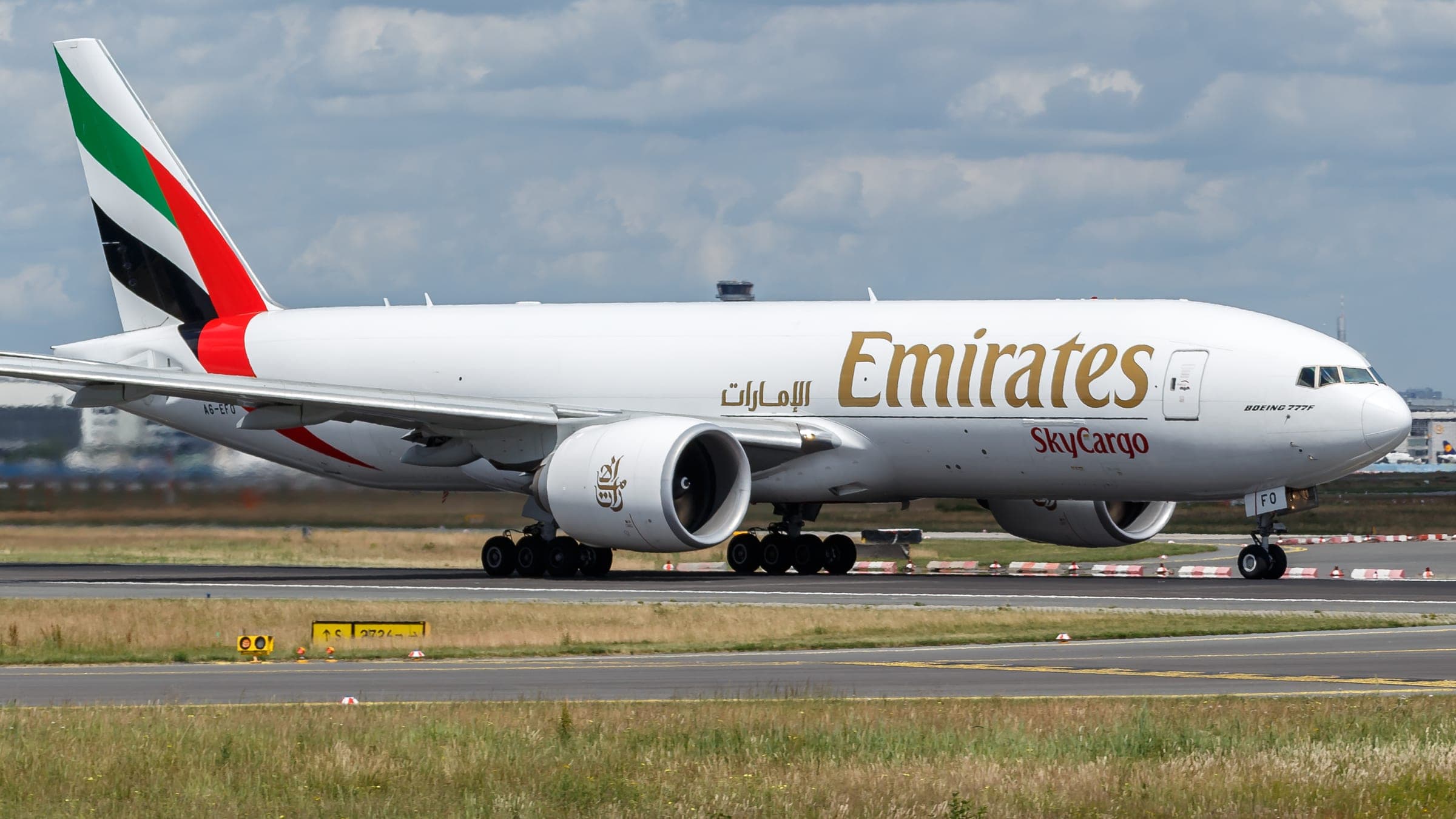
The Emirates Group is the vehicle for this. Alongside the airline it holds dnata, founded in 1959 and now one of the largest combined air-services providers in the world, with airport, cargo, catering and travel operations spanning 174 cities and airports; Emirates Flight Catering, which uplifted 16.2 million meals in 2025-26 for more than a hundred airline customers in Dubai; Emirates Leisure Retail and Maritime & Mercantile International; and the engineering and training arms. The group's workforce reached 130,919 in the year to 31 March 2026, and its profit before tax was AED 24.4 billion on revenue of AED 150.5 billion. Emirates and dnata are separately audited and are not a group under IFRS; they are reported together because they share management and, in Dubai, a purpose.
The vertical integration has continued to deepen. In 2025-26 Emirates Engineering became the first organisation in the UAE to receive Design Organisation Approval from the General Civil Aviation Authority, which allows it to design and certify major aircraft modifications itself rather than buying that capability in. The airline signed a memorandum with Safran to build Business and Economy Class seats in the UAE, initially for its own fleet and later for others, and another with Rolls-Royce to take on maintenance of the Trent 900 engines of its A380 fleet from 2027 at a purpose-built Dubai facility, extending a service agreement into the 2040s.
The one relationship that functions like an alliance is with flydubai, the low-fare carrier the Dubai government established in 2008 and which is separately owned but commonly controlled. The two airlines have operated a codeshare partnership since 2017 that lets Emirates sell flydubai's short-haul network out of the same Dubai bank of connections; by April 2025 the joint network covered 240 destinations and had carried over five million passengers in a year. Beyond that, Emirates works through bilateral arrangements, 32 codeshare and 117 interline partners as at 31 March 2026, reaching more than 1,700 cities, and through rail and ferry links rather than alliance membership.
The business model has not gone unchallenged. In 2015 a coalition of American Airlines, Delta and United, together with several labour organisations, campaigned under the name Partnership for Open & Fair Skies for the United States to revisit its open-skies agreements with the UAE and Qatar, alleging that the three large Gulf carriers had received more than US$40 billion in state support and that Emirates specifically had received at least US$5 billion. Emirates, Etihad and Qatar Airways rejected the claims, and Emirates published a detailed rebuttal arguing that its capital was the original US$10 million plus retained earnings and that the Dubai government had taken dividends out rather than putting subsidies in. The dispute was not settled by evidence so much as overtaken: understandings were reached in 2018, and the pandemic then made state support of airlines universal.
Network and hubs
The network is one hub and a great many spokes. As at 31 March 2026 Emirates served 152 cities in 80 countries and territories from Dubai International, an increase of four destinations over the year, Da Nang, Siem Reap, Shenzhen and Hangzhou, the last two taking the airline to five gateways in mainland China. Frequencies were raised on sixteen existing routes. The shape of the map has been stable for a decade: the destination count has moved between 148 and 158 since 2016-17, and growth has come from flying more often and with larger aircraft rather than from adding pins.
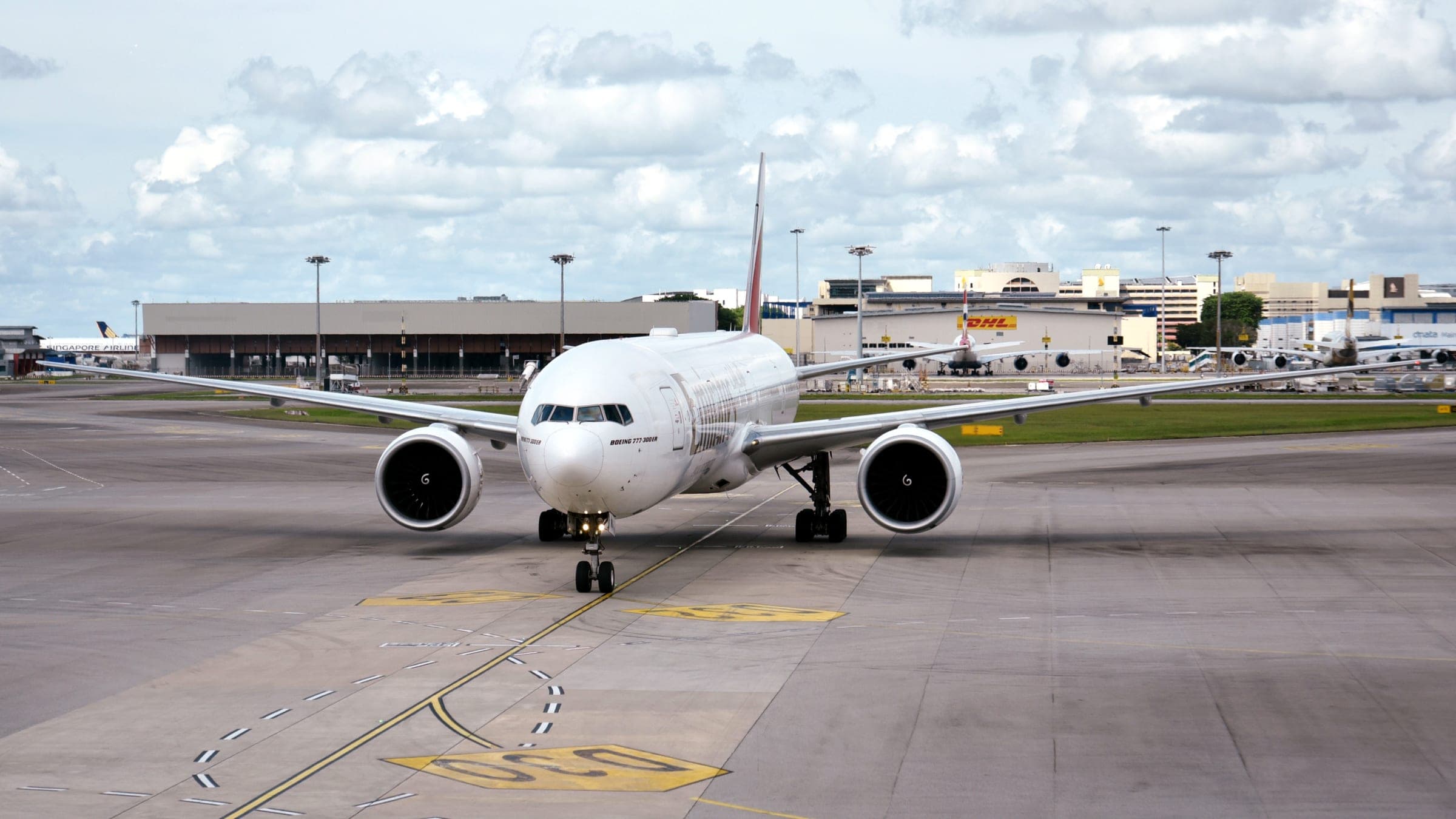
Where the money comes from is more revealing than where the aircraft go. In the year to 31 March 2025, Europe produced 31 per cent of Emirates' revenue and East Asia and Australasia 27 per cent, with the Americas at 17 per cent, West Asia and the Indian Ocean at 10 per cent, Africa at 8 per cent and the Middle East itself at 7 per cent. Less than a tenth of the airline's income comes from its own region. This is the arithmetic of a transfer hub: the Europe-to-Asia and Europe-to-Australasia flows are the business, and Dubai is the place where the two halves of each journey are joined.
Africa has been a deliberate priority rather than a by-product. By March 2025 Emirates was operating 161 weekly flights from nineteen African countries, and reaching more than 210 points on the continent through five codeshare and eighteen interline partners. Connection beyond the network is a large part of the proposition generally: 32 codeshare and 117 interline partners as at 31 March 2026 extended the reach to more than 1,700 cities, supplemented by rail agreements in Europe, thirteen multimodal partners and, unusually, a helicopter link between Nice and Monaco sold on a single ticket.
The hub itself is at its physical limit. Dubai International handled 95.2 million passengers in 2025, up 3.1 per cent, the busiest year in its history and the highest annual international passenger traffic ever recorded at any airport; it was connected to 291 destinations in 110 countries by 108 airlines, and Dubai Airports forecast close to 99.5 million for 2026. The answer is to move. In April 2024 Sheikh Mohammed bin Rashid Al Maktoum approved the designs for a new passenger terminal at Al Maktoum International, south-west of the city, at a cost of AED 128 billion; the completed airport is planned for five parallel runways, 400 aircraft gates and an eventual capacity of 260 million passengers a year, with all Dubai International operations transferring to it over the following decade.
The other lesson of a single-hub network is what happens when the hub closes. On 28 February 2026 military activity between the United States, Israel and Iran disrupted commercial air traffic across the Gulf, and UAE airspace was shut. Emirates and flydubai halted all operations; more than 11,000 flights in and out of the region were cancelled in the opening days. Emirates began restoring services at Dubai International from early March through safe corridors negotiated by the UAE government, rerouting where it had to, and the General Civil Aviation Authority lifted the last of the restrictions on 3 May 2026. The month of disruption fell in the final month of the airline's financial year, and Emirates still reported record revenue and profit for it; it also entered the following year flying below its pre-disruption capacity.
Fleet
Emirates flies four aircraft types and has flown seventeen in forty years. The types that have passed through are the Airbus A300, A310, A330, A340-300, A340-500, A380 and A350 and the Boeing 727-200, 737-300, 777-200, 777-200ER, 777-200LR, 777-300, 777-300ER and 777F, with the 777X and the 787 still to come. The narrowness is deliberate: a fleet of two families, both of them large twin-aisle aircraft, keeps crews interchangeable, spares common and the hub's ground handling uniform, and it is the operational counterpart of a network in which every aircraft is doing more or less the same job.
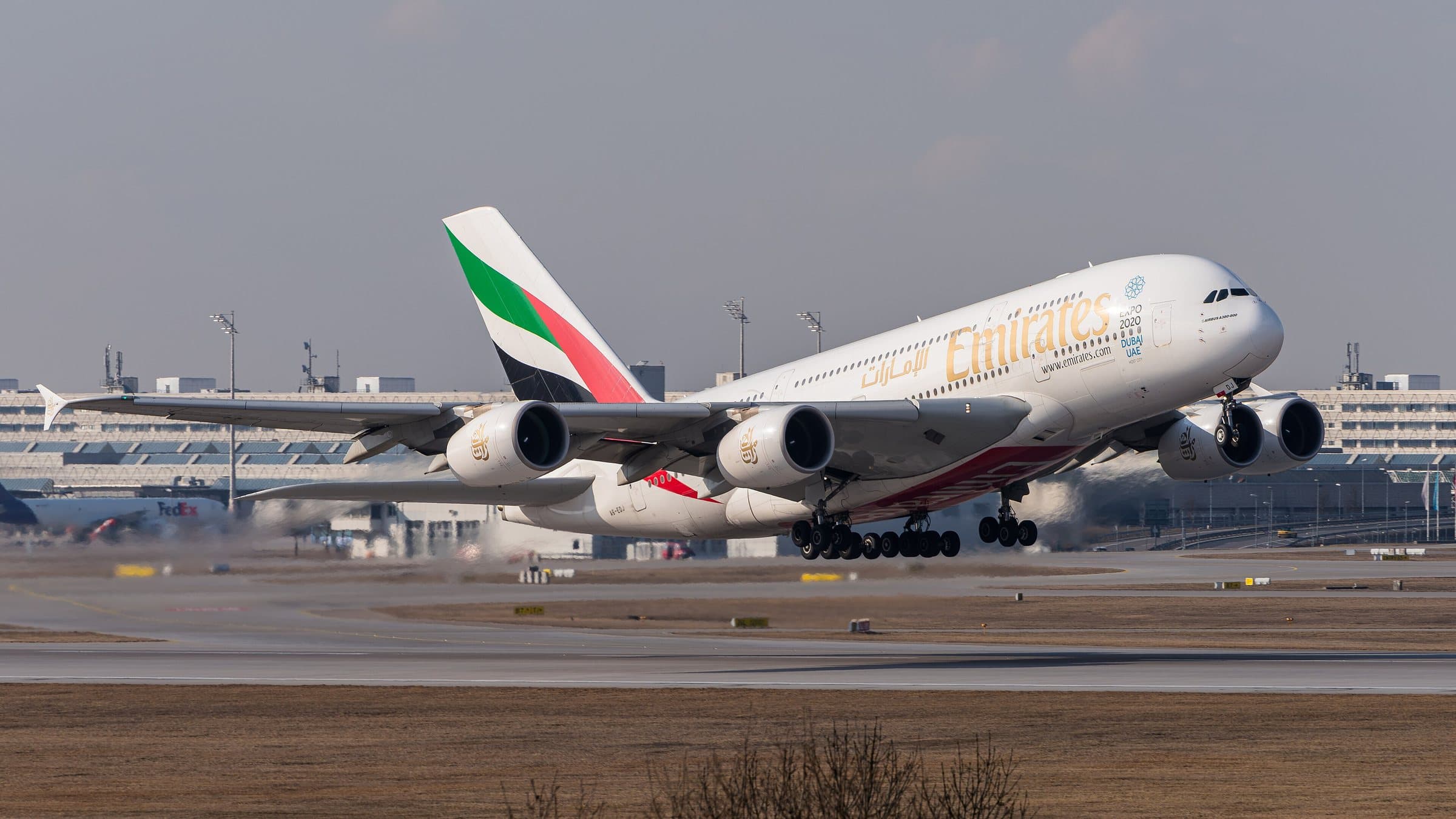
As at 31 March 2026 the fleet stood at 277 aircraft, 116 Airbus A380-800s, 119 Boeing 777-300ERs, ten Boeing 777-200LRs, nineteen Airbus A350-900s and thirteen Boeing 777 freighters, with an average age of 10.8 years. Of those, 190 were owned and 87 leased; during the year Emirates bought out 29 A380s and five 777s at the end of their leases, a sign of how much of the fleet is being kept rather than replaced.
The A380 relationship is the defining one. Emirates was the launch buyer, took 123 aircraft in all, and received the last A380 ever built, A6-EVS, on 17 December 2021; 251 were produced in total, which means Emirates operates very nearly half of every A380 that exists. The type carried 44 per cent of the airline's passengers in 2024-25 across 51 destinations at an 80 per cent seat factor, and it is to be kept flying well into the next decade, which is why the Trent 900 maintenance agreement with Rolls-Royce runs into the 2040s. The Boeing 777 is the other pillar: it provided 48 per cent of capacity and carried about 56 per cent of passengers in the same year, and Emirates has been the world's largest 777 operator since 2009.
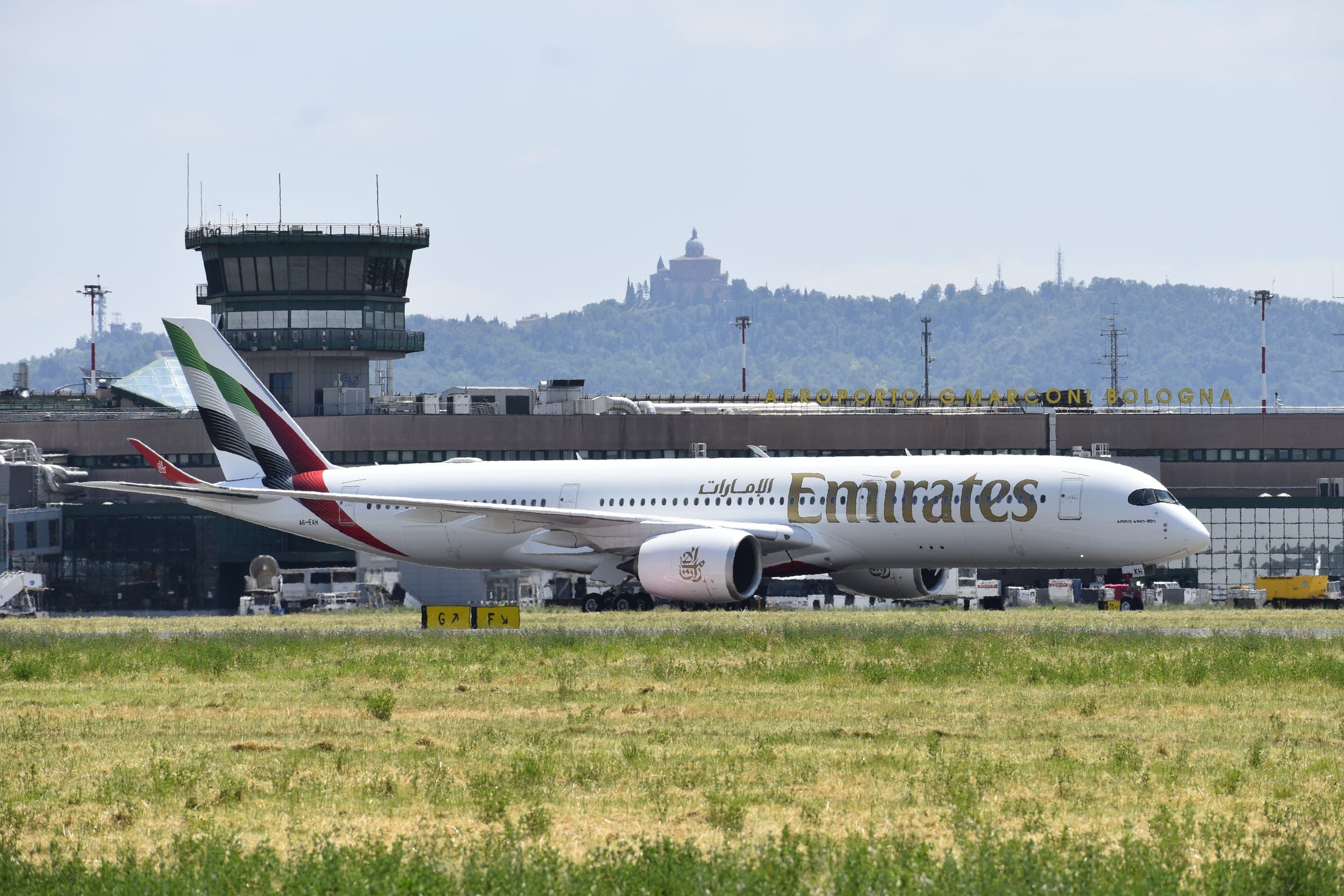
The A350 broke a sixteen-year gap. A6-EXA was delivered on 25 November 2024 and entered commercial service on 3 January 2025 with a flight from Dubai to Edinburgh, the first new type Emirates had introduced since the A380 in 2008. Fifteen more followed in 2025-26, taking the fleet to nineteen aircraft serving 21 destinations by 31 March 2026, and Bahrain became the first Emirates destination flown exclusively by the type.
The order book is enormous and unusually long. At 31 March 2026 it held 367 widebody aircraft (270 Boeing 777Xs, 54 Airbus A350s, 35 Boeing 787s and eight Boeing 777 freighters) with deliveries scheduled through to 2038. Two orders account for most of it. At the Dubai Airshow of November 2023 Emirates committed to 90 Boeing 777s and five more 787s in a deal worth US$52 billion at list prices, and added fifteen A350-900s worth US$6 billion. At the 2025 airshow it added 65 more 777-9s and eight more A350-900s, worth US$41.4 billion at list prices, and supported a Boeing feasibility study for a stretched 777-10 with the option to convert. The first 777-9 is expected from the second quarter of 2027; deliveries have slipped repeatedly, and Emirates has responded by extending leases, buying out aircraft it already flies and putting money into the cabins of the ones it has.
Cabins and service
Emirates sells four cabins, and unusually for a modern carrier it has not given up on the top one. First Class survives on the A380 and the Boeing 777 as fully enclosed private suites, and the airline states that it offers the industry's largest inventory of international First Class seats, an average of about 26,800 suite-seats a week across the two types as at 31 March 2025. As at 31 March 2026 the fleet held 2,204 First Class seats, 14,267 in Business, 4,287 in Premium Economy and 89,206 in Economy.
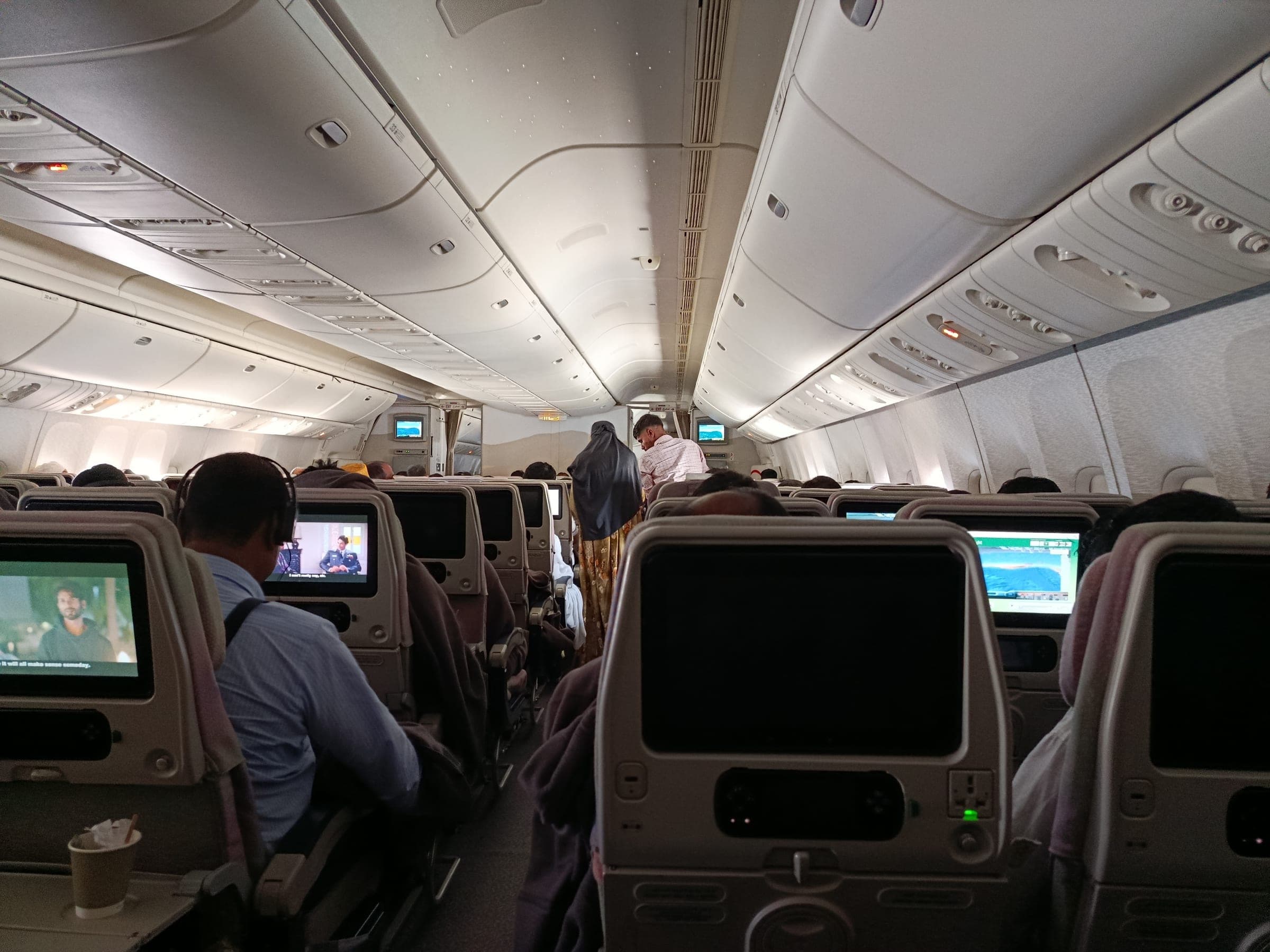
Premium Economy is the newest of the four and the reason for most of the money being spent on interiors. Introduced on the A380 and then extended, it carried 623,000 customers across 37 destinations in 2024-25 and is the centrepiece of a retrofit programme that is one of the largest cabin projects any airline has attempted: 215 aircraft committed at a cost of about US$5 billion, of which 91 had been through a full cabin refresh by 31 March 2026. An A380 takes 22 days in the hangar and a 777 eighteen; 270 engineers and technicians work on the programme, and 62 destinations were being served by refitted aircraft. A further 111 aircraft, 60 A380s and 51 Boeing 777s, were added to the queue in November 2025.
The A350 arrived with the airline's current interior rather than the old one. Its Business Class is 32 lie-flat leather seats in a 1-2-1 arrangement with wireless charging and a minibar; Premium Economy is 21 to 28 seats in 2-3-2; Economy is up to 259 seats in 3-3-3 with a six-way adjustable headrest. Every cabin has a 4K screen, in-seat charging and, in a world first on the type, an electronic blind system. The retrofitted 777s are built to the same idea, with a refurbished First Class, a 1-2-1 Business cabin replacing the older 2-3-2 layout, and Premium Economy inserted where it never existed.
Around the seat sits a service proposition Emirates has invested in more conspicuously than most. ice, the inflight entertainment system, carries content in more than 50 languages. The airline buys more champagne than any other and is the only one to serve Dom Pérignon in First Class across its whole network; in 2025-26 it served 947,000 bottles of First and Business Class champagne and 11.4 million pieces of First Class chocolate. On the ground there are 41 Emirates lounges worldwide, which received 5.3 million visits in 2025-26, and a chauffeur-drive service that made 2.8 million journeys. Connectivity is being rebuilt around Starlink, announced in November 2025, with 21 aircraft fitted by 31 March 2026 and 232 expected by 2027.
Accessibility has become an explicit programme rather than a compliance exercise. Emirates was certified as the world's first Autism Certified Airline in March 2025, runs travel rehearsals at airports for passengers who find flying difficult, and carries sensory products and fidget toys on board.
Livery and identity
The mark is a word. Emirates has never had an animal, a bird or a geometric device; its emblem is the airline's own name written in Arabic calligraphy, set in gold on a red tailfin behind the colours of the United Arab Emirates flag, with the name repeated in gold Latin and Arabic lettering along the fuselage. It has been recognisable at an airport gate since 1985 and has been changed only twice.
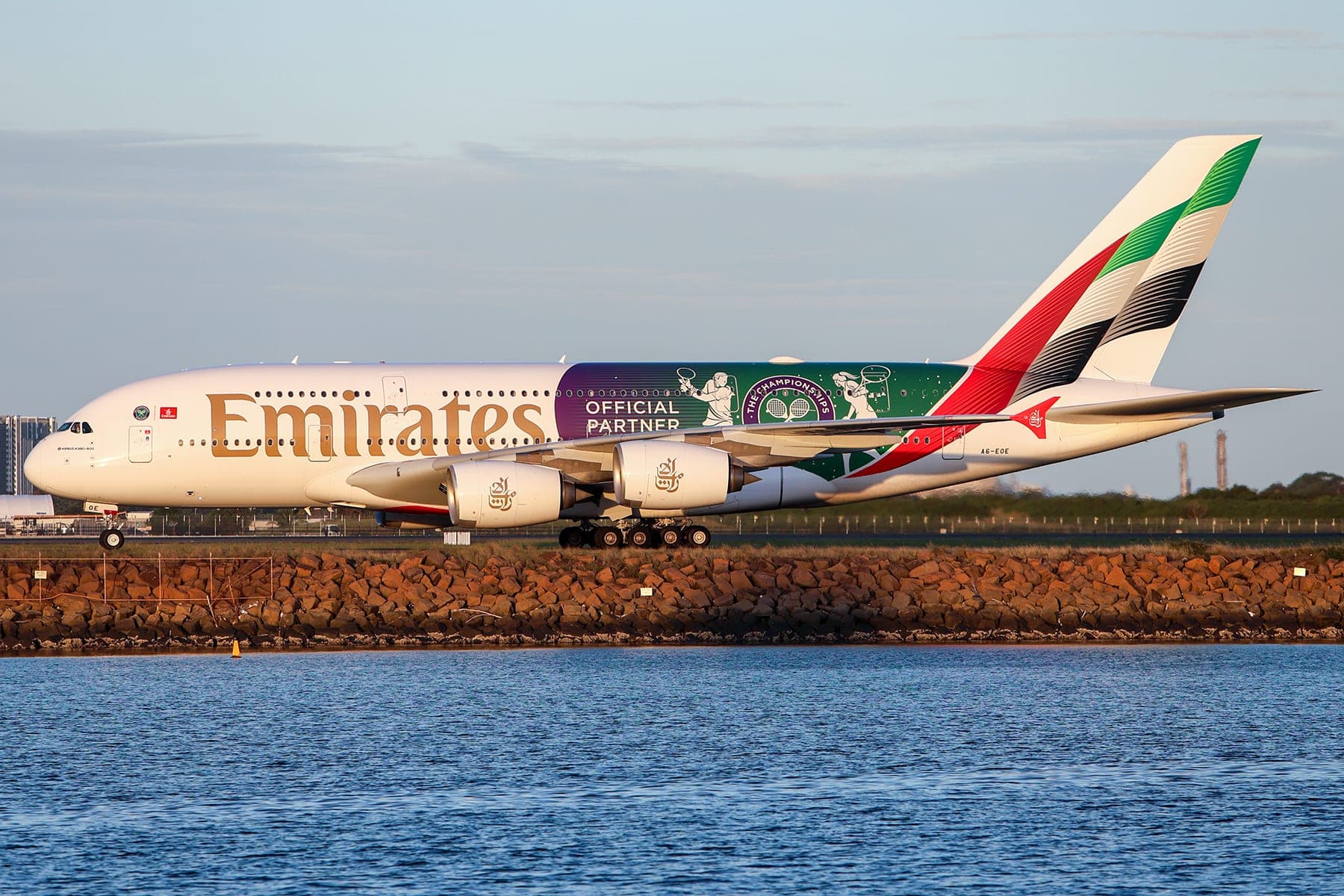
The first revision came with the delivery of the first Boeing 777-300 at the 1999 Dubai Airshow. The second was unveiled on 16 March 2023, when A6-EOE, an A380, rolled out of Emirates Engineering as the first aircraft in the current scheme: the flag on the fin redrawn with a three-dimensional flow to it, the gold lettering along the body made bolder and 32.5 per cent larger, and the wingtips painted red with the Arabic calligraphy reversed out in white so that it reads from a window seat. Twenty-four aircraft, seventeen of them Boeing 777s, were to carry it by the end of that year, with the rest of the fleet following as aircraft passed through the paint shop.
The airline is unusually willing to paint over its own livery for a cause. Special schemes have celebrated the A380 fleet, the Skywards programme's twenty-fifth anniversary and the sponsorship of all four tennis Grand Slams, the last of these unveiled on an A380 in January 2026.
Sponsorship is the other half of the identity, and it is enormous. Emirates has used sport and the arts as a core commercial and brand strategy for forty years and held 65 properties in 2025-26. The portfolio runs from football, Arsenal, Real Madrid, AC Milan, Olympique Lyonnais, a seven-year platinum partnership with FC Bayern Munich from the 2025-26 season, through rugby, where it renewed with World Rugby through 2035, to tennis, cricket, golf, sailing with Emirates Team New Zealand, and the Sydney Symphony Orchestra. The logic is the same as the network's: an airline with no domestic market has to be known everywhere, because everywhere is where its passengers are.
Inside, the identity is the workforce. The Emirates Group employed 130,919 people from more than 180 nationalities across 85 countries and territories as at 31 March 2026, and the airline alone 74,980, of whom around 25,000 are cabin crew. Emirates runs its own flight training academy, which graduated 77 pilots in 2025-26, opened a new flight crew training centre during the year, and has secured a site in Dubai Investments Park for a cabin crew village intended to house 12,000 people.
Safety record
Emirates has lost one aircraft in forty years of operation, and one person has died as a result: a firefighter on the ground at Dubai.
On 3 August 2016 flight UAE521, a Boeing 777-31H registered A6-EMW, arrived at Dubai International from Trivandrum with 282 passengers and eighteen crew. The automatic terminal information service was forecasting moderate windshear affecting all runways. The commander attempted a manual landing on runway 12L with a tailwind within the aircraft's operating limits, flared early and, with a shift in wind direction increasing the airspeed about 650 m beyond the threshold, could not put the aircraft down in the touchdown zone. He elected to go around, judging that what he had encountered was thermals rather than windshear, and so flew a normal go-around rather than the windshear escape manoeuvre.
The main gear had already touched the runway, for six seconds, and the crew did not know it. Because the aircraft had touched down, the TO/GA switches were inhibited by design, so when the commander pushed TO/GA the autothrottle did not respond and both thrust levers stayed at idle. The crew omitted the thrust-verification steps of the go-around procedure and did not scan the primary flight instruments closely enough to notice. The aircraft climbed to 85 ft above the runway on residual energy, sank back, and struck the runway at 0837:38 UTC; the thrust levers were advanced three seconds before impact. Everyone on board got out, four passengers and crew were seriously injured and 28 slightly, but a centre wing fuel tank explosion during the firefighting killed one of the airport firefighters, and the aircraft was destroyed. The General Civil Aviation Authority's Air Accident Investigation Sector published its final report, AIFN/0008/2016, on 20 January 2020, and made recommendations to Emirates, to Dubai Air Navigation Services, to Dubai Airports, to Boeing, to the GCAA itself, to the United States Federal Aviation Administration and to ICAO. Among the findings: the FAA's certification requirements contained no rule obliging an aircraft to warn pilots that an armed autothrottle had become unavailable through the TO/GA inhibit logic, or that a go-around configuration conflicted with the thrust setting. Emirates was asked to strengthen its normal go-around and missed-approach training.
The other serious event in the airline's record ended without injury. On the night of 20 March 2009, flight EK407, an Airbus A340-541 registered A6-ERG, began its take-off roll at Melbourne with 257 passengers and eighteen crew for Dubai. A take-off weight 100 tonnes below the aircraft's actual weight had been entered into the electronic flight bag during pre-departure preparation, producing a thrust setting and reference speeds far too low. The aircraft would not rotate; the tail struck the runway, the aircraft overran the end of the strip, damaging airport lighting and the instrument landing system, and only climbed away when the captain selected TOGA. It returned to Melbourne and landed with substantial damage to the tail and nobody hurt. The Australian Transport Safety Bureau released its final report on 16 December 2011, identifying safety issues in cross-crew qualification and mixed fleet flying, take-off decision-making philosophy, flight plan document design and distraction management.
Those two events aside, Emirates has flown its whole history without a passenger fatality. Safety sits at the head of the stated business model in the group's own reporting, and the airline has more recently put artificial intelligence to work on flight operations, prioritising safety-critical NOTAM information, turbulence alerts and hazard identification for flight crews, and prohibited power banks on board from 30 September 2025.
Legacy
Emirates changed the shape of long-haul air travel by demonstrating that a hub does not need a country behind it. Before 1985 the standard model was that an intercontinental airline grew out of a national market: British Airways had Britain, Lufthansa had Germany, Qantas had Australia, and the network radiated from the place its customers lived. Emirates grew out of a city of a few hundred thousand people with no long-haul market of its own, and built a business on carrying other countries' passengers between other countries' cities. Etihad, Qatar Airways and Turkish Airlines all pursued variants of the same idea; the phrase "Gulf carrier" describes a business model as much as a geography, and Emirates is where the model was proved.
The consequences for everybody else were real. European and Asian flag carriers lost transfer traffic they had assumed was structurally theirs, and the resulting argument: over subsidies, over open-skies agreements, over whether a state-owned airline competing without a home market competes fairly: has not been resolved so much as absorbed. Emirates' own answer has always been the same one it gave in 1985: US$10 million, no further subsidy, and a profit in every year but 1986-87 and the two pandemic years.
It also did more than any other operator to keep the Airbus A380 alive. Emirates ordered the aircraft before anyone else, took 123 of the 251 built, accepted the last one off the line in December 2021, and is committed to flying them into the 2030s with a rebuilt cabin and an engine maintenance agreement running to the 2040s. Without that single customer the programme would have ended sooner and with a far smaller fleet; with it, the largest passenger aircraft ever built has a decade of scheduled service still ahead of it.
Forty years after flight EK600 left for Karachi, the questions in front of the airline are ones of scale rather than survival. Dubai International is at its physical ceiling at 95.2 million passengers a year, and the move to Al Maktoum International is a decade-long project on which the airline's future capacity depends. The order book runs to 2038, and the 777-9 that most of it consists of has not yet been delivered. And the events of early 2026 were a reminder of the one structural weakness that four decades of growth have not addressed: an airline with a single hub, in a region that can close, has nowhere else to fly from.
The fleet
In service at March 31, 2026
Long-haul
Total264
Cargo
Boeing 777F
13+ 8 on order
Total13
Cabins
First Class
Fully enclosed private suites, carried on the Airbus A380 and the Boeing 777. Emirates states that it has the industry's largest inventory of international First Class seats, all of them suites, averaging about 26,800 a week across the two types as at 31 March 2025; the fleet held 2,204 First Class seats at 31 March 2026.
Available onAirbus A380 and Boeing 777 only.
Business Class
A lie-flat seat on every long-haul type. The Airbus A350 and the retrofitted Boeing 777s carry a 1-2-1 cabin (32 seats on the A350, with wireless charging, a 20-inch 4K screen and a minibar) while unrefitted 777s retain the older 2-3-2 arrangement. There were 14,267 Business Class seats in the fleet at 31 March 2026.
Premium Economy
The newest cabin and the reason for the retrofit programme: a 2-3-2 arrangement with a 13.3-inch 4K screen, six-way adjustable headrests and a side cocktail table. It carried 623,000 customers across 37 destinations in 2024-25, and 4,287 seats were installed across the fleet at 31 March 2026.
Available onLong-haul aircraft; being extended through the retrofit programme.
Economy Class
The bulk of the airline: 89,206 seats across the fleet at 31 March 2026. On the Airbus A350 the cabin seats up to 259 in a 3-3-3 arrangement with a 13.3-inch 4K screen, in-seat charging and a six-way adjustable headrest.
Subsidiaries
- Emirates SkyCargo
- The cargo division, flying thirteen Boeing 777 freighters alongside the holds of the passenger fleet. It carried 2.4 million tonnes in 2025-26 and contributed 12 per cent of the airline's revenue.
- Emirates Skywards
- The loyalty programme, launched in 2000, with more than 35 million members and twenty airline partners as at 31 March 2025.
- Emirates Engineering
- The maintenance arm at Dubai International, which in 2025-26 became the first organisation in the UAE to hold Design Organisation Approval from the General Civil Aviation Authority.
- Emirates Flight Training Academy
- The airline's own ab initio pilot school at Al Maktoum International, which graduated 77 pilots in 2025-26.
Timeline
March 1985
Emirates is constituted with US$10 million of Dubai government start-up capital, after Gulf Air cuts its services to the emirate
October 25, 1985
The first service, flight EK600, flies Dubai to Karachi on an aircraft wet-leased from Pakistan International Airlines
July 3, 1987
The first aircraft Emirates owns, Airbus A310-300 A6-EKA, is delivered; London Gatwick opens three days later
1991
Slots at London Heathrow, and the opening of Hong Kong
1996
The first Boeing 777 enters service
2000
Emirates becomes the first airline to announce an order for the Airbus A3XX, later the A380, and launches the Skywards programme
August 1, 2008
The first Airbus A380 commercial service, Dubai to New York
October 14, 2008
Terminal 3 at Dubai International, built for Emirates alone, opens
August 3, 2016
Flight UAE521 is destroyed in a go-around accident at Dubai; a firefighter on the ground is killed
March 25, 2020
Passenger operations are suspended as the pandemic closes the network; Dubai commits to inject equity
December 17, 2021
Emirates takes delivery of A6-EVS, its 123rd Airbus A380 and the last A380 ever built
November 13, 2023
A US$52 billion Boeing order at the Dubai Airshow, followed by fifteen more Airbus A350-900s
April 28, 2024
Designs are approved for a new AED 128 billion terminal at Al Maktoum International, to which Emirates will move
January 3, 2025
The first Airbus A350 enters commercial service, on the Dubai to Edinburgh route
February 28, 2026
All operations are halted as UAE airspace closes during the conflict in the Gulf; restrictions are fully lifted on 3 May
Accidents and defining events
Recorded as the investigators recorded them: what happened, where, and how many people died. Fatal accidents and the events that changed the airline, in date order.
August 3, 2016
UAE521
Boeing 777-31HRunway 12L, Dubai International Airport, United Arab Emirates
A6-EMW touched down long on a tailwind landing from Trivandrum and the commander flew a go-around. Because the aircraft had already touched the runway the TO/GA switches were inhibited, the autothrottle did not respond and both thrust levers stayed at idle; the aircraft climbed to 85 ft and fell back onto the runway. All 300 people on board evacuated, four of them seriously injured, but a centre wing tank explosion during firefighting killed one airport firefighter and the aircraft was destroyed.
1 death (including 1 on the ground)300 people on board
March 20, 2009
EK407
Airbus A340-541Melbourne Airport, Victoria, Australia
A take-off weight 100 tonnes below the actual weight of A6-ERG was entered into the electronic flight bag, producing thrust and reference speeds far too low. The aircraft would not rotate, struck its tail on the runway and overran the end of the strip before climbing away on TOGA thrust. It returned to Melbourne with substantial tail damage and no injuries among the 275 people on board.
No deaths275 people on board
In the catalogue
Aircraft central to this airline's story, as the encyclopedia records them.
Related airlines
- The Emirates Group Annual Report 2025-2026, The Emirates Group
- Emirates Group achieves record profit of AED 24.4 bn (US$ 6.6 bn) in 2025-26, Emirates
- The Emirates Group Annual Report 2024-2025, The Emirates Group
- Emirates places US$ 52 billion wide-body aircraft order at Dubai Airshow 2023, Emirates
- Emirates unveils new signature livery for its fleet, Emirates
- Emirates completes A380 fleet with 123rd delivery of iconic aircraft, Dubai Media Office
- Mohammed bin Rashid approves designs of new passenger terminal at Al Maktoum International Airport, Dubai Media Office
- Dubai International welcomes 95.2 million guests in 2025, Emirates News Agency (WAM)
- Final Report AIFN/0008/2016 — Runway Impact during Attempted Go-Around, Boeing 777-31H A6-EMW, Dubai International Airport, 3 August 2016, General Civil Aviation Authority — Air Accident Investigation Sector, United Arab Emirates
- Tailstrike and runway overrun — Airbus A340-541, A6-ERG, Melbourne Airport, Victoria, on 20 March 2009 (AO-2009-012), Australian Transport Safety Bureau
Checked September 29, 2026