Terminal 1
Opened 1971
Opened on 15 May 1971, replacing the original 1960 building.
Airport
DXB · OMDB
DubaiUnited Arab Emirates
Dubai International Airport
95,200,000a year
Passengers
454,300a year
Aircraft movements
2,200,000t
Cargo
Figures for 2025
Ownership as of 2026
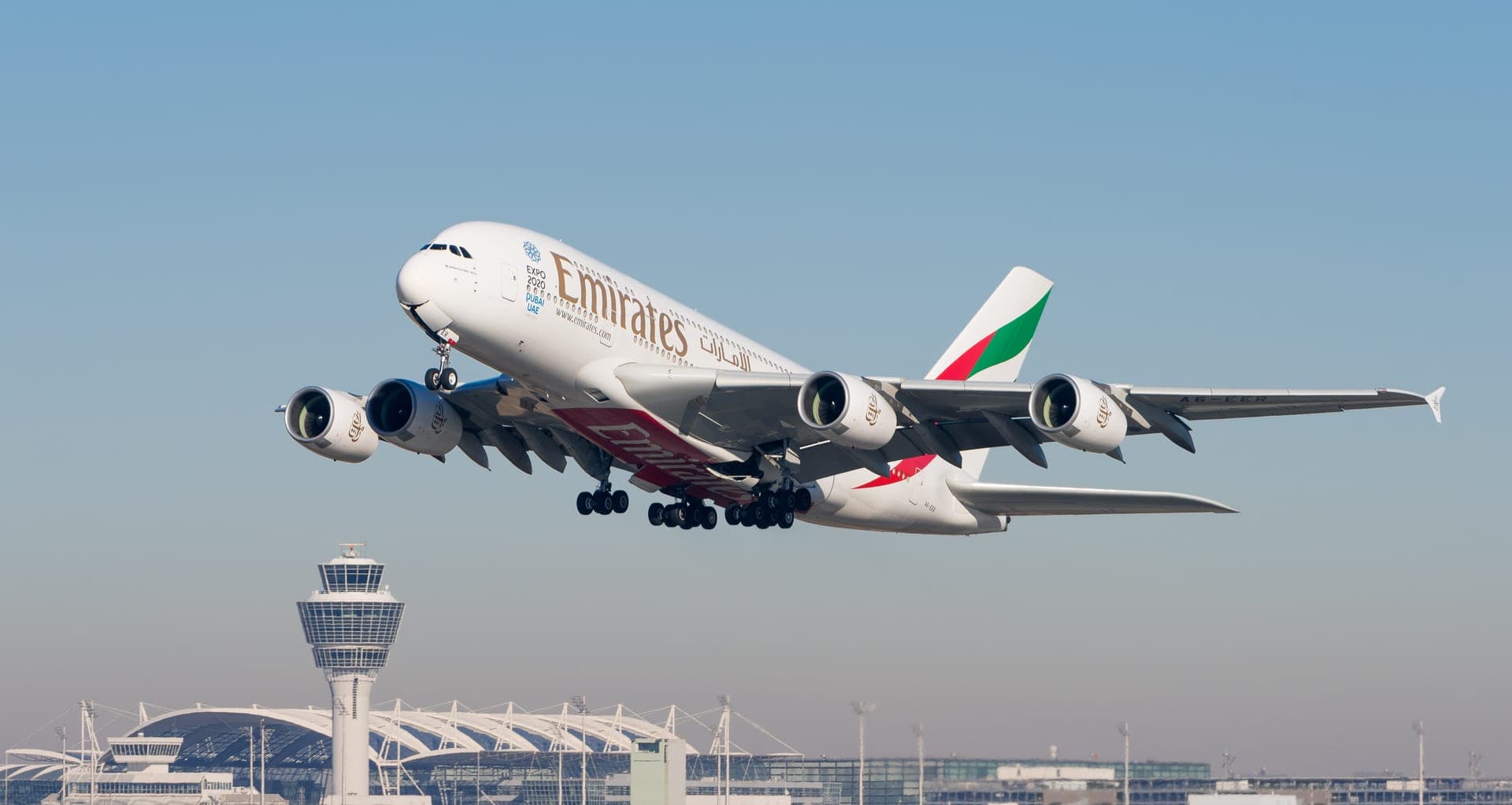
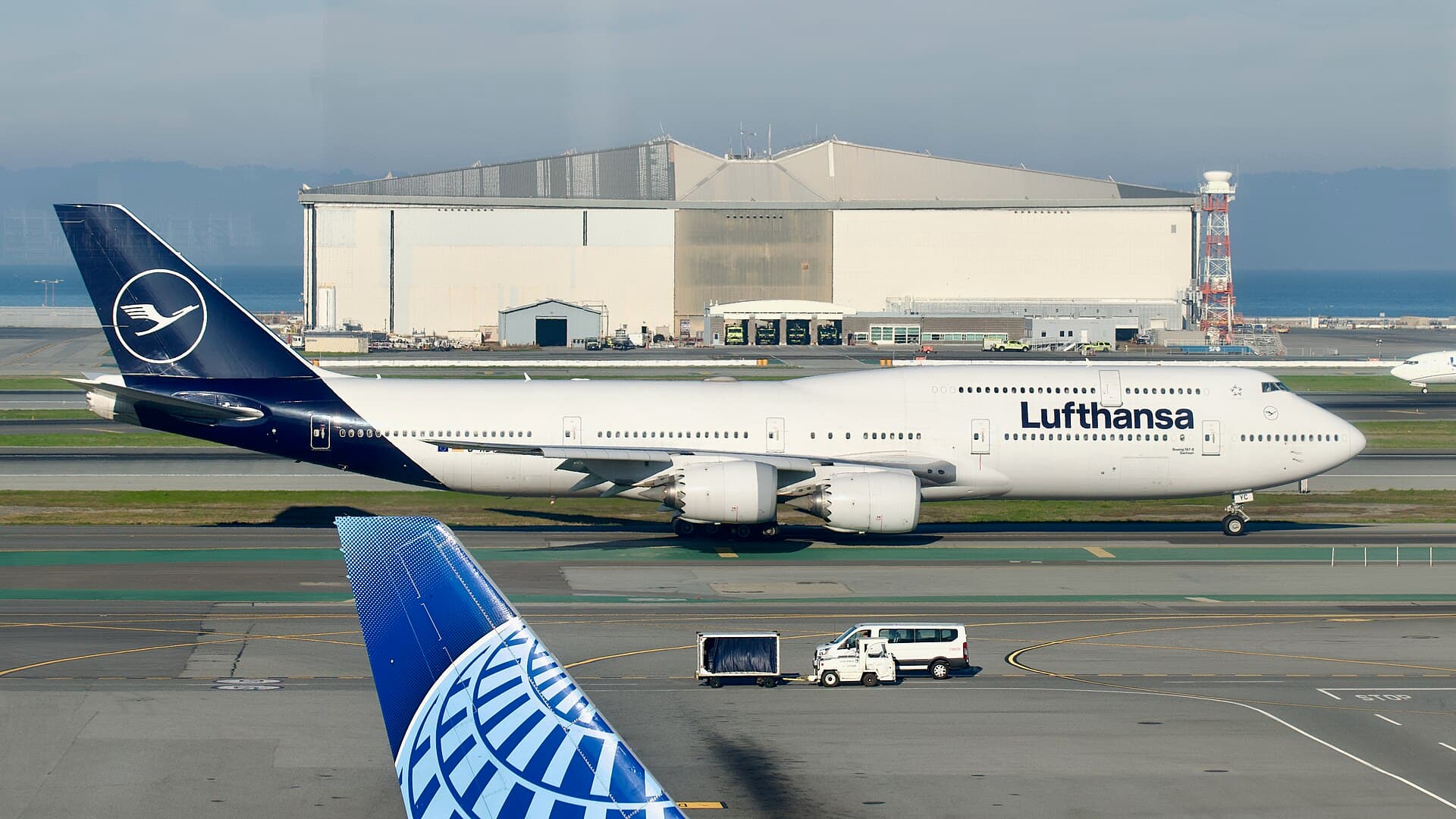
Dubai International Airport is the world's busiest airport for international passengers and, as of 2025, the second busiest of any kind. It is the home of Emirates and of the low-cost airline flydubai, and no other airport sees as many Airbus A380 or Boeing 777 movements; it also has the highest average number of passengers per flight in the world, because most of the aircraft using it are large and most of the traffic is long-haul.
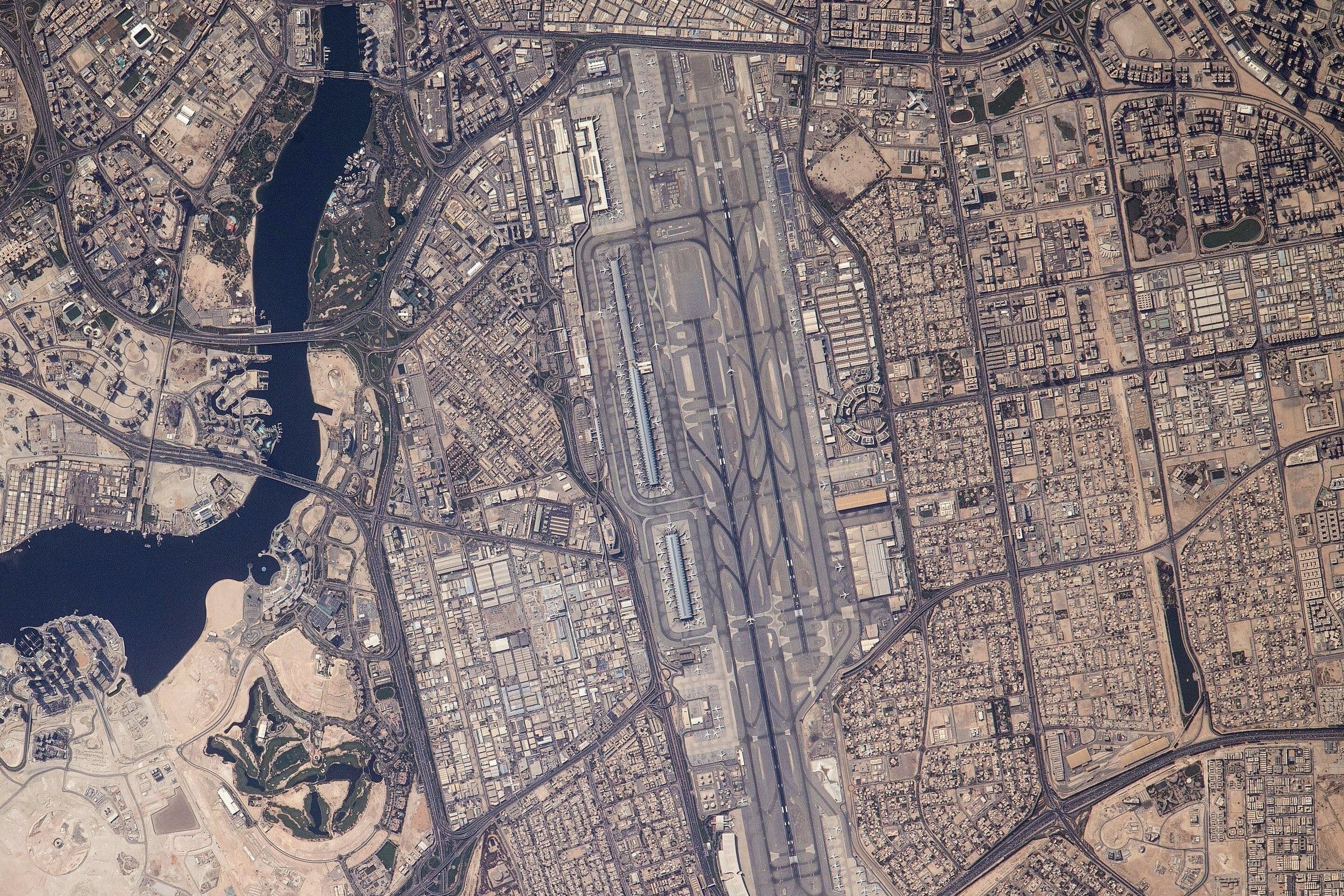
It is an unusual airport in another way. Two parallel runways and three terminals sit in the middle of the city, beside Dubai Creek, on ground that was open desert when construction began in 1959. In 2025 it handled 95.2 million passengers, 454,300 aircraft movements and 2.2 million tonnes of cargo.
Its future has already been decided. Dubai plans to move its air traffic to an expanded Al Maktoum International Airport, and once that is fully operational, DXB, hemmed in by the city that grew around it, is to close.
Dubai's aviation began on water. In July 1937 an agreement gave Imperial Airways a flying-boat base on the creek for about 440 rupees a month, a sum that included the guards' wages; by February 1938 four flying boats a week were calling there.
The airport itself was ordered by the ruler of Dubai, Sheikh Rashid bin Saeed Al Maktoum, in 1959, and opened on 30 September 1960. It had a runway of compacted sand, long enough for aircraft the size of a Douglas DC-3, and a small terminal beside it.
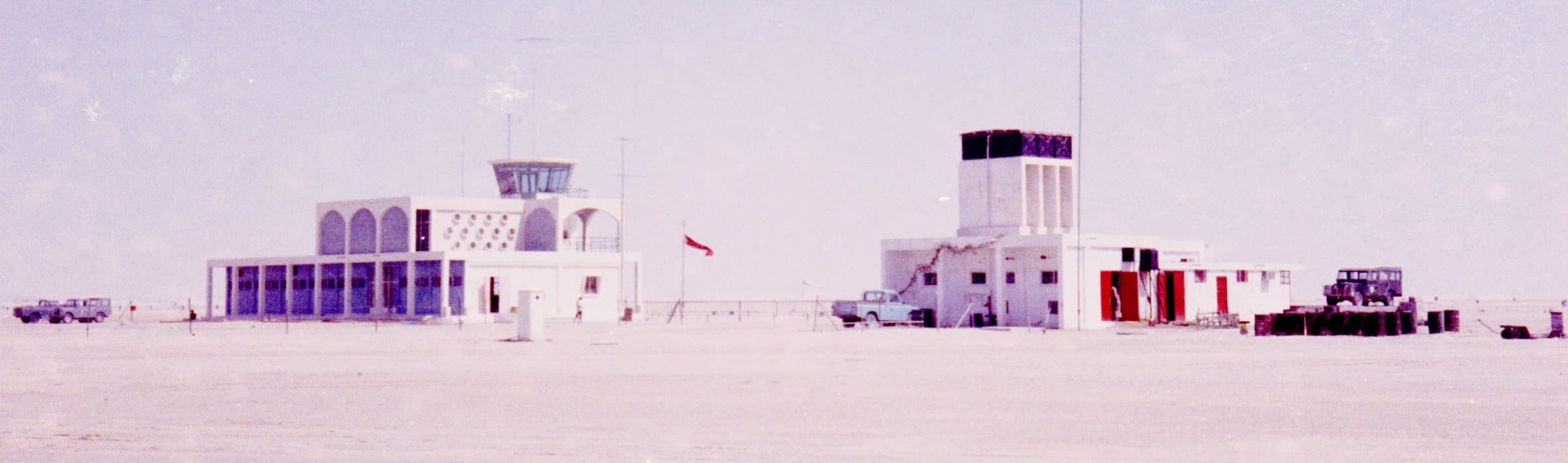
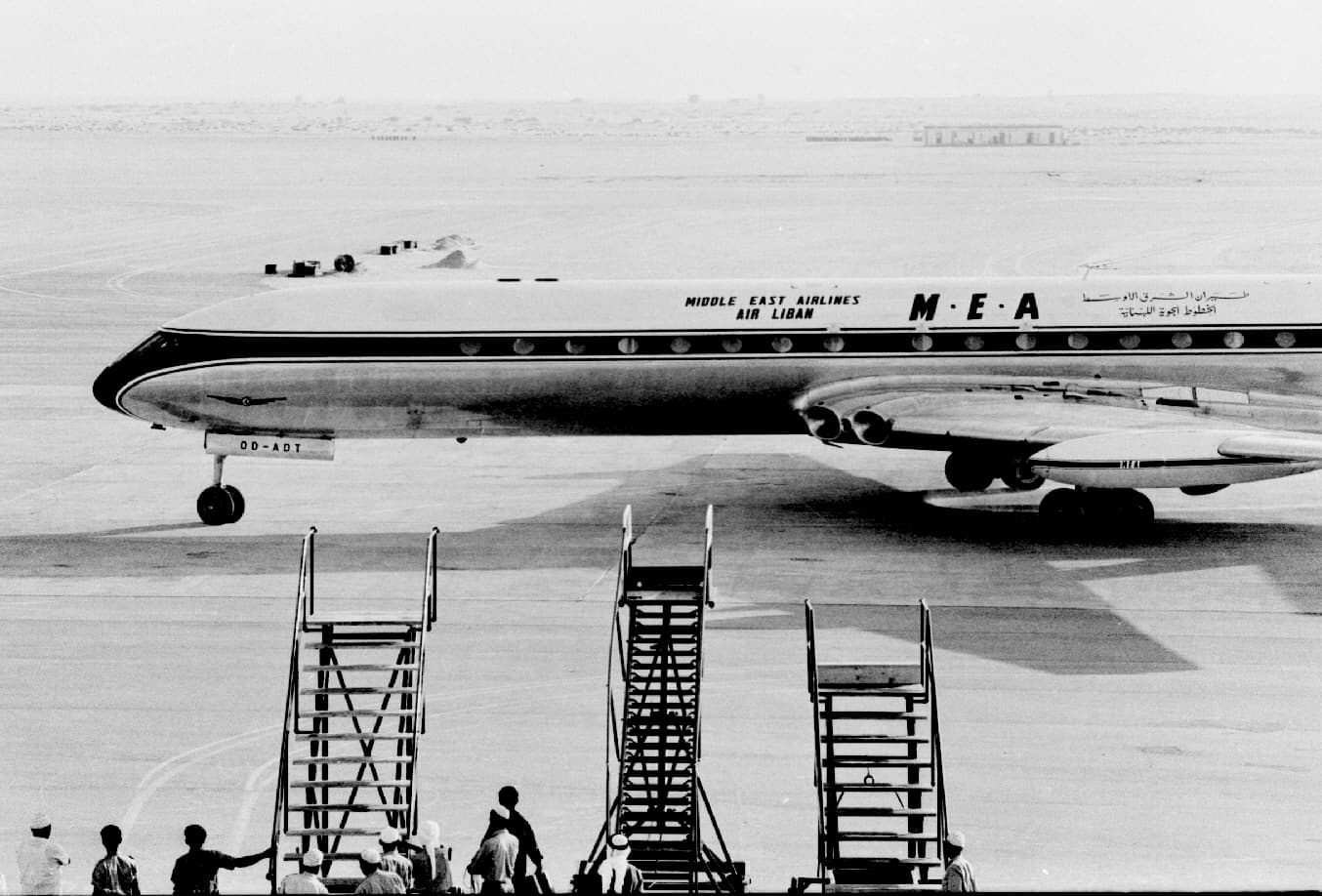
An asphalt runway was begun in May 1963 and opened in May 1965, together with extensions to the terminal, new hangars and navigation aids; the lighting was finished that August. The first jet to land on it was a Comet of Middle East Airlines, and the inauguration on 15 May 1966 was marked by visits from Comets of Middle East Airlines and Kuwait Airways. By 1969 nine airlines served some twenty destinations.
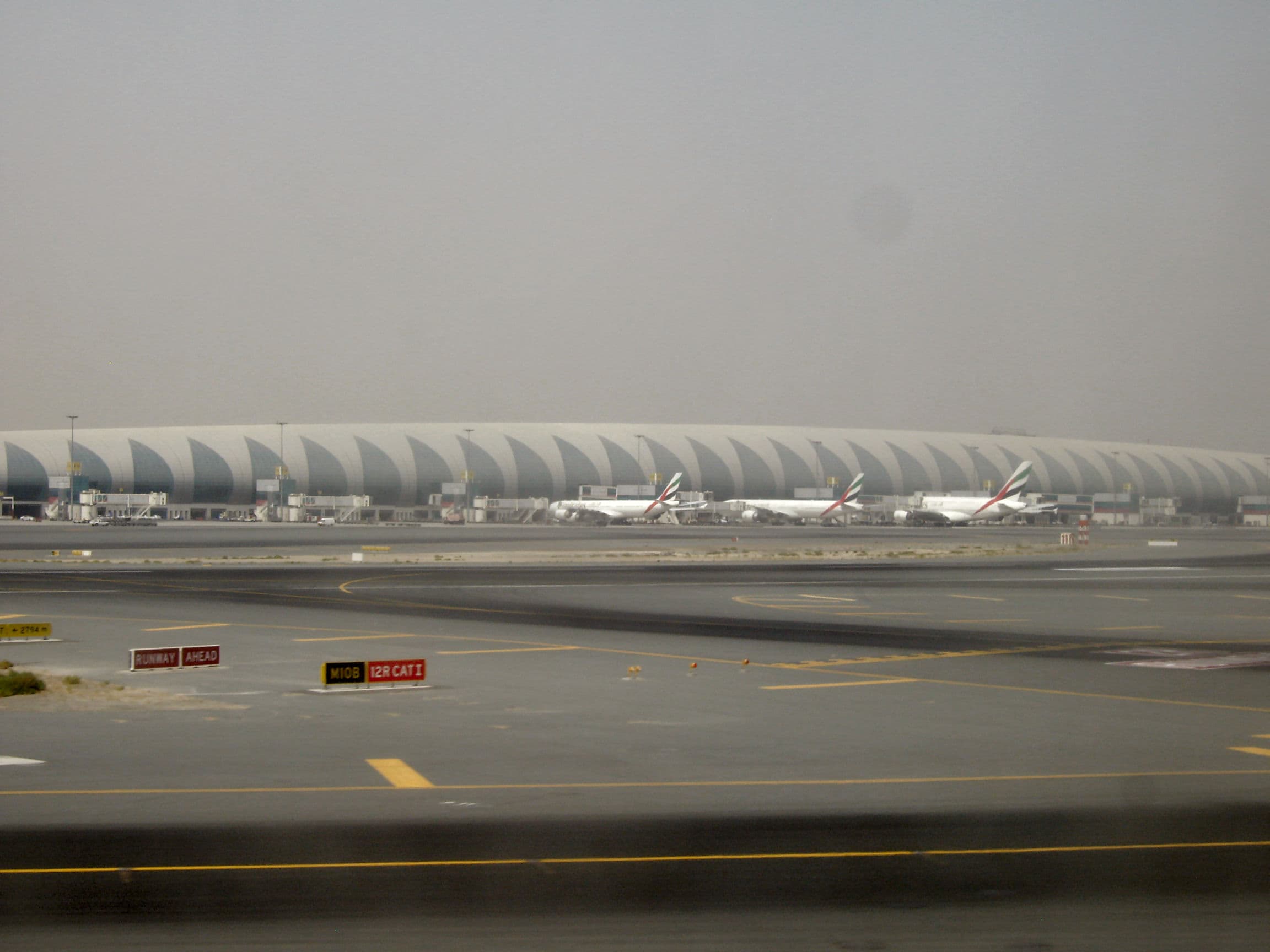
A new terminal, today's Terminal 1, opened on 15 May 1971 as a three-storey building with four piers, a domed VIP lounge and the ogee arches that the terminal still carries; the piers and the dome are gone. The original 1960 building was abandoned and demolished in the early 1990s. A precision approach lighting system was commissioned in 1971, the airport fire station and its generators were finished in December 1971 and fully working by March 1972, and the ruler inaugurated a long-range surveillance radar on 19 June 1973.
Dubai works two closely spaced parallel runways, 12L/30R and 12R/30L, both of them well over 13,000 ft: the southern one is the longer at 14,590 ft. They are equipped with four instrument landing systems, and in 2009 the airport installed a Category III system, the first in the United Arab Emirates, so that aircraft could land in the fog that forms over the Gulf coast in winter.
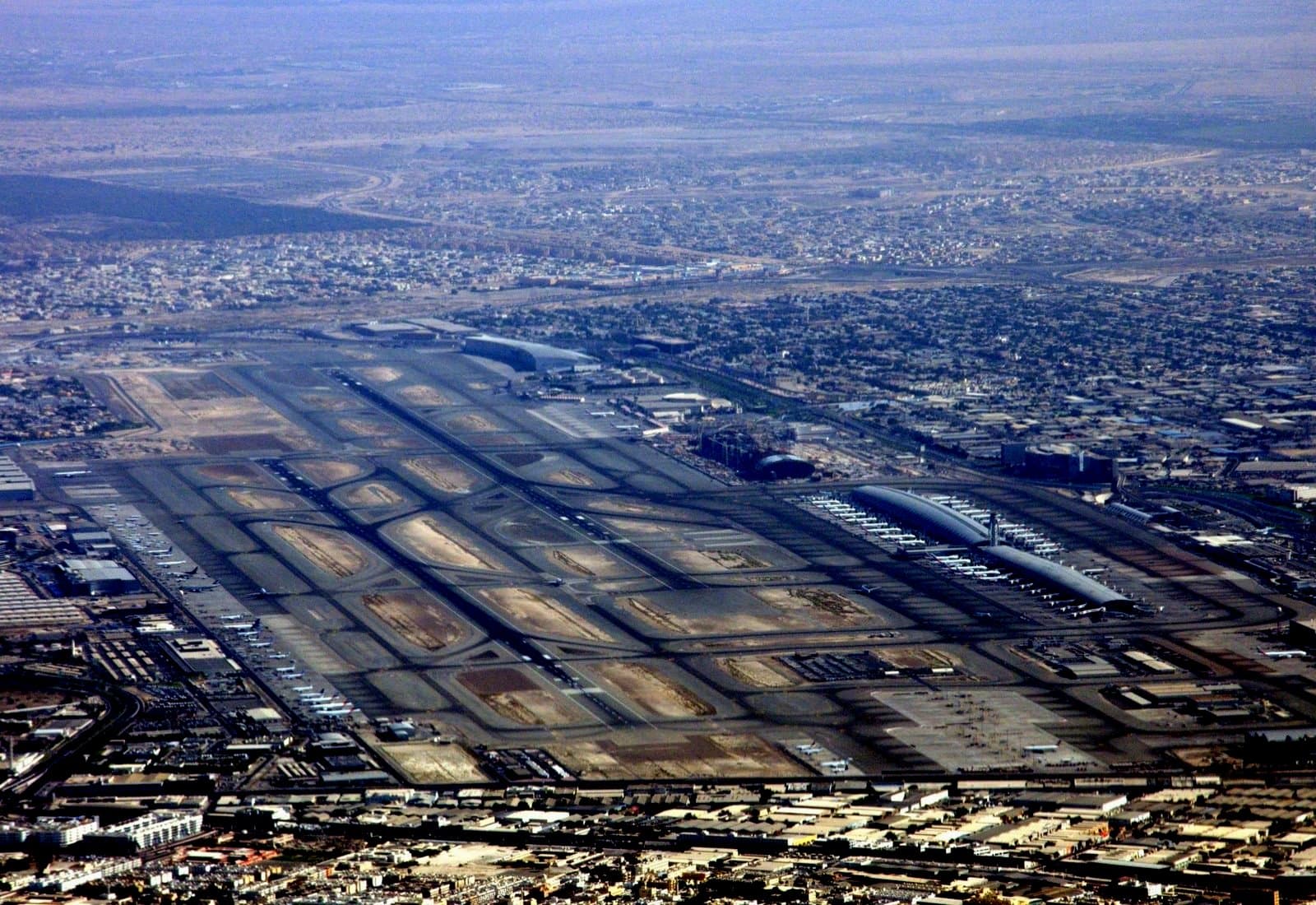
Two closely spaced runways at an airport of this size leave very little margin for maintenance. When the surfaces had to be renewed in 2014, the work was done in an 80-day programme from 1 May to 21 July: the southern runway closed for May, the northern from 31 May to 20 July, and the airport ran on one runway throughout. Flights at DXB were cut by 26 per cent, fourteen airlines moved to Al Maktoum, and Emirates alone cancelled 5,000 flights and grounded more than twenty aircraft. The southern runway was closed again from 16 April to 30 May 2019 for complete resurfacing and new airfield lighting.
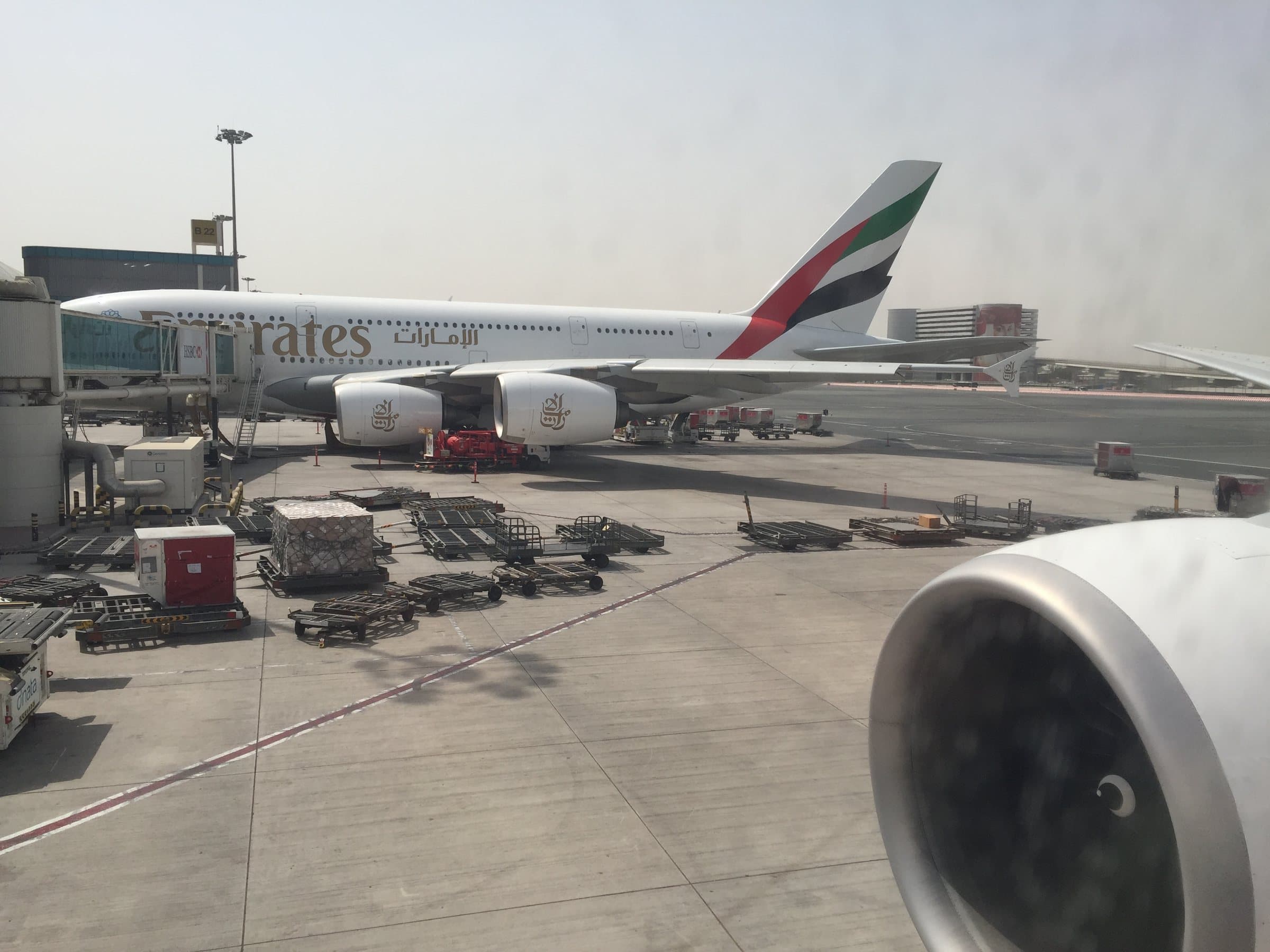
Making room for the A380 cost $120 million in terminal and airfield work (enlarged gate holdrooms, new finger piers, new air bridges, longer baggage carousels) on top of the $3.5 billion Concourse A. The first two purpose-built A380 gates, at $10 million each, were unveiled on 16 July 2008, and five more opened at Concourse B on 14 October 2008. They board the upper deck directly from the gate holdroom, so that a 555-seat A380 need take no longer to fill or empty than a Boeing 747-400.
The airport has three passenger terminals with a combined capacity of about 80 million passengers a year. Terminals 1 and 3 face each other and share a common transit area, so airside passengers can walk between them without passing immigration; Terminal 2 lies on the opposite side of the field, and a shuttle takes about twenty minutes from there to Terminal 1 and thirty to Terminal 3. Terminals 1 and 3 handle about 85 per cent of the traffic; Terminal 2 serves budget airlines and flights to the subcontinent and the Gulf. Beside it stands the Executive Flights Terminal, with its own check-in and a buggy to carry passengers to aircraft anywhere on the airport.
Terminal 1 holds 45 million passengers a year, is used by more than a hundred airlines and covers 5,600,000 ft², with 221 check-in counters. Its gates now sit in Concourse D, reached by an automated people mover; Terminal 1 and Concourse C were rebuilt between 2013 and mid-2015, with new baggage systems, new check-in desks and a larger departure hall.
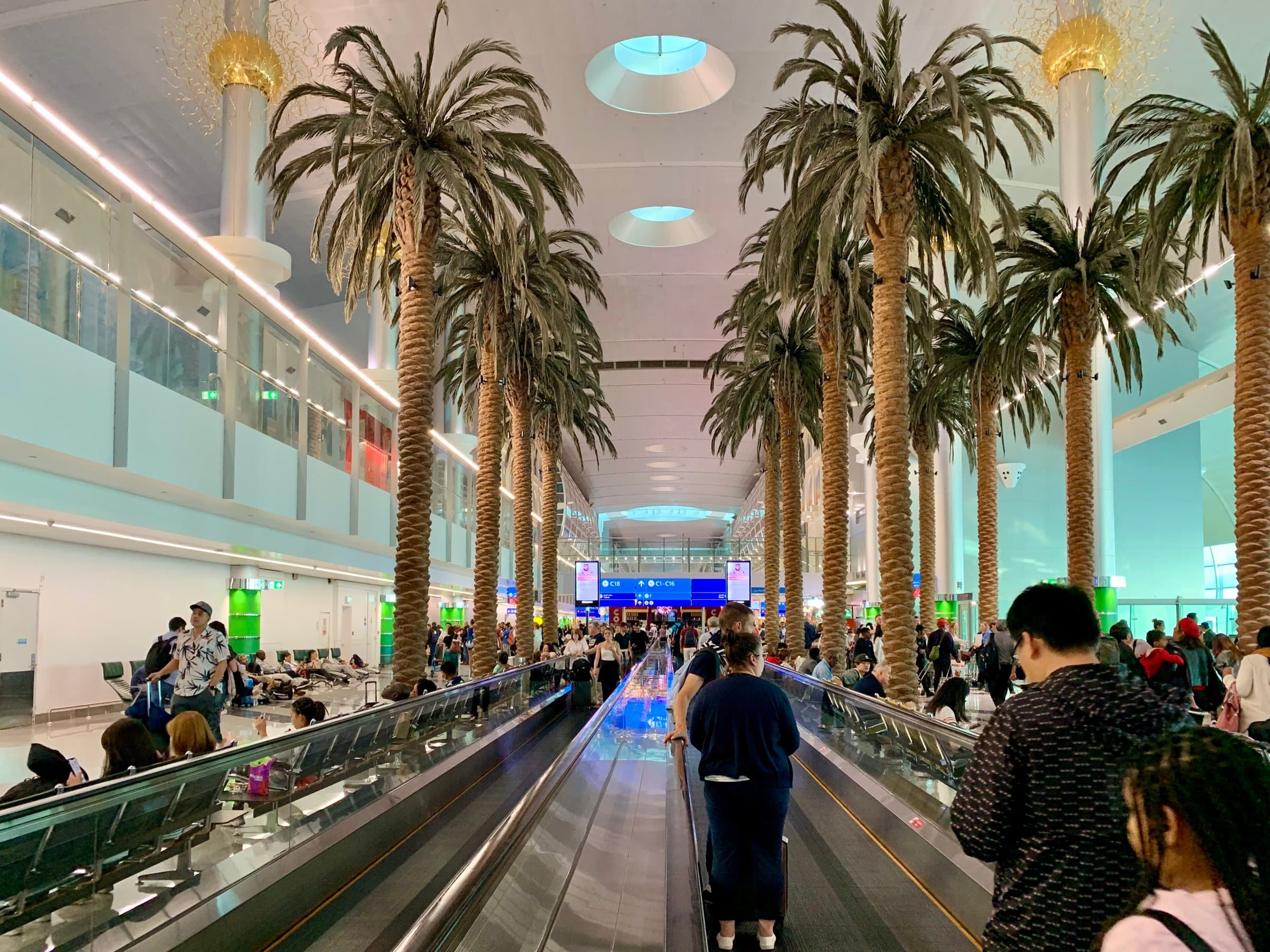
Terminal 3 was built for Emirates alone at a cost of $4.5 billion and holds 65 million passengers a year. On opening it was the largest building in the world by floor space, more than 18,440,000 ft², much of it underground: the departure and arrival halls lie 33 ft beneath the apron, directly connected to Concourse B. It has 180 check-in counters, 72 immigration counters, 14 baggage carousels and 2,600 parking spaces, and its baggage system, the largest and deepest in the world, handles 8,000 bags an hour through 21 screening points and 49 make-up carousels, with 4,500 early-bag storage positions. It opened in four phases to keep the baggage and IT systems from collapsing under the load.
Concourse A, opened on 2 January 2013 at a cost of $3.3 billion, is the world's first concourse built for the A380: 3,030 ft long, 300 ft wide and 130 ft high above the apron, with 20 air-bridge gates, all able to take the A380, and six remote lounges for another 13 stands. It holds two hotels, the largest first- and business-class lounges in the world, each with its own floor and direct access to the aircraft, and 120,000 ft² of shops.
Terminal 3 has not stayed exclusive. A code-share agreement announced on 6 September 2012 brought Qantas in until it moved its stopover to Singapore in 2018; flydubai uses it for selected routes, and in March 2023 United began flying there from Newark.
Emirates is by far the largest operator at Dubai, with a fleet of more than 200 wide-bodied Airbus and Boeing aircraft based here and services to Africa, Asia, Europe, North and South America, Australia and New Zealand; it flies from Terminal 3 and Concourses A, B and C. Its low-cost sister flydubai serves the Middle East, Africa, Europe and South Asia from Terminal 2, and since December 2018 from Terminal 3 for selected routes.
Because both are based here and both fly large aircraft on long sectors, Dubai has the highest average number of passengers per flight of any airport in the world. It is also the busiest airport anywhere for movements of the Airbus A380 and the Boeing 777.
Alongside the airlines, the Dubai Aviation Club provides flight training and facilities for private owners, and the Government of Dubai runs search-and-rescue, police, medical-evacuation and VIP flights from the airport.
The airport is reached by road D 89, one of the longest roads within the city, which begins at the Deira Corniche and runs south-east past the airport to meet Sheikh Mohammed Bin Zayed Road. A tunnel under one of the runways, the Airport Tunnel, was built in 2003.
The Dubai Metro reaches the airport on two lines. The Red Line has a station in front of Terminal 1 and another in front of Terminal 3, both entered directly from arrivals; it opened on 9 September 2009 and came into service in phases over the following year. The Green Line has a station near the Airport Free Zone, from which passengers can reach Terminal 2.
Buses run by the RTA serve all three terminals, mostly towards Deira, and an inter-terminal shuttle links Terminals 1 and 3 with Terminal 2. Emirates runs free coaches three times a day to and from Al Ain and four times a day to and from Abu Dhabi, as does Etihad. Taxis are provided around the clock by the government-owned Dubai Taxi Agency, at a higher flagfall than the city rate.
A master plan launched in 1997 set the shape of the modern airport. Terminal 2 opened in 1998 as its first step. In April 2000 came Concourse 1, now Concourse C and then called the Sheikh Rashid Terminal: 2,600 ft long, joined to check-in by a 980 ft tunnel of moving walkways, and carrying a hotel, business centre, health club, restaurants, a medical centre, a post office and a prayer room.
The runways were reconfigured next, and aprons and taxiways were strengthened in 2003 and 2004. The Dubai Flower Centre opened in 2005 to handle a trade the city had made its own, flowers needing conditions an ordinary cargo shed cannot give. The original runway of 1960 had by then been closed and turned into a taxiway and apron for the new concourse, and the second runway, built in 1984, was shifted further east by 2007.
Terminal 3 was begun in 2004 at an estimated $4.55 billion. Planned for 2006, it was two years late: the topping-out ceremony came on 30 May 2008 and the terminal opened on 14 October 2008, when Emirates flight EK2926 from Jeddah landed and EK843 left for Doha. It added 47 million passengers of annual capacity, bringing the airport to 75 million.
The airport marked its fiftieth anniversary on 29 October 2010, by which time it had handled more than 402 million passengers and 3.87 million aircraft movements in its life, average annual growth of 15.5 and 12.4 per cent. A 2011 master plan turned a proposed Terminal 4 into Concourse D, opened in 2016, and gave Emirates the exclusive use of Concourses A, B and C; every other airline moved to Concourse D or to Al Maktoum.
The airport's record includes the hijackings of the 1970s and a series of accidents on its runways. Sterling Airways Flight 296 crashed on approach on 14 March 1972, killing 112. Japan Air Lines Flight 404, hijacked out of Schiphol on 20 July 1973, stopped at Dubai before flying on to Damascus. British Airways Flight 870, a VC10 bound for Heathrow, was hijacked here on 22 November 1974; one hostage was murdered before the hijackers surrendered after 84 hours, and Captain Jim Futcher, who returned to the aircraft to fly it knowing the hijackers were aboard, was awarded the Queen's Gallantry Medal.
On 27 December 1997 a Pakistan International Boeing 747 overran the runway by 300 metres after an aborted take-off and went through the perimeter wall without loss of life. An Aeroflot Il-86 landed gear up on 21 September 2001, with all 322 aboard surviving; a Pakistan International A300 lost its right main gear on touchdown on 17 October 2001 and was written off, all 205 aboard escaping. A Biman Bangladesh A310's nose gear collapsed during take-off on 12 March 2007. UPS Flight 6, a Boeing 747 freighter, crashed on 3 September 2010 while trying to return to Dubai with a fire aboard.
On 3 August 2016 Emirates Flight 521, a Boeing 777-300 arriving from Thiruvananthapuram, crashed on landing. All 300 passengers and crew got out; an airport firefighter died fighting the fire.
In 2026 the war with Iran reached the airport itself. Its airspace was closed on 28 February after Iranian airstrikes on Dubai and operations were suspended; the airport was damaged and four people were hurt. Limited flights resumed on 2 March, were suspended again on 7 March after drone strikes, and the airport was still operating at reduced capacity at the end of March. Passenger traffic across the second quarter of 2026 fell by about 31 per cent as the war disrupted travel across the Middle East.
Every plan the airport has made has been overtaken by its own growth. The 2011 master plan expected Concourse D to bring capacity to 90 million passengers by 2018, and forecast 98.5 million passengers and 4.1 million tonnes of cargo by 2020. The Cargo Mega Terminal was to handle 3 million tonnes a year, Terminal 2 was to be rebuilt to match the others, and the airport expected to be handling 75 to 80 million passengers by 2013.
The limit is the ground. DXB sits inside Dubai, with two runways close together and a city on every side, and it cannot simply add another. That is why the emirate's answer has been to build elsewhere: Al Maktoum International, out at Dubai World Central, is to be expanded to take everything DXB carries, after which DXB will close.
Dubai's importance is not in its size alone but in what it proved. An airport with no large home market of its own, a city of a few million at the edge of a desert, became the world's busiest for international passengers by treating the journey itself as the product: one hub, one carrier flying long sectors in both directions, and a terminal built so that connecting between them is quick.
The infrastructure follows from that idea. A concourse built for one aircraft type, the largest first- and business-class lounges in the world with their own floors, a baggage system moving 8,000 bags an hour under the apron: these exist because almost every passenger is changing planes and almost every aircraft is full.
Its closure, when Al Maktoum is ready, will be the strangest part of the story: an airport at the height of its traffic, shut because the city it serves has grown around it and the model it proved needs more ground than the middle of Dubai can give.
Opened 1971
Opened on 15 May 1971, replacing the original 1960 building.
Opened 1998
The base of flydubai since 2009.
Opened 2008
Built for Emirates; the world's largest airport terminal by floor space.
July 1937
1959
September 30, 1960
May 1965
May 15, 1966
May 15, 1971
1984
1998
April 2000
2005
October 14, 2008
September 9, 2009
October 29, 2010
January 2, 2013
2014
2016
February 28, 2026
Types whose story is bound up with this airport.
Checked September 19, 2026