Engine
Continental O-300
Continental MotorsUnited States
- Type
- Six-cylinder horizontally opposed piston engine
- Introduced
- 1947
4.94L
Displacement
175hp
Peak output
Figures for the O-300-A to -E
General
- Type
- Six-cylinder horizontally opposed piston engine
- Status
- In service
Programme
- Introduced
- 1947
- Produced
- 1947 to 2000s
Architecture
- Configuration
- Six cylinders, horizontally opposed, air-cooled, direct drive
- Cylinders
- 6
- Bore
- 4.06 in
- Stroke
- 3.88 in
- Compression ratio
- 7:1
- Valves per cylinder
- 2
- Valve gear
- Two overhead valves per cylinder, pushrod-operated from a single six-cam camshaft, with hydraulic tappets
- Cooling
- Air-cooled
Induction and fuel
- Fuel system
- Single Marvel-Schebler MA-3SPA carburettor; pump or gravity feed
- Fuel
- 80/87 minimum grade aviation gasoline
Weight and size
- Dry weight
- 268 lb
- Length
- 39.76 in
- Width
- 31.5 in
- Height
- 23.23 in
Performance
- Maximum speed
- 2,700 rpm
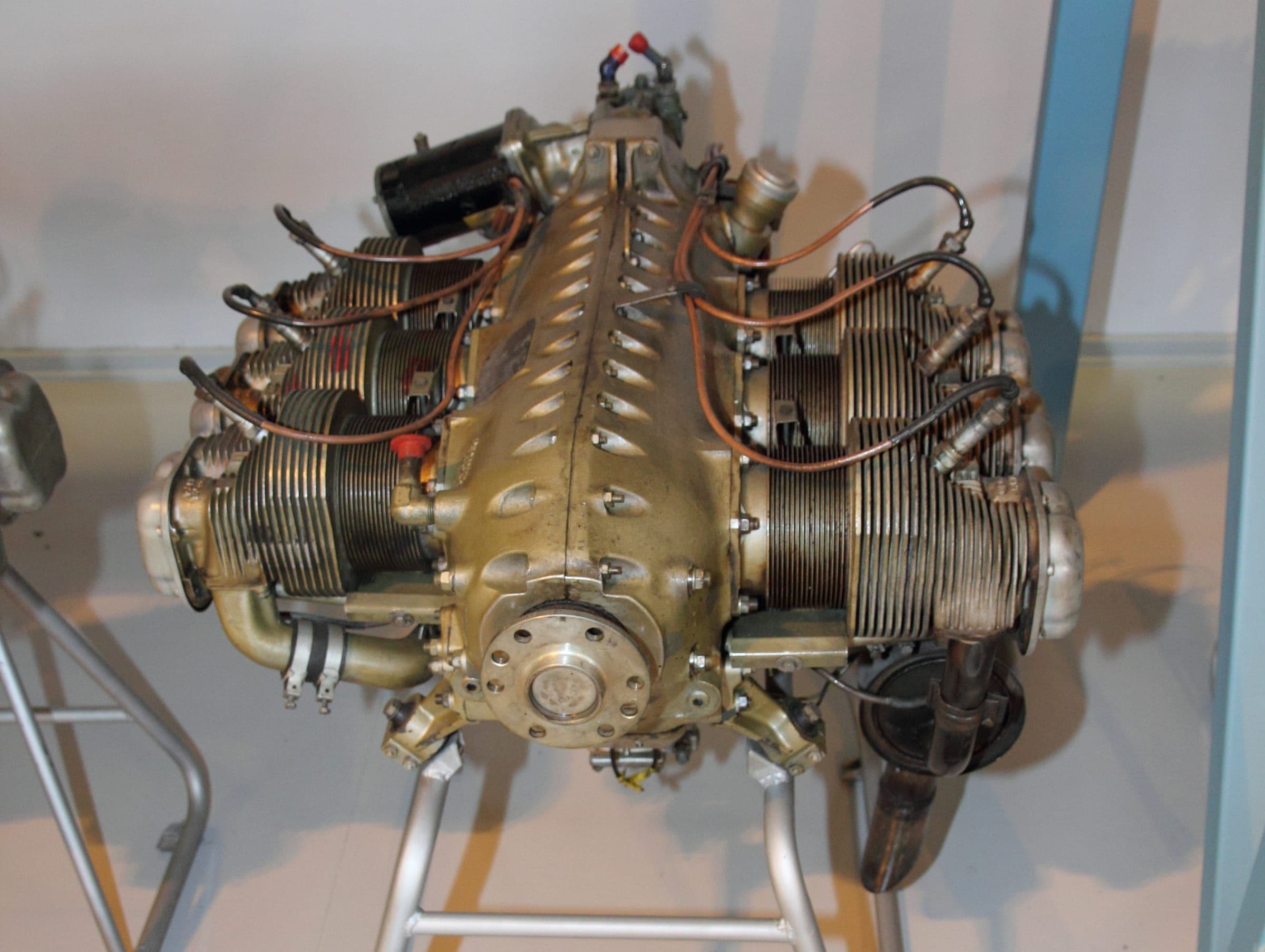
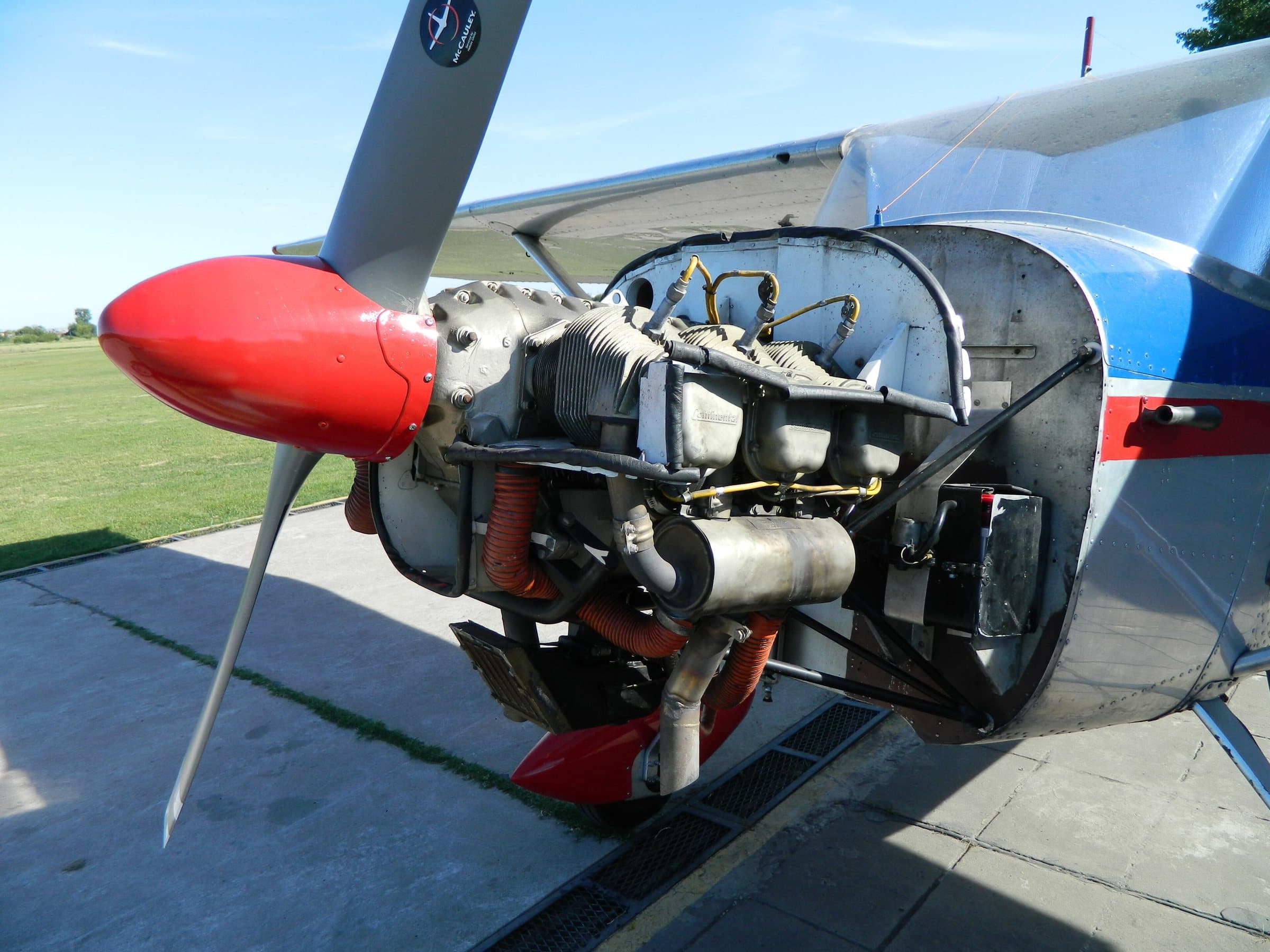
The Continental O-300 is a six-cylinder, horizontally opposed, air-cooled aircraft engine of 4.94 litres, rated at 145 hp at 2,700 rpm. It is one of the least glamorous and most consequential powerplants in the history of private flying. It was type-certificated on 5 December 1947 as the C145-2, renamed O-300 in the middle 1950s when Continental Motors adopted the military-style designation that states an engine's layout and displacement in its name, and it went on to power the aircraft on which more people learned to fly than any other: the Cessna 170, the Cessna 172 and the United States Air Force's T-41A Mescalero.
Nothing about it was advanced, and that was the point. Six small cylinders in two banks of three, air-cooled, 7.0:1 compression, one Marvel-Schebler carburettor, two magnetos, and the lowest-octane aviation gasoline the industry certified, grade 80/87. No supercharger, no fuel injection, no turbocharger, and on most installations no constant-speed propeller. What the arrangement bought was smoothness: six firing impulses per two revolutions instead of four, in an aeroplane sold to people who had never flown before and would judge it partly on how it felt. What it cost was weight and fuel, and both bills came due in 1968, when Cessna moved the 172 to a four-cylinder Lycoming and never looked back.
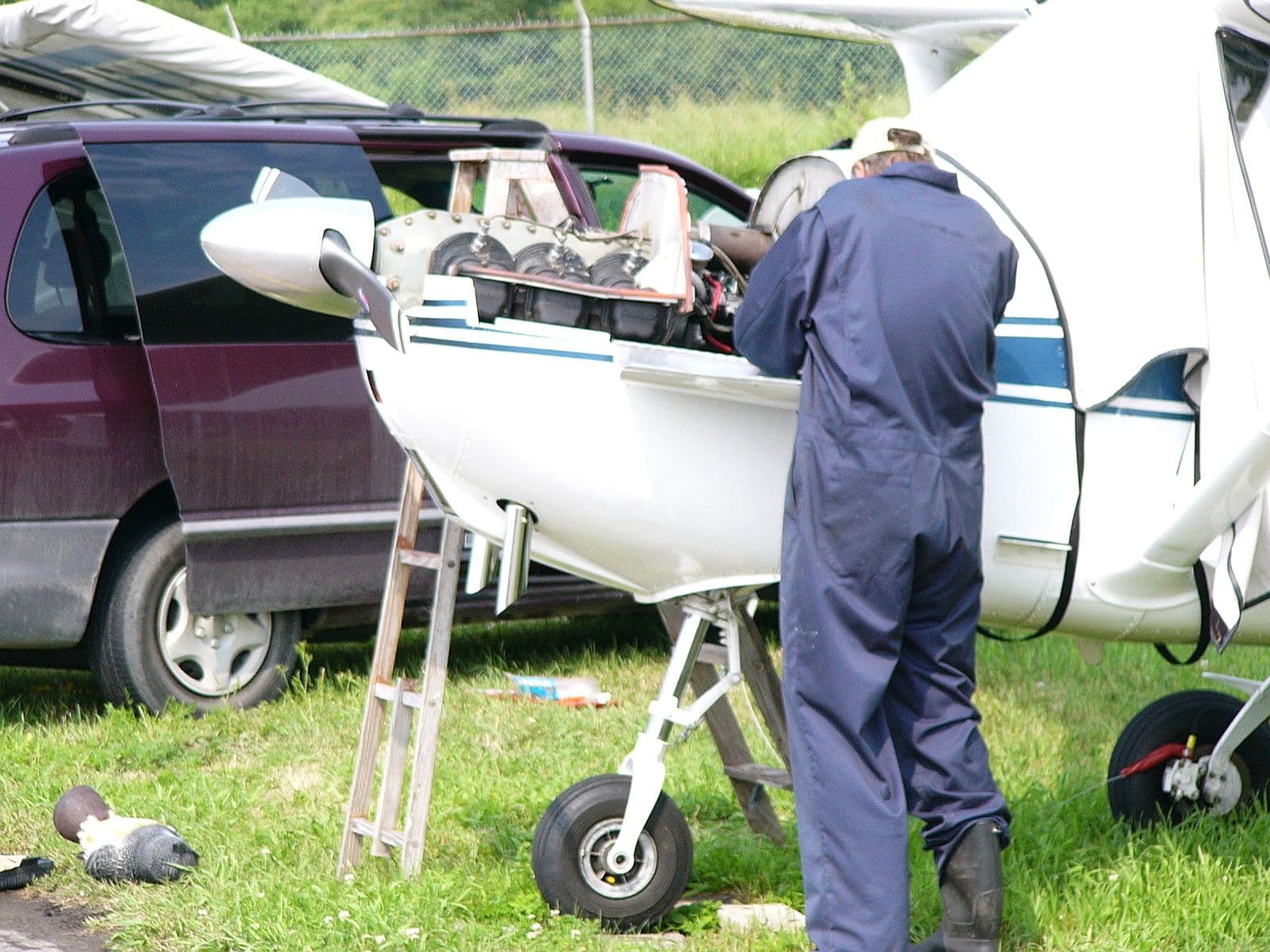
The family is wider than the one engine. A geared branch, the GO-300, turned the same crankcase at 3,200 rpm through a reduction gear to drive the propeller at 2,400 and give 175 hp; it powered the Cessna 175 and a pair of Goodyear airships, and acquired the worst reputation of any Continental light-aircraft engine, largely for things pilots did to it rather than things it did to them. A liquid-cooled, fuel-injected derivative called the Voyager 300 was built and tested in the late 1980s and never certificated. And an ordinary production O-300, installed in an ordinary Cessna 172, holds a record that has never been approached: between December 1958 and February 1959 it ran continuously, without shutting down, for 64 days, 22 hours and 19 minutes.
Aircraft fitted with this engine
Year each aircraft entered service with this engine.
- 1948C-145-2, O-300-A
Cessna 170
The engine's first aircraft: 5,174 built between 1948 and 1956.
- 1948C-145-2, O-300-A
Aeronca 15AC Sedan
561 built; certificated on floats as the S15AC and widely used in commercial bush flying.
- 1956O-300-A, -C, -D
Cessna 172
The original engine of the 172, from 1956 until the Lycoming-powered 172I of 1968.
- 1958GO-300-A, -C, -D, -E
Cessna 175 Skylark
The geared engine's aircraft; 2,106 built in five seasons.
- 1959GO-300
Goodyear GZ-19 and GZ-19A Mayflower
Airships flying on two 175 hp Continentals; the geared engine's pusher and reversing provisions suited the engine car.
- 1963O-300-A
Maule M-4 Jetasen
The engine of Maule's 1957 Bee Dee prototype and of the original production M-4.
- 1965O-300
Cessna T-41A Mescalero
237 ordered by the USAF in 1964 for primary pilot screening.
- C-145
Meyers MAC-145
- C-145
Taylorcraft 15 Tourist
- C-145
Temco TE-1A Buckaroo
- C-145
Baumann Brigadier
- Rolls-Royce Continental O-300-C
Beagle B.218X
A light twin, first flown 19 August 1962; one built, and it never entered production.
- Voyager 300
Alexeev Strizh
The only recorded application of the liquid-cooled Voyager 300, which was never certificated.
13 aircraft
Development
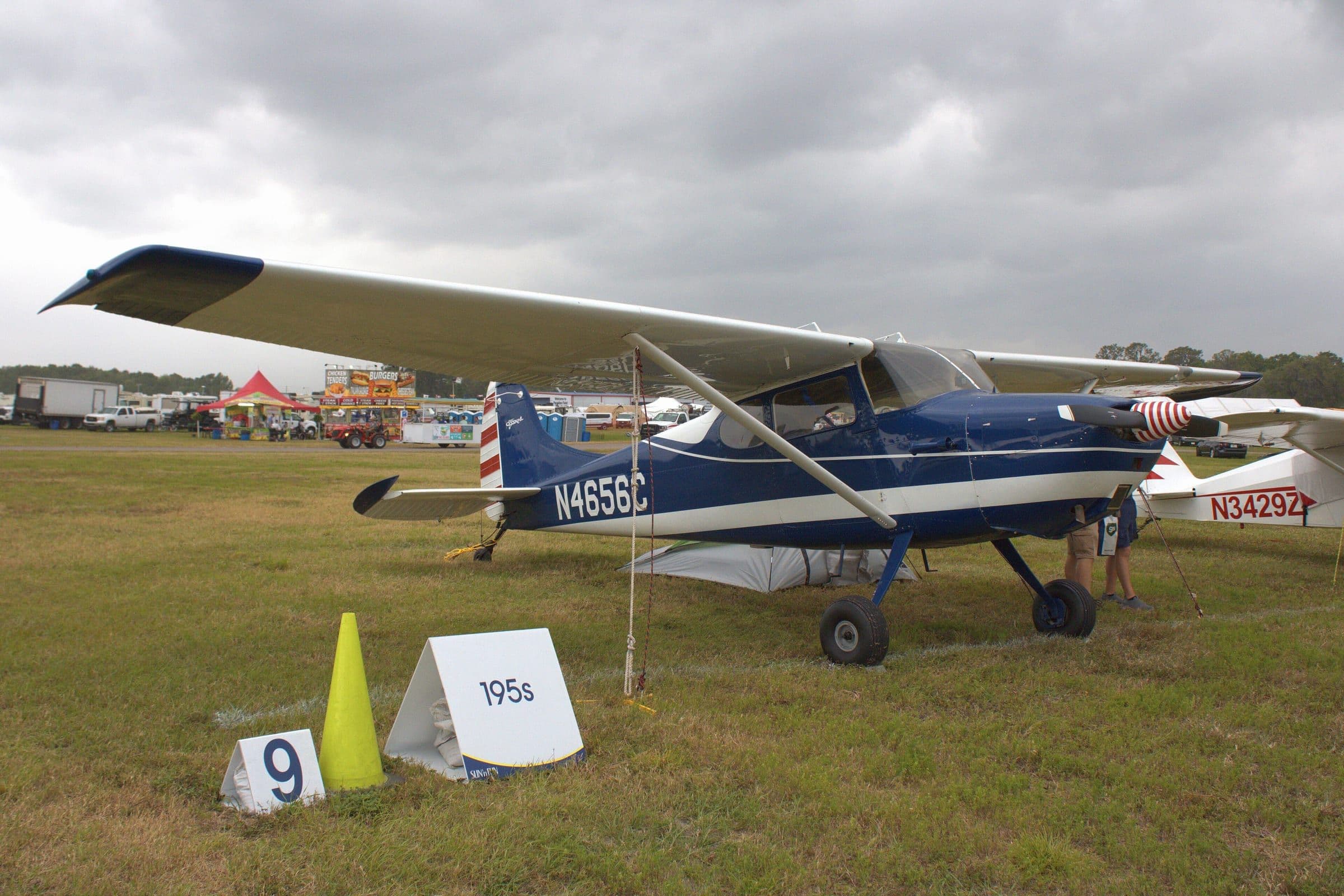
Continental's flat six began not with the O-300 but with the O-280 series, a pair of engines of 4.62 litres certificated together under Type Certificate 236 on 7 November 1945: the C-115, giving 115 hp at 2,350 rpm, and the C-125, giving 125 hp at 2,550. They were the company's answer to the four-seat aeroplane the American industry expected to sell in enormous numbers once the war ended. The C-125 found homes in the Globe GC-1B Swift and a handful of other types; the C-115 found none at all. Neither was quite enough engine.
The C-145 was the fix, and it was made in the cheapest possible way: a longer piston stroke, compression raised to 7.0:1, and different carburettor jetting. That produced 145 hp at 2,700 rpm from 4.94 litres, and it earned Type Certificate 253 on 5 December 1947: a certificate that is still live, and under which every direct-drive member of the family was subsequently approved. Cessna took it for the 170, a four-seat high-wing taildragger that first flew on 1 June 1948 and sold 5,174 copies over eight years. From that point the engine and the aeroplane were a single commercial fact.
What happened over the next sixteen years is visible in the suffix letters, and it is not what one might expect. The C145-2H, added on 1 April 1949, differs from the base engine only in that its crankcase and crankshaft are drilled to feed engine oil pressure to a hydraulically controllable propeller. The C145-2HP, added on 27 January 1953, adds a special crankcase and front main bearing so the engine can be installed as a pusher. Then the designation changed: the O-300-A was added on 12 May 1954 and is, in the certificate's own words, similar to the C145-2 except for parts material and ignition component substitutions.
The ladder continues in the same vein. The O-300-B (27 September 1955) is an -A with the hydraulic propeller provisions. The O-300-C (24 February 1959) is an -A with a different propeller flange. The O-300-D (1 June 1960) is a -C with provisions for a right-angle automatic-engagement starter drive that also carries a vacuum pump drive. The O-300-E (3 April 1963) is a -D with a governor drive pad and crankshaft passages to supply governor oil to the propeller. Across sixteen years of development, not one certificated change touched the combustion chamber, the bore, the stroke, the compression ratio or the power. Every step is about what bolts to the back of the engine or what the front of the crankshaft can feed. It is the clearest possible statement of what a light-aircraft engine maker actually sells: not power, but installations.
Design
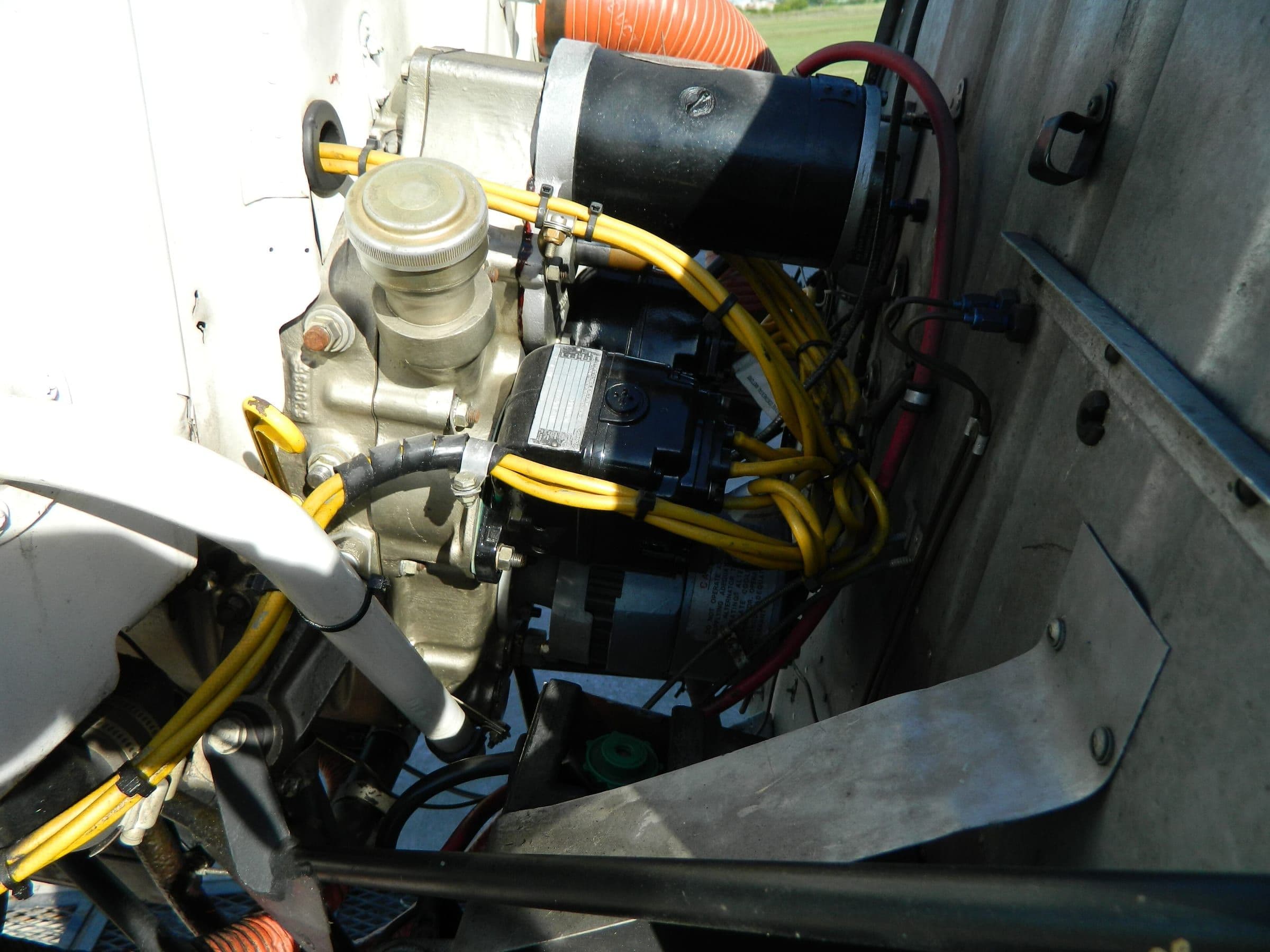 O-300-A
The O-300 is, in the most literal sense available, a four-cylinder Continental O-200 with two more cylinders. The two engines share the same bore, the same stroke and the same 7.0:1 compression ratio; the O-200's 3.29 litres and the O-300's 4.94 litres are the same cylinder counted four times and six times. This is why the O-300 has outlived its own production: the cylinder it uses is still being made, because the O-200 went back into production in 2004 for the light-sport market and has stayed there.
The architecture is the conventional American air-cooled flat engine of its era, executed with no ambition to be anything else. Aluminium heads on steel barrels, two overhead valves per cylinder operated by pushrods in external tubes from a single camshaft (six cams, not eight, which is what makes the shaft short and light) and hydraulic tappets that take up valve clearance automatically. The crankcase is a split aluminium casting; the crankshaft carries fifth- and sixth-order vibration dampers, a detail that says more about the engine than its power rating does, because a six-cylinder opposed crankshaft running at 2,700 rpm behind a fixed-pitch propeller has torsional modes that will destroy it if they are not damped.
Lubrication is a wet sump of 2 US gal nominal capacity, of which the certificate carefully states how much remains usable in a nose-up or nose-down attitude: 1.87 US gal at five degrees nose-up, 1.4 US gal at five degrees nose-down. Oil pressure in normal operation is 30 to 40 psi. Fuel arrives through a single Marvel-Schebler MA-3SPA carburettor, fed either by pump at 1.5 to 6 psi or by gravity, in which case the certificate specifies a minimum fuel head between the carburettor inlet fitting and the float bowl: the kind of requirement that reveals how many of these engines were expected to sit under a high wing with no fuel pump at all.
Ignition is dual magnetos, and the approved list is long and revealing: Bendix-Scintilla SF6LN-12, S6LN-21 or S6LSC-21, J. I. Case Model 67, Slick Electro 664, or a single dual magneto in the S6LN-200 and -204 pairing. Timing is asymmetric (26 degrees before top centre on the right magneto, 28 on the left) a small, deliberate mismatch of the kind that gets set once on a test bed and then printed on certificates for sixty years. Behind the engine, the accessory face carries a generator drive at 2.035:1, a Delco-Remy starter, a fuel pump drive and, depending on the mark, a vacuum pump drive (O-300-D and -E only) and a propeller governor drive (O-300-E only). Dry weight is 121.5 kg without starter and generator, and the six-cylinder layout is the reason: two extra cylinders, two extra pistons, two extra rods and a longer case, for the same power a four-cylinder engine would soon deliver more cheaply.
Fuel and carburation
The O-300's type certificate calls for a minimum of grade 80/87 aviation gasoline, the lowest-octane fuel the American certification system ever recognised for aircraft. With a compression ratio of 7.0:1 the engine has no need of anything better, and this apparently trivial fact has determined a great deal of its history. Lubricating oil is specified by inlet temperature rather than by season: SAE 20 below 49 °C at the oil inlet, SAE 40 above it, with later revisions admitting SAE 50, SAE 30 and 10W30 multigrade under Continental's MHS-24 specification and oils qualified to the SAE J1899 and J1966 standards.
Then grade 80/87 disappeared. As the general aviation fuel network consolidated around a single product in the 1970s and 1980s, the low-lead 100-octane grade known as 100LL became, in most of the world, the only avgas available at all: and a low-compression engine burning a fuel with four times the lead it needs is an engine that accumulates lead. The consequences are the familiar ones: fouled spark plugs, lead deposits on valve stems and in guides, and combustion-chamber deposits that raise effective compression and encourage detonation. None of it is dramatic, and all of it is cumulative.
The valve train paid most of the bill, and the record of that is preserved in part numbers. The original 1940s valves, 3920 intake and 3921 exhaust, lapped in beautifully and could not withstand the temperatures of sustained operation on 100-octane fuel. Continental replaced them with exotic-steel parts, 629404 exhaust and 531608 intake, and later again with a 30-degree intake valve introduced in the 1970s and a further exhaust valve to a newer specification. Superior's Millennium cylinders, one of the common aftermarket choices, use chrome-plated exhaust valves with special guides. The pattern across four decades is the same: a combustion chamber designed for 80 octane being progressively re-equipped to survive 100.
The modern unleaded transition therefore treats the O-300 unusually kindly. Swift Fuels' criterion for its UL94 unleaded avgas is that the engine's type certificate specify grade UL91, grade 80, grade 80/87, or a minimum octane requirement of 80 or lower; the O-300's certificate specifies exactly 80/87, which places it inside the eligible population, subject to the supplemental type certificate and the owner's own verification with a certificated mechanic. After half a century of running on fuel it never needed, the engine's low compression has become its advantage: the thing that made it obsolete in 1968 is the thing that makes it straightforward to take off leaded fuel today.
Production
Continental Motors built the O-300 in Muskegon, Michigan, under Production Certificates 7 and 508, and it remained a Muskegon engine for most of its life. The company's aero-engine arm dated to August 1929, when Continental Motors formed the Continental Aircraft Engine Company as a subsidiary and began with a radial, the A-70 of 170 hp. Its real success came from the other direction: the tiny A-40 of 1930, then the A-50 that powered Piper Cubs, and a wartime output large enough to rank the firm 38th among American corporations by value of war production. The flat sixes were the post-war expansion, the engines for the four-seat family aeroplane the industry believed in.
In 1966 the whole operation moved south. The Air Force was closing Brookley Air Force Base at Mobile, Alabama, and Continental took over its hangars and buildings, establishing there the manufacturing, engineering, sales and support base the company still occupies at what is now the Mobile Aeroplex at Brookley. Teledyne acquired Continental Motors in 1969 to create Teledyne Continental Motors; Teledyne sold it on 14 December 2010 to Technify Motor (USA), a subsidiary of the Chinese state-owned AVIC International, for 186 million dollars; the business was renamed Continental Aerospace Technologies in March 2019. The O-300's certificate has therefore changed hands three times without the engine changing at all, the type certificate holder record on E-253 notes the ownership and name change of 19 April 2011 as a bare administrative line.
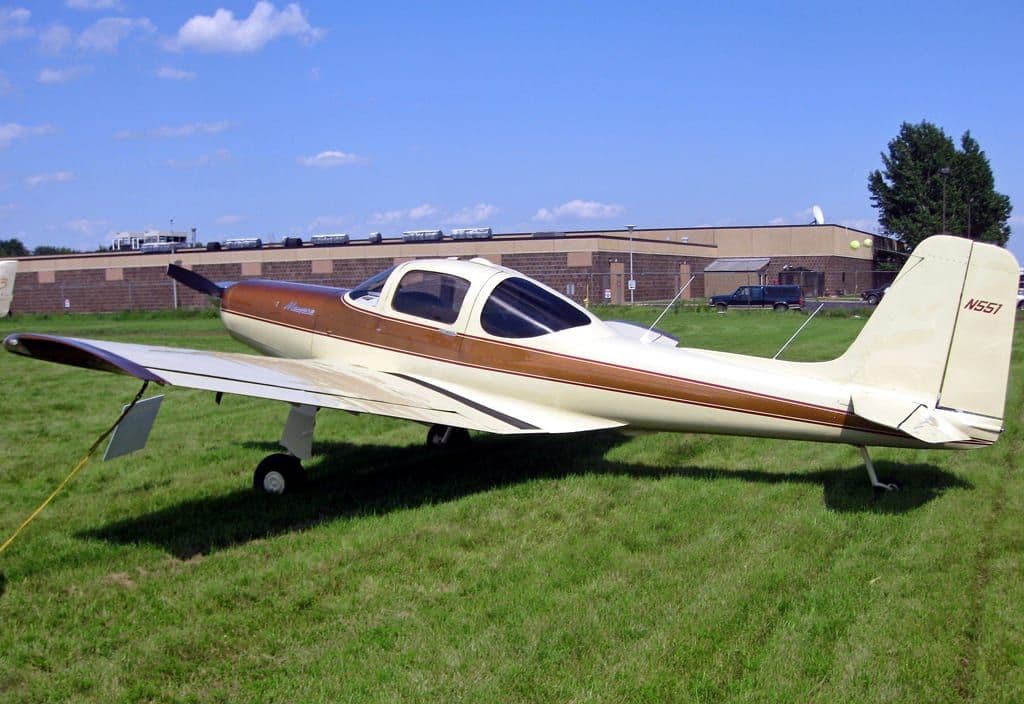
No consolidated production total for the O-300 family appears to have been published, and none should be invented. The airframe figures set a floor. Cessna built 5,174 170s between 1948 and 1956 and about 5,757 Continental-powered 172s between 1956 and 1967; the 175 accounted for 2,106 to 2,108 aircraft; Aeronca built 561 Sedans; the USAF ordered 237 T-41As in 1964, built on the 172 line. Those four programmes alone required well over thirteen thousand engines, before counting the smaller types, the Goodyear airships, spares, replacement engines and the British licence production. It is a large number by the standards of light aviation and a small one by the standards of the Merlin, which is the correct proportion for an engine that sold one aeroplane at a time to private owners.
Production of the geared GO-300 is recorded as running from 1957 to 1973. The direct-drive O-300 lasted longer, Wikipedia records versions still in production in 2004, but it is no longer built. Continental's current certified avgas catalogue runs in four families: the 200 series with the O-200 and IO-240, the 300 series with the IO-360 and IO-370, the 400 series with the O-470, and the 500 series with the IO-520 and IO-550. The O-300 is not among them, and neither is the GO-300. New-built O-300s stopped coming out of Mobile some time ago; every O-300 that returns to service now comes from an overhaul shop.
Licence production
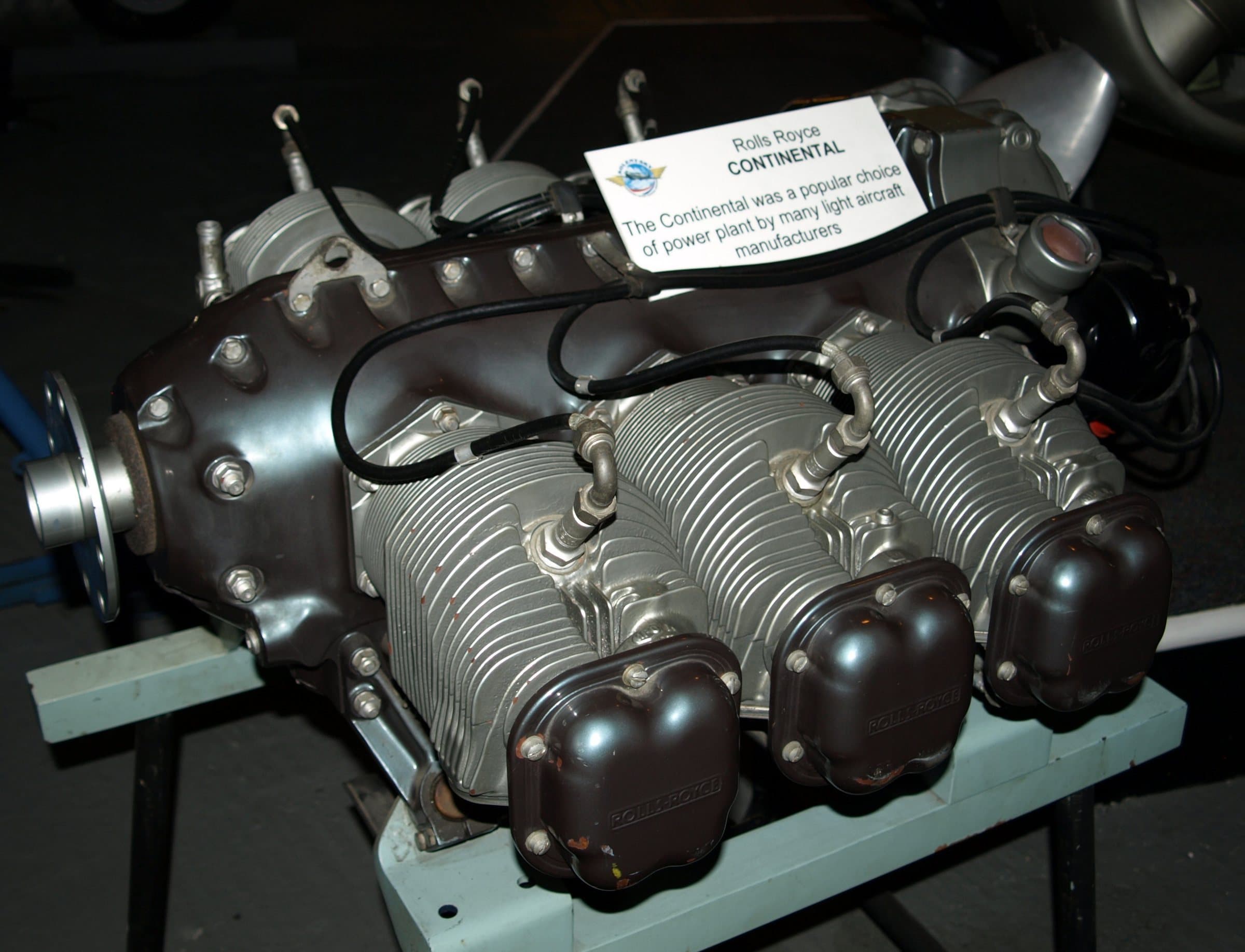
In October 1960 Continental Motors and Rolls-Royce announced an agreement to manufacture and market each other's light-aircraft engines in designated regions of the world. It was a long arrangement, it remained in force until 1 January 1981, and its most visible product was an American flat six carrying a British name. Rolls-Royce built the O-300 at Derby between 1960 and 1965 under licence from Continental Motors Corporation of Muskegon, Michigan, and the engine was approved in Britain under type certificate 4IN on 2 April 1963.
The arrangement made commercial sense on both sides of the Atlantic. Rolls-Royce had no engine of its own in this class and no wish to design one; British and European light aircraft needed a modern 145 hp powerplant without the dollar cost and import delay of buying American. For Continental, a Derby-built O-300 was a way into a market its own factory could not reach economically, and it came with the most valuable badge in aero-engine manufacture printed on the rocker covers. Aircraft built or assembled in Britain in those years carried Rolls-Royce Continental engines as a matter of course, and the Science Museum Group's collection preserves a Rolls-Royce Continental O-300D of Derby manufacture as an object in its own right.
The licence's best-known aircraft was also its least successful. The Beagle B.218X, a light twin whose construction began at the end of 1961 and which first flew on 19 August 1962, used two 145 hp Rolls-Royce Continental O-300-C engines. It was the only one built. Beagle had overspent on the B.206 and had no money to put the B.218 into production; the design became, in one account, a political football in the strife between the former Miles Aircraft directors and the Beagle board, and it was seen internally as a competitor to the company's own 206. More than 300,000 pounds went into a project for which Beagle had neither a plan nor the capacity. The aircraft was grounded in February 1964, re-emerged on 27 August that year as the B.242X with 195 hp Continental IO-360s in place of the Rolls-Royce O-300s, never entered production either, and was destroyed in a building fire in August 1969.
One detail in the record does not resolve cleanly. Wikipedia's account of the O-300 attributes the limited production of the O-300-E to the Beagle B.218X, while the article on the aircraft names the O-300-C, and the FAA certificate shows the -E was not added to E-253 until 3 April 1963: eight months after the B.218X first flew. The -C attribution is the one consistent with the certification dates, and the -E's small production run is better treated as unexplained than as explained by an aeroplane that had already flown without it.
In service
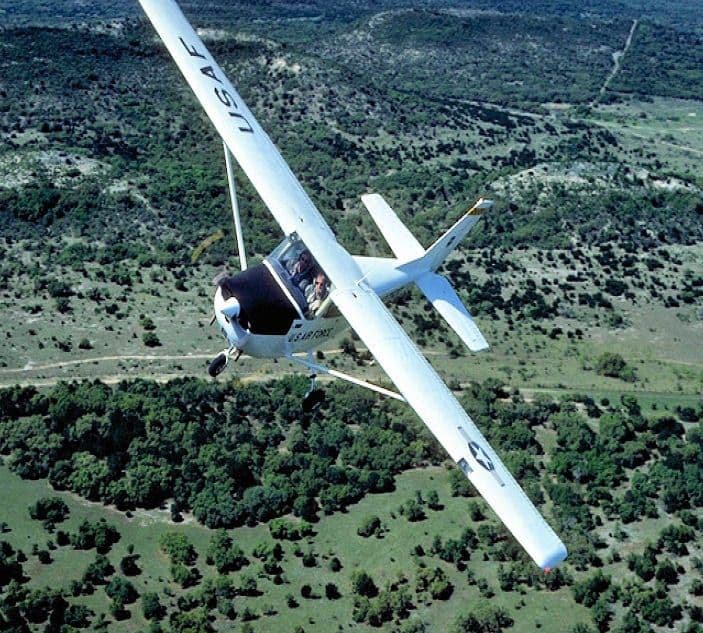
In civil service the O-300 was operated by people with no professional training in engines, and its specification reflects that from end to end. Grade 80/87 came out of a farm pump or a single tank at a grass field. The sump held 2 US gal and was checked with a dipstick. There was one mixture control, one throttle, one carburettor heat lever, and on most airframes a fixed-pitch propeller, so the entire engine management available to the pilot was throttle, mixture and carburettor heat. The certificate's list of approved spark plugs runs to five manufacturers and more than forty part numbers, which is what it looks like when an engine must be maintainable in any hangar in the country.
What the engine asked in return was attention to two things: temperature and valves. Sustained high cylinder head temperature is the mechanism behind nearly every expensive O-300 failure, and it usually traces back to baffles and cowling seals rather than to the engine. Valve guides want inspecting at 100-hour intervals, and reaming when they are found tight. An owner who does those two things gets an engine that reaches its 1,800-hour overhaul without drama; an owner who does neither gets a burnt exhaust valve, and the burnt valve arrives on a climb-out with four people aboard.
The engine's most systematic operator was the United States Air Force. Having decided that primary screening was better done in a light aeroplane than in a jet, the USAF ordered 237 T-41A Mescaleros, militarised Cessna 172Fs, from Cessna in 1964, and the first class, 67-A, began training at Big Spring, Texas in August 1965. For the best part of a decade the first engine an American military pilot ever started was an O-300. The later marks moved away: the T-41B for the Army and the T-41C for the Air Force Academy used the 210 hp Continental IO-360, as did the T-41D supplied under the Military Assistance Program, so the O-300 belongs specifically to the T-41A. More than twenty nations operated T-41s of one mark or another; the Philippines took twenty T-41Ds as late as 2008. From 1993 the USAF began replacing much of its T-41 fleet with the Slingsby T-3A Firefly.
The engine also went on floats, which is where 145 hp begins to feel thin. The 172A of 1960 was the first Skyhawk certified for floatplane operation, the 175A of the same year was approved for seaplane use, and Aeronca had certificated the float-equipped S15AC a decade earlier with structural reinforcement for water work. A four-seat aeroplane on floats at 145 hp is an aeroplane operated with careful attention to load and to water state, and the appetite for the 30 extra horsepower of the geared GO-300 becomes easy to understand.
Reliability and maintenance
The direct-drive O-300 is published with a time between overhauls of 1,800 hours, the geared GO-300 with 1,200. Those two numbers carry most of the family's reputation between them, and the gap is a reduction gearbox's worth of complication and of pilot dependence. In both cases the figure is a manufacturer's recommendation for private operation rather than a hard life, and in practice the engine's condition at any given hour is almost entirely a function of how its cylinder head temperatures have been managed.
The signature defect is a sticking exhaust valve. Carbon accumulates in a valve guide that has closed up slightly through repeated heating and cooling after overhaul, and the valve begins to drag; the symptom is a roughness or a stumble on climb-out, characteristically between 1,500 ft and 2,000 ft above the ground, when the engine is hot and at high power. The diagnosis, as the Swift Museum Foundation's technical archive describes it, is to hold the valve up with rope in the cylinder, remove the keepers and springs, and feel whether the valve drags in its guide or wobbles in it: drag means a tight guide, wobble means a worn one. The proper repair is to pull the cylinder and ream the guide; the field expedient is to spin the valve in place with a drill motor and a lubricant. Owners who inspect at 100-hour intervals rarely meet the problem; owners who do not, meet it on a climb-out.
Exhaust valve leakage is the related and more serious failure, and the archive lists its causes in an order that puts human hands first: insufficient dry clearance between valve tip and rocker, which is what happens after a valve and seat have been ground several times over the years; valve springs that have lost tension; debris under a seat; and, above all, prolonged high cylinder head temperatures traceable to baffle and cowling airflow that is not doing its job. The symptom is a shudder in the 2,200 to 2,400 rpm band, worst in the climb and sometimes relieved by reducing power. A minimum differential compression of 80/60 is the threshold; a leaking exhaust valve is not airworthy at any reading.
The certificate sets the limits the whole discussion turns on: a maximum permissible cylinder head temperature of 274 °C, cylinder barrel 143 °C, and oil inlet 107 °C, the last raised to 116 °C when running the heavier oils under the MHS-24 specification. Longer-term, the structure itself sets the outer bound: steel cylinders are commonly topped around 1,000 hours, and Continental's own service history includes a corrective bulletin, CSB98-1B, covering defective valves and premature wear attributed to assembly methods. The engine's reputation, taken as a whole, is of a powerplant that is honest rather than tough: it tells you what is wrong, it does so early, and it punishes an owner who does not listen.
Upgrades
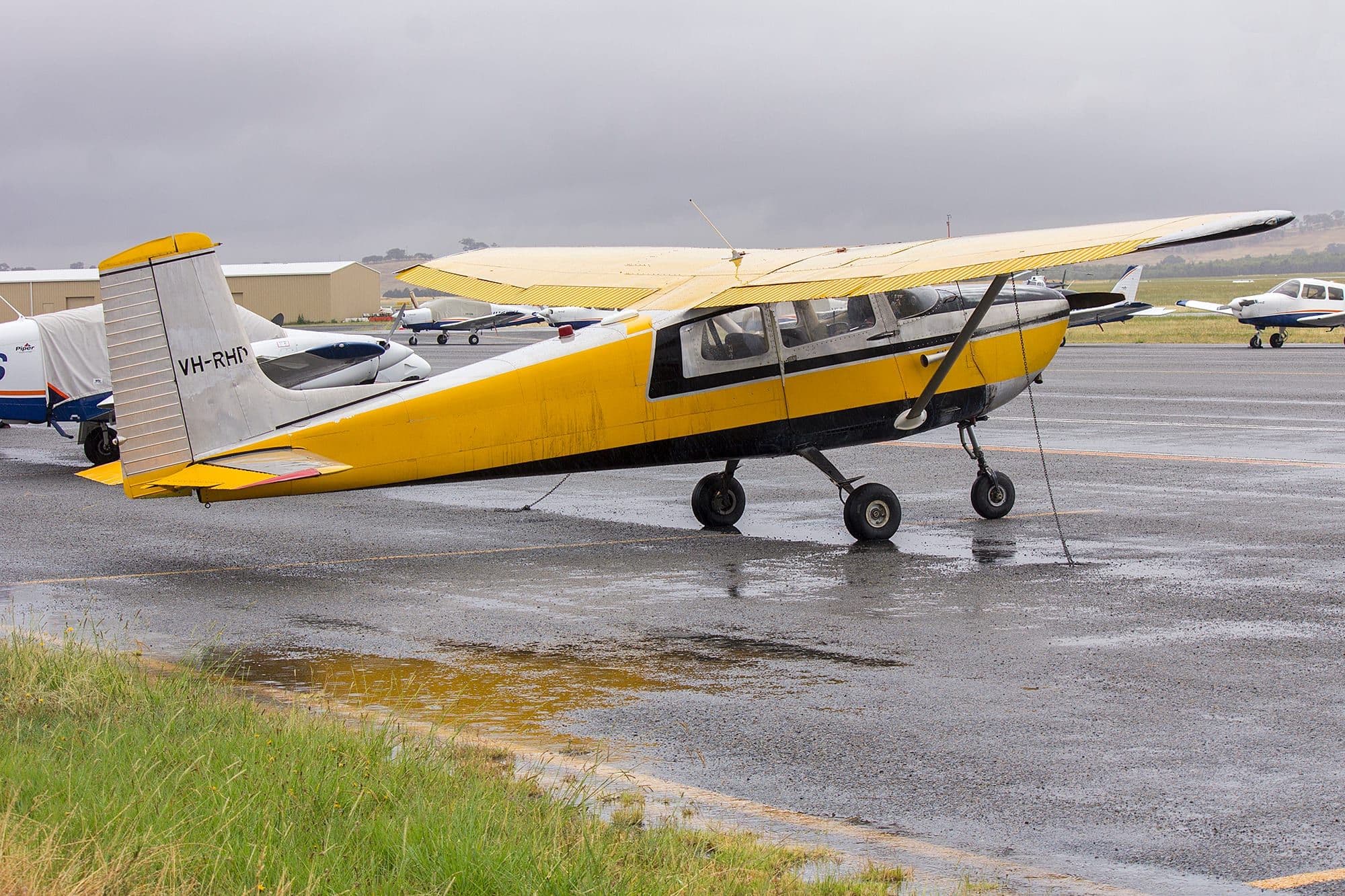 GO-300
The most consequential thing ever done to the O-300 was to put a gearbox on it. The GO-300, certificated as Type Certificate 298 on 6 December 1957, runs the same bore and stroke at 3,200 rpm and drives the propeller at 2,400 through a 0.750:1 reduction gear, producing 175 hp for take-off and maximum continuous alike. Compression rises slightly to 7.3:1, the carburettor becomes a Marvel-Schebler MA-4-5, the sump grows to 2.5 US gal, oil pressure runs 30 to 60 psi, and the crankshaft gains six third-order dampers, a different set of torsional problems for a different rotational speed. Dry weight rises to 312 lb or 318 lb depending on mark. The variants run -A through -F, and their differences are again almost entirely about installation: hydraulic propeller provisions, a shortened oil filler neck, a different starter drive, a governor pad.
Cessna's reason for wanting it was arithmetic. The company had a gap between the 145 hp 172 and the 230 hp 182, and a geared O-300 filled it with 30 hp more than the 172 for very little extra weight or frontal area. The Cessna 175 first flew on 23 April 1956, entered the 1958 model year, and sold 2,106 or 2,108 aircraft in five seasons before the designation was dropped in 1962. Then the engine's reputation collapsed, and it collapsed for a reason that had almost nothing to do with the engine: pilots trained on direct-drive engines cruised the 175 in the 2,300 to 2,700 rpm band that felt right to them, which on a geared engine is far too slow. Below about 2,500 rpm the GO-300 does not make enough oil pressure to lubricate and cool itself properly, and the reduction gear meets harmonic vibration. The aircraft's own handbook, which listed cruise settings down to 2,400 rpm, cannot have helped. The verdict is written in the fleet: the 175 acquired a poor name for engine reliability, many were re-engined with larger direct-drive engines, and yet nearly 90 per cent of the survivors still fly behind their original GO-300s.

One GO-300 variant had a life outside light aeroplanes. The GO-300-F, added on 5 December 1963, incorporates provisions for pusher operation and for propeller reversing: precisely the combination an airship needs. Goodyear's GZ-19 Mayflower, first flown on 25 February 1959, and the rebuilt GZ-19A of 1963 both flew on two 175 hp Continental engines, cruising at around 53 kt, and spent their working lives over American cities as advertising and camera platforms.
The family's last technical adventure was liquid cooling. From 1980 Teledyne Continental Motors evaluated liquid-cooled cylinders for future general aviation engines, and in 1984 the concept was chosen for Burt Rutan's Voyager, the aircraft that flew round the world non-stop in 1986; the patented lightweight liquid-cooled cylinder assembly promised better cooling, less cooling drag, lower fuel consumption, longer life and the high-altitude capability that mission demanded. The six-cylinder member of that family, variously designated Voyager 300, OL-300 and IOL-300, was fuel-injected and liquid-cooled and gave 170 hp at 2,700 rpm from the O-300's displacement. It was built and run between 1987 and 1991, was offered for the Alexeev Strizh, and was never type-certificated. The O-300's own architecture, unmodernised, outlived its modern replacement by decades.
Applications
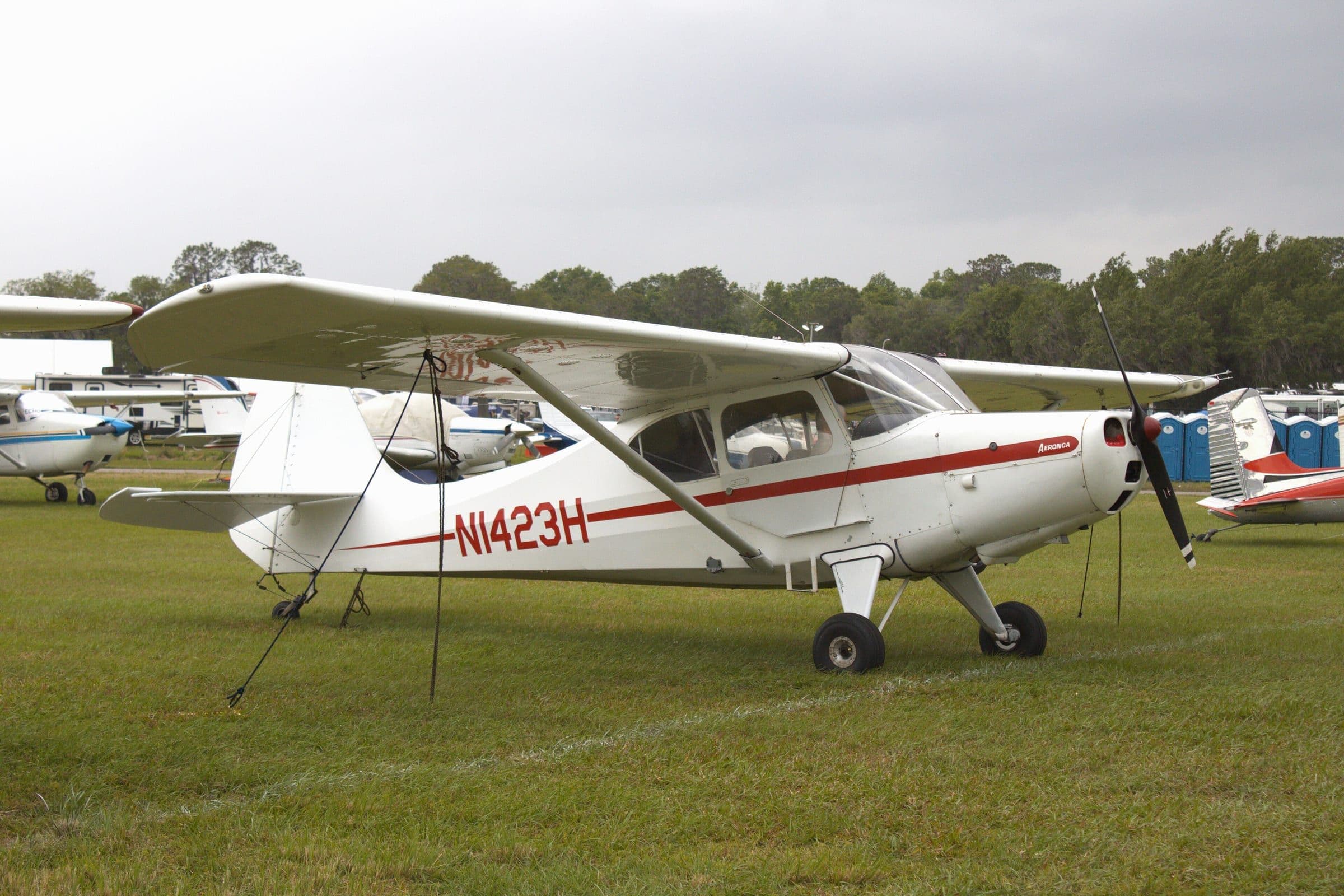
Cessna is most of the story. The 170, built from 1948 to 1956 in 5,174 examples, was the C-145's first home: a four-seat all-metal high-wing taildragger developed from the two-seat 140, with fabric wings and a V strut on the first model, all-metal wings and a single strut on the 170A of 1949, and the Fowler-type slotted flaps and dihedral outer wing of the 170B from 1952. In 1956 Cessna replaced it with the 172, which was essentially a 170B with a nosewheel and a square fin, and the O-300 carried straight across. The 172 used the O-300-A from 1956, the O-300-C in the 172A of 1960, the first 172 certified for floats, the O-300-D in the 172B of 1961, and Continental power through the 172H of 1967. A model designated Cessna 160 was intended for production and not built.
The geared branch had its own Cessna. The 175 of 1958 to 1962 used the GO-300-A, -C, -D and, in the 175C Skylark of 1962 with its constant-speed propeller, the GO-300-E. Its variants track the engine closely: the 175A of 1960 added seaplane approval and the deluxe Skylark trim, the 175B of 1961 an electric starter and vacuum system, the 175C a higher gross weight. The 175D was a prototype only and reappeared as the P172D, sold as a 172 rather than a 175: a quiet admission of what the Skylark name had come to mean.
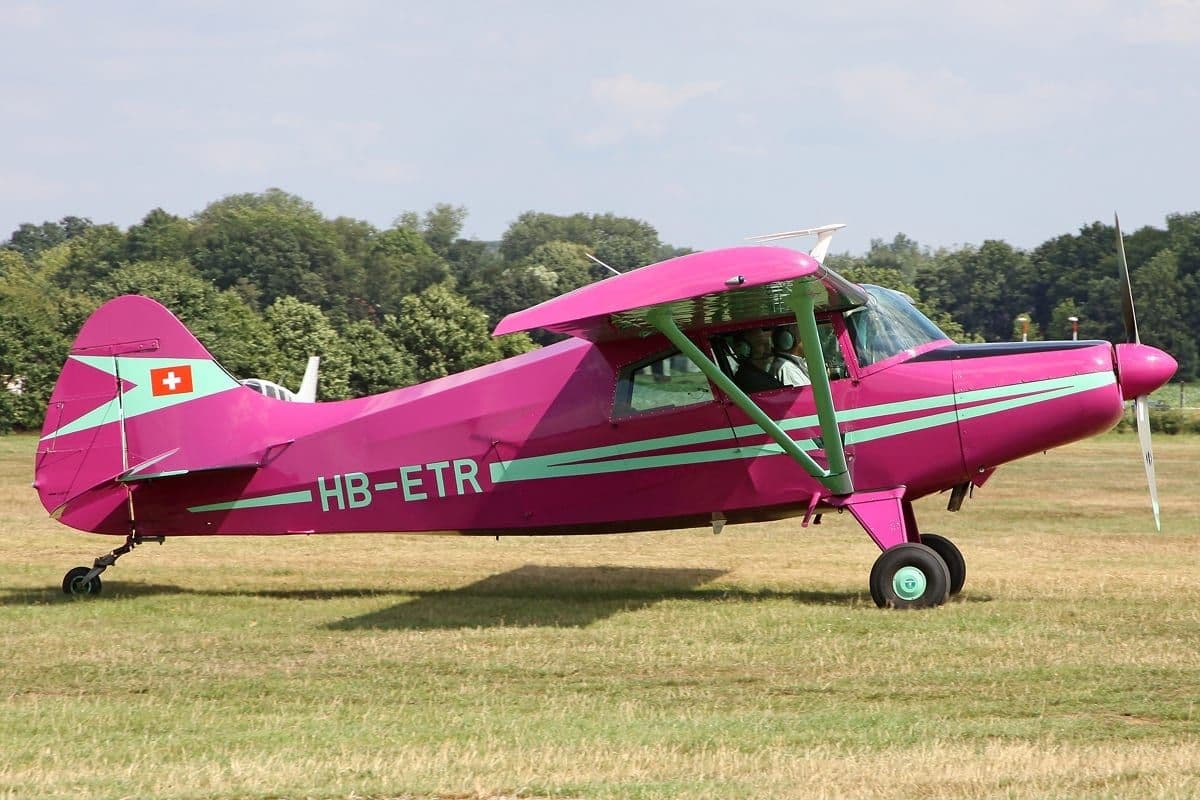
Beyond Wichita, the C-145 and O-300 powered a scattering of programmes that together describe the American light-aircraft industry of the 1950s. The Aeronca 15AC Sedan, 561 built from 1948 to 1951 with the C-145-2 or O-300-A, went into commercial bush flying and agricultural work and was certificated on floats as the S15AC. B. D. Maule's prototype of February 1957, the Bee Dee, and the production M-4 Jetasen both used a 145 hp O-300-A before the line moved to Franklin and Continental IO-360 engines. The Meyers MAC-145, the Taylorcraft 15 Tourist, the Temco TE-1A Buckaroo and the Baumann Brigadier all took the engine. So did the Cessna T-41A Mescalero, the military 172 on which the United States Air Force's pilot candidates first flew.
Two applications sit outside aeroplanes altogether. Goodyear's GZ-19 airship Mayflower, first flown on 25 February 1959, and its 1963 rebuild as the GZ-19A, both flew on two 175 hp Continental engines: the geared engine's pusher and reversing provisions being exactly what an airship's car requires. And the liquid-cooled Voyager 300 was offered for the Alexeev Strizh, the only recorded application of a member of this family that was never certificated. The pattern across all of them is consistent: the O-300 was the engine you chose when you wanted four seats, a fixed-pitch propeller, a grass strip and no surprises.
Records
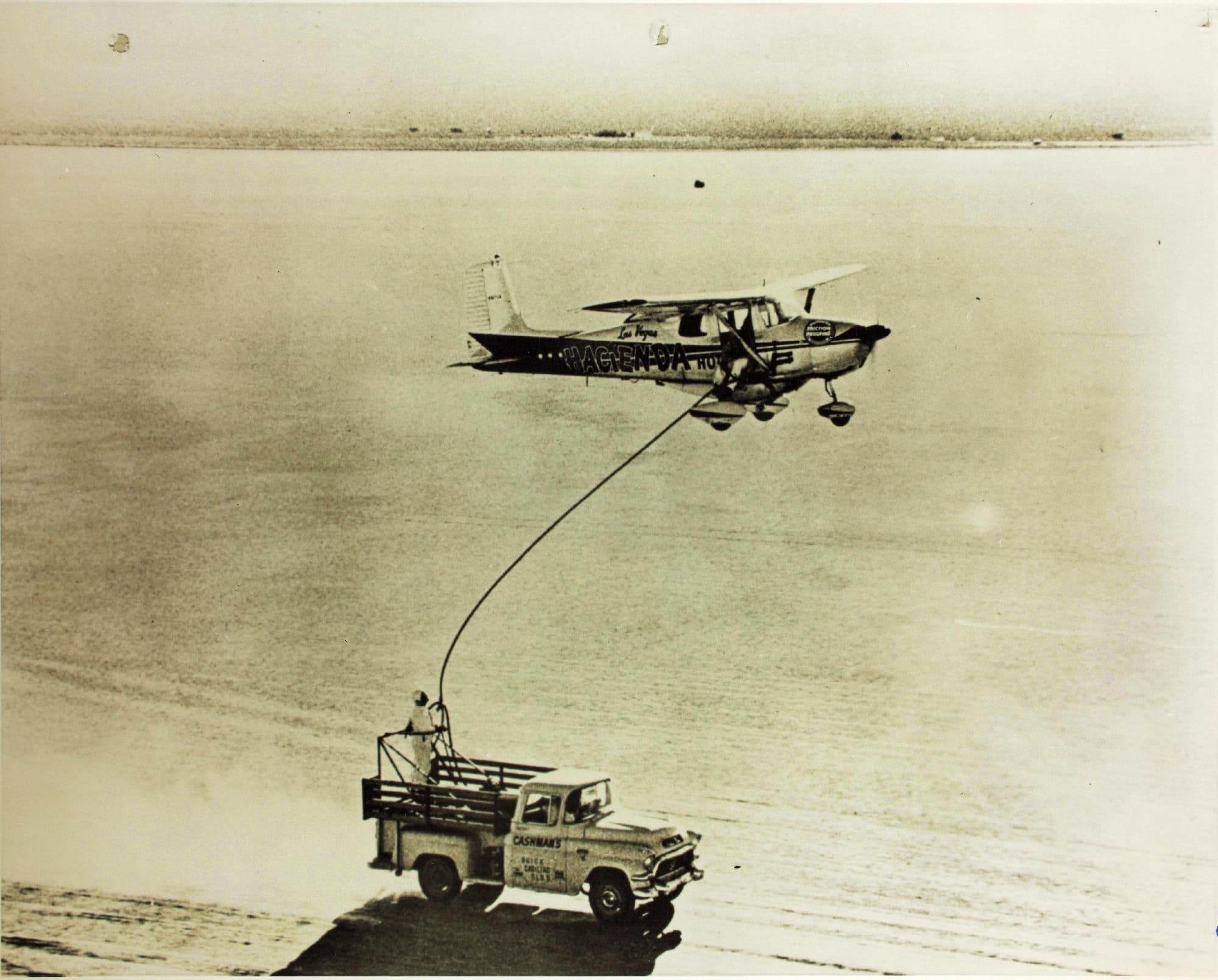
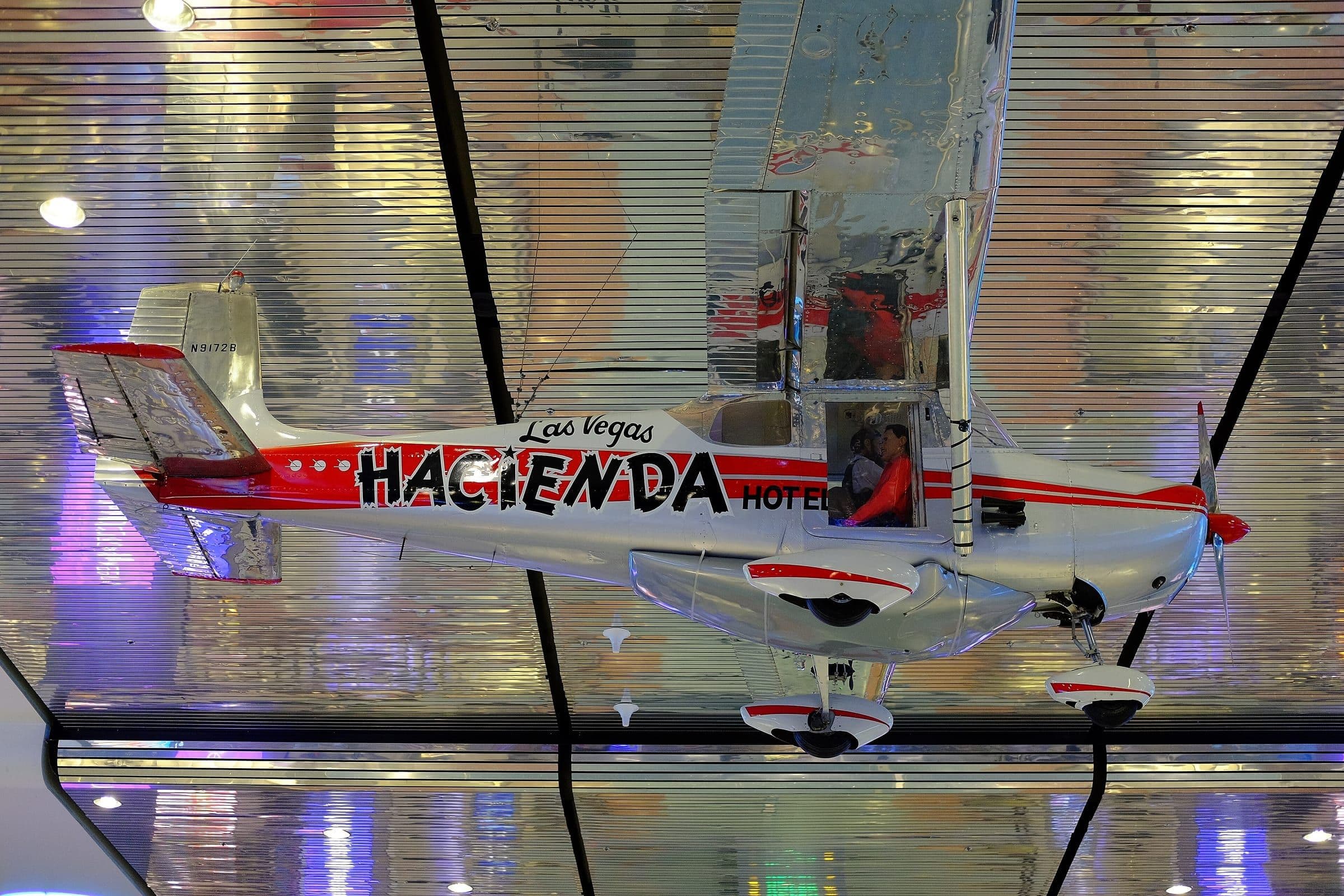
On 4 December 1958 a Cessna 172, registration N9172B, took off from Las Vegas with Robert Timm and John Cook aboard. It landed on 7 February 1959, having been airborne for 64 days, 22 hours, 19 minutes and 5 seconds and covered an estimated 130,000 nm, about six times round the Earth, without once leaving the Mojave. The engine, an ordinary production Continental, was never shut down. The record has not been beaten.
The flight was an advertisement. The Hacienda, the first family-oriented hotel-casino in Las Vegas, had been built by Judy and Warren "Doc" Bailey in 1956, and Timm, a slot-machine mechanic on the Hacienda's staff, suggested that Bailey sponsor an endurance attempt. Continental supplied an engine described as special, which by one account was a standard factory unit selected by a secretary and promoted to uniqueness by the act of being chosen. The real preparation was mechanical: the mechanic Irv Kuenzi built a plumbing system through the firewall so that oil and oil filters could be changed while the engine ran, and a 95 US gal belly tank was fitted beneath the aeroplane.
Refuelling was the theatre of the thing. The Cessna flew at about 56 kt matched to a truck racing along a desert road below; one crewman stood on an external platform working a winched fuel line, and the transfer took roughly three minutes. They did it some ninety-three times. The rest of the flight was attrition. Earlier attempts had repeatedly burnt exhaust valves, though Jim Heth and Bill Burkhart's identical Cessna had no such trouble. Timm believed periodic alcohol injection into the cylinders would hold carbon down; Kuenzi disagreed and quietly disabled the system. On 12 January, day thirty-nine, the generator failed, taking the radio, the cabin heat and the lights with it and leaving the belly tank to be hand-pumped for the remaining four weeks. The fuel gauges stopped working. Then the tachometer died altogether, which meant flying an engine for weeks with no direct indication of its speed.
By late January the accumulated carbon had cost enough power that climbing with a full fuel load was becoming difficult, and on 7 February they landed because, as the account has it, the engine could take no more. It had run for more than 1,550 hours without stopping, on an airframe that had only 450 hours on it when the flight began. The aeroplane survives: N9172B hangs on display at the Las Vegas airport, now Harry Reid International, where it has been seen by rather more people than ever looked at a Continental O-300 on purpose. Nothing else in the engine's history says as much about it. It was not a powerful engine or an advanced one, but it was the kind of engine that could be asked to run for two months and would.
Preservation
The O-300 is preserved in two different ways, and the less obvious one matters more. Museums hold examples as objects: the Aviation Museum of Central Finland has an O-300-D on a stand, Solent Sky at Southampton displays a Rolls-Royce-built engine, and the Science Museum Group's collection includes a Rolls-Royce Continental O-300D of Derby manufacture, catalogued with its licence origin (Continental Motors Corporation of Muskegon, Michigan) recorded as part of what the object is.
The airframes are preserved too, and one of them is a destination. N9172B, the Cessna 172 that stayed airborne for 64 days in the winter of 1958-59, hangs in the terminal at Harry Reid International Airport in Las Vegas, which was still called McCarran when the photograph on this page was taken in 2019. It is an unusual kind of monument: an aeroplane displayed not for what it was but for what its engine did.
The living preservation happens in workshops and type clubs. The International Cessna 170 Association and the Cessna 175 community carry the operating knowledge that the manuals never contained, and the Swift Museum Foundation's technical archive preserves, in the form of answers to owners' questions, a detailed account of how C-125, C-145 and O-300 valves, guides, pushrod tubes and cylinders actually behave and what the part numbers mean. That body of practical knowledge is the reason a seventy-year-old engine remains a reasonable thing to own.
What is not preserved is the factory. Continental Aerospace Technologies' current certified avgas catalogue covers the 200, 300, 400 and 500 series (O-200, IO-240, IO-360, IO-370, O-470, IO-520, IO-550) and contains neither the O-300 nor the GO-300. Support for the family now runs through overhaul shops, the aftermarket cylinder manufacturers and the commonality with the still-produced O-200. That is a functioning arrangement rather than a comfortable one, and it is the arrangement under which most of the piston fleet of the 1950s survives.
Legacy
The O-300 lost its argument in 1968. That year's Cessna 172I arrived with a 150 hp Lycoming O-320-E2D: four cylinders instead of six, less weight, a shorter installation and lower fuel consumption for slightly more power. The six-cylinder flat engine never returned to the 172, and the 172 went on to become the most-produced aeroplane in history without it. It is a clean illustration of how light-aircraft engines are actually chosen: not on smoothness or on character, but on installed weight and cost per hour.
What the engine left behind is more durable than its own production run. The cylinder it used is the O-200's cylinder, and the O-200 went back into production in 2004 to serve the light-sport category and is still being built; parts commonality with a live production engine is the single most important reason an O-300 can still be overhauled economically in the 2020s. The type certificate, 253, issued in December 1947, remains the document under which these engines are maintained, having survived Continental's move from Michigan to Alabama, its purchase by Teledyne, its sale to AVIC and its renaming as Continental Aerospace Technologies.
The geared GO-300 left a lesson rather than a legacy, and it is one the industry has had to relearn repeatedly. An engine that requires a different operating technique from the one pilots already have will be operated with the technique they already have. Cessna sold the 175 to buyers stepping up from 172s and did not succeed in teaching them that 2,300 rpm, a perfectly sensible cruise setting on the engine they came from, was below the speed at which this one lubricates and cools itself. The engine got the blame, the aeroplane got the reputation, and the model line was quietly renamed. Nothing about the GO-300's metallurgy was at fault.
The broader legacy is the fleet. Thousands of O-300s are still flying, in Cessna 170s and early 172s and the surviving 175s, in Aeronca Sedans and Maules, largely in private hands and largely on the same grass strips. The engine has now been in service for nearly eighty years, longer than most of the aircraft it was designed for existed as production lines. It was never the best engine of its generation by any measurement anyone applied to it. It was the one that was there, in enormous numbers, when private flying became something an ordinary family could contemplate.
Output by altitude
A piston engine has no single power figure. Each rating below is what the sources publish for one mark under one set of conditions, at the altitude it was measured at.
| Mark and conditions | Altitude | Output |
|---|---|---|
| Take-off, five minutes, full throttle at sea level2,700 rpm · 80/87 octane | Sea level | 145hp |
| Maximum continuous, full throttle at sea level2,700 rpm · 80/87 octane | Sea level | 145hp |
| GO-300, take-off and maximum continuous at sea level3,200 rpm · 80/87 octane | Sea level | 175hp |
Mark evolution
C145-2
1947145 hpThe original engine of the family, type-certificated on 5 December 1947 under Type Certificate 253.
Developed from the 125 hp C-125 by lengthening the piston stroke, raising compression to 7.0:1 and rejetting the carburettor. The four-seat light aeroplane needed more than 125 hp.
C145-2H
1949145 hpCrankcase and crankshaft provisions for a hydraulically controllable propeller driven from engine oil pressure.
C145-2HP
1953145 hpA special crankcase and front main bearing making the engine eligible for pusher installation.
- O-300-A
The rear of a Continental O-300-A in 2014, the face that carries the magnetos, starter and accessory drives O-300-A
1954145 hpThe C145-2 under the new displacement-based designation, added to the certificate on 12 May 1954.
Parts material and ignition component substitutions; dimensions, compression and output unchanged.
O-300-B
1955145 hpHydraulic propeller control provisions, as the C145-2H had.
O-300-C
1959145 hpA different propeller flange, an ARP502 Type I flange in place of the earlier SAE-AS127 No. 3.
- O-300-D
A Continental O-300-D on a stand at the Aviation Museum of Central Finland, 2012, showing the whole engine from the front left O-300-D
1960145 hpProvisions for a right-angle automatic-engagement starter drive incorporating a vacuum pump drive.
O-300-E
1963145 hpA governor drive pad and crankshaft passages to supply governor oil to the propeller. Built in small numbers.
GO-300-A
1957175 hpThe geared branch: 3,200 crankshaft rpm driving the propeller at 2,400 through a 0.750:1 reduction gear. Type Certificate 298, 6 December 1957.
Reduction gearbox, compression raised to 7.3:1, Marvel-Schebler MA-4-5 carburettor, larger sump, six third-order crankshaft dampers. Cessna wanted 30 hp more than the 172 for the aircraft that became the 175.
Poorly received, largely because pilots trained on direct-drive engines cruised it below the speed at which it makes oil pressure and cools itself.
GO-300-B
1958175 hpProvisions for hydraulic propeller control.
- GO-300
A Cessna 175 Skylark at Wagga Wagga in 2016, one of the aircraft still flying behind the geared GO-300 GO-300-C
1959175 hpReduced height of the oil filler neck and breather tube assembly.
GO-300-D
1960175 hpRight-angle automatic-engagement starter drive with a vacuum pump drive.
GO-300-E
1961175 hpThe -D with hydraulic propeller control provisions; the engine of the constant-speed 175C Skylark.
The Goodyear airship Mayflower near Miami around 1967, flying on two 175 hp Continental engines GO-300-F
1963175 hpProvisions for pusher operation and propeller reversing. The combination an airship's engine car requires.
Voyager 300 (OL-300 / IOL-300)
1987170 hpA liquid-cooled, fuel-injected six developed from the O-300, run between 1987 and 1991 and never type-certificated.
Teledyne Continental's patented lightweight liquid-cooled cylinder assembly in place of air cooling, plus fuel injection; 170 hp at 2,700 rpm. Better cooling, less cooling drag, lower fuel consumption, longer life and the high-altitude capability the Rutan Voyager programme demanded.
- Certified AvGas Engines, Continental Aerospace Technologies
- Type Certificate Data Sheet No. E-253 — Continental C145-2, -2H, -2HP; O-300-A, -B, -C, -D, -E (Revision 19, 1 November 2011), Federal Aviation Administration
- Type Certificate Data Sheet No. E-298 — Continental GO-300-A to -F (Revision 13, 1 November 2011), Federal Aviation Administration
- Rolls-Royce Continental O-300D light aircraft aero engine, Science Museum Group Collection
- Historic Flight — Timm/Cook Cessna 172 Endurance Flight, 4 December 1958 to 7 February 1959 (catalogue 10_0014841), San Diego Air and Space Museum Archive
- Continental horizontally opposed aircraft engines, Aircraft Engine Historical Society
- Continental C125/C145/O-300 cylinders and valves — Monty the Answer Man archives, Swift Museum Foundation
- Design and Development of the Voyager 200/300 Liquid Cooled Aircraft Engine (SAE Technical Paper 871042), SAE International
- UL94 unleaded avgas — eligible aircraft and engines, Swift Fuels
- Endurance Test, Circa 1958, Aircraft Owners and Pilots Association
Checked September 25, 2026