History
Breaking the Sound Barrier
October 14, 1947
Muroc Army Air Field, Mojave DesertCalifornia, United States
Mach 1.06
Speed reached
50
Flight number
1
Pilot
The flight
- Date
- 14 October 1947
- Aircraft
- Bell X-1, 46-062
- Name
- Glamorous Glennis
- Pilot
- Capt. Chuck Yeager
- Launch
- Dropped from a B-29
- Speed
- Mach 1.06
- Landing
- Glide to the dry lake bed
The aircraft
- Engine
- Reaction Motors XLR-11 rocket
- First discussed
- December 1944
- First glide flight
- 19 January 1946
- First powered flight
- 9 December 1946
- Where it is now
- National Air and Space Museum
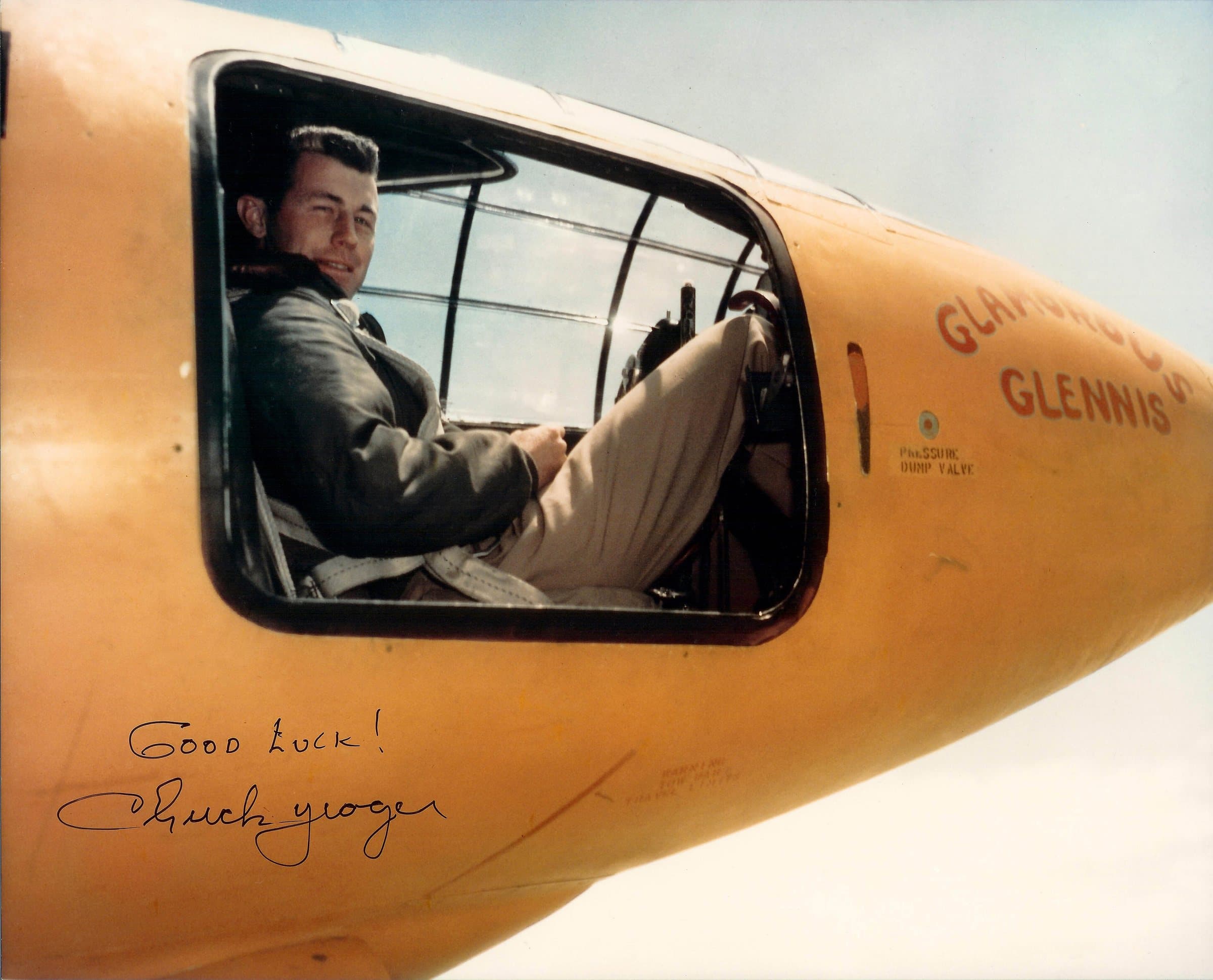
On 14 October 1947, over the Mojave Desert, Captain Chuck Yeager dropped from the bomb bay of a B-29 in the rocket-powered Bell X-1 and reached Mach 1.06, the first manned supersonic flight. The aircraft he flew, number 46-062, he had named Glamorous Glennis for his wife.
The first manned supersonic flight took place on 14 October 1947, over the Mojave Desert in California, less than a month after the US Air Force became a separate service. Captain Charles "Chuck" Yeager flew aircraft 46-062, which he had named Glamorous Glennis after his wife. Dropped from the bomb bay of a B-29, the rocket-powered X-1 reached Mach 1.06; when the engine burned out, Yeager glided down to the dry lake bed. It was the fiftieth flight of the programme.
Background
Britain had tried first. In 1942 the Ministry of Aviation began a secret project with Miles Aircraft to build an aircraft capable of passing the speed of sound, and its chief aerodynamicist designed an all-moving tailplane for it. Three prototypes were ordered in 1944, but the M.52 was cancelled in February 1946, with its first flight expected that summer; a model of the design reached Mach 1.38 in level flight on 10 October 1948. In September 1946 a tailless DH 108 broke up at Mach 0.875 while practising for a speed record.
The machine
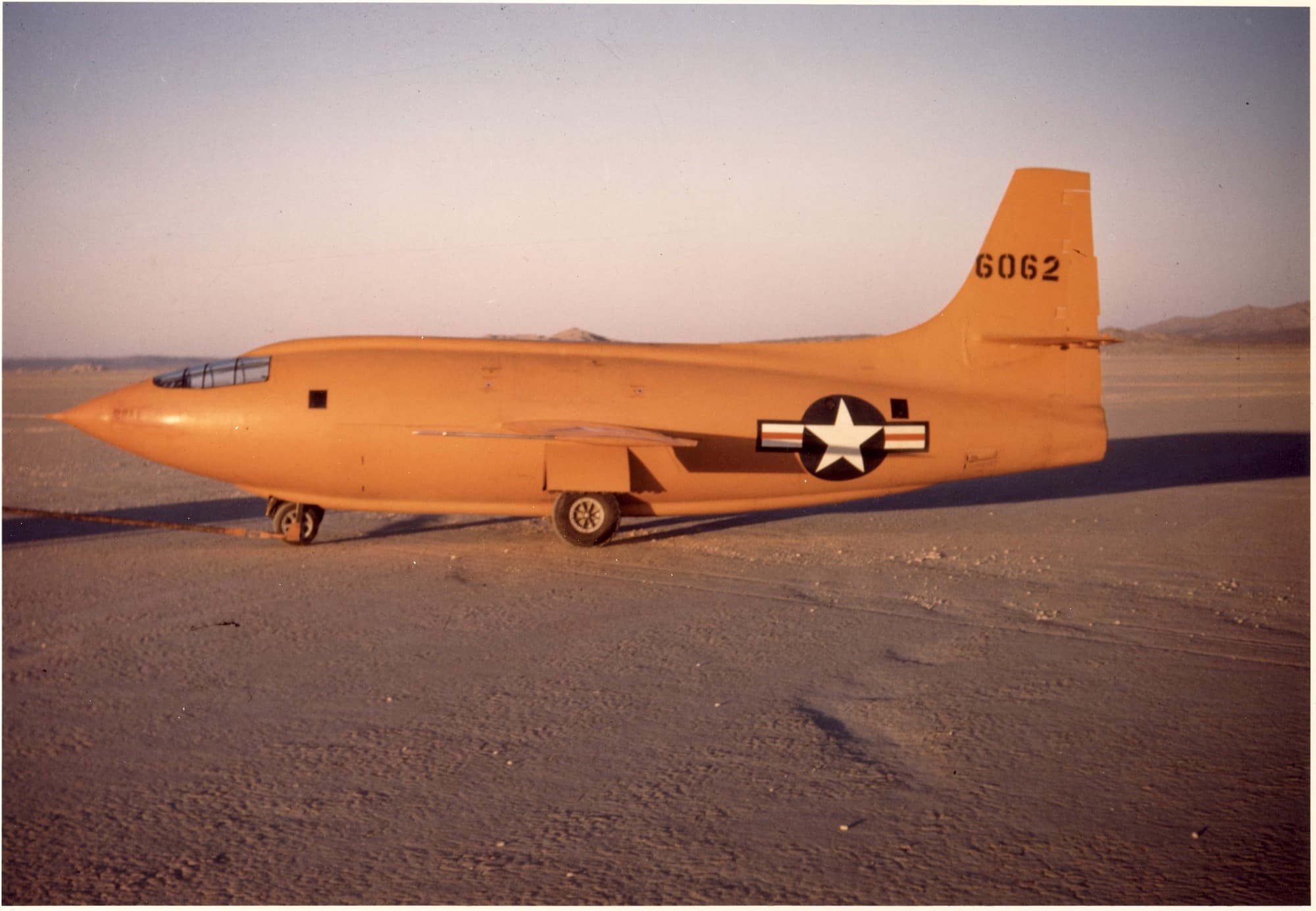
The XS-1 was first discussed in December 1944. It was meant to take off from the ground, but the end of the war freed a B-29 Superfortress to carry it aloft instead. Its first glide flight was over Pinecastle, Florida, on 19 January 1946, and its first powered flight on 9 December 1946 at Muroc.
In October 1947 Yeager ran out of elevator authority at Mach 0.94, which took the team by surprise until they realised that the horizontal stabiliser could still be moved: the control that carried the aircraft through Mach 1.
Legacy
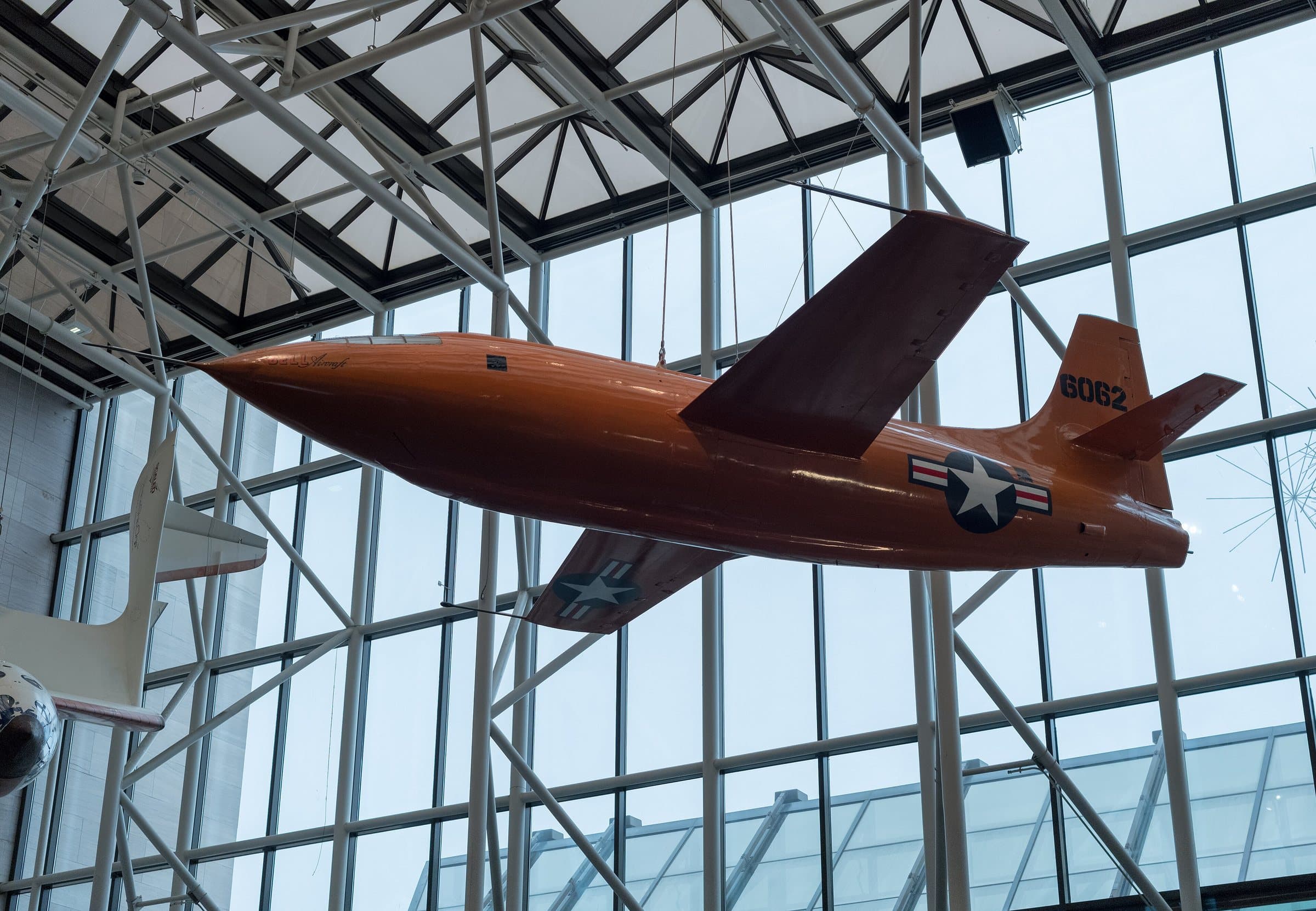
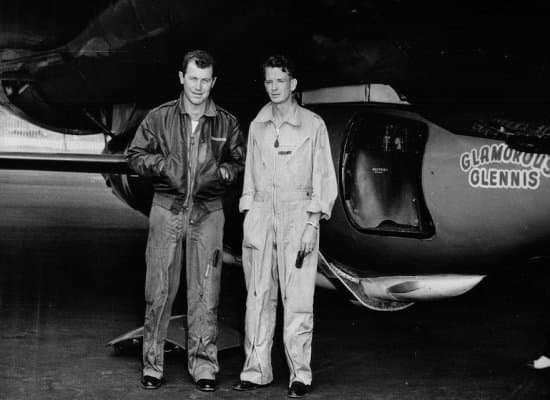
The three main participants in the X-1 programme received the Collier Trophy of the National Aeronautics Association in 1948 and were honoured at the White House. A later development with more fuel, the X-1A, exceeded 1,600 mph in 1954. Glamorous Glennis hangs today in the National Air and Space Museum in Washington.
Who was there
- Chuck Yeager1923 to 2020
- PilotThe US Air Force captain who flew the first supersonic flight.
- Jack Ridley
- Flight test engineerWorked out that the moving horizontal stabiliser could give control when the elevator lost authority near Mach 1.
Related entries
- Bell X-1, Wikipedia
Checked September 20, 2026