Airline
British Airways
BA · BAW · SPEEDBIRDUnited KingdomInternational Airlines Group (IAG)
British Airways Plc
298
Aircraft
In service at December 31, 2025
46.3M
Passengers
in 2025
Identity
- IATA
- BA
- ICAO
- BAW
- Callsign
- SPEEDBIRD
- Founded
- March 31, 1974
Company
- Legal name
- British Airways Plc
- Headquarters
- Waterside, Harmondsworth, near London Heathrow Airport
- Country
- United Kingdom
- Parent
- International Airlines Group (IAG)
- Status
- Operating
Network
- Alliance
- oneworld, founding member (1999)
- Load factor
- 83.8 %
Hubs and bases
London HeathrowLHR
Hub
London GatwickLGW
Secondary hub
London CityLCY
Base
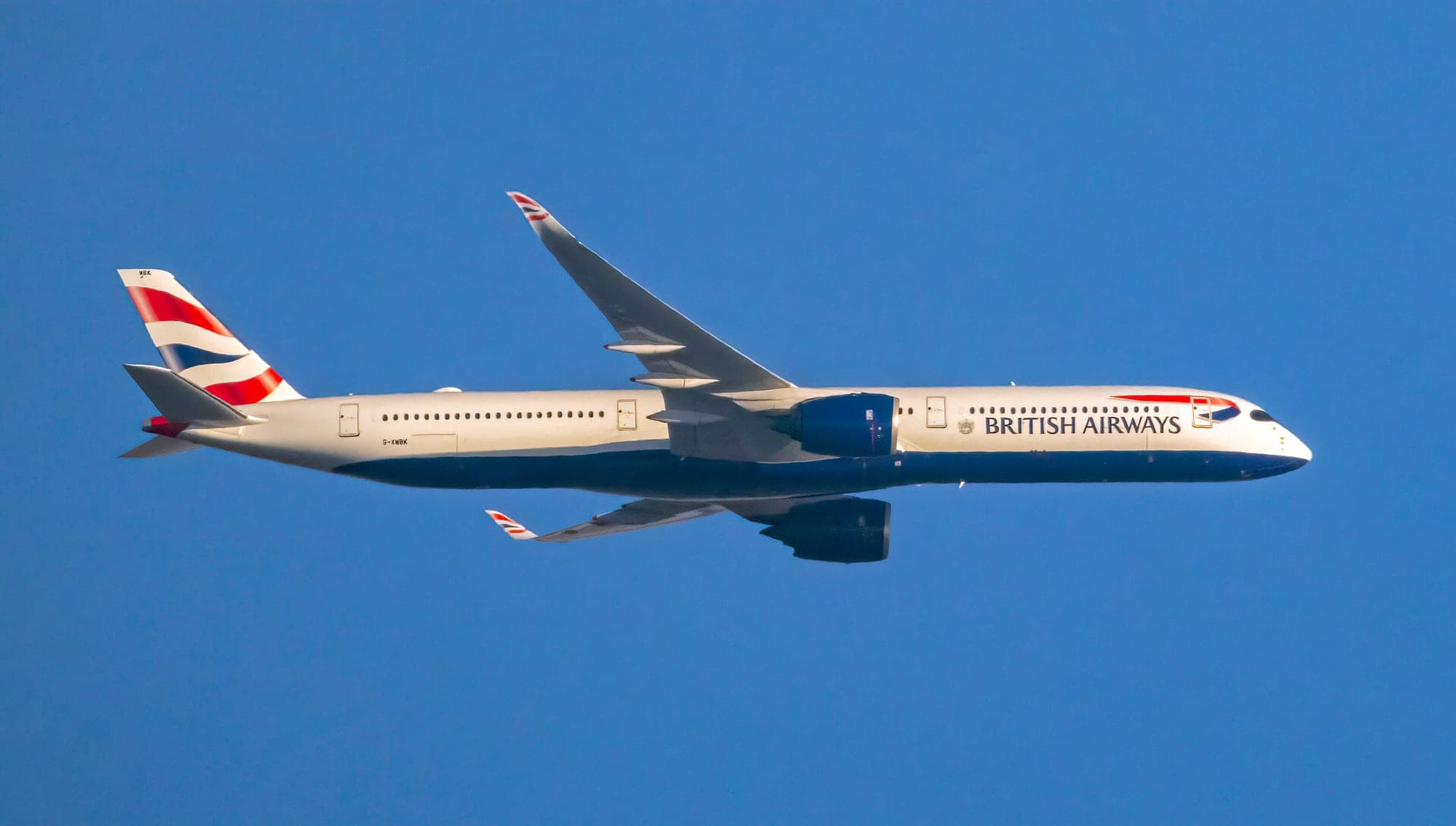
British Airways is the flag carrier of the United Kingdom and, by passengers carried, the largest airline in the International Airlines Group, the Anglo-Spanish holding company it formed with Iberia in 2011. It flies as BA, is known to air traffic control by the ICAO designator BAW, and answers on the radio to SPEEDBIRD, a callsign it inherited from the Imperial Airways of the 1930s. Its operation is built around London Heathrow, where it holds the largest share of take-off and landing slots, with a second network at Gatwick and a regional operation at London City.
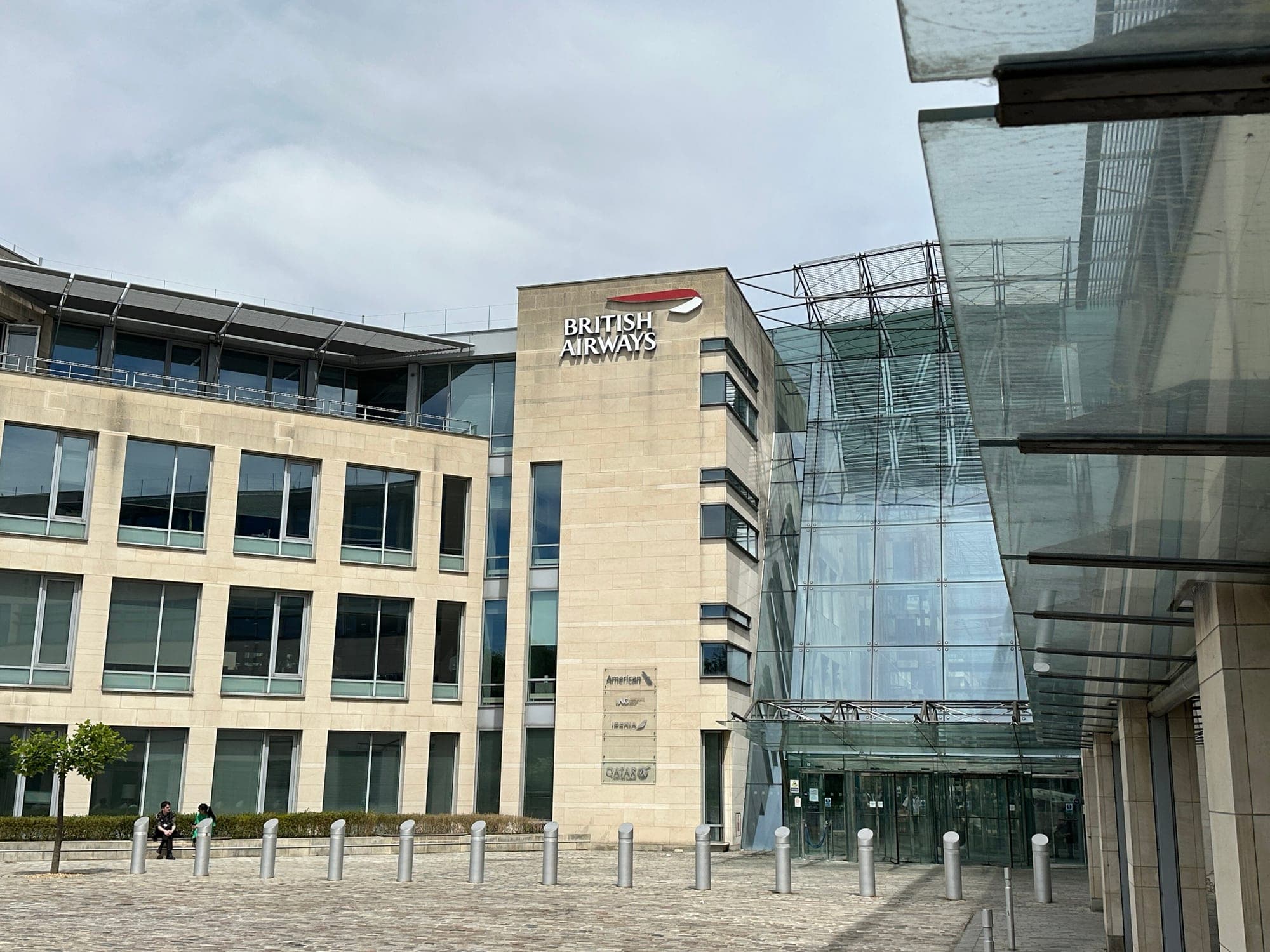
The company in its present form dates only from 1974, when the state-owned British Overseas Airways Corporation and British European Airways were dissolved into a single airline. Its lineage is much older. BOAC was itself the merger of Imperial Airways and a private company already called British Airways, and Imperial Airways had been formed in 1924 from four pioneer carriers, one of which had flown some of the first scheduled international services after the First World War. The airline counts its heritage from 1919 and marked a centenary in 2019.
In 2025, according to its own annual report, British Airways carried 46.3 million passengers with an average load factor of 83.8 per cent and ended the year with 298 aircraft in service across the parent company and its two subsidiaries, BA CityFlyer and BA Euroflyer. Average headcount was just under 42,000. It was privatised in 1987, was a founding member of the oneworld alliance in 1999, and flew Concorde for twenty-seven years, longer than any airline except Air France, with whom it shared the type's entire commercial career.
Formation
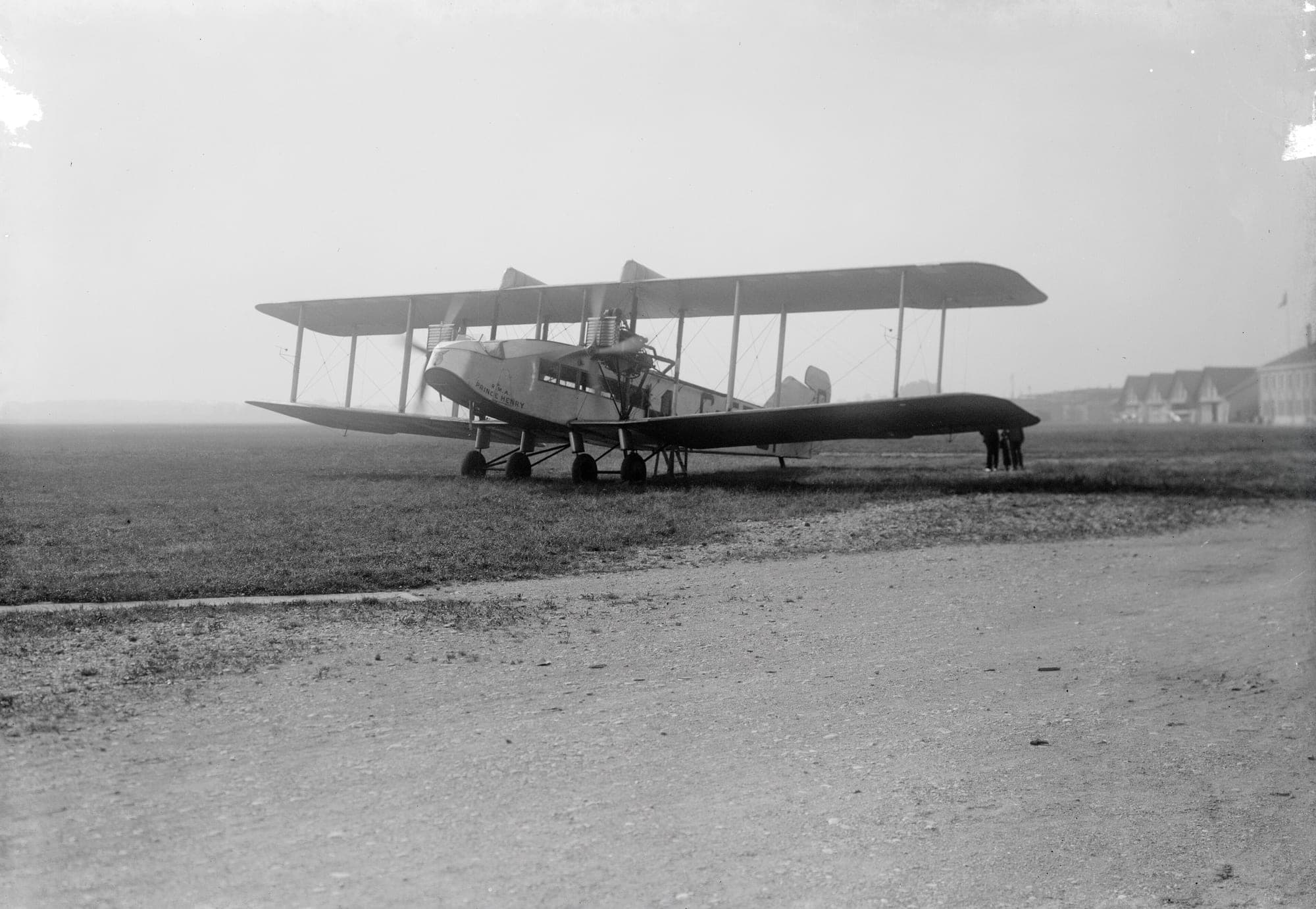
Commercial aviation in Britain began almost as soon as civil flying was permitted again in 1919. Aircraft Transport and Travel opened a daily London to Paris service that August, and within a few years several small companies: Handley Page Transport, the Instone Air Line, Daimler Airway and the British Marine Air Navigation Company: were competing on the short Channel routes against subsidised French rivals. None of them could make money, and a government committee concluded that Britain needed one strong carrier instead of several weak ones.
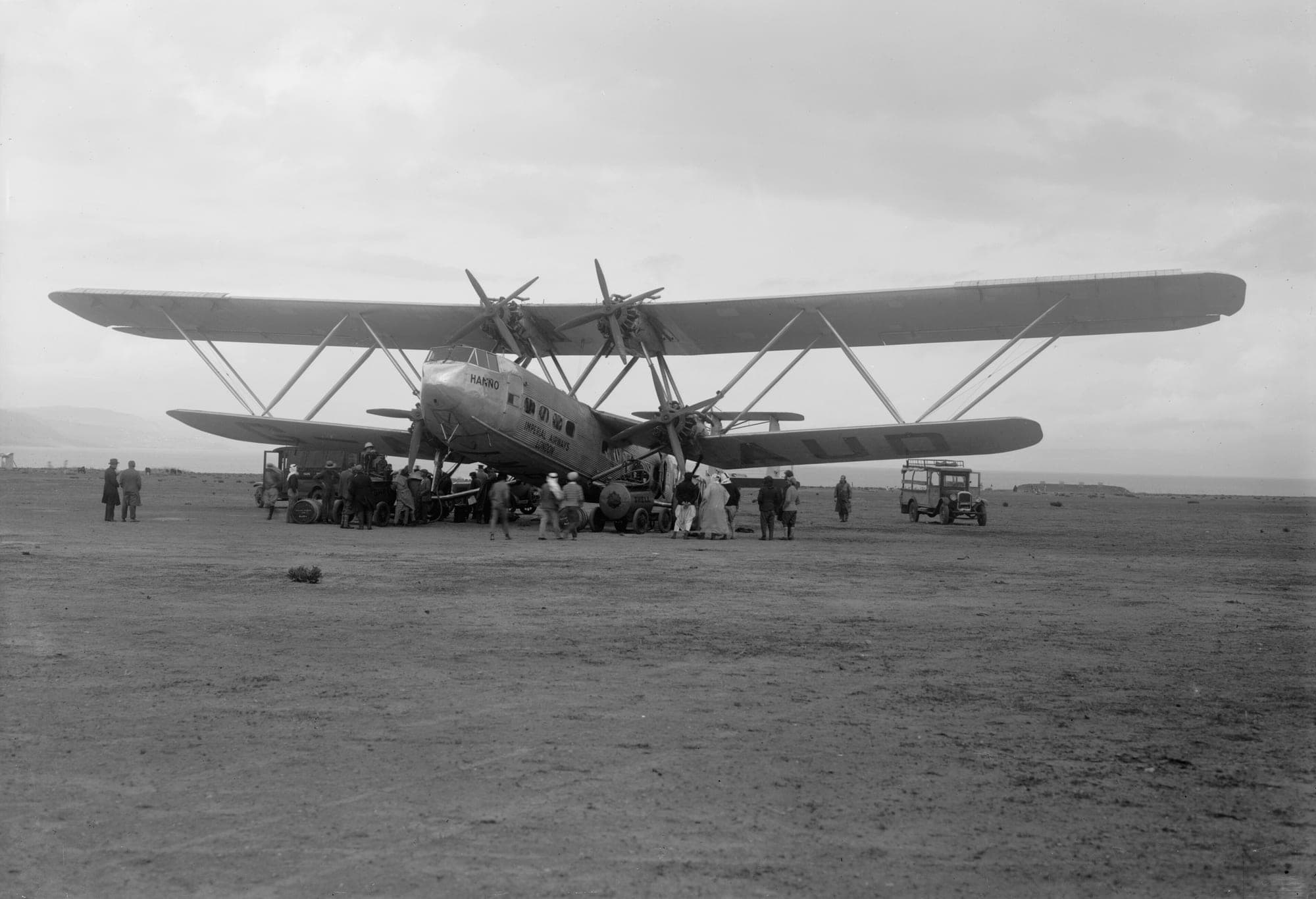
Imperial Airways was the result. Formed on 31 March 1924 from the four surviving companies, with a government subsidy and a brief to develop air routes across the Empire, it became Britain's chosen instrument abroad. Through the late 1920s and the 1930s it built the long trunk routes that defined its era: to Cairo, Karachi and India, down Africa to Cape Town, and eventually to Australia in partnership with Qantas. The aircraft were built for comfort and reliability rather than speed, most famously the stately Handley Page H.P.42 biplanes and, from 1937, the Short Empire flying boats.
Imperial neglected Europe, and in 1935 several independent companies (among them Hillman's Airways, Spartan Air Lines and United Airways) merged into a private rival that took the name British Airways Ltd. It flew modern monoplanes from Heston and then Croydon and Gatwick on European routes, and competed openly with the older airline for government favour.
By the end of the decade Parliament had judged both companies inadequate for what lay ahead. The Cadman Committee of 1938 criticised Imperial's management and equipment, and the government's answer was to nationalise and combine them. The British Overseas Airways Act of 1939 created a single public corporation to take over both, and it began operating on 1 April 1940, with the country already at war.
Nationalisation and reconstruction
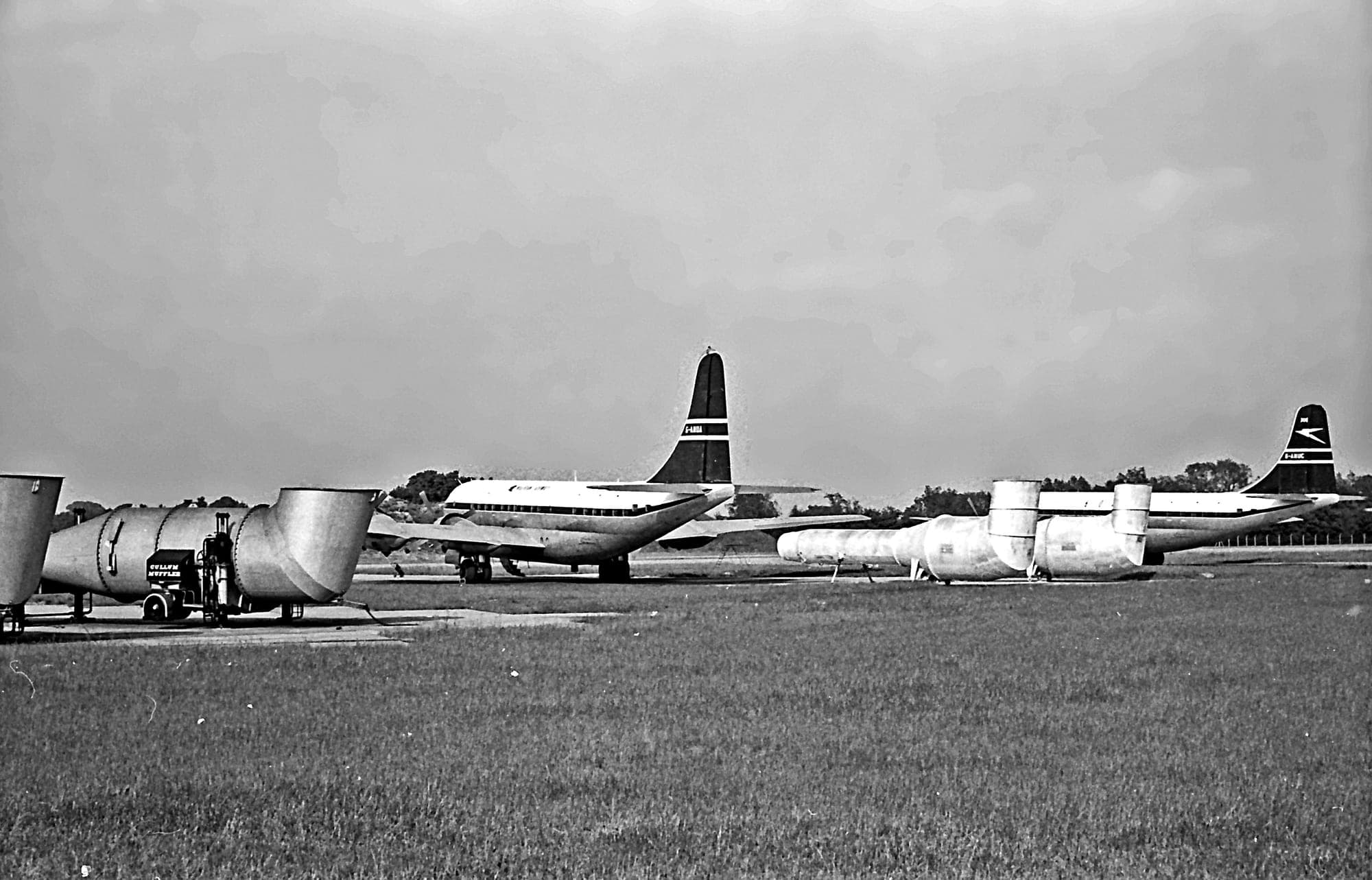
The British Overseas Airways Corporation spent the war as an arm of the state, flying diplomats, ferry pilots, mail and priority cargo on routes that survived the fighting, from neutral Lisbon, across the Atlantic, and on the so-called Horseshoe Route linking Durban, Cairo, Karachi and Sydney. When peace came, the Labour government reorganised civil aviation into public corporations. BOAC kept the long-haul world, British European Airways was formed on 1 August 1946 to fly European and domestic routes, and a third corporation for South America was folded back into BOAC in 1949.
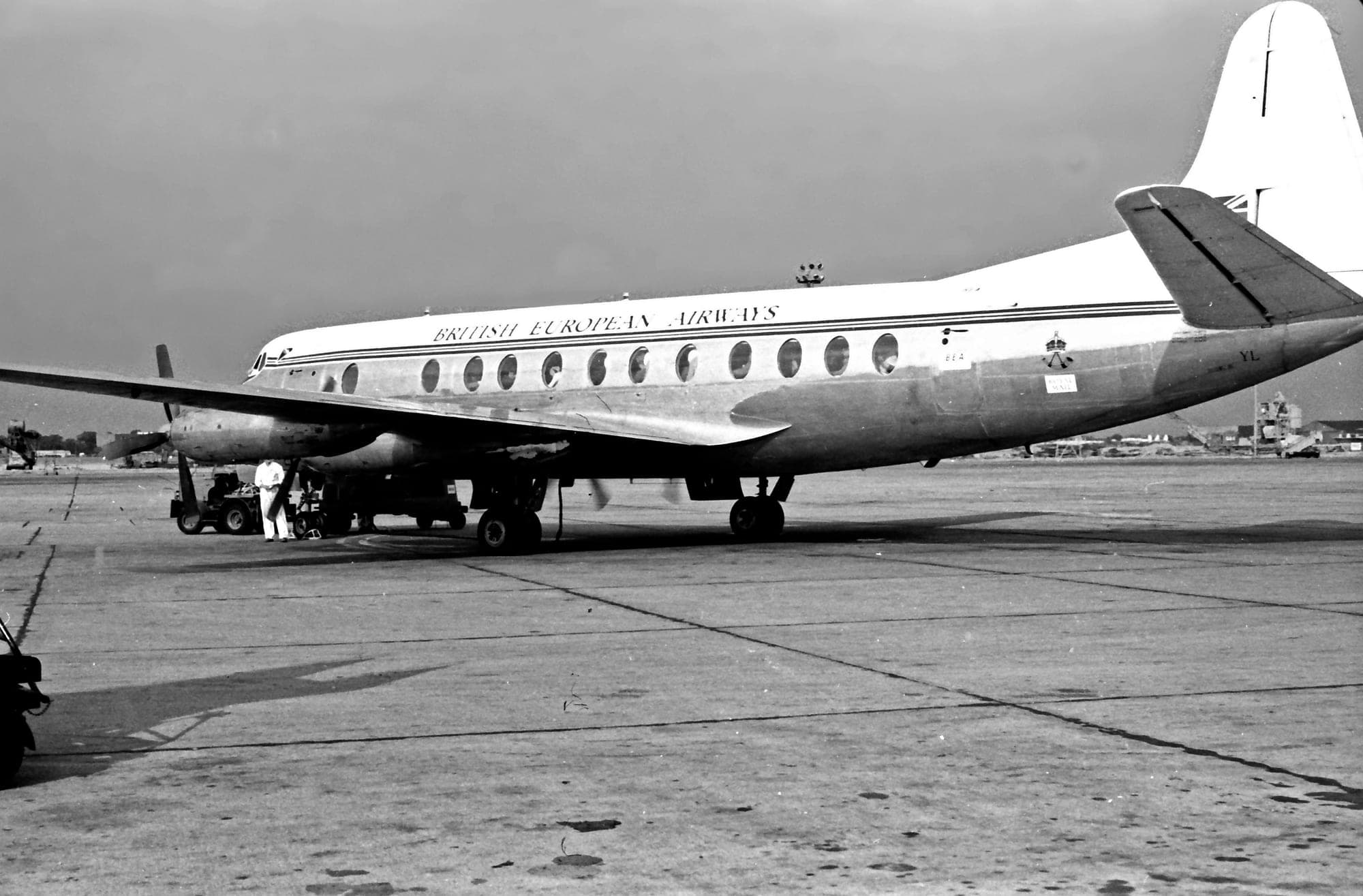
Both corporations moved to the new London Airport at Heathrow, which opened to civil traffic in 1946 and would remain the family's home. BEA began with war-surplus Douglas Dakotas and grew into the largest airline in Europe, becoming in 1953 the first to operate a turboprop airliner in scheduled service, the Vickers Viscount. BOAC, short of suitable British types, flew American Constellations and Stratocruisers across the Atlantic while waiting for the home industry to catch up.
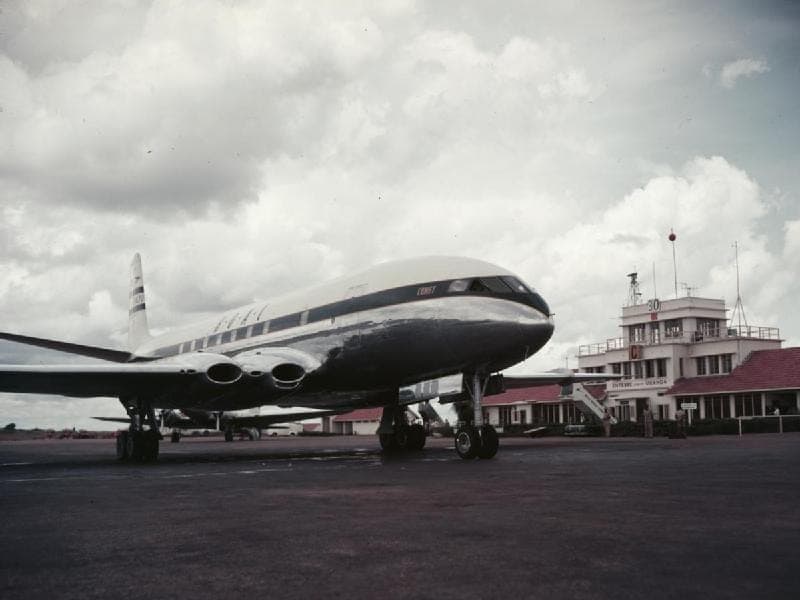
It looked, briefly, as if it had. On 2 May 1952 BOAC flew the world's first scheduled jet airliner service, a de Havilland Comet 1 from London to Johannesburg. Two fatal Comet breakups in 1954, off Elba and Naples, grounded the fleet and led to the discovery of metal fatigue around the fuselage openings; by the time the redesigned Comet 4 opened BOAC's transatlantic jet service in October 1958, Boeing's 707 was days away.
The arrangement of two state airlines, one looking outward and one to Europe, lasted nearly three decades. It produced loyal followings and distinctive cultures, and also persistent losses, duplicated overheads and a long argument over whether British corporations should be obliged to buy British aircraft.
Growth and expansion
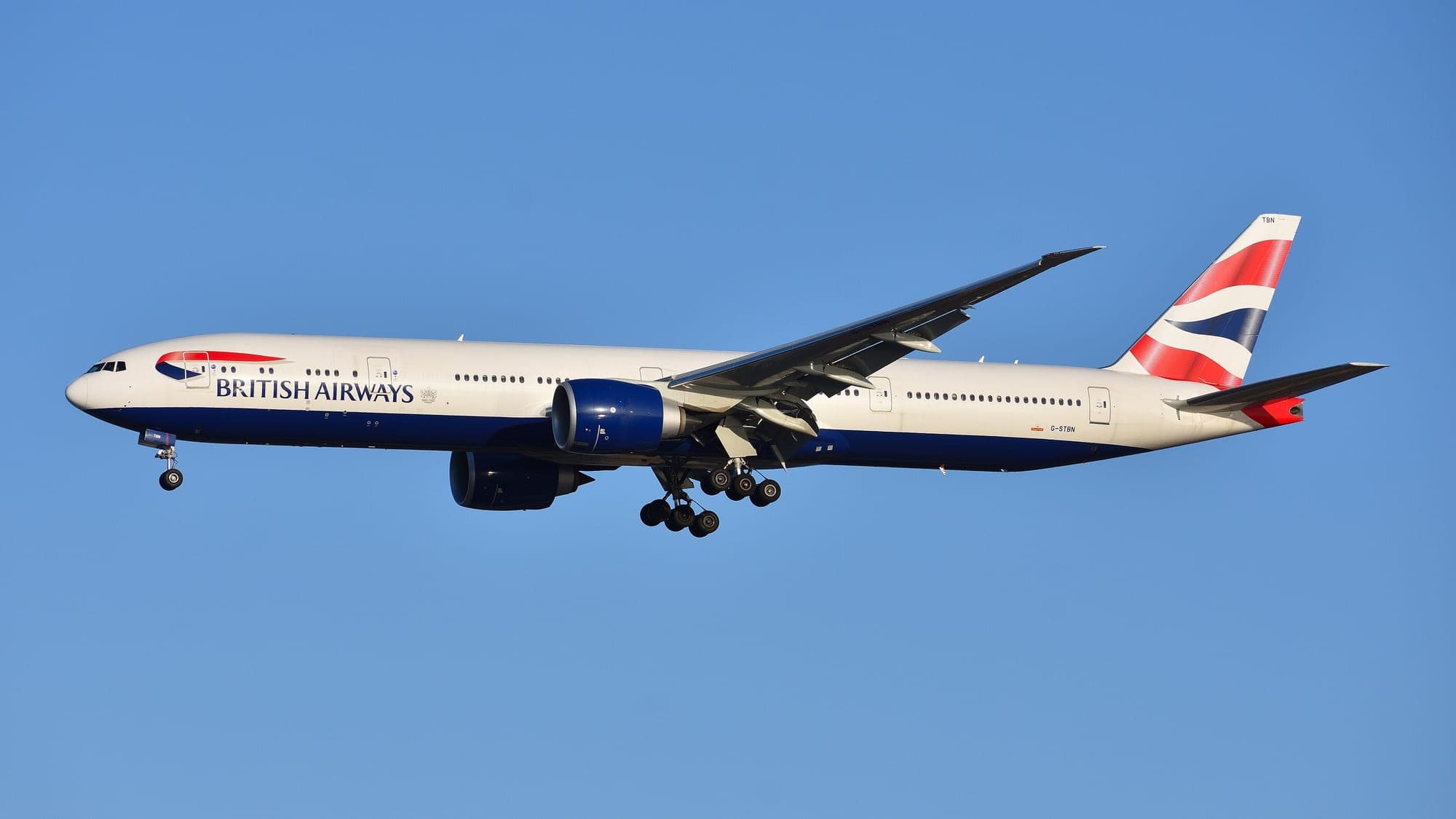
Alliances replaced ownership as the way to reach the world. After an attempted partnership with American Airlines was blocked by regulators in the late 1990s, British Airways joined American, Canadian Airlines, Cathay Pacific and Qantas in announcing oneworld in September 1998; the alliance began operating on 1 February 1999, with British Airways among its founding members. A transatlantic joint business with American Airlines and Iberia finally received antitrust approval in 2010, and Finnair later joined it.
Consolidation in Europe followed. British Airways and Iberia, partners since the 1990s, agreed to merge in 2009 and completed the transaction in January 2011, creating International Airlines Group, a holding company registered in Madrid with headquarters functions in London. Each airline kept its own brand, licence and nationality. IAG added bmi British Midland in 2012, bringing its Heathrow slots to British Airways, then Vueling in 2013 and Aer Lingus in 2015.
The COVID-19 pandemic halted almost all flying in 2020. British Airways retired its remaining Boeing 747-400s that year, earlier than planned, ending the airline's 747 operation after nearly five decades, and gave up its short-haul base at Gatwick before returning there through a new subsidiary, BA Euroflyer, in 2022.
By 2025 the business had recovered. IAG's annual report records a record operating profit for British Airways of £2.23 billion at a margin of 15.2 per cent, capacity 1.7 per cent above 2024, and deliveries that year of one Boeing 787-10 and twelve short-haul Airbus aircraft. Some long-haul flying was subcontracted to American Airlines because of shortages of Rolls-Royce engines for the 787 fleet.
The jet age
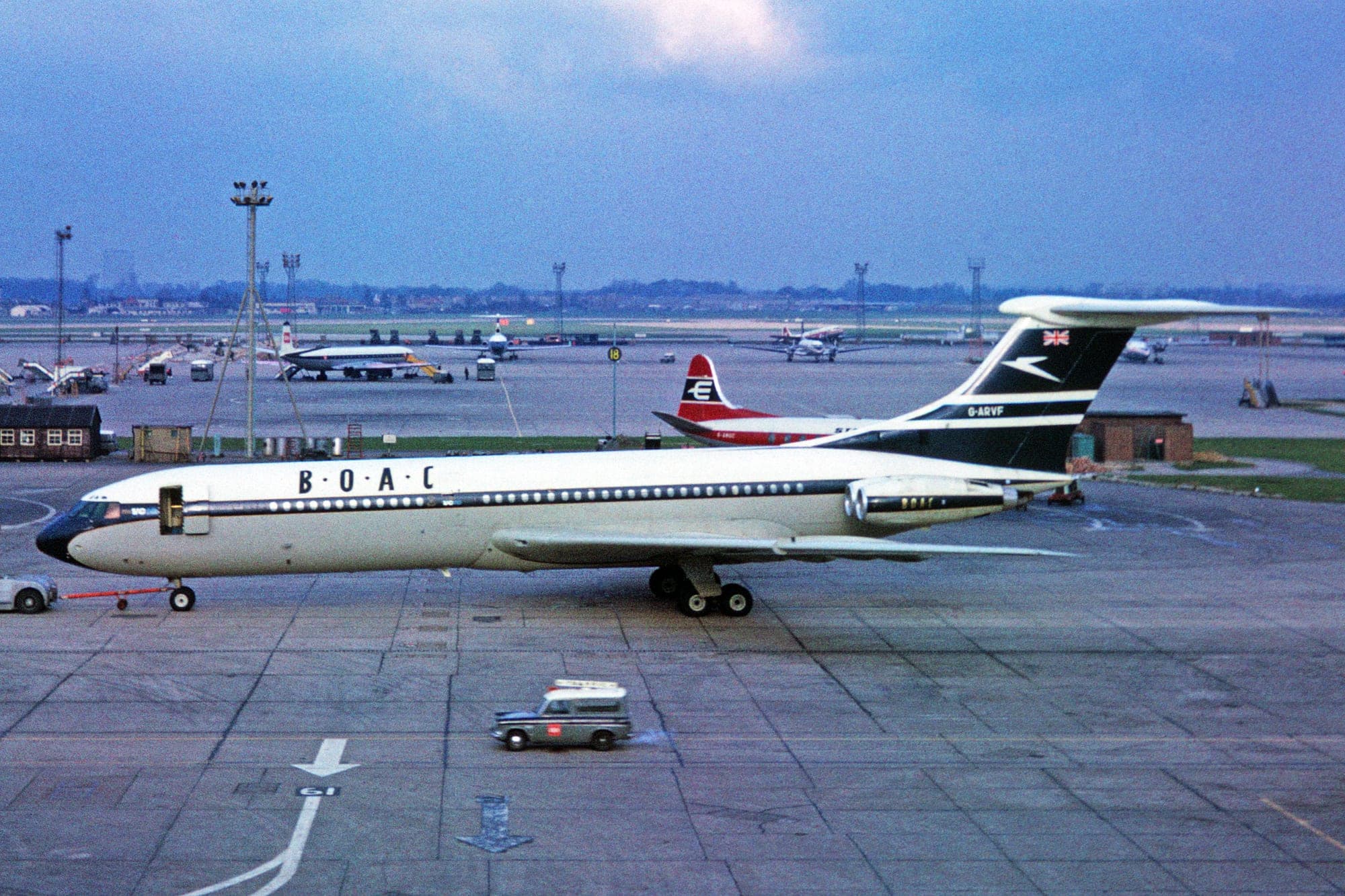
The 1960s gave each corporation a British jet designed around its own demands, and both proved narrower than the market. BOAC's Vickers VC10, in service from April 1964, was built to lift heavy loads out of hot, high and short African and Asian runways; passengers loved its quiet cabin and rear-mounted engines, but it cost more to fly than the Boeing 707 it competed against. BEA's Hawker Siddeley Trident, introduced the same year, was sized so tightly to the airline's specification that few other carriers bought it. On 18 June 1972 a BEA Trident, flight 548, stalled shortly after take-off from Heathrow and crashed near Staines, killing all 118 people on board, the worst air accident in Britain at the time.
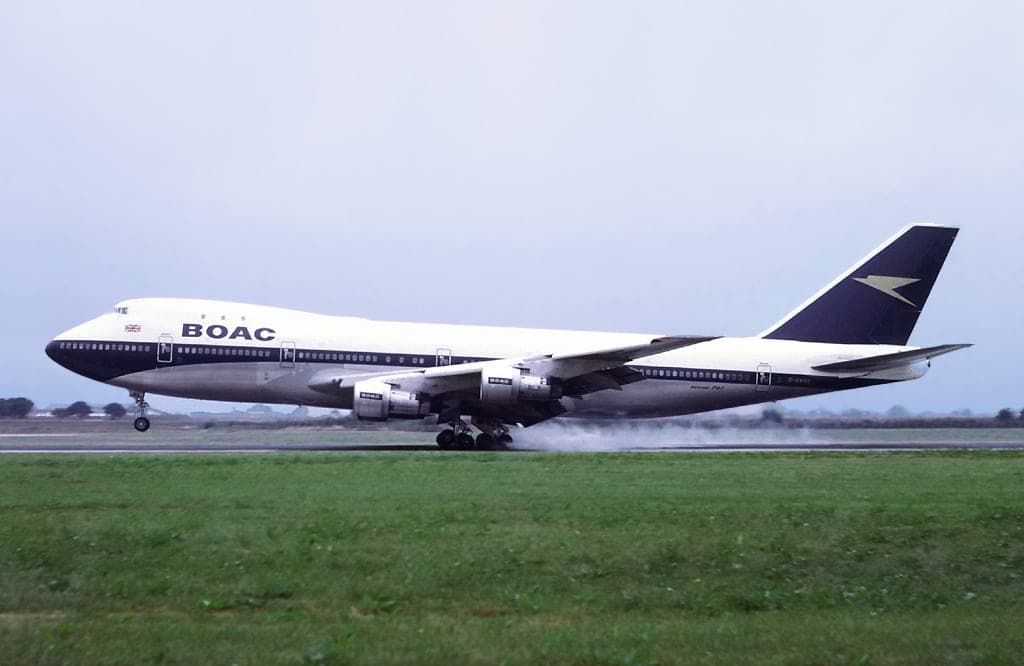
The wide-body era arrived on American terms. BOAC opened Boeing 747 service between London and New York in April 1971, and the type would carry the airline's name for almost half a century. Meanwhile the case for two separate state airlines was weakening. The Edwards Committee, reporting in 1969, recommended a single holding board for the public sector, and the Civil Aviation Act 1971 created the British Airways Board, which took control of BOAC and BEA on 1 April 1972.
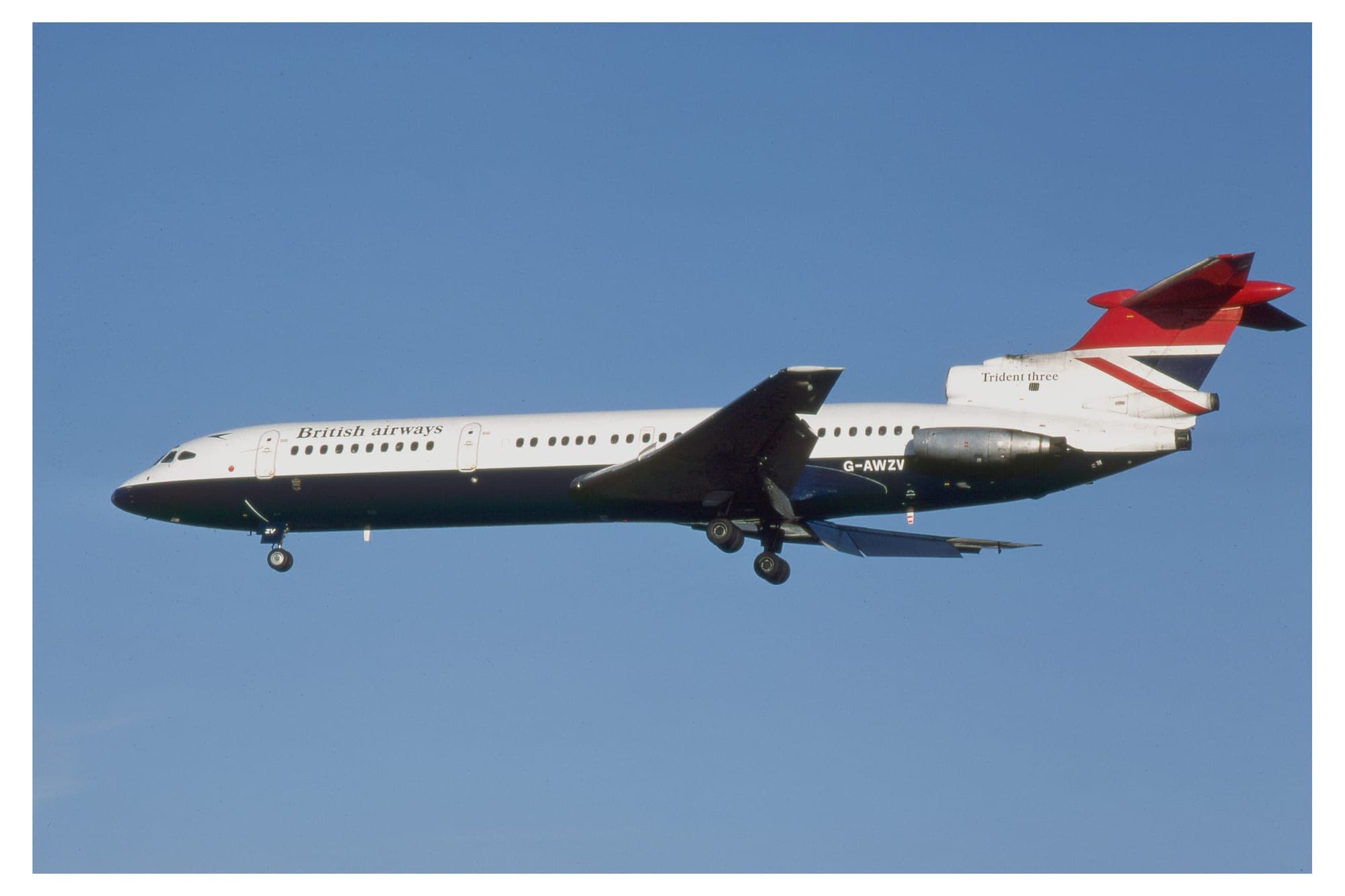
For two years the corporations kept their names while the board merged their operations beneath them, and aircraft began to appear in a shared livery lettered simply British Airways. On 31 March 1974 BOAC and BEA were dissolved, and British Airways became a single airline, absorbing with them the regional divisions that had grown up inside BEA in Scotland, the Channel Islands and the north of England.
The merged company inherited two workforces, two engineering bases, two sets of management and the losses of both. Industrial disputes, the oil shocks of 1973 and 1979, and the arrival of cut-price transatlantic competition from Laker Airways left it, at the start of the 1980s, overstaffed and deep in debt: a national institution with little prospect, as it stood, of surviving without the Treasury.
Supersonic service
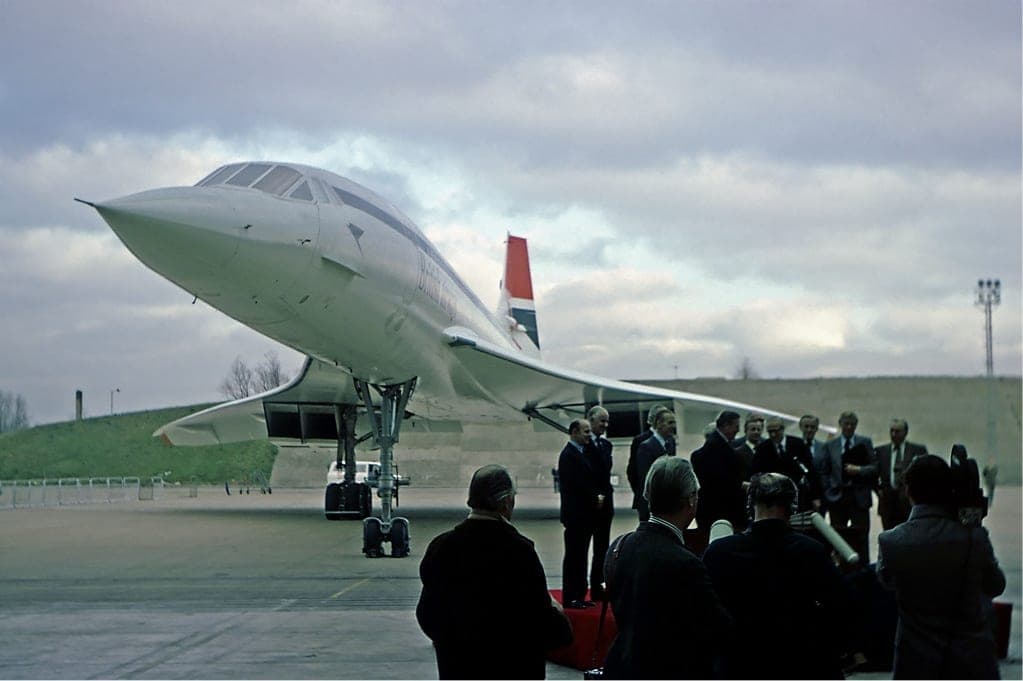
British Airways and Air France were the only airlines to fly Concorde in regular service for its whole commercial life. The British carrier took seven aircraft, registered G-BOAA to G-BOAG, and on 21 January 1976 opened supersonic passenger service with a flight from Heathrow to Bahrain, timed to depart at the same moment as Air France's first service from Paris to Rio de Janeiro. Washington followed in May 1976, and New York, after a long fight over noise and landing rights, in November 1977.
The route network never became what the programme had promised. A service to Singapore, flown in partnership with Singapore Airlines, ran intermittently and was dropped in 1980; the Bahrain route ended the same year. What remained was the one market Concorde suited perfectly: London to New York in about three and a half hours, flown as BA001 and BA002, together with seasonal services to Barbados and a busy charter programme. Under private ownership, and with the aircraft on its own books, British Airways ran Concorde as a premium product that could make money, selling it to bankers, celebrities and anyone with a reason to cross the Atlantic before lunch.
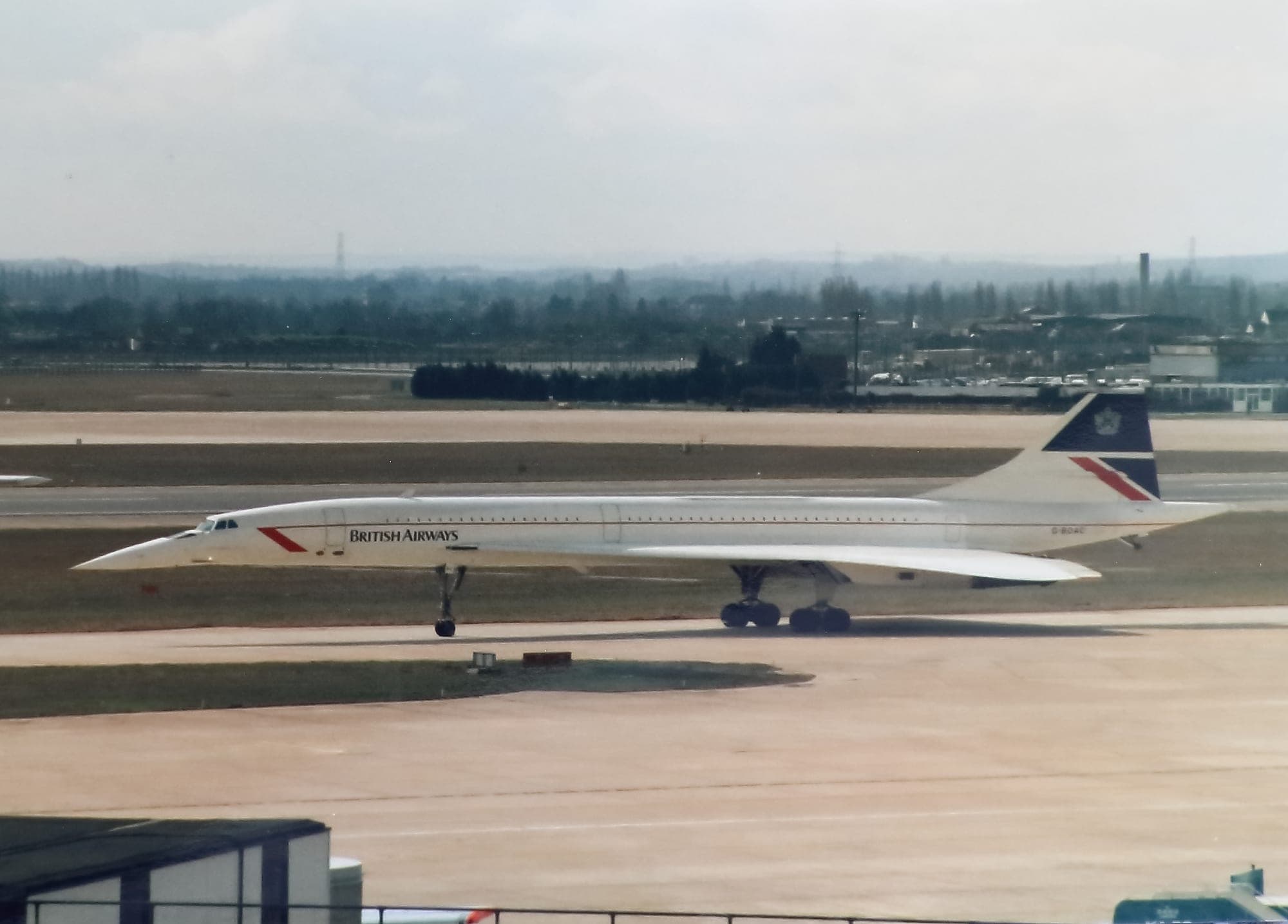
The end came quickly. After an Air France Concorde crashed at Gonesse on 25 July 2000, the type's certificate of airworthiness was suspended and the British fleet was grounded. Modifications, including Kevlar liners for the fuel tanks and new tyres, returned it to service in November 2001, into an industry shaken by the attacks of 11 September. In April 2003 the two airlines announced Concorde's retirement, citing falling demand and rising maintenance costs.
On 24 October 2003 British Airways flew its last commercial Concorde service, BA002 from New York, landing at Heathrow in sequence with two other Concordes flying in from Edinburgh and a loop over the Bay of Biscay. On 26 November G-BOAF made the type's final flight, to Filton near Bristol, where it had been built. The seven aircraft are preserved in Britain, the United States and Barbados.
Consolidation and merger
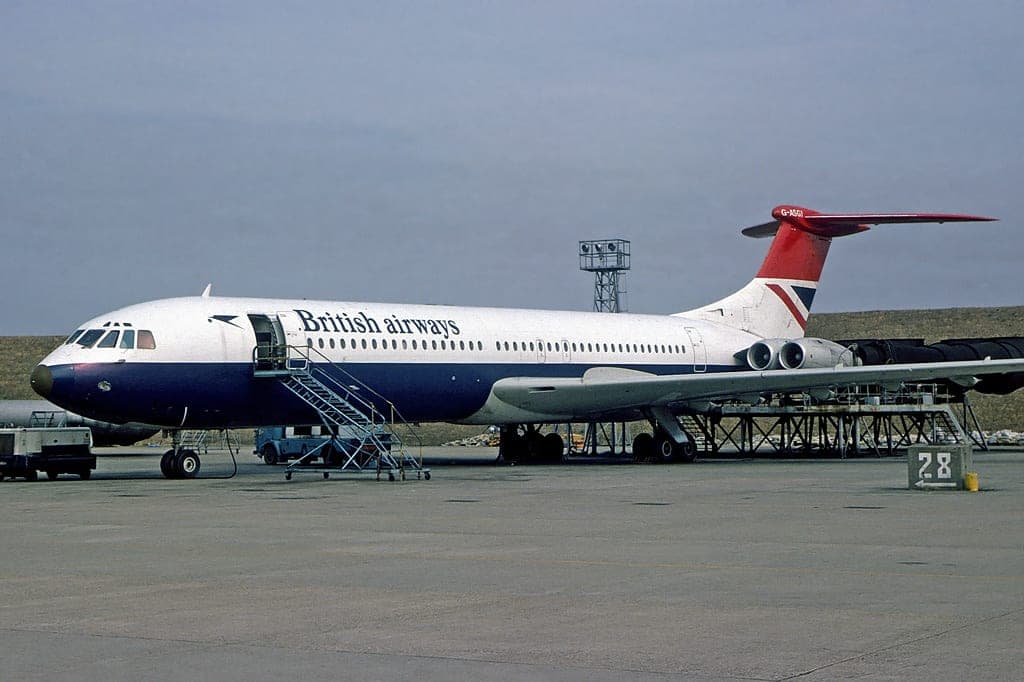
The Conservative government that took office in 1979 intended to sell British Airways, and in 1981 it appointed the industrialist John King, later Lord King, as chairman to make that possible. King cut the workforce by tens of thousands, closed routes and wrote off obsolete aircraft; from 1983 his chief executive, Colin Marshall, turned the company's attention to its customers, retraining staff and rebuilding the product around the business traveller. In 1983 the advertising agency Saatchi & Saatchi gave the airline a slogan it would use for two decades: the world's favourite airline.
British Airways was privatised by a public share offer in February 1987, one of the flagship sales of the Thatcher years. Within months it had agreed to take over its main British rival, British Caledonian, whose network at Gatwick it absorbed in 1988. The enlarged airline was consistently profitable through the late 1980s and the 1990s, and for much of that time the slogan was a claim it could support: it carried more international passengers than any other airline in the world.
The period had its reckonings. In January 1993 British Airways settled a libel action brought by Richard Branson and Virgin Atlantic over what became known as the dirty tricks campaign, apologising in the High Court and paying damages and costs; Lord King retired as chairman the following month. Under Robert Ayling, chief executive from 1996, the airline pursued alliances and a new corporate image, and faced a costly cabin-crew strike in 1997.
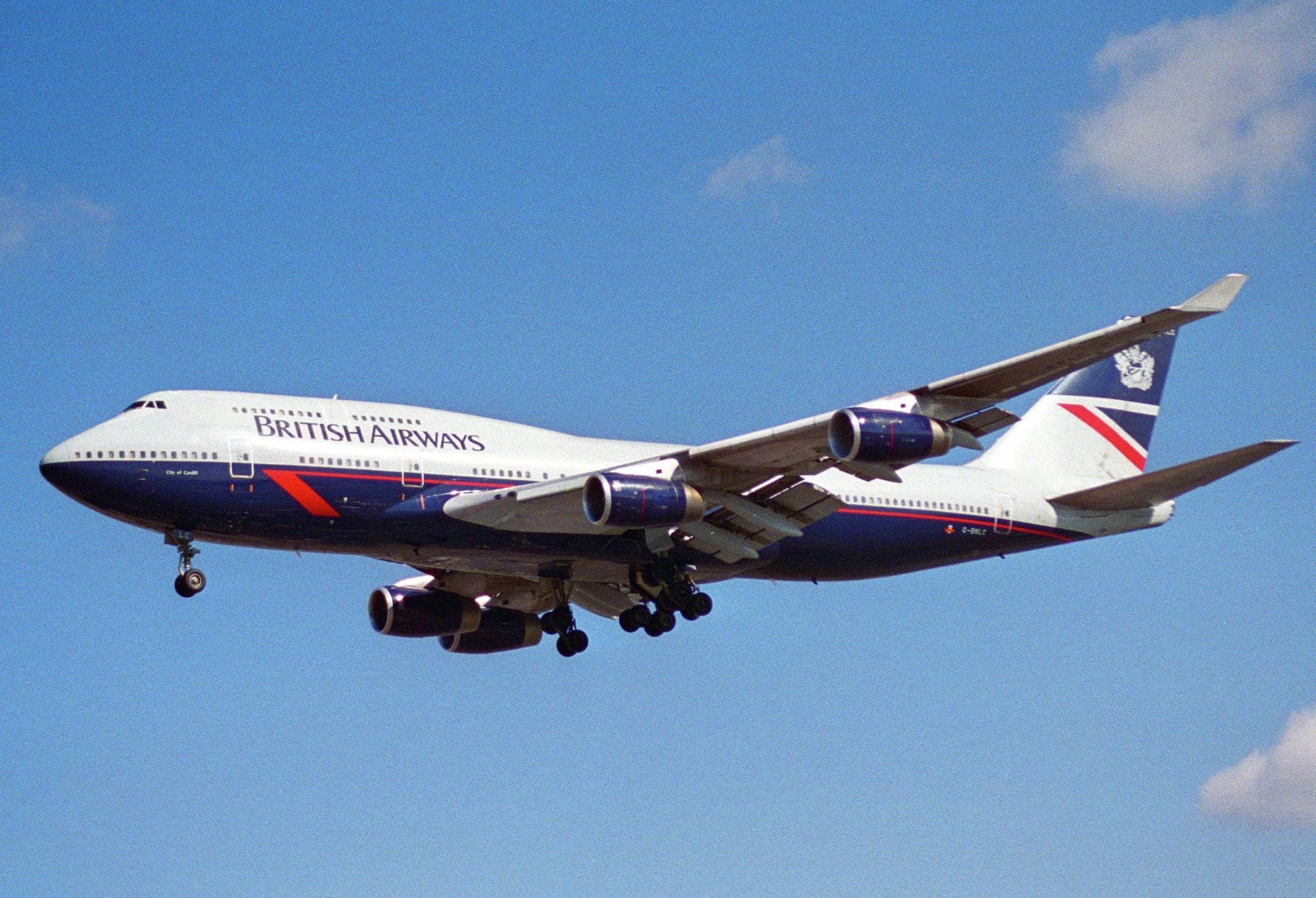
At the turn of the century, with the 747-400 at the heart of its long-haul fleet and a new head office at Waterside beside Heathrow, British Airways was at its largest. It then met, in quick succession, the grounding of Concorde, the collapse in transatlantic travel after September 2001 and the rise of low-cost carriers on its short-haul routes, and began a long period of retrenchment under Rod Eddington and Willie Walsh.
Network and hubs
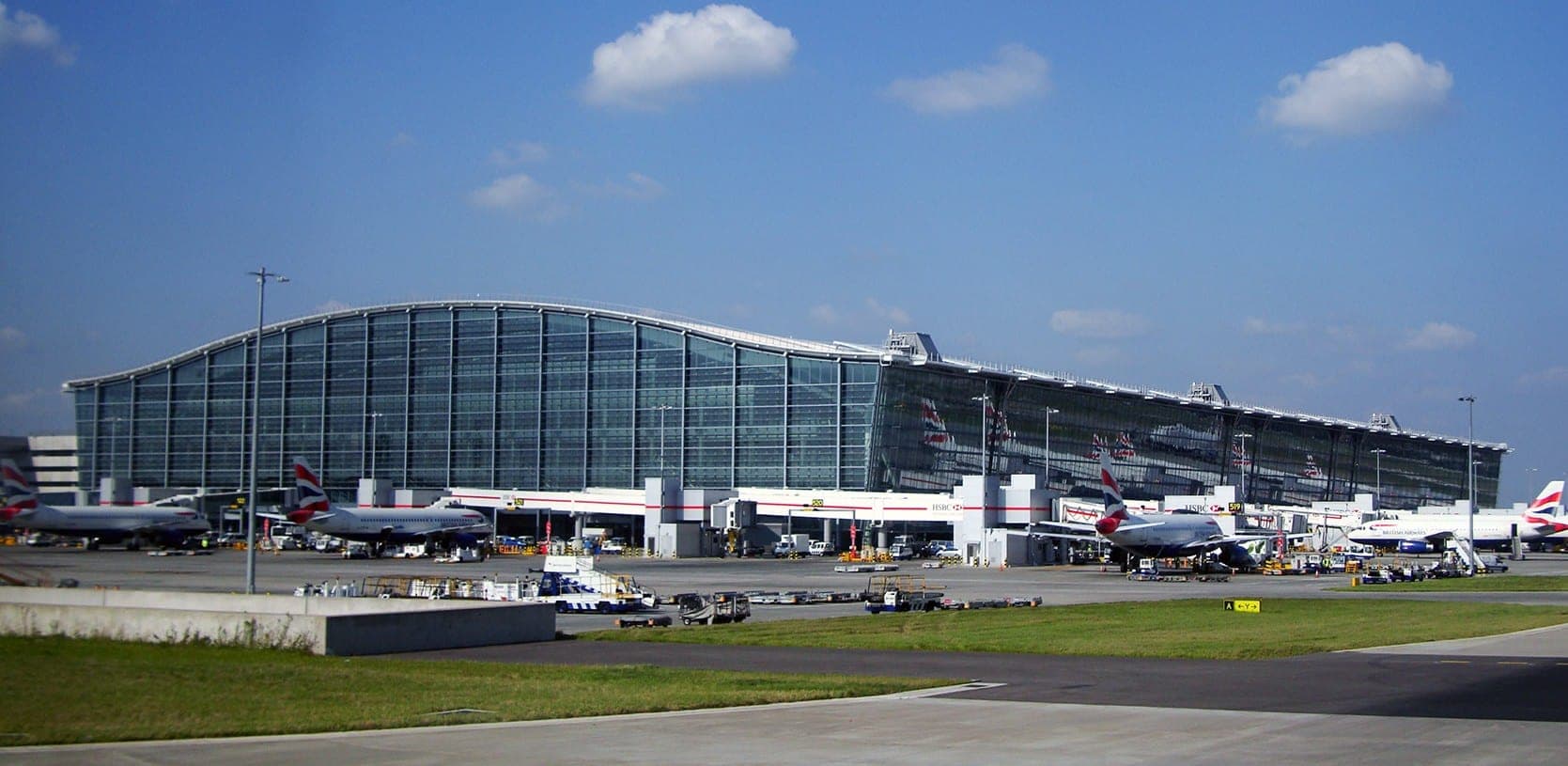
Heathrow is the centre of everything British Airways does. Both its parent corporations moved there in the late 1940s, and the airline now holds the largest share of slots at an airport that has operated close to its runway capacity for decades. Connecting passengers from Europe, the Middle East and India to North America through London is the core of its long-haul economics, and the North Atlantic, flown jointly with American Airlines, is its most important market.
Since 27 March 2008 the airline has operated from Terminal 5, built for its exclusive use. The opening day went badly: failures in the baggage system and staff access led to hundreds of cancelled flights and tens of thousands of misplaced bags over the following days. The terminal has since become the airline's shop window, and it expanded into parts of Terminal 3 as well.
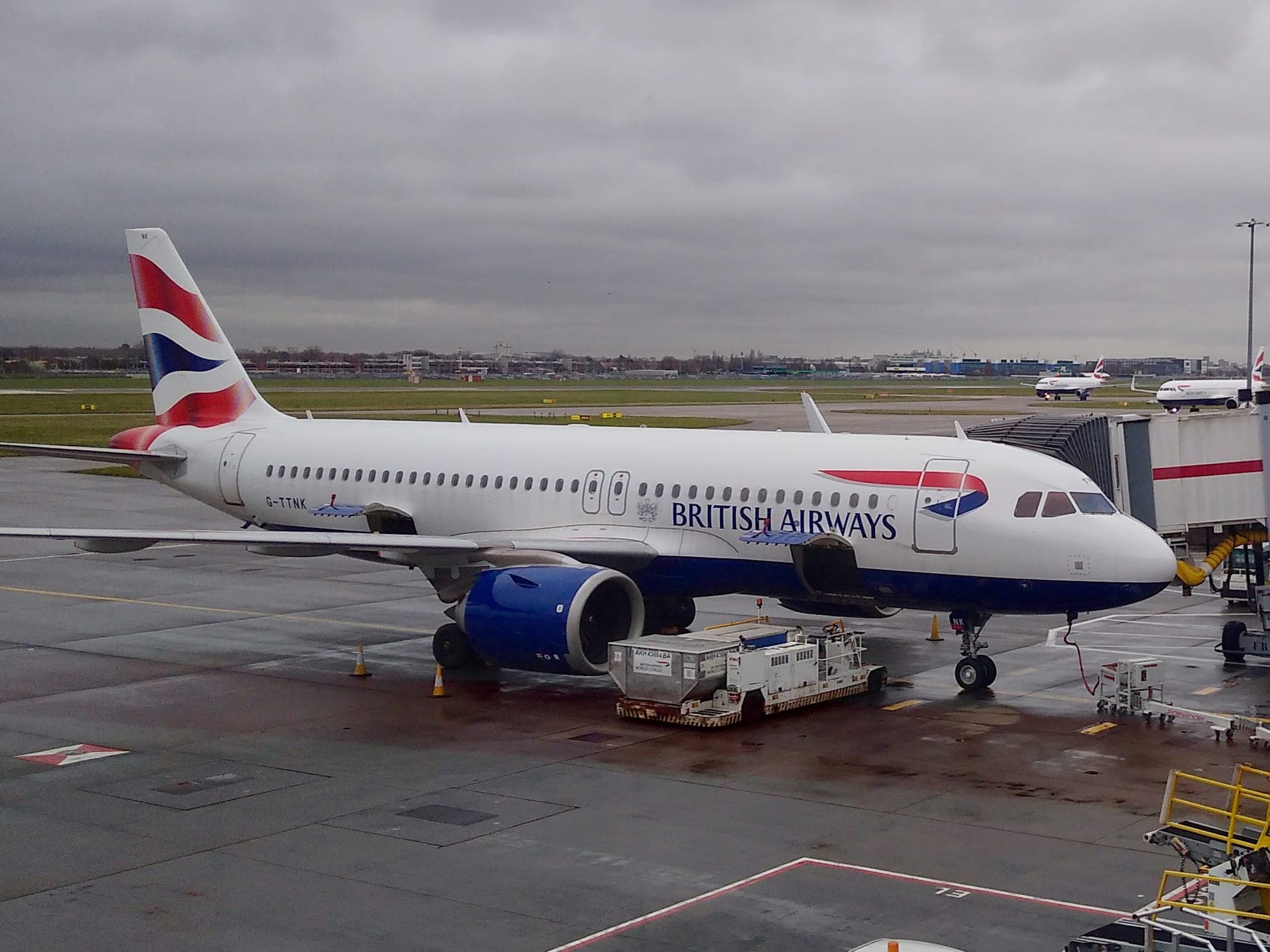
Gatwick carries a smaller network of leisure and short-haul flights, operated by BA Euroflyer, together with some long-haul routes to the Caribbean and elsewhere. At London City Airport in the Docklands, BA CityFlyer flies Embraer 190s on routes chosen for the business traveller and the city-break market.
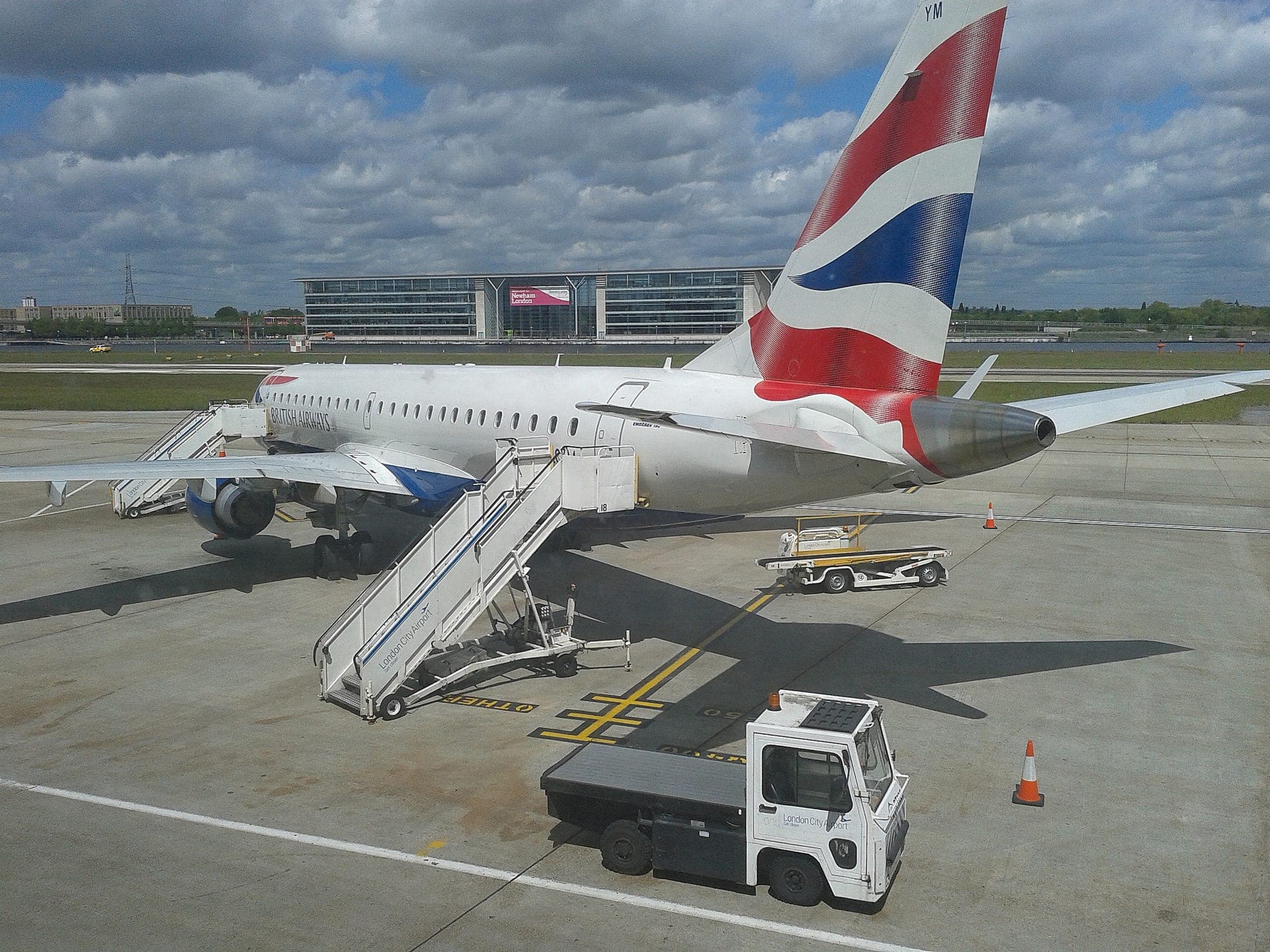
The airline's 2025 annual report describes a network of more than 200 destinations in 76 countries, and new routes announced for 2026 included St. Louis, its twenty-seventh destination in the United States.
Fleet
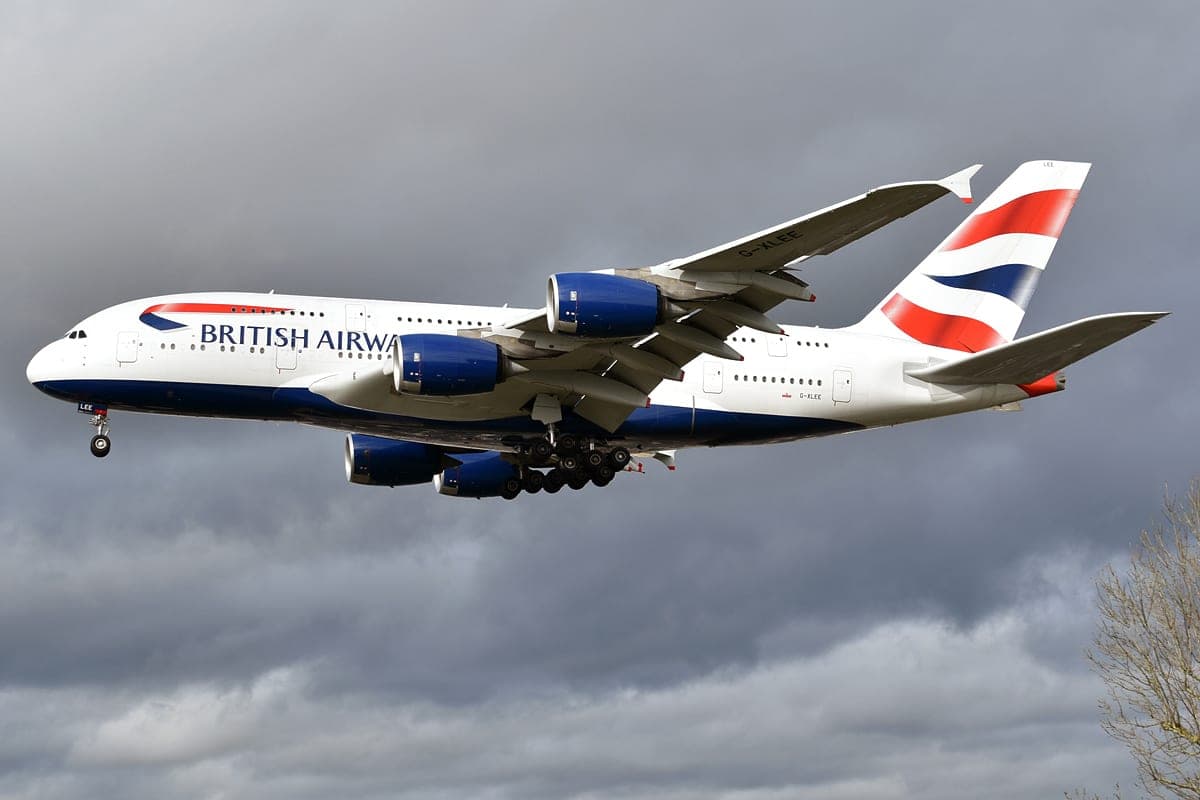
On 31 December 2025, according to the fleet table in its annual report, British Airways and its subsidiaries had 298 aircraft in service, five more than a year earlier, with a further four held out of service. The long-haul fleet is built around the Boeing 777, with 43 of the -200 series and 16 of the -300, alongside 12 Airbus A380s, 18 Airbus A350-1000s and 42 Boeing 787s across all three variants.
The A380s arrived from 2013 and are used on the densest routes from Heathrow; they were stored during the pandemic and returned to service in 2021 and 2022. The A350-1000 entered service in 2019 as the launch aircraft for the Club Suite. Short-haul flying is almost entirely Airbus: 23 A319s, 93 A320s and 31 A321s, a growing share of them the neo variants, with 20 Embraer E190s at BA CityFlyer.
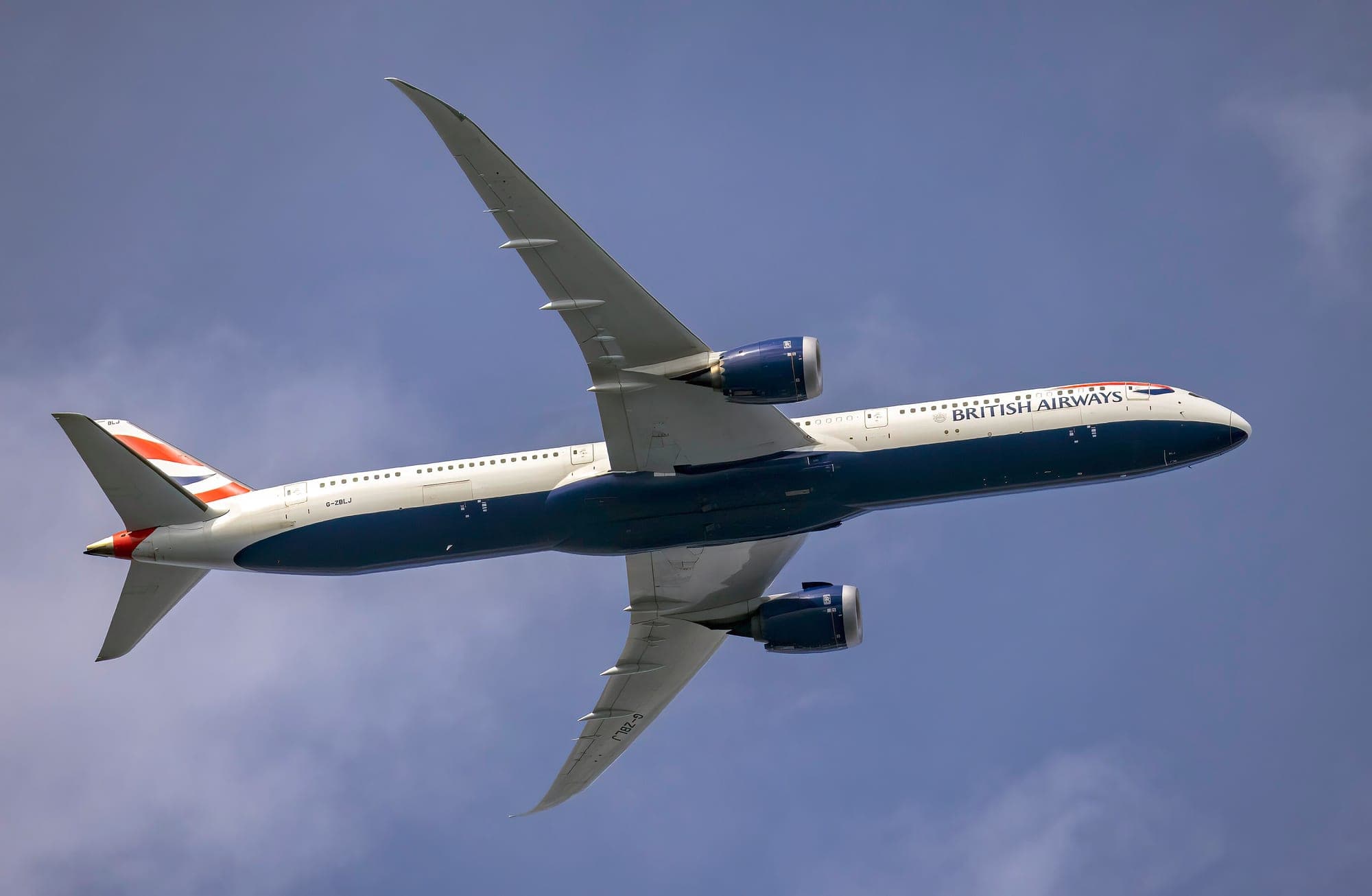
The same table lists 74 aircraft on firm order, among them 38 Boeing 787-10s and 24 Boeing 777-9s, the latter delayed by the type's late certification.
Cabins and service
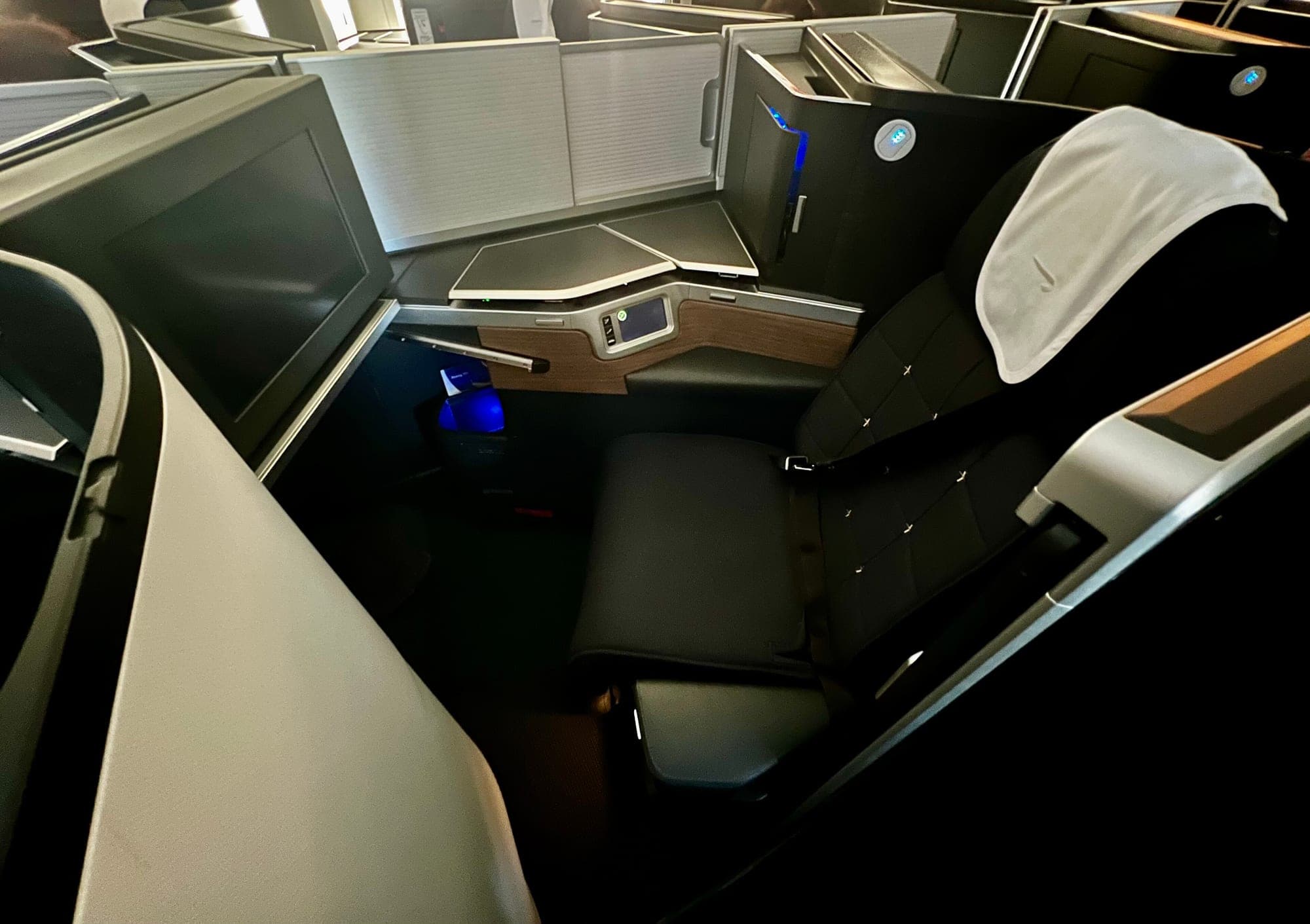
British Airways sells four cabins on long-haul routes: First, Club World, World Traveller Plus and World Traveller. Club World was launched in 1988, and in 2000 it became the first business-class cabin to offer a seat that converted into a fully flat bed, arranged in a distinctive forward-and-backward-facing layout that the airline kept for almost twenty years.
Its successor, the Club Suite, has direct aisle access for every passenger and a door that closes. It entered service on the Airbus A350-1000 in 2019 and has been retrofitted across most of the wide-body fleet. On European and domestic routes the cabins are Club Europe and Euro Traveller.
The airline's 2025 annual report announced free Starlink Wi-Fi from 2026 across long- and short-haul aircraft, a new First seat, and a new lounge design first opened in Miami and Dubai, with the Heathrow lounges next.
Livery and identity
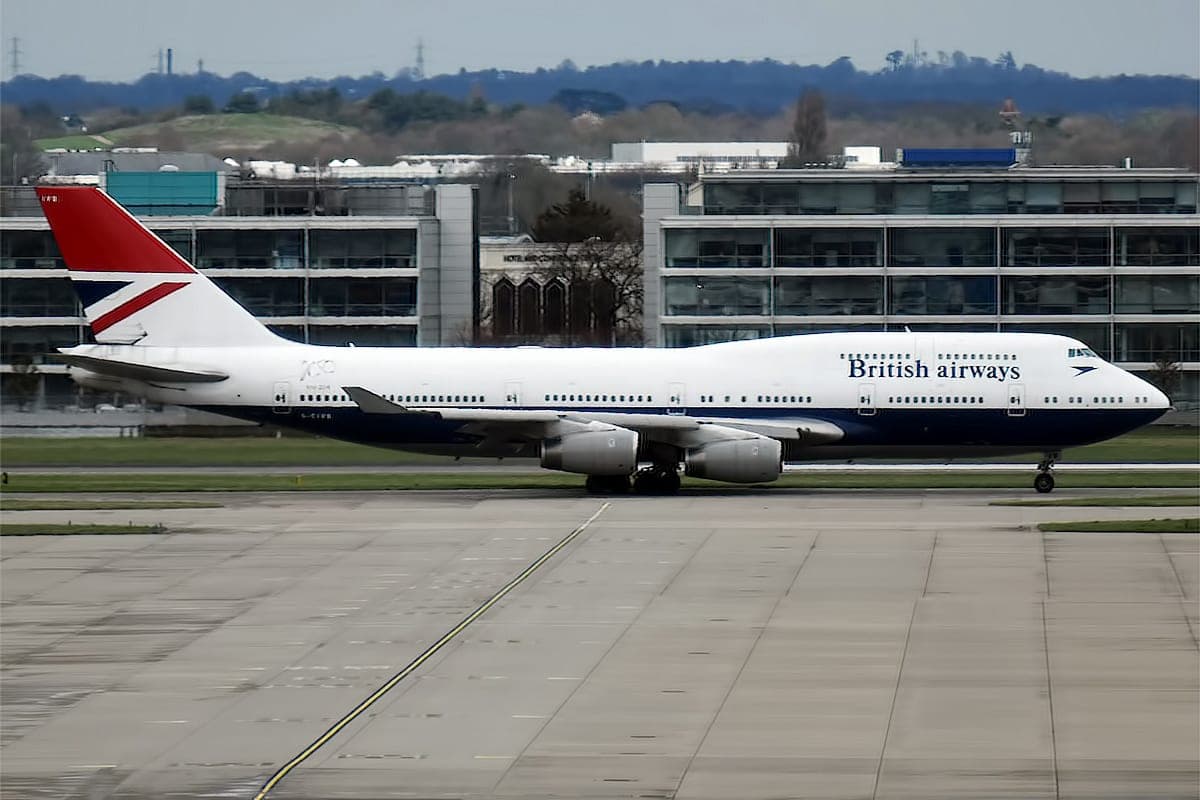
The Speedbird is the oldest thread in the airline's identity. Designed for Imperial Airways in 1932 by Theyre Lee-Elliott, the stylised bird was carried on by BOAC, whose radio callsign SPEEDBIRD British Airways still uses today, and it appeared in gold on the tails of BOAC's jets until the merger.
The first British Airways livery, created by the consultancy Negus & Negus and introduced from 1974, paired a dark blue upper fuselage with a red Union Flag tail and the words British Airways. In 1984 Landor Associates replaced it with a pearl-grey and midnight-blue scheme, a coat of arms with the motto To Fly To Serve, and a red speedwing along the fuselage.
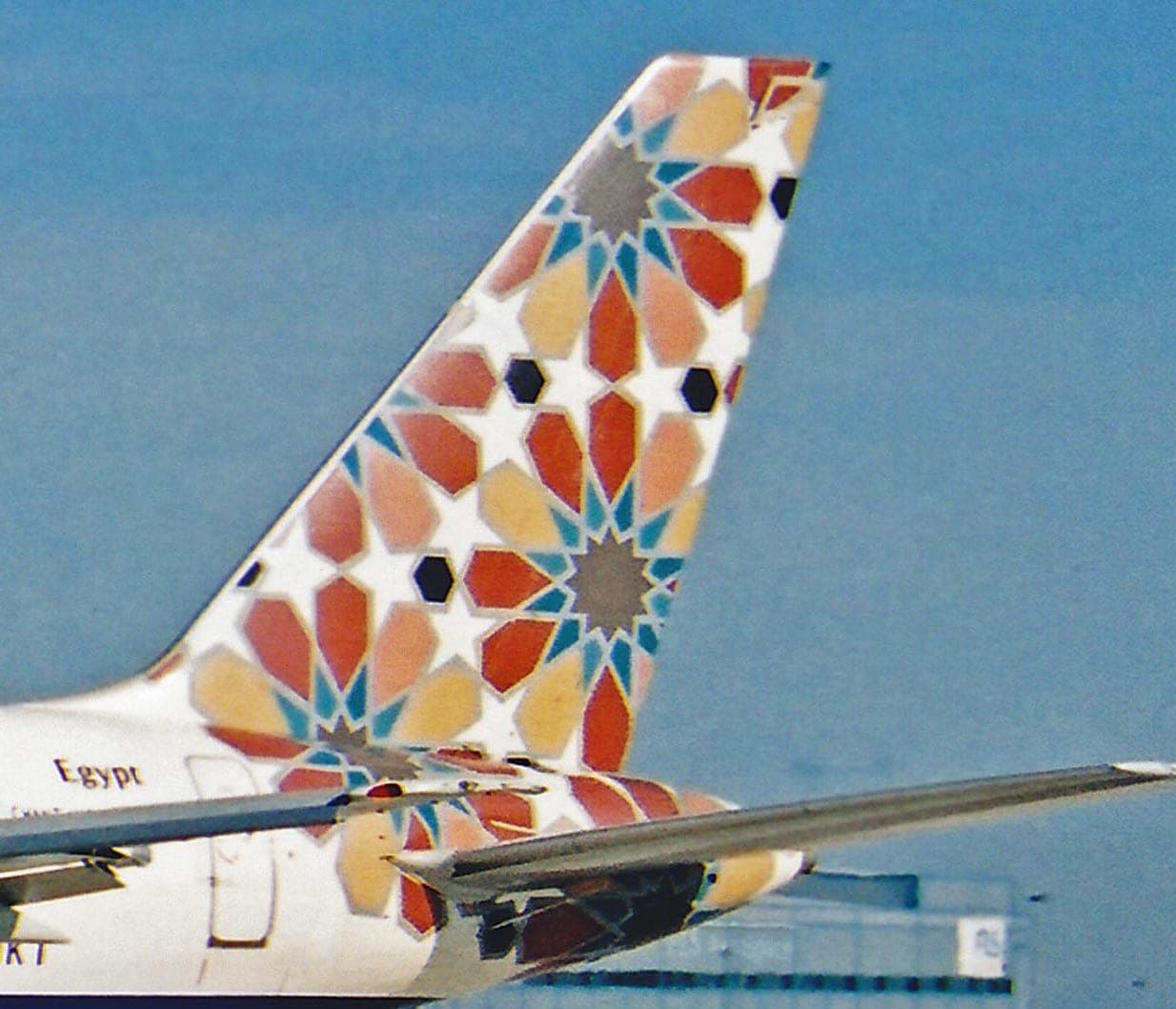
In 1997 the airline dropped the national flag from its tails in favour of World Images, dozens of designs by artists from around the world, intended to present a global rather than a British airline. The designs were widely disliked in Britain, Margaret Thatcher famously covered a model tail with a handkerchief, and in 1999 the airline began repainting its fleet in the Chatham Dockyard version of the Union Flag, which with the 1997 lettering and the red and blue speedmarque remains its livery.
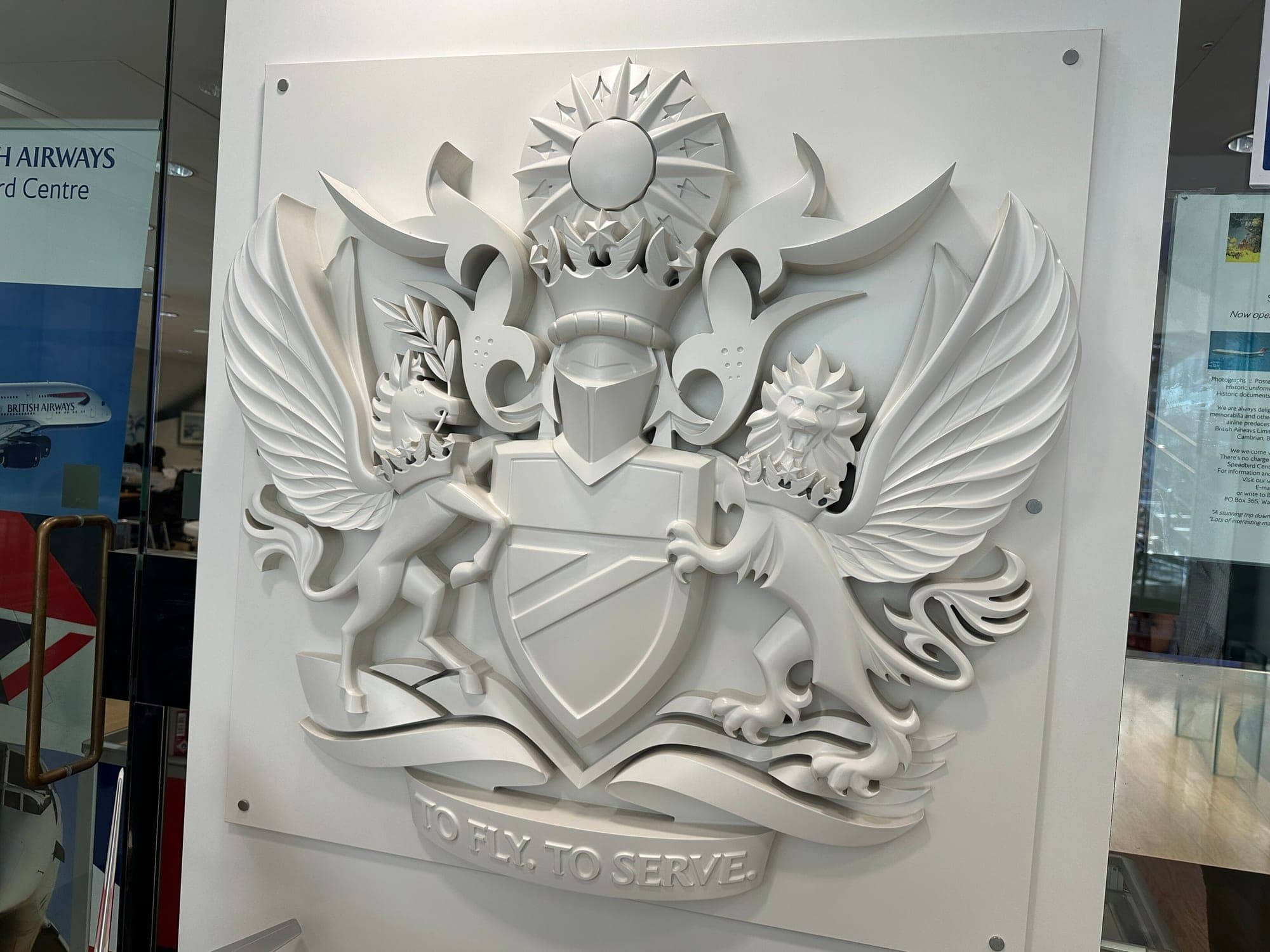
For the centenary in 2019, four aircraft were painted in historic schemes: a Boeing 747-400 each in BOAC, Negus and Landor colours, and an Airbus A319 in BEA's red square.
Safety record
The fatal accidents in the airline's history belong to the inherited fleets and its first decade; the serious events since have been survived by everyone on board.
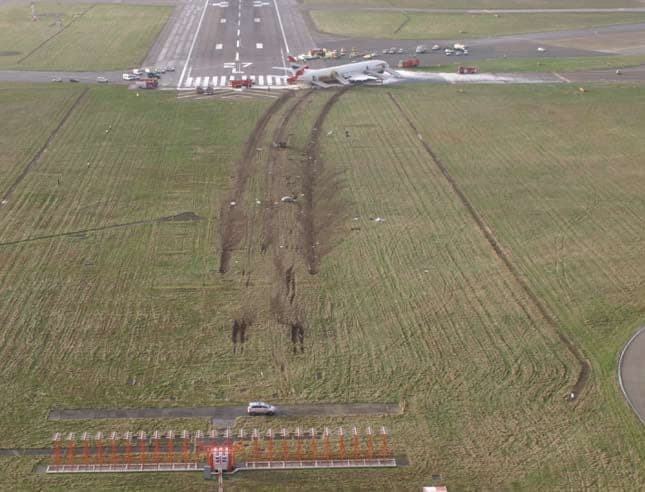
On 10 September 1976, a British Airways Trident 3B, flight 476 from London to Istanbul, collided in mid-air over Croatia, then part of Yugoslavia, with an Inex-Adria DC-9 after an air traffic control error; all 176 people aboard both aircraft were killed. On 22 August 1985, a British Airtours Boeing 737, a charter subsidiary of British Airways, suffered an uncontained engine failure during take-off at Manchester and caught fire; 55 of the 137 people aboard died, most from smoke inhalation, and the investigation led to wide changes in cabin evacuation and fire safety.
Other events became case studies without deaths. In June 1982, flight 9, a Boeing 747 flying through volcanic ash from Mount Galunggung in Indonesia, lost all four engines and recovered them after gliding. In June 1990, a windscreen of flight 5390, a BAC One-Eleven, blew out over Didcot and the captain was partly drawn through it; the crew landed safely at Southampton. On 17 January 2008, flight 38, a Boeing 777 from Beijing, lost thrust on both engines on final approach to Heathrow because of ice in the fuel system and landed short of the runway; all 152 people aboard survived. On 8 September 2015 at Las Vegas, a 777 engine failed and caught fire during take-off, and all 170 people evacuated.
Legacy
British Airways is unusual among the great flag carriers in how much of aviation history it can claim through its ancestors: some of the first international airline services, the Empire routes, the first scheduled jet service, the first turboprop service, and a share of the only supersonic airliner ever to carry passengers for a living.
It is equally a case study in what became of the state airline. It was among the first of Europe's national carriers to be sold to private shareholders, and its turnaround in the 1980s became a textbook example of management-led change. Its merger with Iberia produced one of the models for cross-border ownership within Europe's nationality rules.
Today it is a commercial company inside a Spanish-registered group, yet it still flies under the flag on its tails, answers to the radio name of Imperial Airways' bird, and keeps its Concordes and old liveries close to its identity.
The fleet
In service at December 31, 2025
Long-haul
Boeing 777-200
43
Boeing 777-300
16
Airbus A350-1000
18
Boeing 787-8
12
Boeing 787-9
18
Boeing 787-10
12
Total131
Medium-haul
Airbus A319
23
Airbus A320
93
Airbus A321
31
Total147
Regional
Embraer E190
20
Total20
Cabins
First
The smallest cabin on the long-haul fleet: individual seats that convert to beds, with dedicated lounges at Heathrow. The annual report for 2025 announced a new First seat for 2026.
Available onSelected long-haul aircraft
Club World
Long-haul business class, launched in 1988. In 2000 it became the first business cabin to offer a fully flat bed; its current seat, the Club Suite with a closing door and direct aisle access, entered service on the Airbus A350-1000 in 2019.
Available onLong-haul fleet
World Traveller Plus
Premium economy: a separate cabin of wider seats with more legroom, sold between Club World and World Traveller.
Available onLong-haul fleet
World Traveller
Long-haul economy, the largest cabin on every wide-body aircraft.
Available onLong-haul fleet
Club Europe
Short-haul business class: the front rows of the single-aisle cabin, with the middle seat left free, lounge access and a meal.
Available onEuropean and domestic routes
Euro Traveller
Short-haul economy on European and domestic routes.
Available onEuropean and domestic routes
Subsidiaries
- BA CityFlyer
- The regional subsidiary, flying Embraer 190s mainly from London City Airport.
- BA Euroflyer
- The short-haul subsidiary formed to operate from London Gatwick.
Genealogy
How British Airways came together, from the first daily international air service of 1919. The warm boxes are the company's own line: Aircraft Transport and Travel, whose business passed to Daimler Airway, which merged into Imperial Airways in 1924; Imperial and a second, private British Airways Ltd became BOAC in 1939; BOAC and BEA were combined as British Airways in 1974. Pale boxes are companies merged in or absorbed along the way, British Caledonian in 1988, Dan-Air in 1992 and bmi in 2012.
Scroll to see the full diagram
Timeline
March 31, 1924
Imperial Airways is formed
Four pioneer companies are merged into a subsidised national carrier.
1935
A private British Airways Ltd is formed
Several independent airlines merge to fly European routes.
April 1, 1940
BOAC begins operating
Imperial Airways and British Airways Ltd are nationalised into one corporation.
August 1, 1946
British European Airways is formed
May 2, 1952
First scheduled jet airliner service
A BOAC Comet 1 flies from London to Johannesburg.
April 1, 1972
British Airways Board takes control of BOAC and BEA
March 31, 1974
BOAC and BEA are dissolved into British Airways
January 21, 1976
Concorde enters service
First supersonic passenger flight, London to Bahrain.
February 1987
Privatisation
Shares are sold to the public.
1988
British Caledonian absorbed
February 1, 1999
oneworld begins operating
British Airways is a founding member.
October 24, 2003
Last commercial Concorde flight
March 27, 2008
Terminal 5 opens at Heathrow
January 2011
Merger with Iberia creates IAG
2020
Boeing 747 fleet retired
Accidents and defining events
Recorded as the investigators recorded them: what happened, where, and how many people died. Fatal accidents and the events that changed the airline, in date order.
September 10, 1976
BA476
Hawker Siddeley Trident 3BNear Vrbovec, Zagreb, Yugoslavia (now Croatia)
The Trident, flying from London to Istanbul, collided in mid-air with an Inex-Adria DC-9 after an air traffic control error. All 63 people on the Trident and all 113 on the DC-9 were killed, 176 in total.
63 deaths63 people on board
August 22, 1985
KT28M
Boeing 737-236Manchester Airport, England
Operated by British Airtours, the group's charter subsidiary. An uncontained engine failure during the take-off roll caused a fire; the take-off was abandoned but smoke and fire entered the cabin during evacuation. Most victims died of smoke inhalation.
55 deaths137 people on board
January 17, 2008
BA38
Boeing 777-236ERLondon Heathrow Airport, England
Ice in the fuel system restricted fuel flow to both engines on final approach and the aircraft landed short of the runway. The aircraft was written off; there were no fatalities.
No deaths152 people on board
In the catalogue
Aircraft central to this airline's story, as the encyclopedia records them.
Related airlines
- British Airways Plc Annual Report and Accounts, year ended 31 December 2025 (fleet table; operating and financial statistics), British Airways Plc, filed at Companies House
- Annual Report and Accounts 2025, International Airlines Group
- Full year results for the year to 31 December 2025, International Airlines Group
- Report on the accident to Boeing 777-236ER, G-YMMM, at London Heathrow Airport on 17 January 2008 (Aircraft Accident Report 1/2010), Air Accidents Investigation Branch, United Kingdom
- Report on the accident to Boeing 737-236, G-BGJL, at Manchester Airport on 22 August 1985 (Aircraft Accident Report 8/88), Air Accidents Investigation Branch, United Kingdom
- Report on the accident to BAC One-Eleven, G-BJRT, over Didcot, Oxfordshire on 10 June 1990 (Aircraft Accident Report 1/92), Air Accidents Investigation Branch, United Kingdom
- Investigation DCA15FA185 — British Airways Boeing 777-236, G-VIIO, Las Vegas, 8 September 2015, National Transportation Safety Board
- British Airways, Wikipedia
- British Overseas Airways Corporation, Wikipedia
- British European Airways, Wikipedia
Checked September 12, 2026