Manufacturer
Lockheed
United States1912
Lockheed Corporation
Company
- Country
- United States
- Headquarters
- Burbank, California (Calabasas from 1987)
Founding
- Founded
- December 19, 1912San Francisco, California
- How it was founded
- The brothers' first company; the continuous Lockheed Aircraft Company was formed in Hollywood in December 1926 and re-founded by a group of investors led by Robert Gross in 1932.
- Founded as
- Alco Hydro-Aeroplane Company
- Founders
- Allan Loughead · Malcolm Loughead
- Former names
- Alco Hydro-Aeroplane Company (1912–1916)Loughead Aircraft Manufacturing Company (1916–1921)Lockheed Aircraft Company (1926–1932)Lockheed Aircraft Corporation (1932–1977)
American aircraft, missile and space company, 1912 to 1995: the Vega, the Electra, the P-38 Lightning, the Constellation, the Skunk Works jets, the C-130 Hercules and the Polaris and Trident missiles.
Lockheed was one of the great American aircraft companies of the twentieth century, and for most of its life one of the most improbable. It began in 1912 as a two-brother seaplane venture in San Francisco, failed outright once, was sold and went bankrupt a second time, and was bought out of receivership in 1932 for what a modest house might cost. Sixty-three years later it merged with Martin Marietta to form Lockheed Martin, the largest defence contractor in the world.
Between those two points it built an astonishingly varied catalogue. The wooden Vega carried Amelia Earhart and Wiley Post into the record books. The twin-finned Electra and its descendants gave the company its first real commercial success and, as the Hudson, its first large military order. The P-38 Lightning was among the most recognisable fighters of the Second World War, and the Constellation, with its triple tail, became one of the defining airliners of the propeller age.
After the war Lockheed became something else again: a company whose most famous products were often the ones it was not allowed to talk about. Clarence "Kelly" Johnson's Skunk Works produced the P-80, America's first operational jet fighter, then the U-2 and the SR-71 Blackbird for the intelligence services. At Marietta, in Georgia, the company built the C-130 Hercules, a tactical transport that is still in production in the 2020s. At Sunnyvale, in California, it built the Polaris, Poseidon and Trident missiles carried by the US Navy's ballistic-missile submarines, the Agena upper stage and, in the 1980s, the Hubble Space Telescope.
Lockheed's history also has its low points, and they were serious ones. The L-1011 TriStar airliner nearly destroyed the company and required a federal loan guarantee in 1971, and in 1975 and 1976 congressional hearings revealed that Lockheed had paid bribes to officials abroad to win aircraft sales, a scandal that ended political careers abroad and led directly to American anti-bribery law. The company that emerged from the 1970s abandoned the airliner business and concentrated on defence and space, the course that led to the 1995 merger.
Origins
Allan and Malcolm Loughead grew up in California with an interest in machines encouraged by their older half-brother Victor, a writer on motoring and early aviation. Allan taught himself to fly, and by 1912 the brothers were determined to build an aircraft of their own. They found an investor in Max Mamlock of the Alco Cab Company, who put $4,000 into the project, and on 19 December 1912 they incorporated the Alco Hydro-Aeroplane Company in San Francisco.
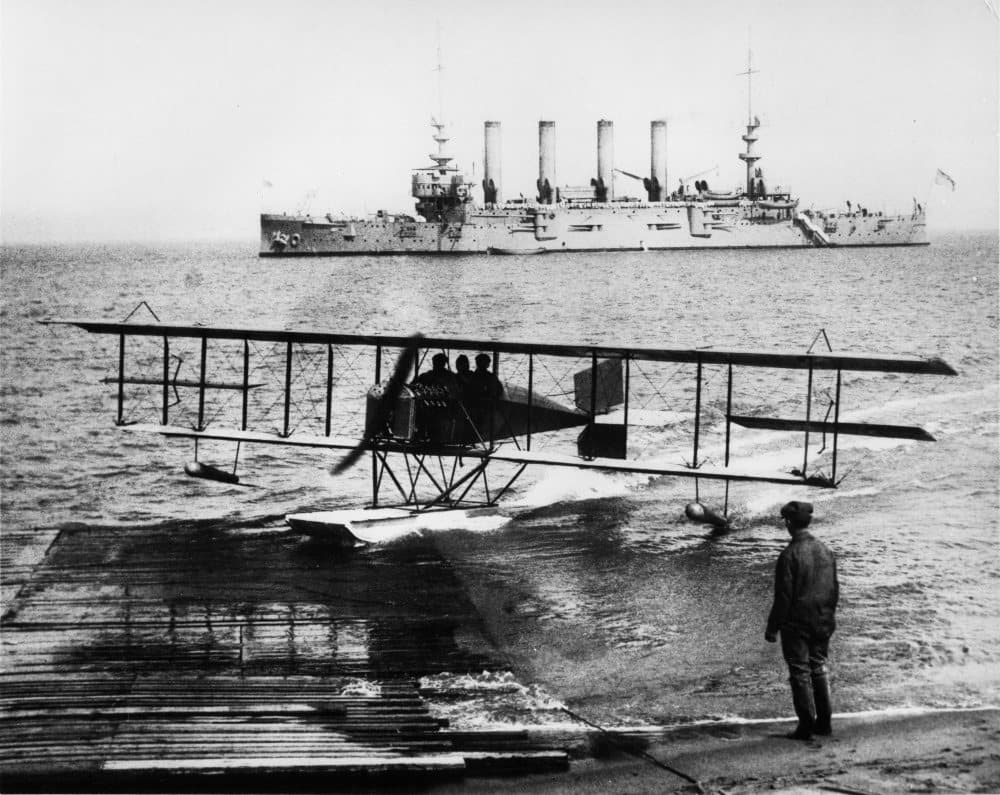
Their aeroplane, the Model G, was a three-seat seaplane on a single central float and, by the company's own account, the largest seaplane yet built in the United States. Allan flew it for the first time from San Francisco Bay on 15 June 1913. The venture was precarious, the machine was later damaged at its dock, but repaired, it earned its keep at the Panama-Pacific International Exposition of 1915, where more than 600 passengers paid $10 each for a ride over the bay without a single accident.
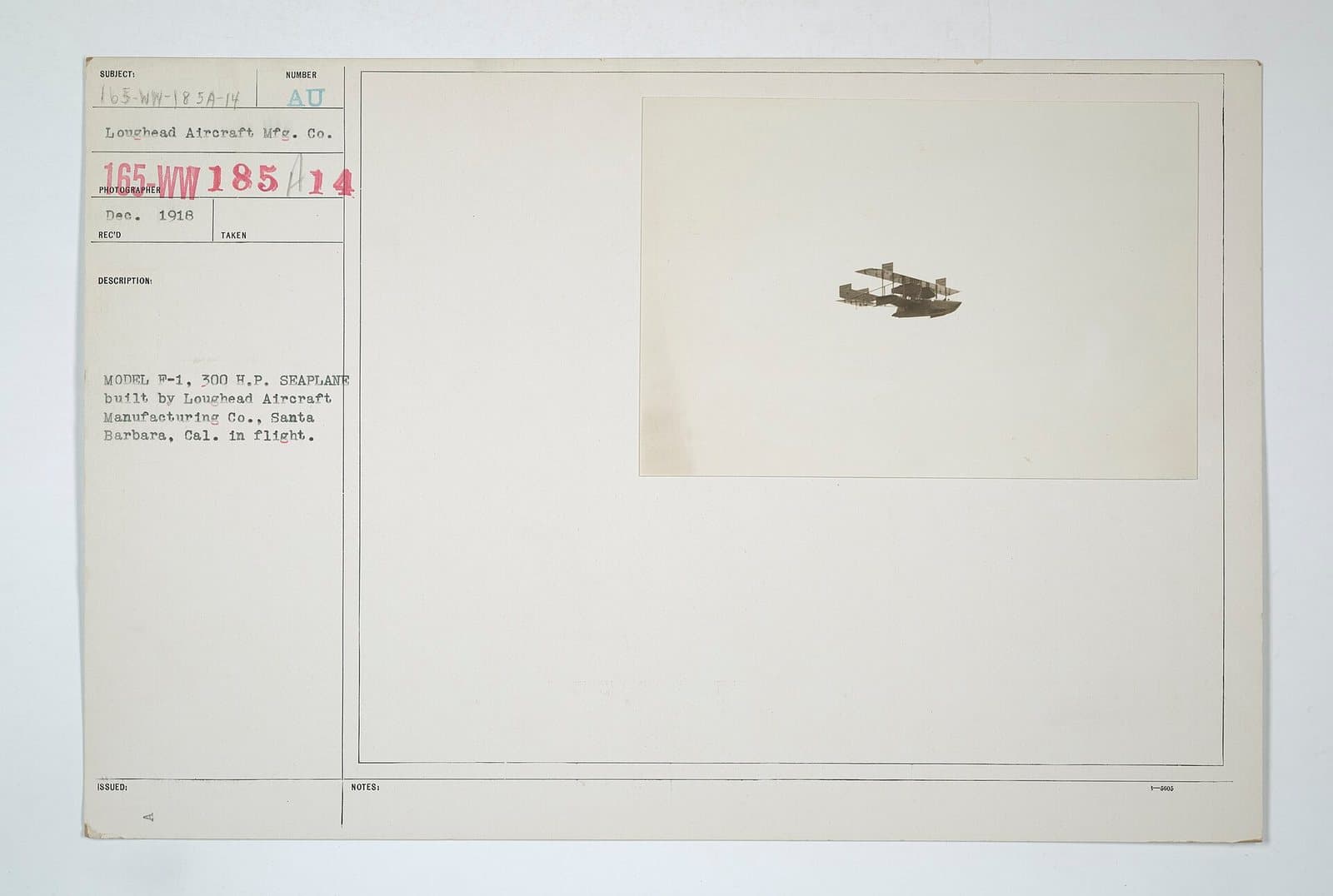
In 1916 the brothers moved south and founded the Loughead Aircraft Manufacturing Company in Santa Barbara. There they hired a young draughtsman named John K. "Jack" Northrop, who would go on to found a famous company of his own. The firm's F-1, a large twin-engined flying boat, was designed with the US Navy in mind and flew in 1918; the war ended before it could lead to production.
The company's most original machine was the S-1 of 1919, a small single-seat sport biplane intended for the private owner. Its fuselage was a moulded shell of plywood, formed in two halves in a concrete mould, a technique the Lougheads patented. It was light, strong and far ahead of its time, but it could not compete with the thousands of war-surplus aircraft being sold off for a fraction of its price.
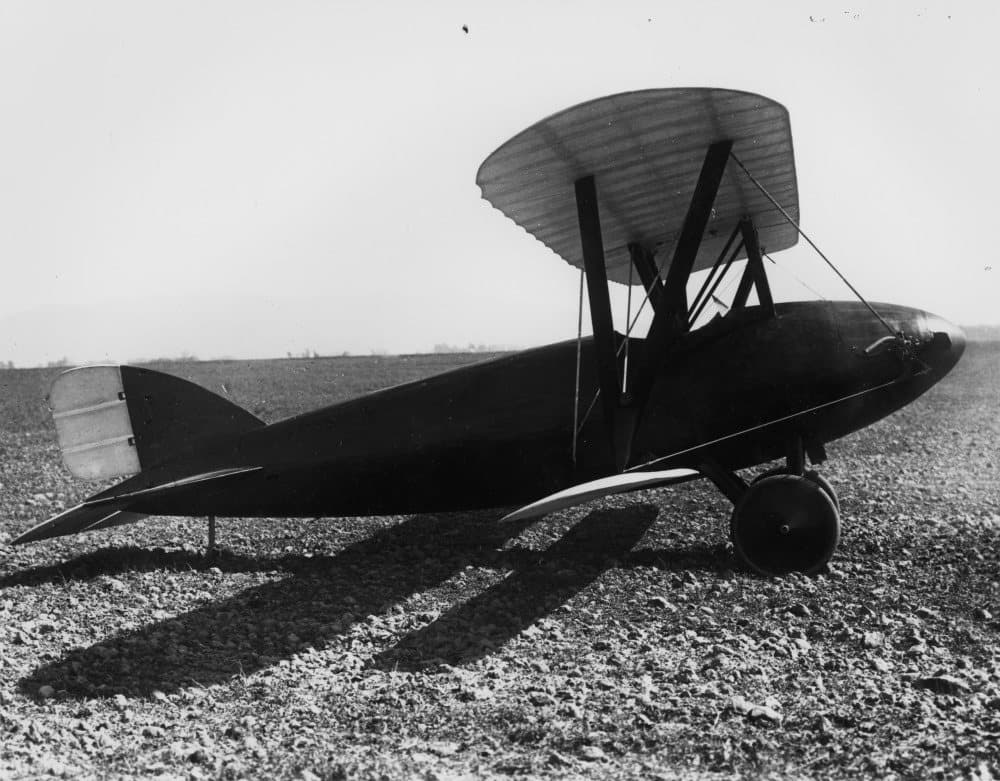
Without a market, Loughead Aircraft closed in 1921. Malcolm turned to the hydraulic four-wheel brake system he had developed, which was sold under the Lockheed name, the phonetic spelling the family had adopted because the original was so often mispronounced. Allan went into real estate. The moulded monocoque fuselage, however, survived the company that invented it.
Expansion
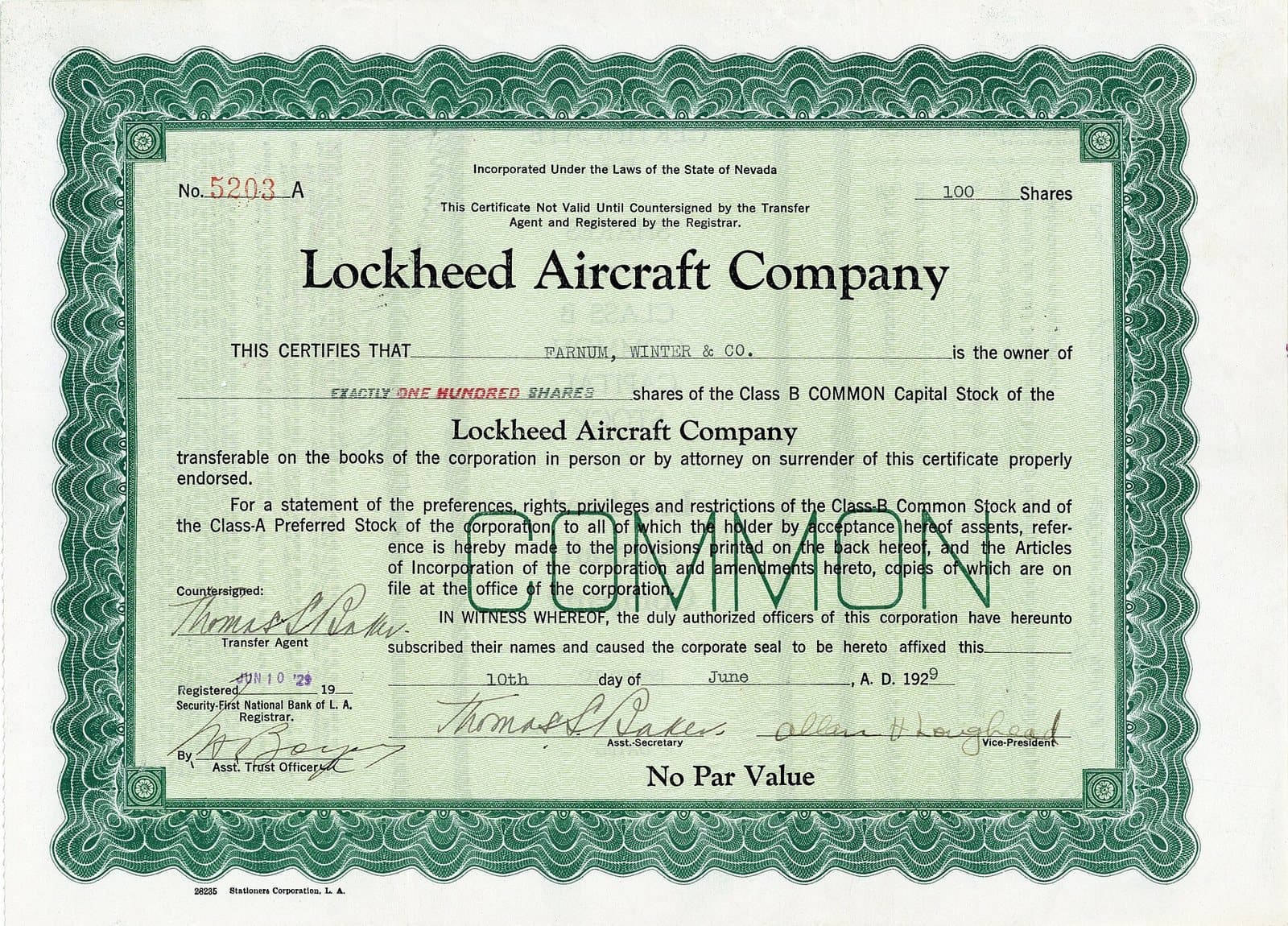
In December 1926 Allan Loughead, now Allan Lockheed in business, returned to aircraft with a new company, the Lockheed Aircraft Company, set up in a rented workshop in Hollywood with Jack Northrop as designer and backing from investors including Fred Keeler. Their first product was the Vega, a high-wing monoplane that combined the moulded plywood fuselage of the S-1 with a clean cantilever wing and no external struts. It first flew on 4 July 1927.
The Vega was fast, roomy and strikingly modern, and it made the new company's name almost at once. In April 1928 Hubert Wilkins and Carl Ben Eielson flew one across the Arctic from Alaska to Spitsbergen. The company outgrew Hollywood and moved in 1928 to Burbank, which would remain Lockheed's home for most of the century. Vegas, and the related Air Express, Sirius and Orion, became the aircraft of choice for pilots chasing speed and distance records.
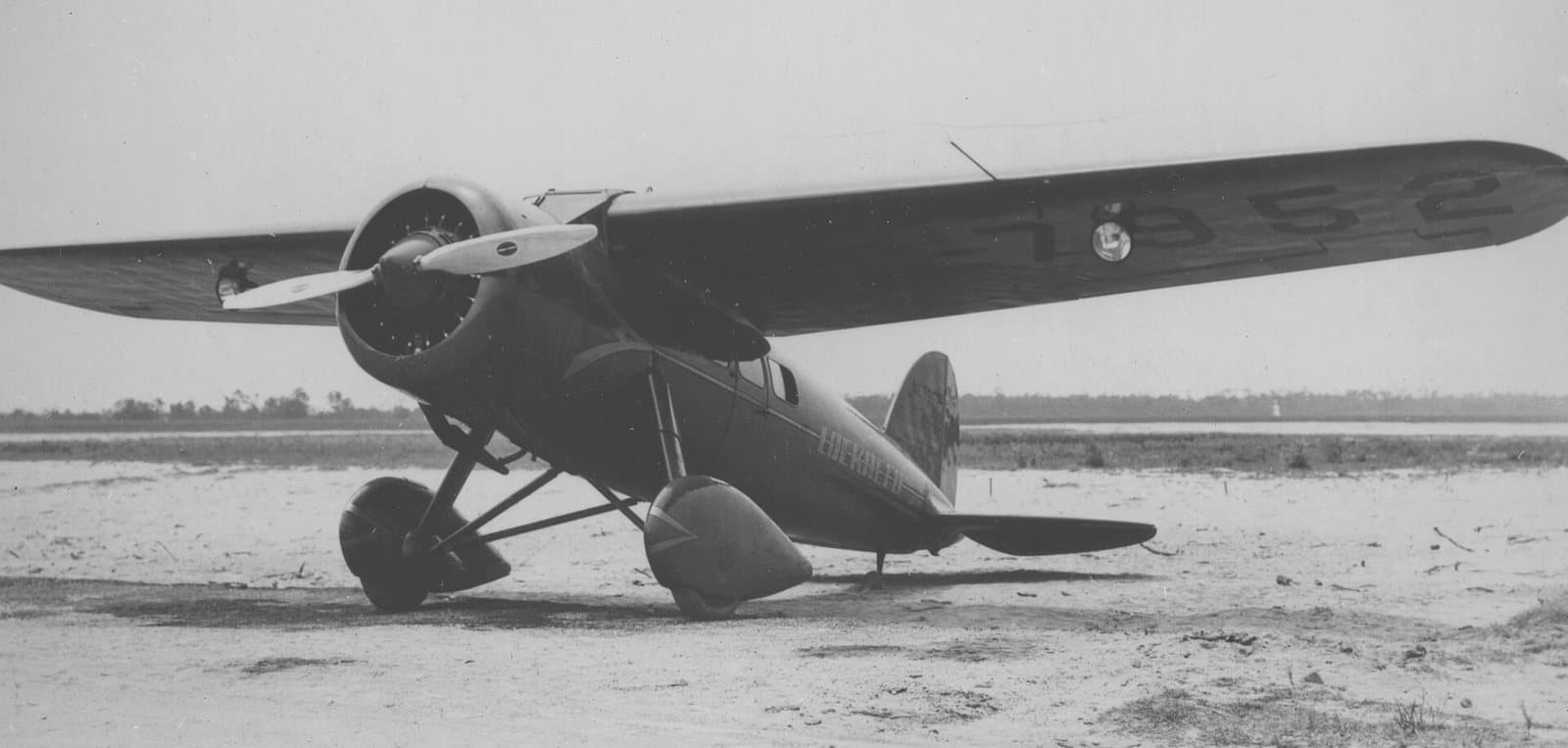
The most famous of those pilots flew Vegas. In 1931 Wiley Post and his navigator Harold Gatty flew the Vega "Winnie Mae" around the world in eight days, and in 1933 Post flew it round the world again, alone, in seven days, helped by an autopilot and a radio direction finder. On 20 and 21 May 1932 Amelia Earhart flew her red Vega 5B alone across the Atlantic, the first woman to do so, and followed it with the first nonstop solo flight across the United States by a woman. Both aircraft are preserved at the Smithsonian's National Air and Space Museum.
Commercial success did not make the company secure. In July 1929 the Detroit Aircraft Corporation, a holding company assembling a portfolio of aircraft makers, bought a controlling interest in Lockheed, and Allan Lockheed, who had opposed the sale, left soon afterwards. Detroit Aircraft was ruined by the Depression, and in 1931 Lockheed went into receivership.
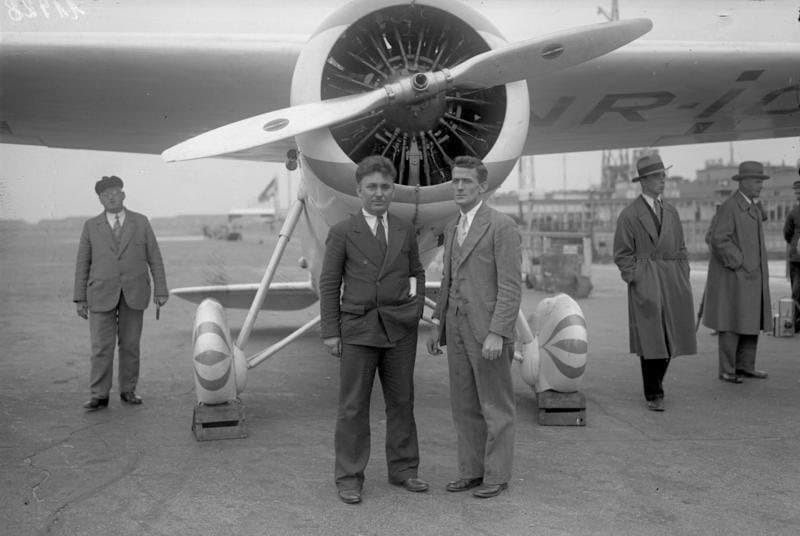
In June 1932 a group of investors led by Robert Gross, a Boston-born investment banker, and including the airline founder Walter Varney, bought the company's assets out of receivership for about $40,000. The new Lockheed Aircraft Corporation had few employees, no cash to speak of and a product line built in wood at a moment when the industry was moving to metal. Gross decided that its future lay in a new all-metal airliner.
Wartime production
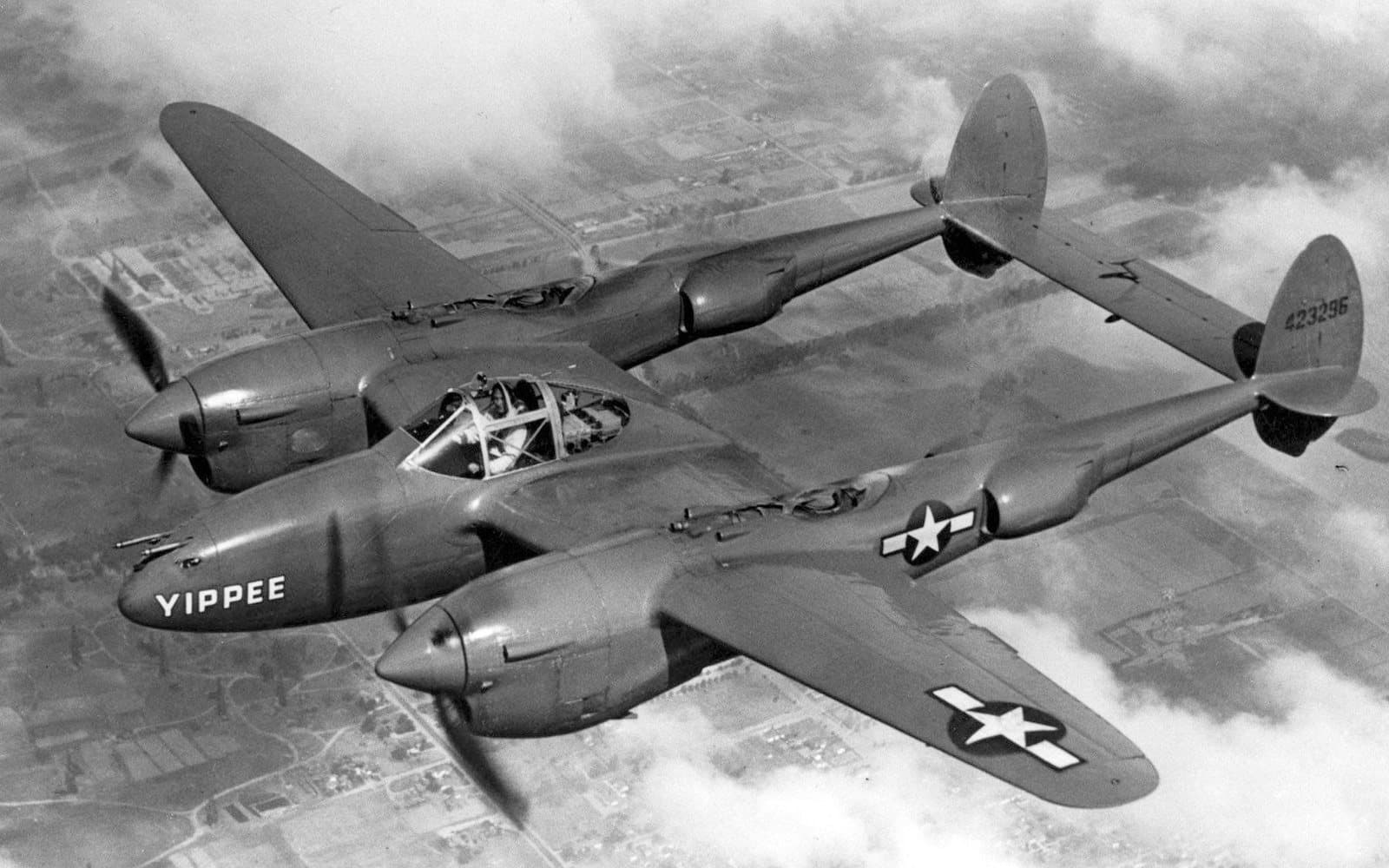
In 1937 the US Army Air Corps asked for a high-altitude interceptor with a performance well beyond anything then flying. Lockheed's answer, designed by a team under Hall Hibbard with Kelly Johnson, was radical: two Allison engines in long booms that also carried the turbo-superchargers and the twin tail, with the pilot and a concentrated battery of guns in a central nacelle between them. The XP-38 first flew on 27 January 1939.
The P-38 Lightning was demanding to build and, at first, to fly, but it was fast, long-ranged and heavily armed, and it became one of the most important American fighters of the war. It was at its best over the long distances of the Pacific. On 18 April 1943 P-38s flying from Guadalcanal intercepted and shot down the aircraft carrying Admiral Isoroku Yamamoto, commander of the Japanese Combined Fleet, and the two highest-scoring American aces of the war, Richard Bong and Thomas McGuire, both flew Lightnings. More than 10,000 were built.
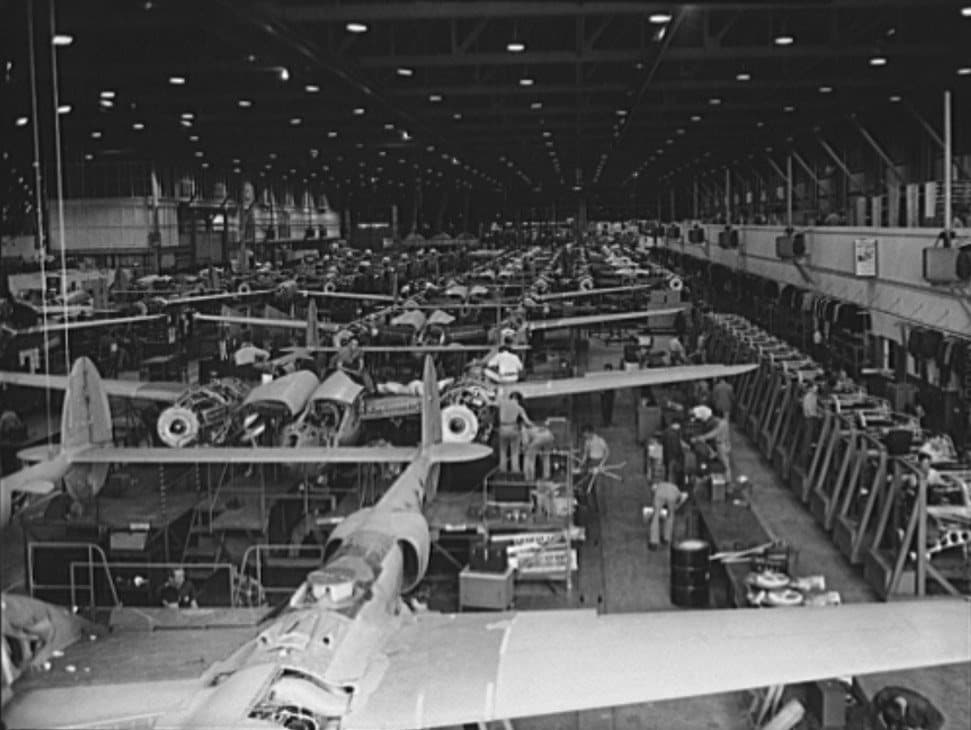
The war transformed the company in scale. Burbank grew into one of the largest aircraft plants in the country, and Lockheed's subsidiary Vega Aircraft, absorbed into the parent company in 1943, built Venturas and, under licence from Boeing, B-17 Flying Fortresses. Because the plants lay close to the Pacific coast, the factory roofs and car parks around Burbank were hidden under camouflage netting dressed to look, from the air, like fields and suburban housing.
The workforce changed as much as the buildings. Tens of thousands of new workers, a great many of them women who had never worked in industry before, were trained in months. Production lines were mechanised: by the later years of the war P-38 centre sections moved continuously along powered conveyor lines, a technique borrowed from the motor industry, rather than standing in fixed jigs.
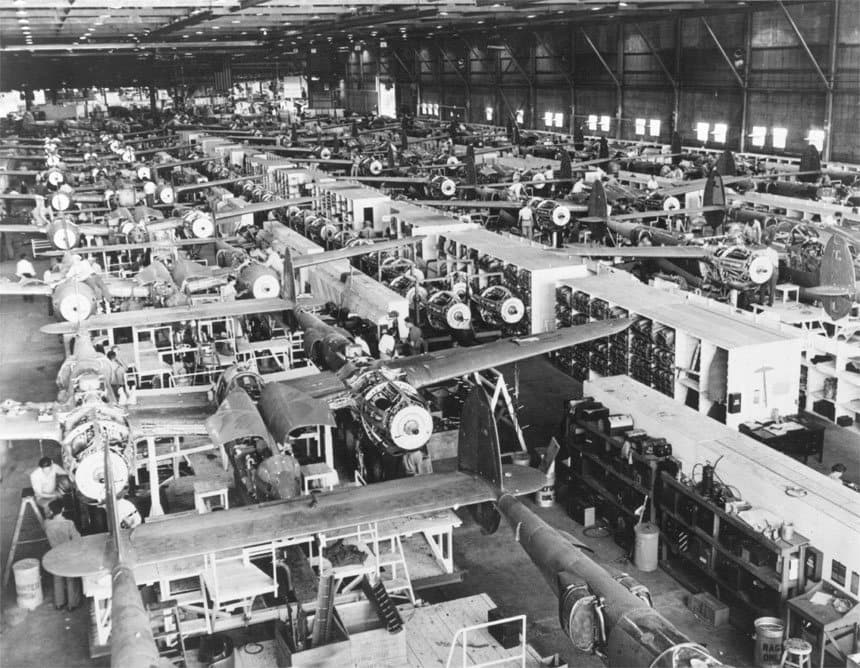
By the end of the war Lockheed and Vega had delivered some 19,000 aircraft, among them Hudsons, Venturas, Lightnings and Flying Fortresses. The company that had been bought for $40,000 thirteen years earlier had become one of the pillars of American air power: and had also, quietly, begun work in 1943 on a jet fighter.
The jet age
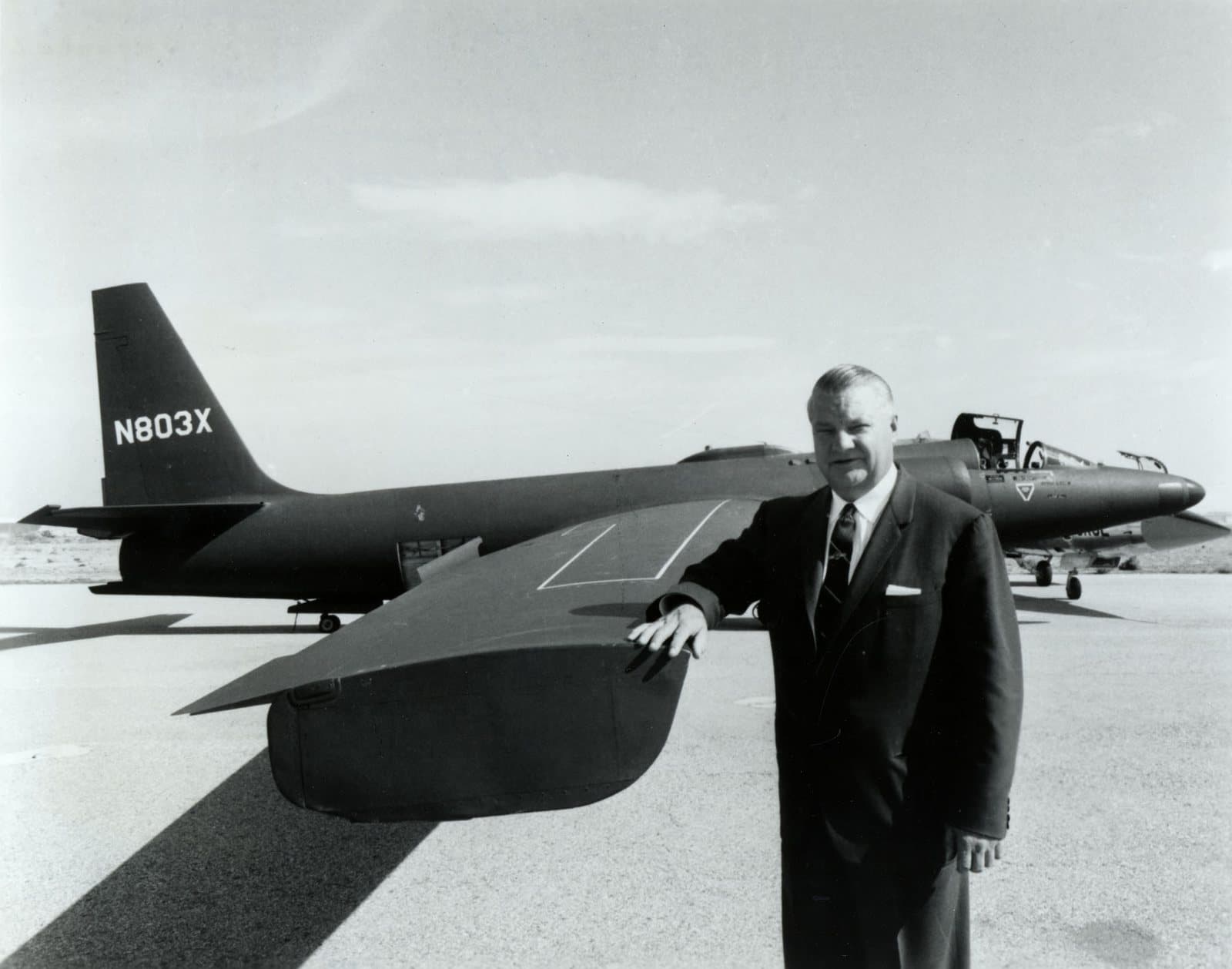
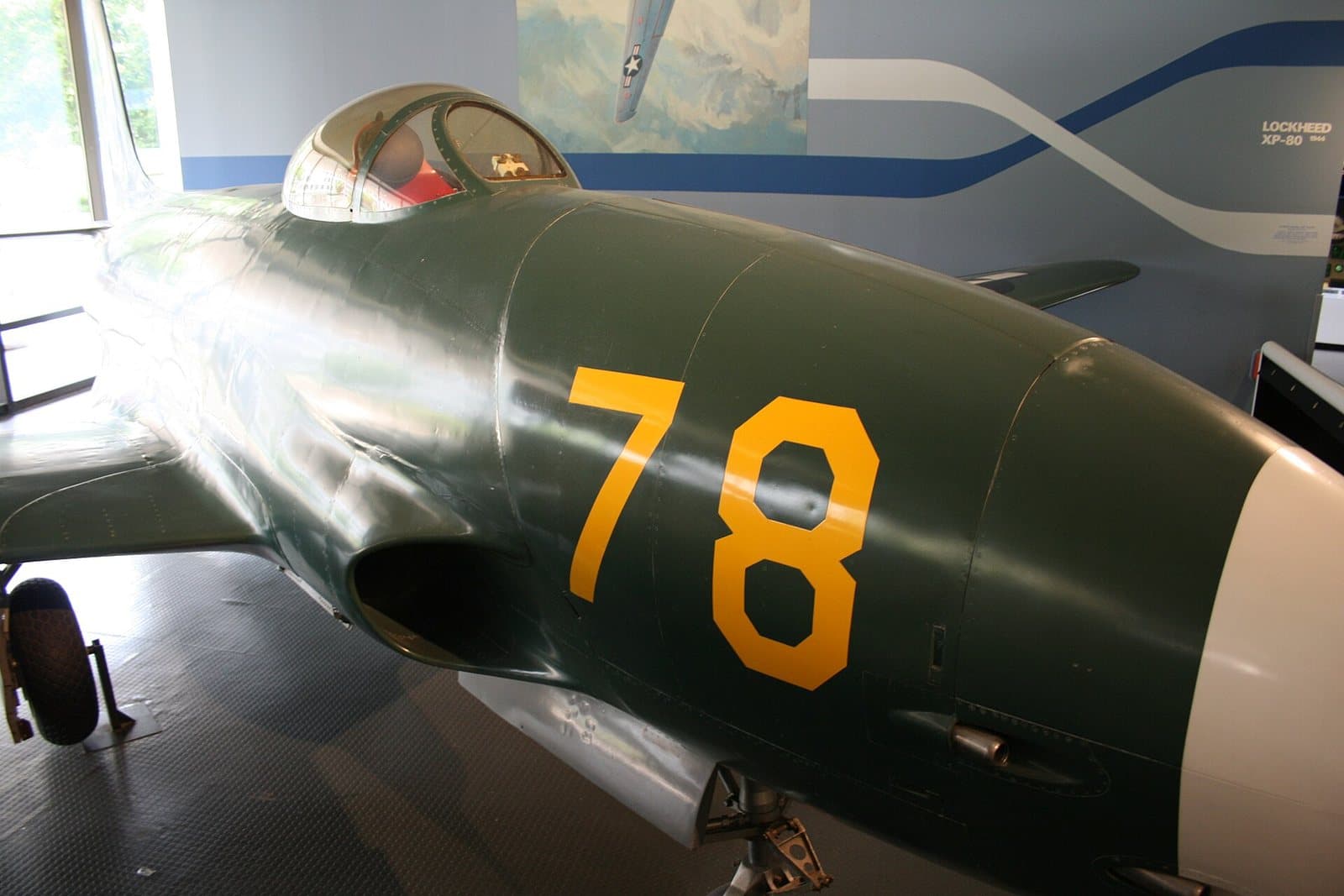
In June 1943 the Army Air Forces asked Lockheed for a fighter built around a British de Havilland jet engine and wanted it quickly. Kelly Johnson promised a prototype in 180 days and set up a small, isolated team with its own engineers and mechanics, housed at first in a temporary shelter beside a plastics factory whose smell gave the place its nickname: the Skunk Works, after the "Skonk Works" of Al Capp's comic strip Li'l Abner. His engineers delivered the XP-80 in 143 days, and it first flew on 8 January 1944.
The P-80 Shooting Star became the first American jet fighter in operational service, and its two-seat trainer derivative, the T-33, was built in thousands and flown by air forces around the world. More important than any single aircraft was the method: a small, trusted team with direct access to its customer, minimal paperwork, engineers working beside the shop floor, and Johnson's own rules for running a project. The Skunk Works became a permanent part of the company.
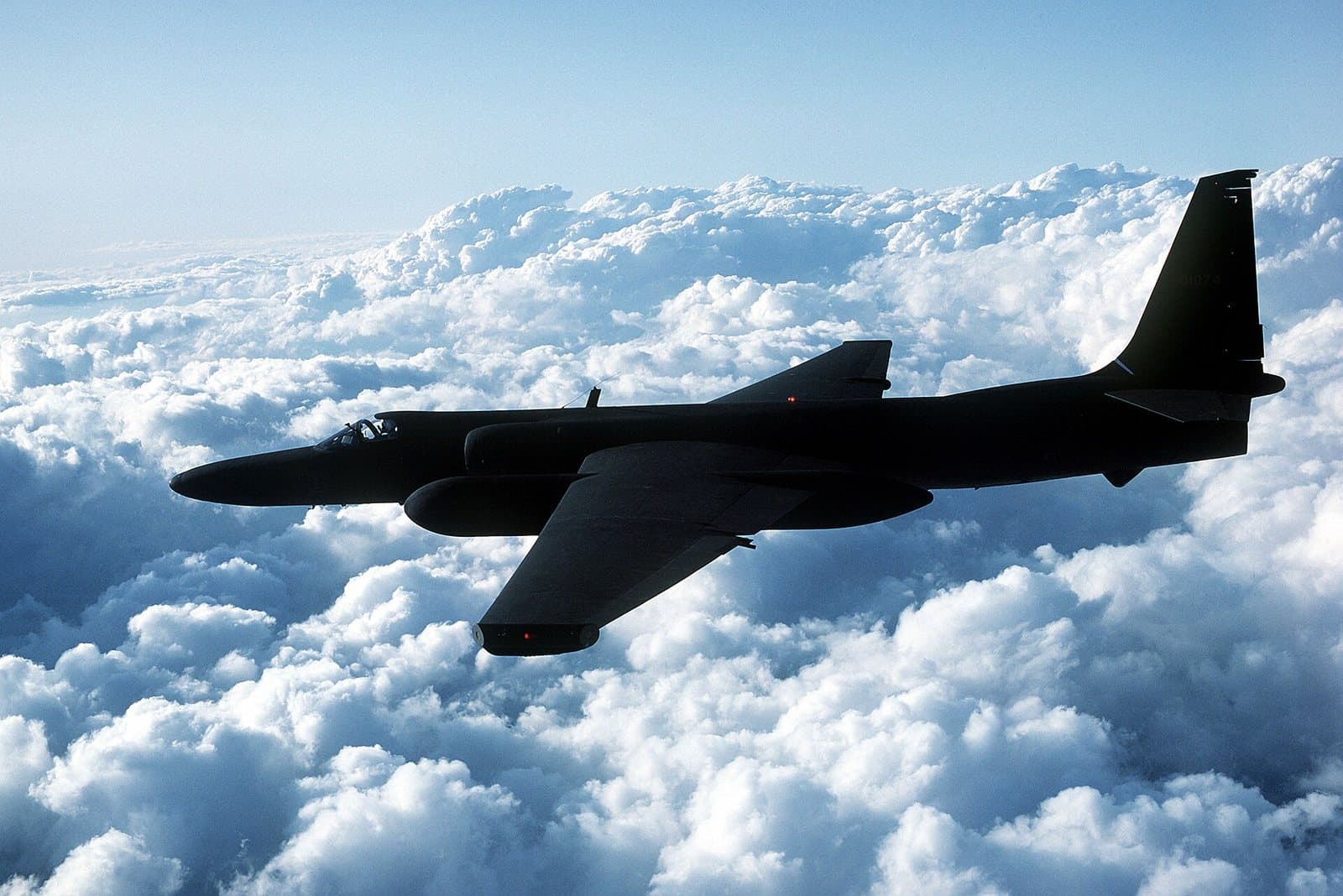
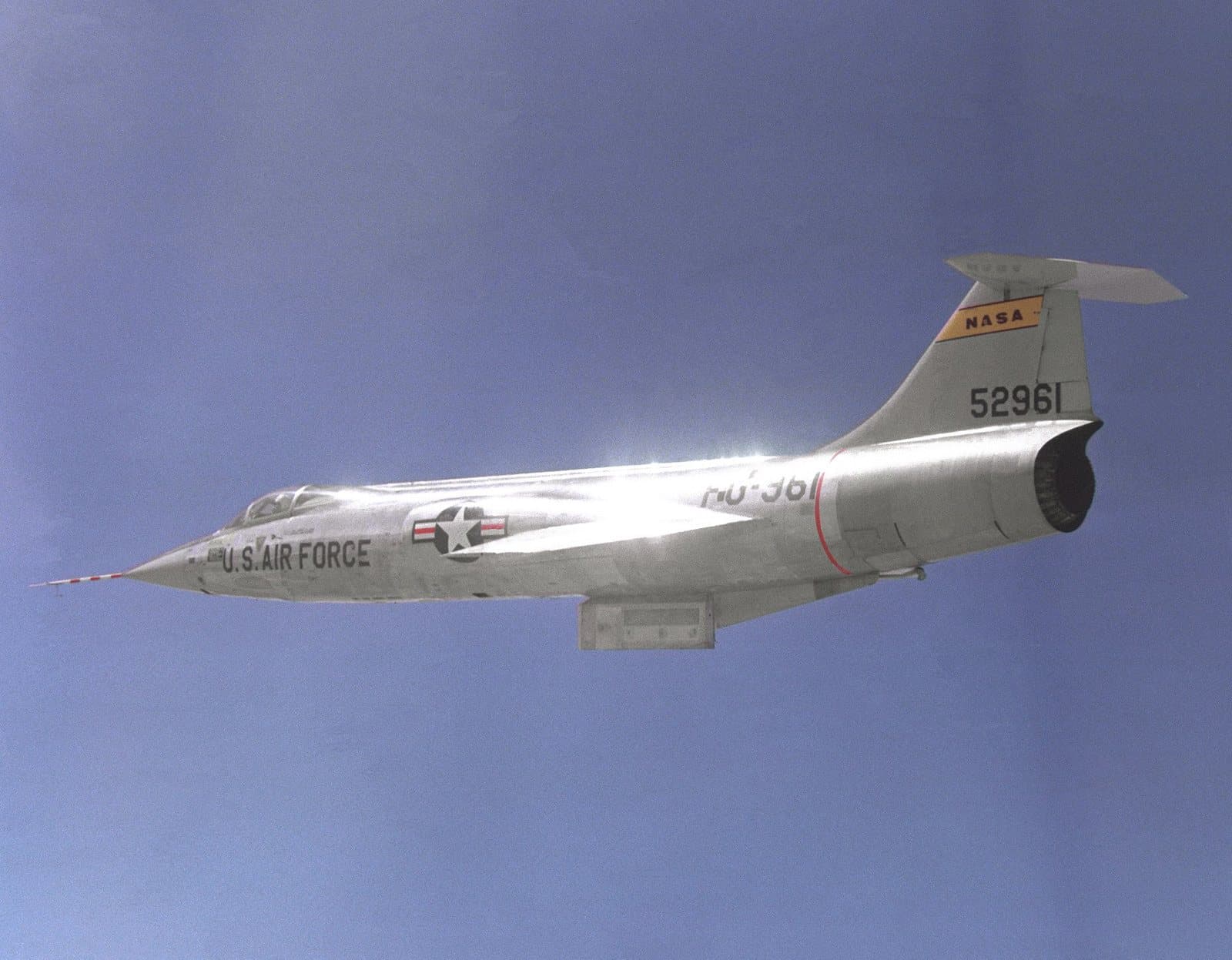
Its next fighter, the F-104 Starfighter, first flew in 1954 and pursued speed and climb above all else, on a short, very thin wing. Then, in 1954, the Central Intelligence Agency contracted Lockheed to build a reconnaissance aircraft able to overfly the Soviet Union beyond the reach of its defences. The U-2, in effect a jet-powered glider, flew in August 1955, and from 1956 it photographed Soviet territory until 1 May 1960, when Francis Gary Powers was shot down near Sverdlovsk.
The U-2's successor had to fly too high and too fast to be intercepted at all. Johnson's team designed the A-12 for the CIA, built largely of titanium to withstand the heat of sustained flight above Mach 3; it first flew in 1962. The Air Force's two-seat version, the SR-71 Blackbird, followed on 22 December 1964. Thirty-two were built, and in 1976 an SR-71 set an absolute speed record for a jet aircraft that still stands.
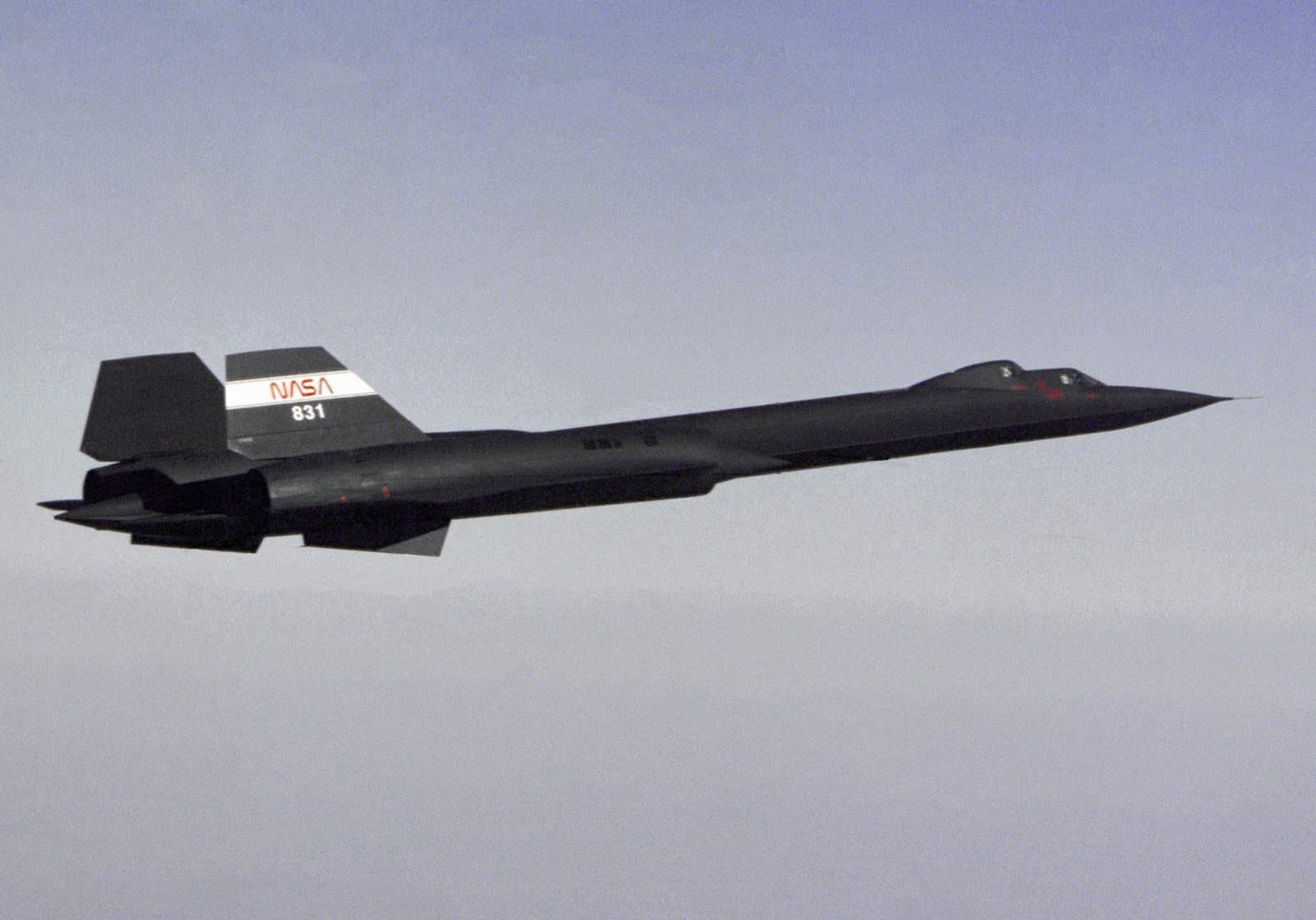
Johnson retired in 1975 and was succeeded by Ben Rich, under whom the Skunk Works built the F-117 Nighthawk, the first operational aircraft designed around stealth. The SR-71 was retired by the Air Force in 1990 and flown by NASA for research through the 1990s; the Skunk Works name passed intact to Lockheed Martin.
Products
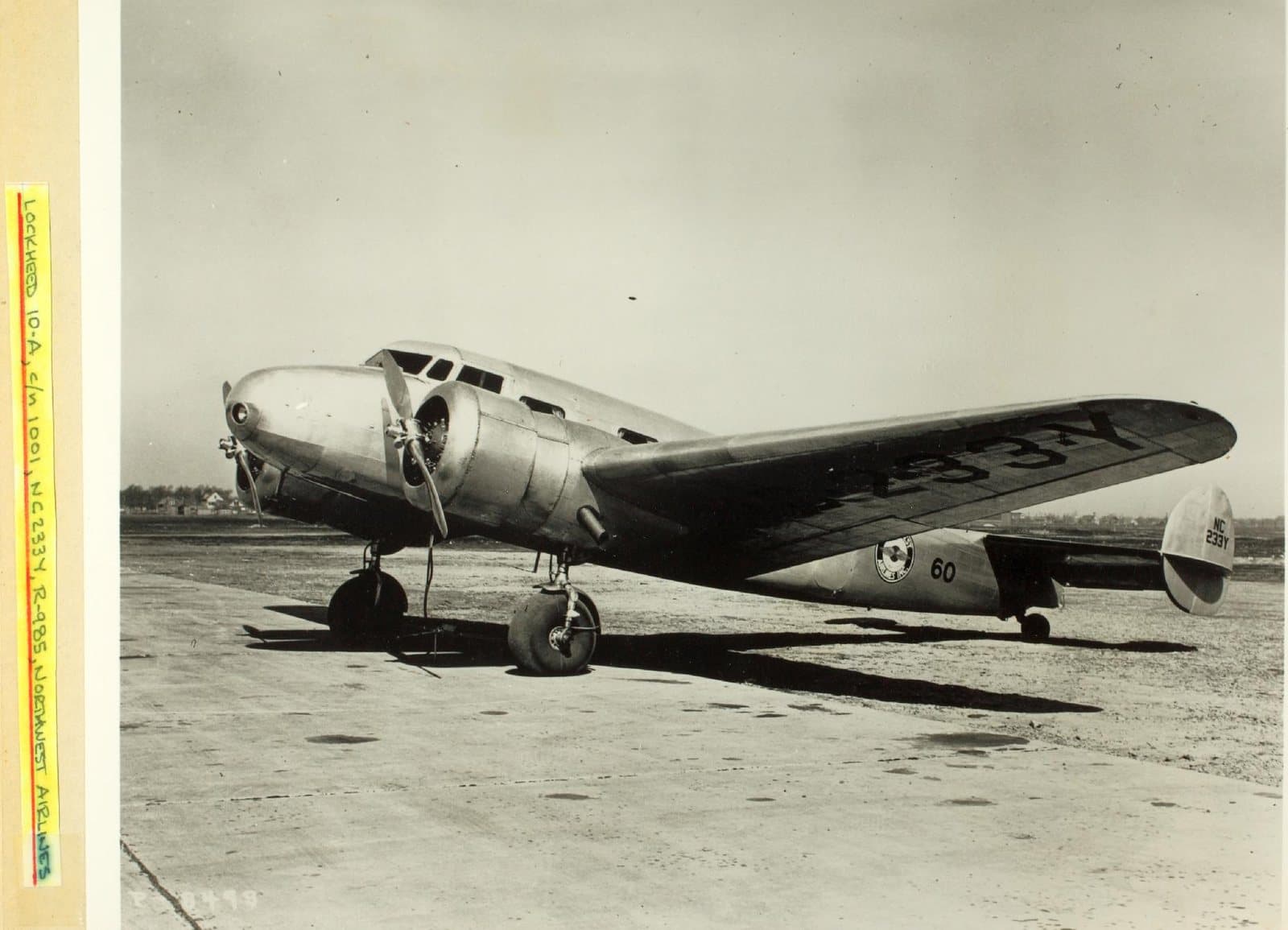
The airliner Gross wanted was the Model 10 Electra, a ten-passenger, twin-engined, all-metal monoplane sized for the regional routes that the larger Douglas and Boeing transports served poorly. It first flew on 23 February 1934. During its development a young engineer from the University of Michigan, Clarence "Kelly" Johnson, found in wind-tunnel testing that the original single fin gave poor directional stability and recommended the twin-fin tail that became a Lockheed signature for two decades.
The Electra sold to airlines in the United States and abroad and gave the company a secure footing. It was followed by the smaller Model 12 Electra Junior, popular as an executive aircraft, and by the larger Model 14 Super Electra of 1937. In July 1938 Howard Hughes flew a Model 14 around the world in less than four days, one of the most publicised flights of the decade.
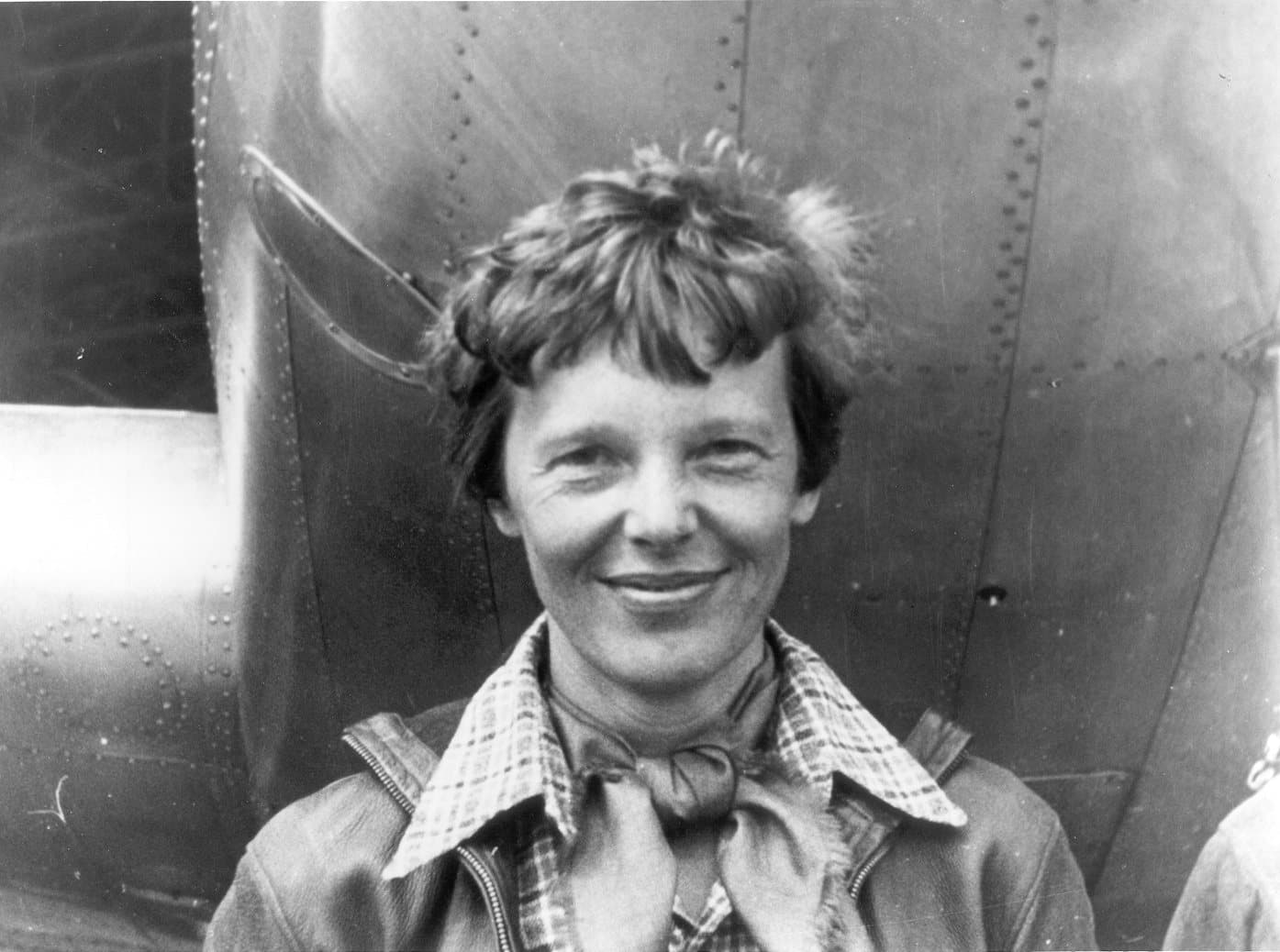
The Electra also carried the most famous disappearance in aviation. Amelia Earhart's specially equipped Electra 10-E, bought with funds raised through Purdue University, was the aircraft in which she and her navigator Fred Noonan vanished over the central Pacific on 2 July 1937, on the leg to Howland Island during their attempt to fly around the world.
The Model 14 opened the door to Lockheed's first large military contract. In 1938 the British Purchasing Commission, looking for a maritime reconnaissance aircraft that could be delivered quickly, visited Burbank; Lockheed's engineers produced a military version of the Model 14 in a matter of days, and Britain placed the largest order the company had ever received. As the Hudson it served with Royal Air Force Coastal Command from 1939 and with the air forces of Australia, Canada, New Zealand and the United States.
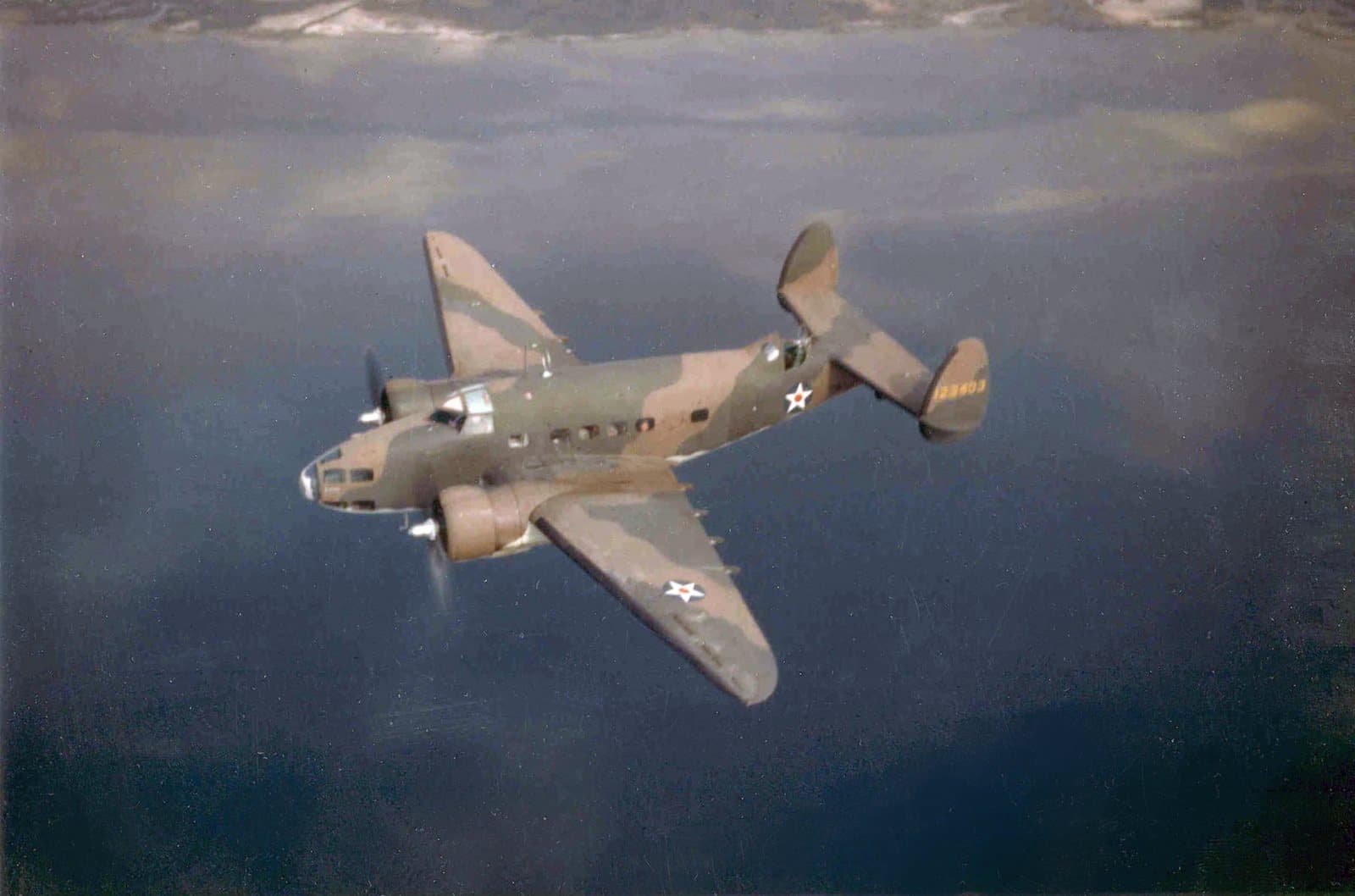
The Hudson made Lockheed a significant military supplier before the United States entered the war, and its larger successors, the Ventura and the Harpoon, kept the line in production through 1945. The expansion it paid for, in plant, people and experience of quantity production, was the foundation on which the company's wartime output was built.
Defence
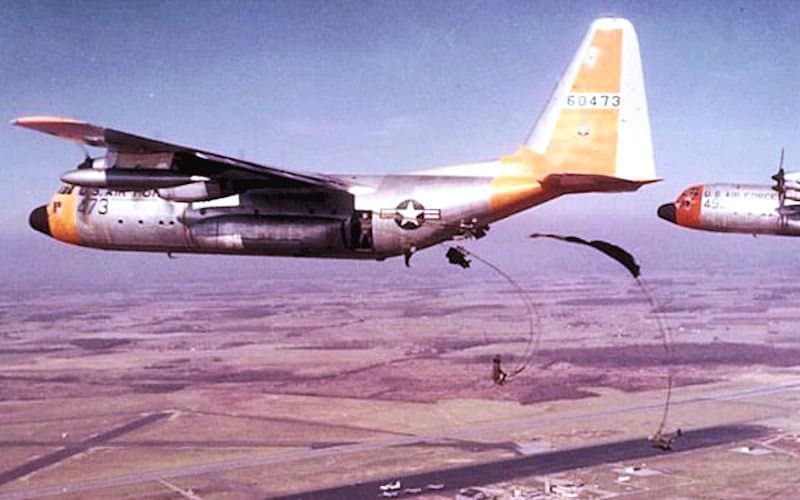
The Korean War showed the US Air Force that it had no transport able to carry troops and equipment into short, rough airstrips close to the fighting. In 1951 it issued a requirement for a new medium tactical transport, and Lockheed's design, with four Allison turboprops, a high wing, a cargo floor at truck-bed height and a rear loading ramp, won. The first YC-130 prototype flew from Burbank on 23 August 1954.
Production went not to California but to Marietta, Georgia, where Lockheed had reopened the huge government-owned wartime bomber plant in 1951. The C-130 Hercules proved one of the most adaptable aircraft ever built: transport, paratroop carrier, gunship, tanker, weather reconnaissance aircraft, Antarctic ski-plane and firefighter. Successive models kept the same basic layout, and Lockheed Martin continues to build the C-130J version at Marietta.
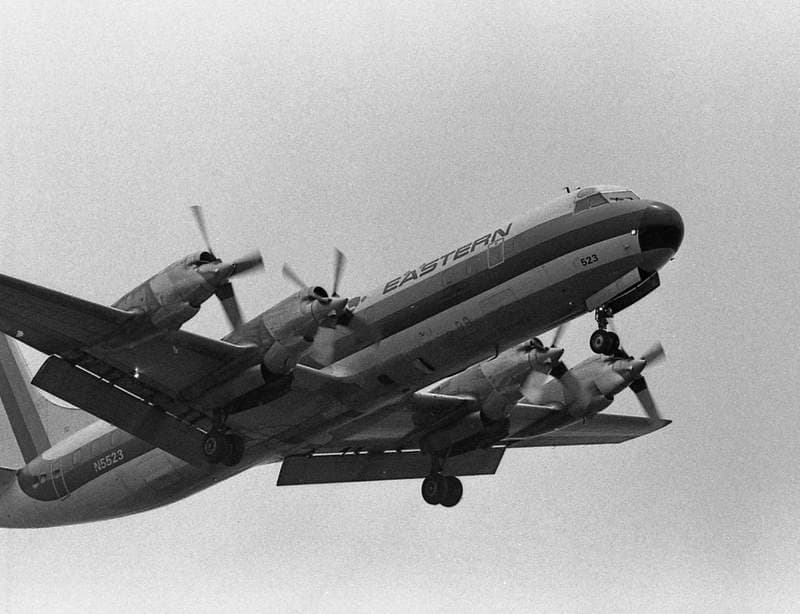
The same turboprop experience produced Lockheed's first post-war domestic airliner, the L-188 Electra, which first flew in December 1957. The Electra suffered two fatal in-flight break-ups in 1959 and 1960, traced to a whirl-mode vibration in the engine mountings; the fix was effective, but by then airlines were moving to jets and sales never recovered.
The Electra's airframe had a far longer life at sea. The US Navy chose it as the basis of a new anti-submarine patrol aircraft, and a modified Electra flew in 1958 as the aerodynamic prototype of the P3V, later P-3 Orion. With a longer range, a weapons bay and a magnetic anomaly detector boom in the tail, the Orion became the Navy's standard land-based patrol aircraft for decades and was exported widely.
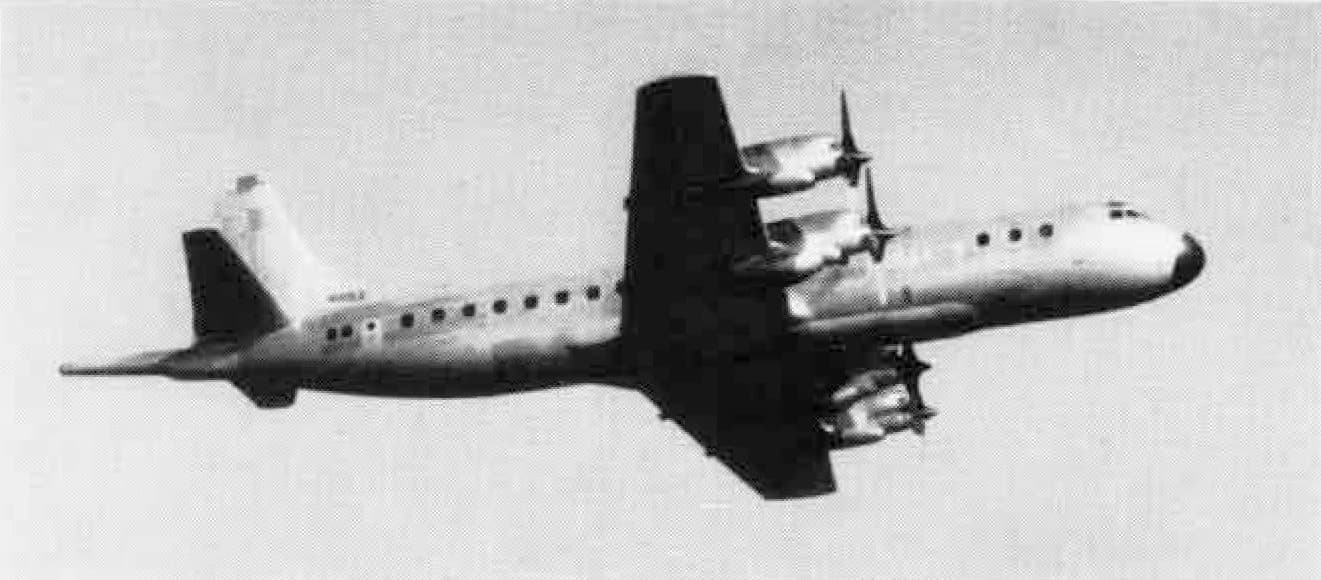
Marietta also built the strategic jet transports that gave the Air Force global reach. The C-141 Starlifter first flew in December 1963 and carried much of the airlift of the Vietnam War. The far larger C-5 Galaxy followed in June 1968; its cost overruns became a political controversy and weighed heavily on the company's finances at the very moment it was launching a new airliner.
Space
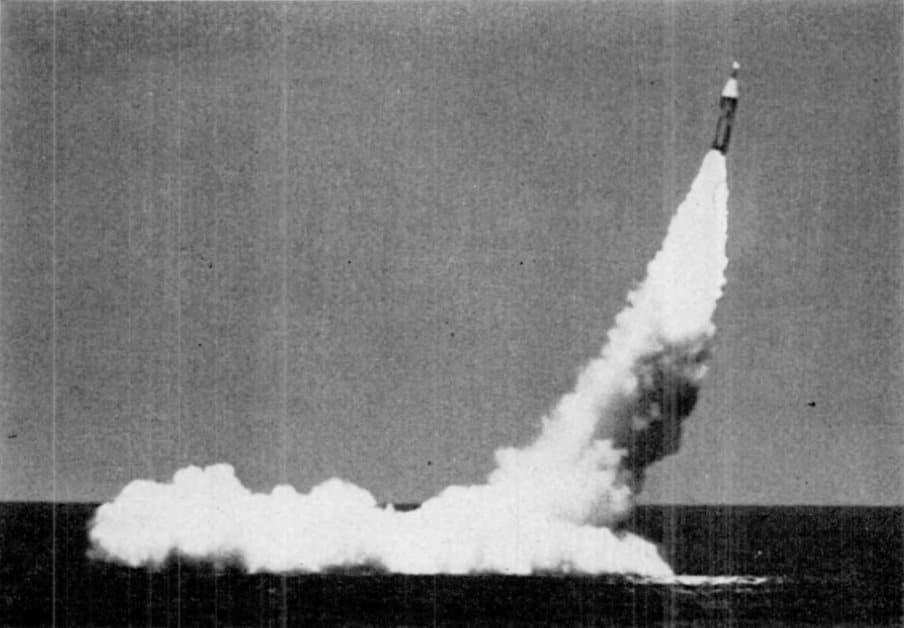
In 1954 Lockheed created a Missile Systems Division and, within a few years, moved it to a new complex at Sunnyvale, at the southern end of San Francisco Bay, where it grew into Lockheed Missiles & Space Company. It became, by revenue, the most important part of the corporation for much of the Cold War.
Its defining programme was the submarine-launched ballistic missile. Lockheed was prime contractor for the Navy's Polaris, a solid-fuel missile that could be fired from a submerged submarine. On 20 July 1960 the USS George Washington launched the first Polaris from beneath the Atlantic off Cape Canaveral, and the Navy's first deterrent patrol followed that November. Lockheed built the successor Poseidon, which entered service in 1971, and the Trident I and Trident II; the Trident II D5 entered service in 1990 and remains the US and British submarine-launched missile.
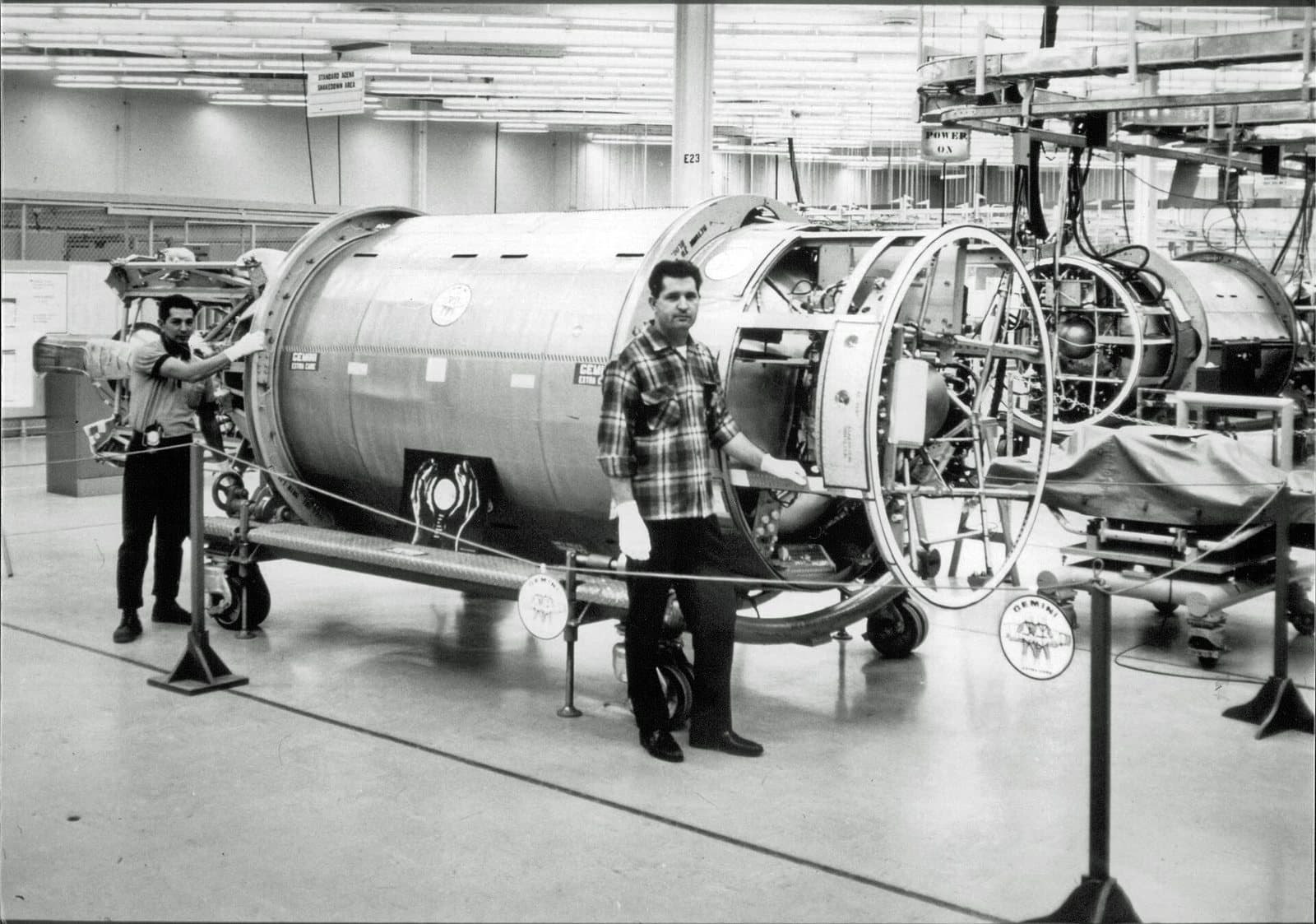
In space, Lockheed's Agena upper stage was one of the workhorses of the early space age. It carried the Corona reconnaissance satellites into orbit from 1959, launched many scientific and military spacecraft, and served NASA as the target vehicle for the Gemini programme: in March 1966 Neil Armstrong and David Scott docked Gemini 8 with an Agena, the first docking of two spacecraft in orbit.
Sunnyvale also built a long line of classified reconnaissance satellites, and in the 1970s Lockheed won the contract to build the support systems module and integrate the Hubble Space Telescope for NASA. Hubble was assembled and tested at the Lockheed plant through the 1980s, was delayed by the loss of Challenger in 1986, and was finally launched from the Space Shuttle Discovery in April 1990.
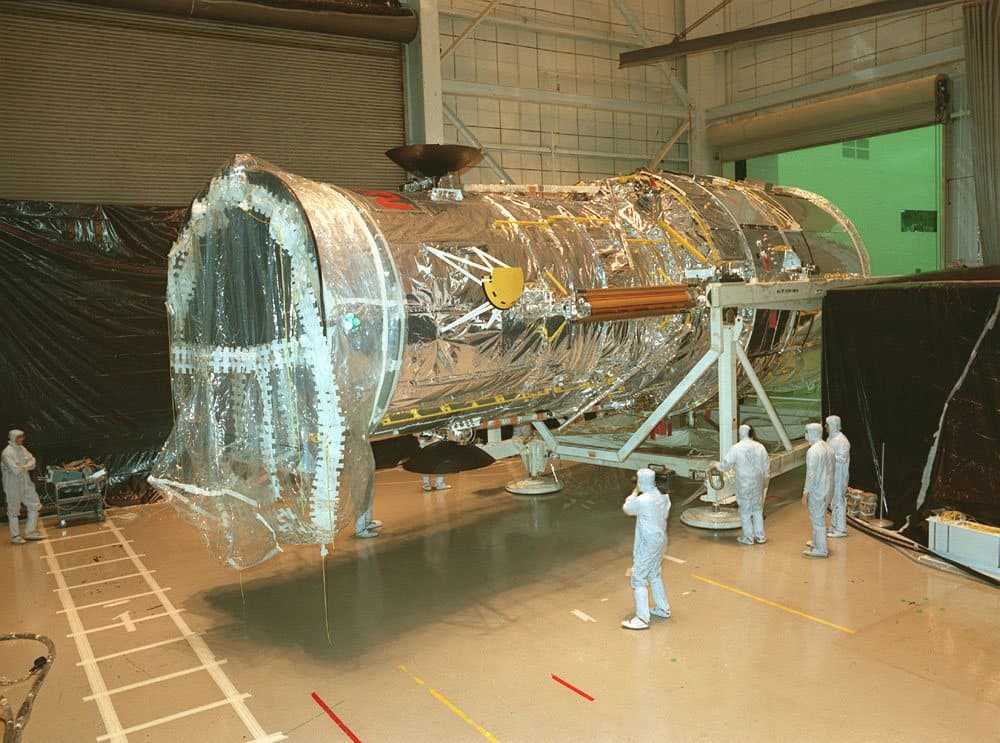
From 1983 Lockheed Space Operations Company also held NASA's contract to process the Space Shuttle orbiters at Kennedy Space Center. By the early 1990s missiles and space were the heart of the business, and it was the strength of this side of the company, matched with Martin Marietta's own launch vehicles and satellites, that made the eventual merger so compelling.
Competition
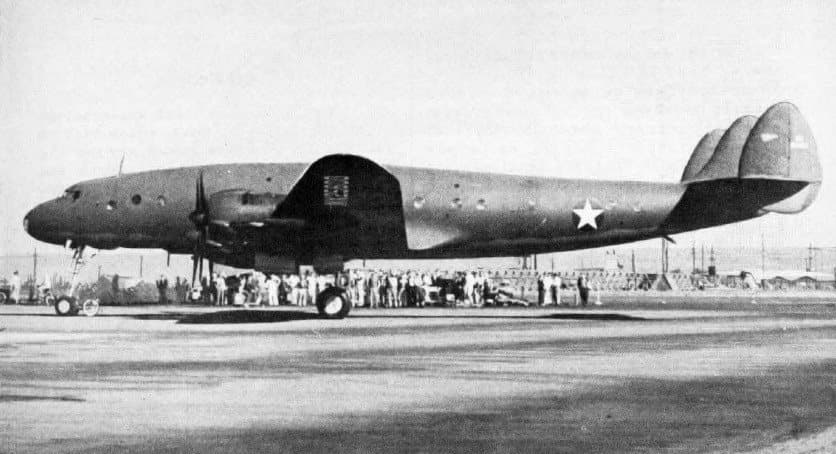
Lockheed's great airliner rivalry was with Douglas, and it began with the Constellation. Designed from 1939 with Transcontinental & Western Air, whose principal shareholder was Howard Hughes, it was a pressurised four-engined airliner with a curved, dolphin-like fuselage and a triple tail sized to fit existing hangars. The prototype first flew on 9 January 1943, but the war put the whole programme into military service as the C-69 transport.
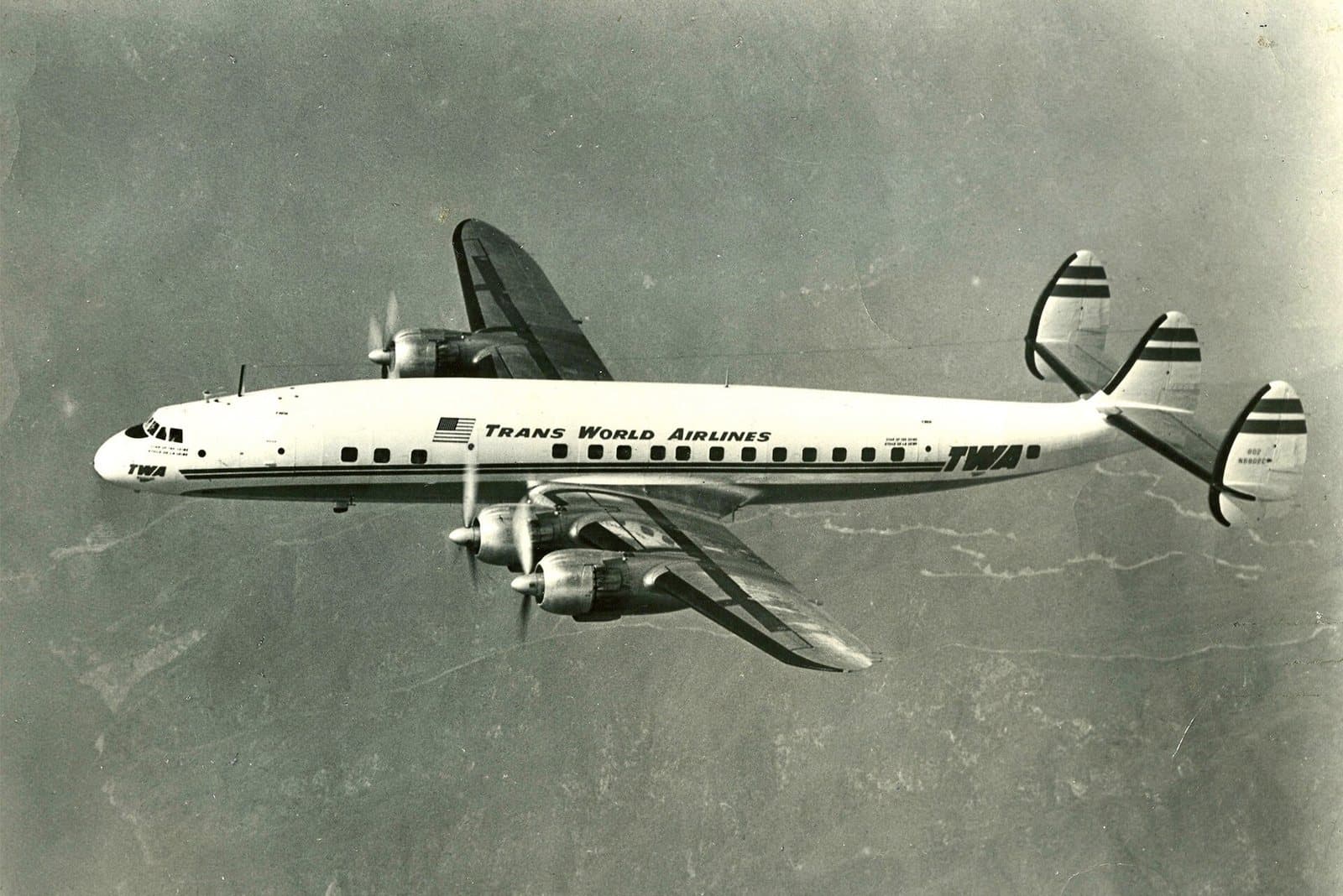
From 1946 the Constellation entered airline service with TWA, Pan American and, soon, carriers across the world, competing directly with the Douglas DC-6 and DC-7. Lockheed stretched it into the L-1049 Super Constellation and finally the long-range L-1649 Starliner, but piston airliners were overtaken by the jet, and Lockheed did not build a first-generation jet airliner.
Its return to the market was the L-1011 TriStar, a wide-body trijet launched in 1968 against the very similar McDonnell Douglas DC-10. Lockheed chose a single engine, the Rolls-Royce RB211. The TriStar first flew on 16 November 1970; in February 1971 Rolls-Royce went into receivership, crippled by the cost of developing that engine, and the programme and Lockheed itself were suddenly in danger.
The British government nationalised Rolls-Royce to keep the RB211 alive, and in Washington the Nixon administration asked Congress to guarantee bank loans to Lockheed. The Emergency Loan Guarantee Act, which authorised guarantees of up to $250 million, passed the Senate by a single vote and was signed in August 1971. It was fiercely argued over as a bailout of a private company; Lockheed was the only firm ever to use it, and the guarantee was ended in 1977 when the company refinanced with its banks.
The TriStar entered service with Eastern Air Lines in 1972 and was admired by pilots for its advanced automatic landing system, but two nearly identical aircraft competing for one market could not both make money, and the programme lost Lockheed heavily. Production ended in 1984 after 250 aircraft, and Lockheed left the commercial airliner business for good.

The struggle to sell aircraft abroad produced the company's worst scandal. In 1975 and 1976 the US Senate Subcommittee on Multinational Corporations, chaired by Frank Church, established that Lockheed had for years paid bribes and secret commissions to officials and intermediaries in several countries to win orders for the F-104 Starfighter, the TriStar and other aircraft.
The consequences abroad were grave. In Japan, former Prime Minister Kakuei Tanaka was arrested in 1976 over payments connected with All Nippon Airways' purchase of TriStars and was later convicted. In the Netherlands, a government commission found that Prince Bernhard, the Queen's husband, had accepted money from Lockheed, and he gave up his military and many business posts. In Italy, a former defence minister was convicted. In the United States, chairman Daniel Haughton and president Carl Kotchian resigned in February 1976, and the affair helped bring about the Foreign Corrupt Practices Act of 1977, which made the bribery of foreign officials by American companies a federal crime.
Mergers and ownership
The company that came out of the 1970s was smaller in ambition and steadier in purpose. In 1977 the Lockheed Aircraft Corporation changed its name to Lockheed Corporation, acknowledging that aircraft were now only one part of its business, and after the TriStar it concentrated on government work: missiles, satellites, military aircraft and services. In 1987 its corporate headquarters moved from Burbank to Calabasas, on the western edge of Los Angeles.
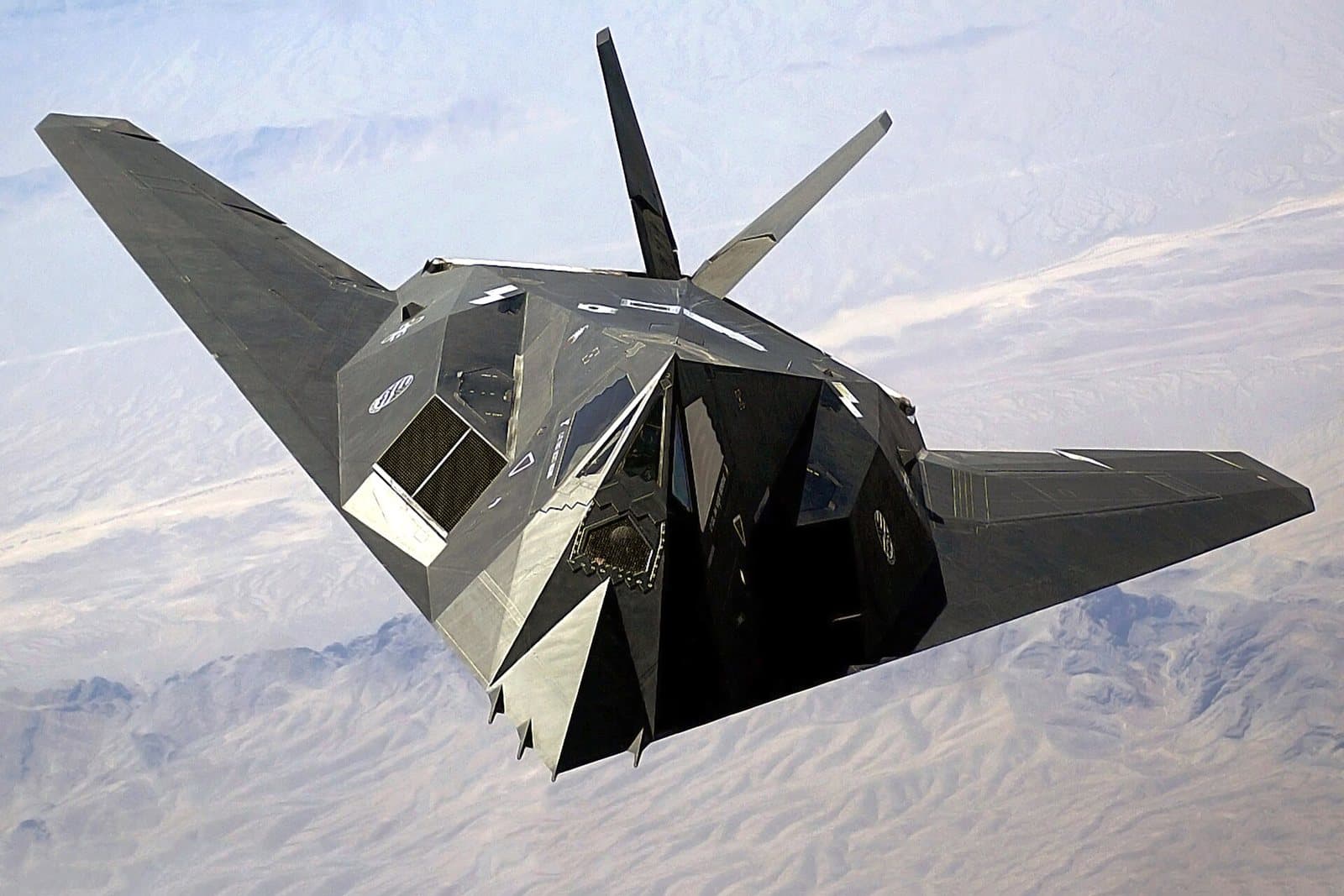
The late 1980s brought both vindication and pressure. In November 1988 the Air Force publicly acknowledged the F-117 Nighthawk, which the Skunk Works had flown in secret since 1981, and in April 1991 a team of Lockheed, Boeing and General Dynamics won the contest for the Advanced Tactical Fighter that became the F-22 Raptor. At the same time the company fought off a hostile proxy campaign by the investor Harold Simmons in 1990, and the end of the Cold War promised steep cuts in defence spending.
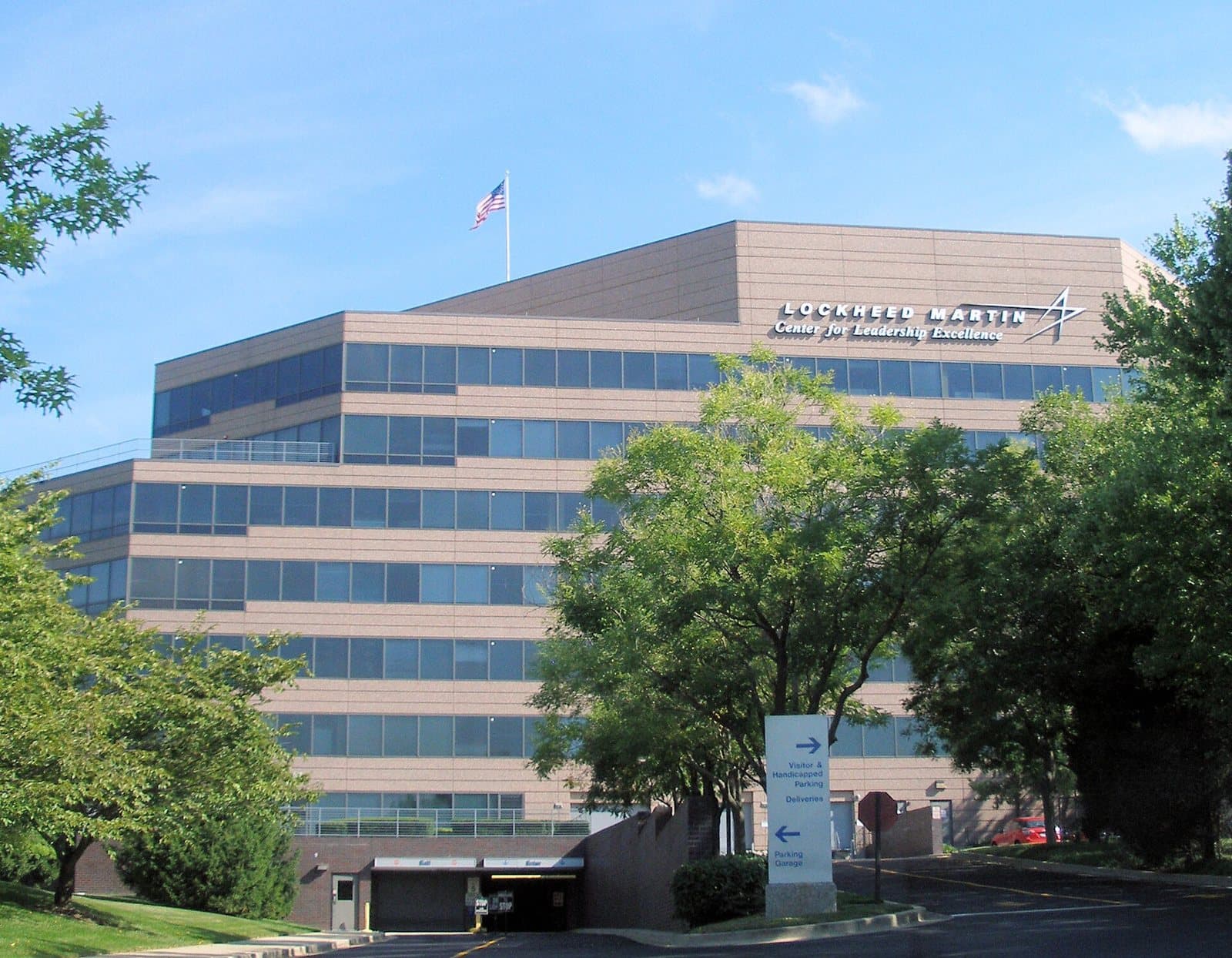
The industry's answer to shrinking budgets was consolidation, and Lockheed moved early. In 1993 it bought the Fort Worth fighter division of General Dynamics, maker of the F-16. In March 1994 it opened merger talks with Martin Marietta, the Bethesda-based company descended from the Glenn L. Martin Company, whose origins, like Lockheed's, lay in California in 1912. The two announced their merger on 30 August 1994.
The merger was completed on 15 March 1995, creating Lockheed Martin. It was presented as a merger of equals: Lockheed's chairman, Daniel Tellep, became chairman and chief executive, Martin Marietta's Norman Augustine became president with the understanding that he would succeed Tellep, and the new company was headquartered at Martin Marietta's offices in Bethesda, Maryland. The name put Lockheed first, reportedly because "Martin Lockheed" sounded too much like a person.
Legacy
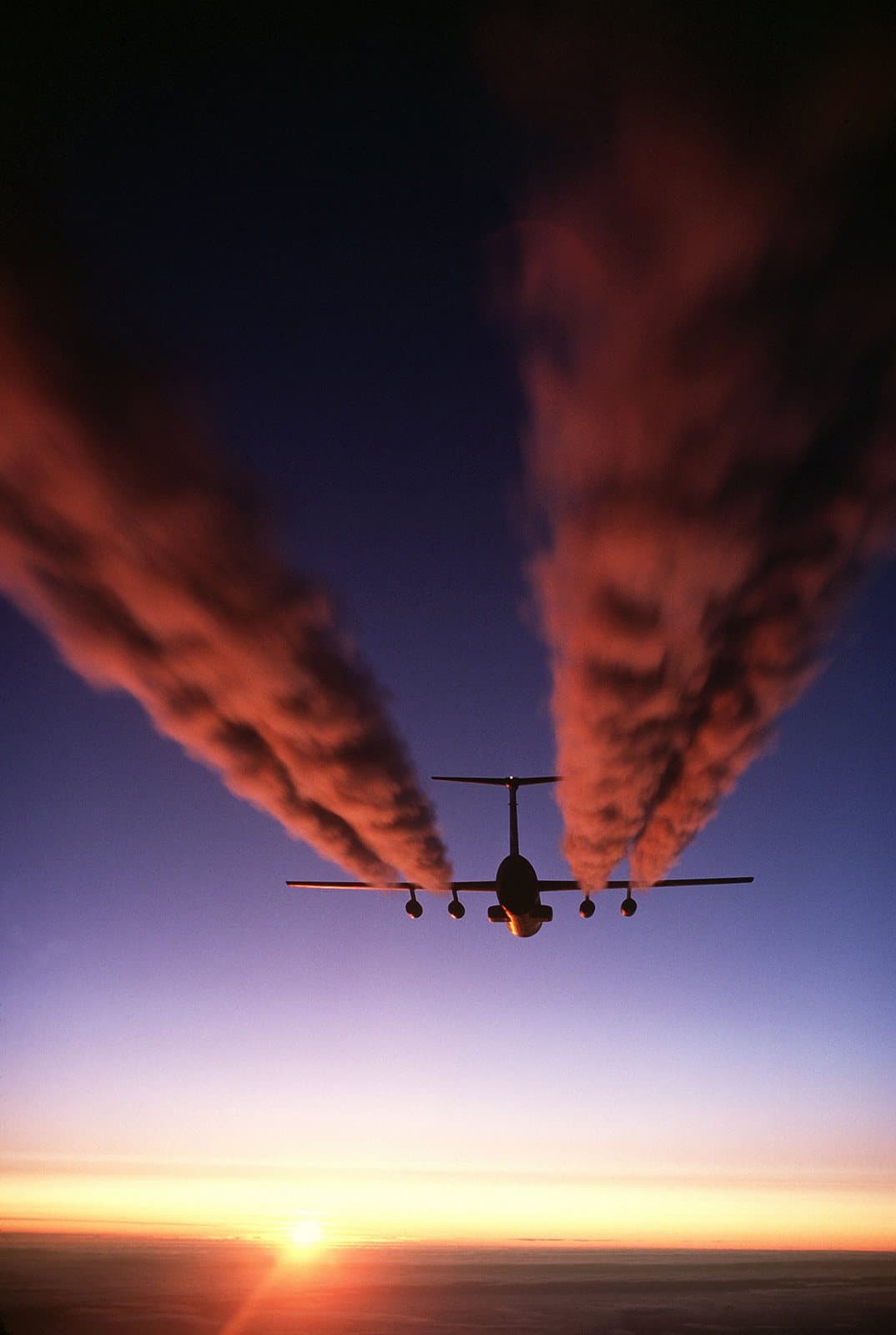
Lockheed ceased to exist as an independent company in 1995, but more of it survives than of most of the firms absorbed in that decade's consolidation. The Skunk Works still operates under that name at Palmdale as Lockheed Martin's advanced development programmes, and the C-130 Hercules, designed in the early 1950s, is still being built at Marietta in its C-130J form, one of the longest production runs of any military aircraft.
The Trident II D5 missiles developed at Sunnyvale remain at sea aboard American and British submarines, and the Hubble Space Telescope that Lockheed integrated in the 1980s has become one of the most productive scientific instruments ever made. P-3 Orions, C-5 Galaxies and U-2s outlived the company that designed them by decades.
The history is preserved in museums as much as in factories. Amelia Earhart's Vega and Wiley Post's Winnie Mae hang in the Smithsonian's National Air and Space Museum in Washington, together with the XP-80 Lulu-Belle, and an SR-71 stands at the museum's Steven F. Udvar-Hazy Center. Constellations, Lightnings and Electras are kept flying or on display around the world.
The company's record is also a lesson that its successors did not escape. It showed what a small, trusted engineering team could achieve in secret, and it showed how a single commercial programme and the pressure to win sales abroad could bring a great manufacturer to the edge of collapse and into disgrace.
Products
Programmes the company has built or is building. Entries that exist elsewhere in FLYPEDIA are linked.
Airliners
- Lockheed Model 10 ElectraOut of productionFirst flight 1934
Ten-passenger all-metal twin with the twin-fin tail; Earhart's last aircraft.
- Lockheed ConstellationOut of productionFirst flight 1943
Pressurised four-engined airliner with a triple tail, stretched into the Super Constellation and Starliner.
- Lockheed L-188 ElectraOut of productionFirst flight 1957
Four-turboprop airliner and the basis of the P-3 Orion.
- Lockheed L-1011 TriStarOut of productionFirst flight 1970
Wide-body trijet with Rolls-Royce RB211 engines; 250 built, production ended 1984.
Military aircraft
- Lockheed HudsonOut of productionFirst flight 1938
Maritime patrol and bomber derivative of the Model 14, first ordered by Britain.
- Lockheed P-38 LightningOut of productionFirst flight 1939
Twin-boom fighter of the Second World War; more than 10,000 built.
- Lockheed P-80 Shooting StarOut of productionFirst flight 1944
The Skunk Works' first aircraft and the first operational American jet fighter.
- Lockheed F-104 StarfighterOut of productionFirst flight 1954
Mach 2 interceptor built for the US Air Force and widely exported.
Four-turboprop tactical transport built at Marietta; still produced by Lockheed Martin as the C-130J.
- Lockheed U-2Out of productionFirst flight 1955
High-altitude reconnaissance aircraft built for the CIA.
- Lockheed P-3 OrionOut of productionFirst flight 1958
Long-range anti-submarine patrol aircraft for the US Navy and export customers.
- Lockheed C-141 StarlifterOut of productionFirst flight 1963
Four-jet strategic transport of the US Air Force.
Mach 3 strategic reconnaissance aircraft; 32 built.
- Lockheed C-5 GalaxyOut of productionFirst flight 1968
Very large strategic transport of the US Air Force.
- Lockheed F-117 NighthawkOut of productionFirst flight 1981
The first operational aircraft designed around stealth.
Space
- Polaris, Poseidon and Trident missilesOut of production
Submarine-launched ballistic missiles built at Sunnyvale; the Trident II D5 remains in service.
- AgenaOut of production
Upper stage and spacecraft for reconnaissance satellites and the Gemini docking target.
General aviation
- Lockheed VegaOut of productionFirst flight 1927
Moulded-plywood monoplane flown by Amelia Earhart and Wiley Post on record flights.
Prototypes
- Loughead Model GOut of productionFirst flight 1913
The brothers' first seaplane, flown on San Francisco Bay and used for pleasure flights in 1915.
Sites
- Santa Barbara
Santa Barbara, California1916–1921
Works of the Loughead Aircraft Manufacturing Company: the F-1 flying boat and the S-1 sportplane.
- Burbank
Burbank, CaliforniaSince 1928
Home of the company from 1928 and its headquarters until 1987: the Vega, the Electra, the Hudson, the P-38, the Constellation and the first Skunk Works.
- Marietta
Marietta, GeorgiaSince 1951
Government-owned wartime bomber plant reopened by Lockheed: the C-130 Hercules, the C-141 Starlifter and the C-5 Galaxy.
- Sunnyvale
Sunnyvale, California
Lockheed Missiles & Space Company: Polaris, Poseidon and Trident missiles, the Agena and the Hubble Space Telescope.
- Palmdale
Palmdale, California
Final assembly and flight test of the L-1011 TriStar, and later home of the Skunk Works.
Genealogy
The Lockheed line, from the Alco Hydro-Aeroplane Company the Loughead brothers founded in 1912. Their Loughead Aircraft Manufacturing Company followed in 1916; Allan Loughead's Lockheed Aircraft Company of 1926 adopted the phonetic spelling; investors re-formed it as Lockheed Aircraft Corporation in 1932, and it became Lockheed Corporation in 1977. It absorbed its Vega subsidiary in 1943 and General Dynamics' Fort Worth aircraft business in 1993, and in 1995 merged with Martin Marietta, itself descended from the Glenn L. Martin Company of 1912, to form Lockheed Martin.
Scroll to see the full diagram
Timeline
December 19, 1912
Allan and Malcolm Loughead incorporate the Alco Hydro-Aeroplane Company
June 15, 1913
First flight of the Model G seaplane on San Francisco Bay
1916
Loughead Aircraft Manufacturing Company founded in Santa Barbara
December 1926
Lockheed Aircraft Company formed in Hollywood
July 4, 1927
First flight of the Vega
1931
Post and Gatty fly the Winnie Mae around the world in eight days
May 1932
Amelia Earhart flies her Vega alone across the Atlantic
June 1932
Robert Gross's group buys Lockheed out of receivership
February 23, 1934
First flight of the Model 10 Electra
January 27, 1939
First flight of the XP-38 Lightning
January 9, 1943
First flight of the Constellation
January 8, 1944
The Skunk Works' XP-80 flies, 143 days after work began
August 23, 1954
First flight of the YC-130 Hercules
August 1955
First flight of the U-2
July 20, 1960
First Polaris missile launched from a submerged submarine
December 22, 1964
First flight of the SR-71 Blackbird
November 16, 1970
First flight of the L-1011 TriStar
August 1971
Emergency Loan Guarantee Act signed
Federal guarantees of up to $250 million for bank loans to Lockheed.
February 1976
Chairman and president resign over the foreign bribery revelations
1977
Renamed Lockheed Corporation
April 1990
Hubble Space Telescope launched
March 15, 1995
Merger with Martin Marietta forms Lockheed Martin
- The Founding of Lockheed Martin, Lockheed Martin
- Missions Impossible: The Skunk Works Story, Lockheed Martin
- A Merger of Equals, Lockheed Martin
- C-130 Hercules, Lockheed Martin
- Lockheed Brothers — International Air & Space Hall of Fame, San Diego Air & Space Museum
- Lockheed Vega 5B, Amelia Earhart, Smithsonian National Air and Space Museum
- Lockheed Vega "Winnie Mae", Smithsonian National Air and Space Museum
- Lockheed SR-71 Blackbird, Smithsonian National Air and Space Museum
- The CIA and the U-2 Program, 1954–1974, Central Intelligence Agency, Center for the Study of Intelligence
- Hubble Space Telescope, NASA
Checked September 15, 2026